
Addison’s Disease or Perimenopause? Decoding the Overlap
Confused by fatigue and salt cravings? Explore the differences between Addison's disease vs perimenopause symptoms in women over 40 to ensure a proper diagnosis.
Published:
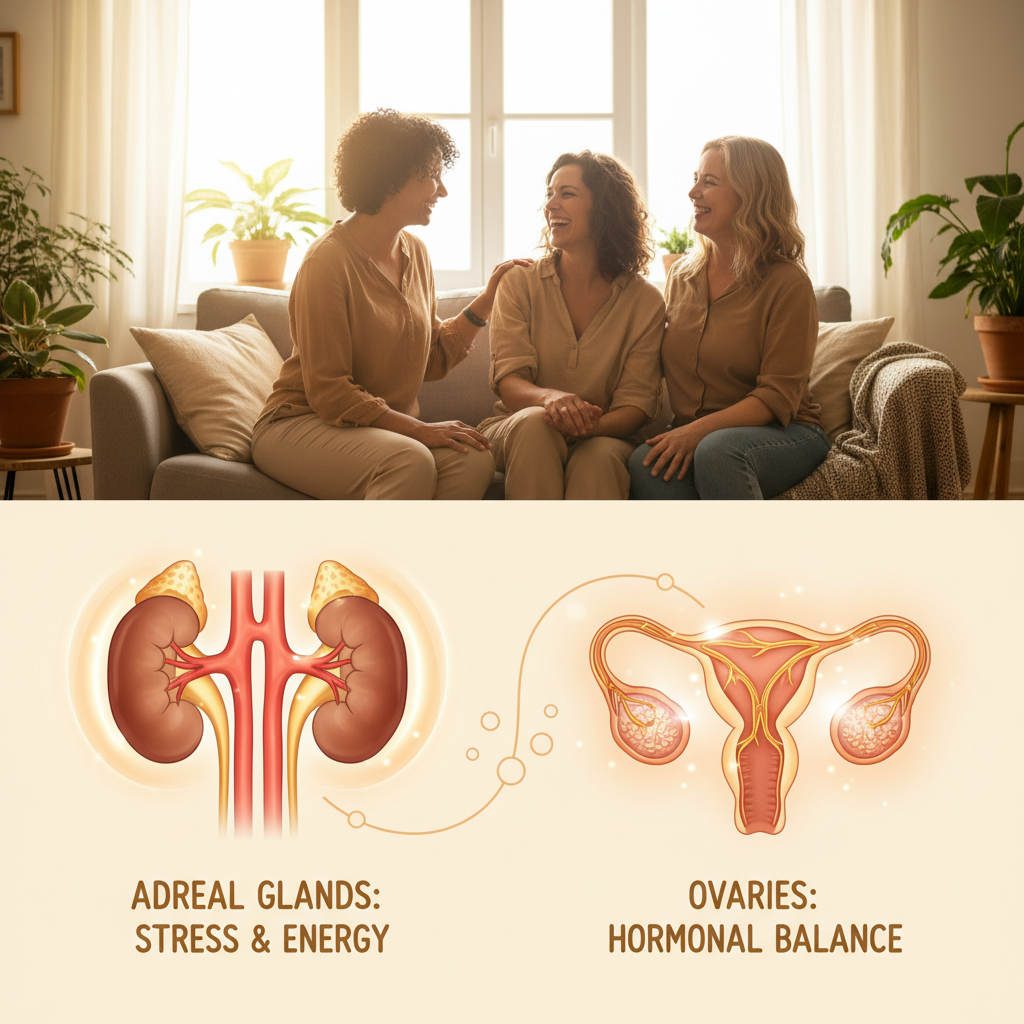
You’re navigating your 40s or early 50s, so you’ve likely been told to expect a transition. You might be experiencing the classic signs: erratic periods, nights spent tossing and turning, and a sudden, inexplicable drop in your energy levels. But what if the exhaustion you're feeling isn't just "the change"?
When we talk about the perimenopause symptoms checklist, we often focus on the decline of estrogen and progesterone. However, there is a rare but serious autoimmune condition known as Addison’s disease (primary adrenal insufficiency) that shares a striking number of symptoms with the menopausal transition. Because they both peak in women during the middle years, the two are frequently conflated, leading to delayed diagnoses and unnecessary suffering.
In this deep dive, we’ll help you decode the overlap of Addison’s disease vs perimenopause symptoms in women over 40, ensuring you have the knowledge to advocate for the right testing and care.
Why are the symptoms of Addison’s disease so easily mistaken for perimenopause?
The primary reason for the confusion lies in the non-specific nature of early symptoms. Both perimenopause and Addison’s disease involve a fundamental shift in your endocrine system. In perimenopause, your ovaries are winding down; in Addison’s, your adrenal glands are being damaged—usually by an autoimmune attack—leaving them unable to produce essential hormones like cortisol and aldosterone.
According to the National Institutes of Health (NIH), Addison's disease often develops slowly. The initial fatigue, muscle weakness, and loss of appetite are nearly identical to the "burnout" many women associate with the perimenopause insulin resistance signs or the general strain of midlife.
Furthermore, both conditions can cause:
- Irritability and low mood (often labeled as "mood swings").
- Sleep disturbances.
- Brain fog or difficulty concentrating.
- Irregular menstrual cycles (Addison's can even cause premature ovarian failure).
Because perimenopause is a universal experience for women, clinicians may reflexively attribute these symptoms to hormonal aging without screening for underlying adrenal dysfunction. This is particularly risky because, unlike perimenopause, untreated Addison’s disease can be life-threatening.
Is your salt craving a sign of perimenopause or adrenal insufficiency?
While many women in perimenopause experience cravings for sweets or simple carbohydrates due to fluctuating blood sugar, Addison’s disease presents a very specific, intense craving: salt.
This happens because the adrenal glands produce aldosterone, a mineralocorticoid that regulates the balance of sodium and potassium in your body. When aldosterone levels drop, your kidneys excrete too much sodium and retain too much potassium. Your body reacts by driving an urgent, almost insatiable desire for salty foods.
While you might crave a bag of chips during a stressful week in perimenopause, an Addisonian salt craving is physiological, not emotional. If you find yourself salting foods that are already salty, or literally eating salt straight from the shaker, it is a significant "red flag" that distinguishes adrenal insufficiency from standard perimenopausal changes.
| Symptom | Perimenopause Profile | Addison’s Disease Profile |
|---|---|---|
| Primary Craving | Sugar, Chocolate, Carbs | Salt, Vinegar, Pickles |
| Weight Changes | Weight gain (midsection) | Unintentional weight loss |
| Fatigue | Fluctuating, improved by rest | Progressive, debilitating, "bone-tired" |
| Nausea | Occasional (hormonal shifts) | Frequent, often with vomiting |
| Muscle Pain | Common (joint/muscle aches) | Severe weakness and cramping |
How does the skin hyperpigmentation in Addison’s differ from hormonal melasma?
Many women over 40 notice changes in their skin. You might see "age spots" or the "mask of pregnancy" (melasma). Melasma is a common symptom of perimenopause, driven by the interaction of estrogen and progesterone with melanocytes.
However, the hyperpigmentation in Addison’s disease is distinct. It is caused by an increase in adrenocorticotropic hormone (ACTH). Because the adrenals aren't producing enough cortisol, the pituitary gland overproduces ACTH to try and stimulate them. ACTH is molecularly similar to melanocyte-stimulating hormone.
The Mayo Clinic notes that Addison’s pigmentation often appears in areas not typically exposed to the sun, such as:
- The creases of the palms.
- The inside of the cheeks (buccal mucosa).
- Recent scars.
- Pressure points like elbows, knees, and knuckles.
- Small dark freckles appearing over the forehead and shoulders.
If your "tan" looks like you’ve been on vacation despite spending all winter indoors, or if your gums are turning a bluish-black hue, this is not perimenopausal melasma. This is a classic sign of primary adrenal insufficiency.
Why do blood pressure drops and dizziness get worse during the perimenopause transition?
Dizziness and lightheadedness are frequently reported during the perimenopause transition. Fluctuating estrogen can affect your autonomic nervous system, leading to temporary bouts of vertigo or feeling faint.
In Addison’s disease, however, the dizziness is usually orthostatic hypotension—a significant drop in blood pressure that occurs when you stand up from a sitting or lying position. This occurs because the lack of cortisol and aldosterone prevents the body from maintaining blood volume and vascular tone.
During perimenopause, the loss of estrogen can actually exacerbate these symptoms. Estrogen helps maintain the elasticity of blood vessels. When estrogen drops, your body’s ability to compensate for low adrenal output diminishes. If you are also dealing with fibromyalgia-perimenopause symptoms, the total body pain and dizziness can become a confusing "symptom soup" that masks the specific cardiovascular weakness of Addison's.
Can fluctuating estrogen levels mask a developing autoimmune adrenal crisis?
One of the most dangerous aspects of the overlap is that the "up and down" nature of perimenopause can mask the progressive decline of the adrenal glands. A woman might have a "good month" when her estrogen is higher, feeling slightly more energetic, which leads her to dismiss the symptoms of an emerging adrenal crisis as just a "bad patch" of perimenopause.
Addison’s disease is often part of a broader "Polyendocrine Deficiency Syndrome." This means if you have one autoimmune condition, like Hashimoto’s, you are at a higher risk for others. We discuss this "stacking" effect in our guide on Hashimotos-perimenopause overlap.
An adrenal crisis is triggered when the body is under stress (infection, injury, or even severe emotional stress) and cannot produce the necessary cortisol to cope. Symptoms include:
- Sudden, penetrating pain in the lower back, abdomen, or legs.
- Severe vomiting and diarrhea, leading to dehydration.
- Low blood pressure and loss of consciousness.
- High potassium and low sodium.
If you are experiencing these symptoms, do not assume it is a "severe hot flash" or a "migraine." Seek emergency medical attention immediately.
What lab tests can distinguish between perimenopause and primary adrenal insufficiency?
If you suspect your symptoms go beyond the normal hormonal transition, you must advocate for specific blood work. Standard "wellness panels" often miss these markers.
- Morning Cortisol Test: Cortisol levels are highest in the morning (usually between 7:00 AM and 9:00 AM). A very low level is suggestive of Addison's.
- ACTH Stimulation Test: This is the "gold standard." Doctors inject a synthetic version of ACTH and measure how your adrenals respond. If cortisol doesn't rise, the diagnosis is confirmed.
- Electrolyte Panel: Checks for low sodium (hyponatremia) and high potassium (hyperkalemia).
- Adrenal Antibodies (21-hydroxylase): This determines if the cause is autoimmune.
- FSH/LH and Estradiol: These help determine your menopausal status. High FSH and low Estradiol indicate perimenopause or menopause.
It is important to note that if you are already on HRT for perimenopause beginners guide, oral estrogen can increase "cortisol-binding globulin," which might make your total cortisol levels look normal on a standard blood test even if they are low. Always inform your doctor of all hormones you are taking.
How should you manage the overlap of mineralocorticoid deficiency and hormone loss?
Managing both conditions requires a delicate, "goldilocks" approach to hormone replacement.
While perimenopause is managed with estrogen and progesterone to stabilize the cycle and protect bone health, Addison’s requires life-long replacement of glucocorticoids (like hydrocortisone or prednisone) and mineralocorticoids (fludrocortisone).
The challenge for women over 40 is that the symptoms of "over-replacement" of cortisol (weight gain, thinning skin, bone loss) can look like menopause, while "under-replacement" (fatigue, muscle aches) also looks like menopause.
The Endocrine Society recommends using the lowest effective dose of corticosteroids to avoid side effects like osteoporosis, which is already a concern for post-menopausal women. Integrating a balanced HRT regimen can often help lower the "stress" on the body, potentially allowing for a more stable management of adrenal doses.
Checklist for Discussion with Your Physician:
- Do I have darkening of the skin in non-sun-exposed areas?
- Is my fatigue "relentless" rather than "episodic"?
- Am I losing weight without trying?
- Are my salt cravings intense and daily?
- Have my electrolyte levels ever been out of range?
The journey through your 40s is complex, and your body is a sophisticated instrument. By distinguishing between the natural shift of perimenopause and the pathological signs of Addison’s disease, you ensure that your "radiance" is supported by a foundation of true health, not just a label of "age." If you feel something is deeply wrong, trust your intuition—it is often the most accurate diagnostic tool you have. In many cases, the Cleveland Clinic suggests that with proper medication, women with Addison’s can live a full, active life, navigating menopause with the same grace as anyone else.
FAQ
Common questions
Are salt cravings normal in perimenopause?
While salt cravings aren't a typical symptom of perimenopause, they are a hallmark sign of Addison’s disease due to the loss of sodium-regulating hormones.
Can Addison’s disease cause early menopause?
Yes, Addison’s disease can lead to premature ovarian failure, making perimenopausal symptoms appear much earlier than expected.
How do I know if my skin changes are melasma or Addison's?
Hormonal melasma usually appears on the face due to sun exposure, whereas Addison's causes darkening in skin creases, scars, and inside the mouth.
Can you have both Addison’s and perimenopause?
Yes, because both conditions involve the endocrine system, it is possible for a woman to be navigating the menopausal transition while also having Addison's.
Does perimenopause interfere with Addison’s testing?
Standard tests like the ACTH stimulation test and morning cortisol levels remain the most reliable way to identify adrenal insufficiency regardless of age.
Is Addison’s disease dangerous if left untreated?
No, perimenopause is a natural life stage, while Addison’s is a life-threatening medical condition requiring lifelong hormone replacement therapy.
Want this in your inbox each Sunday?
New articles, the science you can actually use, and the occasional rant.
Keep reading

Perimenopause Symptoms Checklist: 38 Signs You're Not Imagining
A comprehensive, doctor-reviewed checklist of perimenopause symptoms — from the obvious hot flashes to the weird ones nobody warned you about.
9 min read

Hashimoto's and Perimenopause: Why Symptoms Overlap (and How to Tell Them Apart)
Fatigue, brain fog, weight gain, hair loss — Hashimoto's and perimenopause share most symptoms. Here's how to tell what's flaring, what's hormonal, and what to ask your doctor.
11 min read

Fibromyalgia and Perimenopause: When Two Storms Collide
Why fibromyalgia almost always flares during perimenopause, what changes in your nervous system, and the small daily shifts that actually help.
10 min read