
Alopecia Areata or Perimenopause? Hair Loss After 40
Confused by hair loss in your 40s? Explore the link between alopecia areata and perimenopause, how hormones trigger flares, and the best treatment options.
Published:
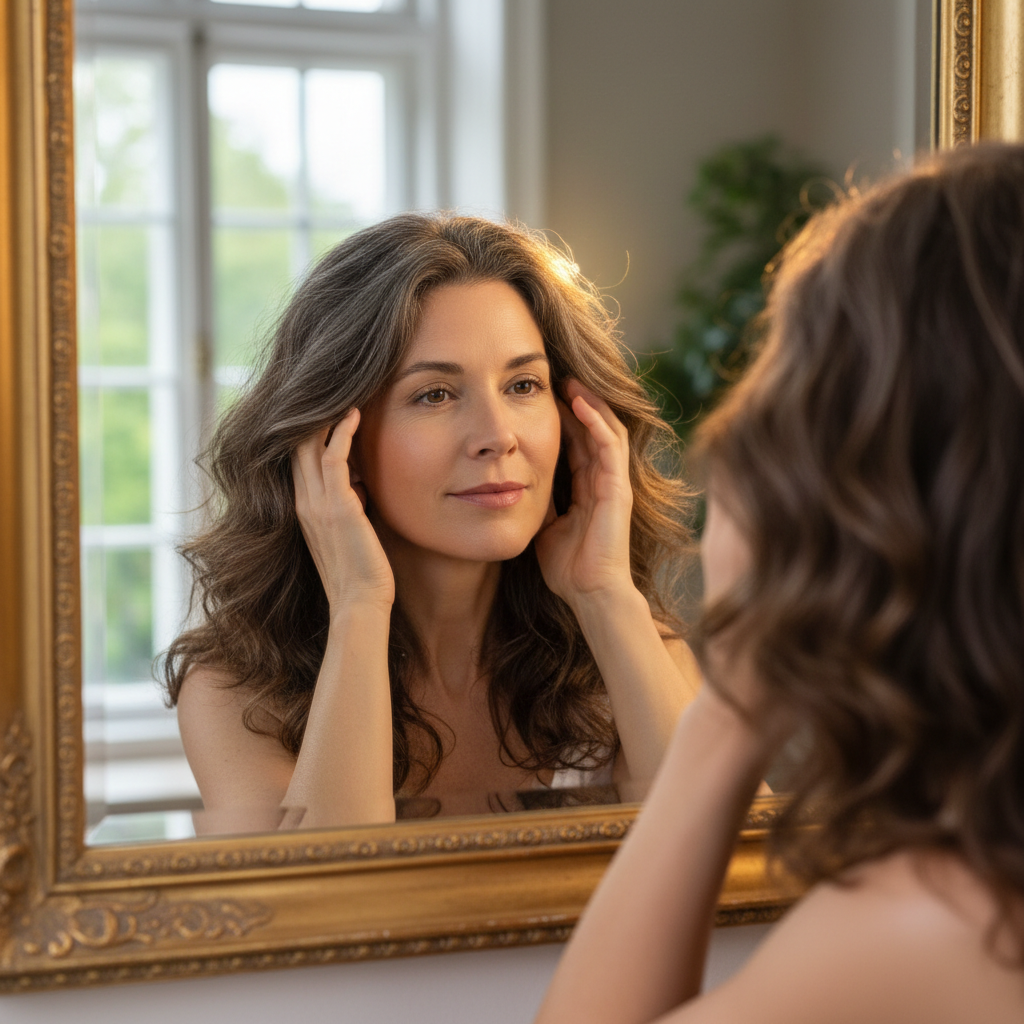
Finding clumps of hair in your brush or noticing a receding hairline can feel like an emotional gut-punch, especially when you’re already navigating the "second puberty" of your 40s. You might find yourself staring into the mirror, wondering if your thinning strands are just a normal byproduct of aging or a sign of an underlying health condition.
In your 40s and 50s, the lines between hormonal shifts and autoimmune responses often blur. While female pattern hair loss (androgenic alopecia) is a common visitor during the transition to menopause, a more sudden, aggressive form of loss called Alopecia Areata can also make an appearance or flare up during this time. Understanding the alopecia areata and perimenopause hair loss link is crucial to saving your strands and your sanity.
Is your hair loss hormonal or an autoimmune flare?
The first step in reclaiming your radiance is identifying what kind of hair loss you are experiencing. During perimenopause, your body is a shifting landscape of hormones. Most women expect some degree of thinning, which is typically driven by the decline of estrogen and progesterone. When these "hair-friendly" hormones drop, the relative influence of androgens (like testosterone) increases, which can shrink the hair follicles.
However, Alopecia Areata is a different beast entirely. It is an autoimmune disease where your immune system mistakenly attacks the hair follicles, causing hair to fall out—often in very specific, round patches about the size of a coin.
According to the National Institutes of Health (NIH), Alopecia Areata can occur at any age, but the intense physiological stress of the perimenopause transition can sometimes act as a trigger for those already genetically predisposed. If you are tracking your symptoms using a perimenopause symptoms checklist, you might notice that hair loss correlates with other inflammatory signs.
| Feature | Perimenopausal Thinning (Telogen Effluvium/Androgenic) | Alopecia Areata (Autoimmune) |
|---|---|---|
| Pattern | Widening part, overall diffuse thinning at the crown. | Smooth, round patches or total loss in specific areas. |
| Onset | Gradual, often noticed over months or years. | Sudden; "exclamation point" hairs may appear at edges. |
| Sensation | Usually painless, though scalp may feel "tight." | May involve tingling, itching, or burning before loss. |
| Cause | Estrogen/Progesterone drop; high androgen sensitivity. | Immune system attacking the hair follicle bulb. |
How perimenopause inflammation triggers alopecia areata?
Perimenopause is not just a reproductive transition; it is a period of systemic "inflammaging." As estrogen levels fluctuate wildly before eventually crashing, the body loses one of its most potent anti-inflammatory regulators. Estrogen helps keep the immune system in check; when it fluctuates, the immune system can become hyper-reactive.
This is why many women find that existing autoimmune conditions, such as Hashimoto’s thyroiditis, tend to flare during this window. In the case of alopecia areata, the "immune privilege" of the hair follicle—a protective shield that usually prevents the immune system from noticing it—is breached.
When systemic inflammation rises due to hormonal chaos, the T-cells in your immune system may begin to see your hair follicles as foreign invaders. The resulting inflammation "shuts down" the follicle, forcing it into the telogen (resting) phase prematurely. Because the body is already under the strain of perimenopause insulin resistance, which further fuels inflammation, the scalp becomes a prime target for autoimmune activity.
Can falling estrogen levels worsen autoimmune hair thinning?
Estrogen is essentially "fertilizer" for your hair. It keeps your strands in the anagen (growth) phase for longer, resulting in thicker, more voluminous hair. When estrogen levels plummet, the growth phase shortens.
For a woman with Alopecia Areata, this drop in estrogen is a double whammy. Not only is the immune system attacking the follicle, but the hormonal support that would usually help the hair bounce back is missing. Research published via PubMed Central (NIH) suggests that sex hormones play a significant role in modulating the immune response in the skin.
Furthermore, low estrogen is often accompanied by low iron (ferritin) or vitamin D levels—both of which are critical for hair follicle health. If you are already managing conditions like fibromyalgia in perimenopause, your body’s "stress bucket" may already be full, making it harder for your hair follicles to recover from an autoimmune hit.
Distinguishing between patchy loss and general thinning?
It is vital to look closely at the scalp.
- Check the Shape: If you see "islands" of completely smooth skin where hair used to be, this points toward Alopecia Areata. If you see your scalp peeking through throughout the top of your head, but the hairline remains mostly intact, this is likely female pattern hair loss triggered by perimenopause.
- Look for "Exclamation Point" Hairs: These are short hairs that are narrower at the bottom than the top, often seen at the edges of bald patches. These are a hallmark sign of an active autoimmune attack.
- Nail Changes: Alopecia Areata often affects the nails, causing tiny pits (like pinpricks) or redness. Hormonal hair loss typically does not affect the nails in this specific way.
- Body Hair: Alopecia Areata can affect eyebrows, eyelashes, and body hair. Hormonal thinning usually targets the scalp, though you might ironically notice more hair on your chin due to changing androgen ratios.
If you are unsure, a dermatologist should perform a "pull test" or a scalp biopsy to confirm the presence of lymphocytic infiltration, which is the smoking gun for the alopecia areata and perimenopause hair loss link.
The role of stress and cortisol in 40+ hair health?
We cannot talk about the 40s without talking about stress. The "Sandwich Generation" years—caring for children and aging parents while managing a career—coincide exactly with the hormonal drop-off of perimenopause.
When you are stressed, your adrenal glands pump out cortisol. High cortisol levels have been shown to degrade skin elements like hyaluronan and proteoglycans by approximately 40%, according to the Mayo Clinic. Chronic stress also pushes the immune system into a pro-inflammatory state, which can trigger or worsen an Alopecia Areata flare.
In perimenopause, your "stress buffer" is thinner because estrogen normally helps dampen the cortisol response. Without that buffer, every stressful event hits your follicles harder. Managing stress isn't just "self-care"; it’s a medical necessity for hair retention.
Treatment options: Minoxidil, steroids, or HRT?
The good news is that hair follicles in Alopecia Areata remain alive. They are simply "hibernating" due to the immune attack, meaning regrowth is almost always possible. Treatment usually requires a multi-pronged approach:
1. Topical and Intralesional Steroids
For patchy Alopecia Areata, the first line of defense is often corticosteroid injections performed by a dermatologist. According to the American Academy of Dermatology (AAD), these injections help suppress the local immune response, allowing the hair to regrow. Topical high-potency steroids may also be used.
2. Minoxidil (Rogaine)
While Minoxidil doesn't treat the autoimmune cause of Alopecia Areata, it can stimulate the follicles to enter the growth phase. It is often used as an adjunct therapy to speed up regrowth once the inflammation is under control.
3. Hormone Replacement Therapy (HRT)
If your hair loss is being exacerbated by the perimenopausal drop in estrogen, HRT may help. By stabilizing hormone levels, HRT can lengthen the growth cycle of the hair and reduce the systemic "alarm" that may be triggering autoimmune flares. If you are new to this option, our HRT for perimenopause beginners guide explains how systemic hormones can support your skin and hair health.
4. JAK Inhibitors
For severe or persistent cases of Alopecia Areata, a newer class of drugs called JAK inhibitors (like baricitinib) has shown revolutionary results. These drugs work by blocking the specific signaling pathways the immune system uses to attack the hair follicle. The FDA recently approved these as the first systemic treatment for severe Alopecia Areata.
5. Anti-Inflammatory Diet and Lifestyle
Addressing the internal environment is key. Focusing on an anti-inflammatory diet—rich in Omega-3 fatty acids, Vitamin D, and antioxidants—can help support the immune system. Reducing sugar intake can also help mitigate insulin resistance, which is a known driver of inflammation in midlife.
Summary: Taking Control of Your Scalp Health
The transition through your 40s and 50s is a period of profound biological change. While the alopecia areata and perimenopause hair loss link can feel overwhelming, understanding that your hormones and your immune system are in a constant dialogue is the first step toward healing.
If you notice sudden patches of hair loss, do not wait. Seek a professional diagnosis from a dermatologist who understands the nuances of perimenopausal health. Whether your path involves HRT, targeted autoimmune treatments, or stress management, your hair is a reflection of your internal balance. By quieting the internal inflammation and supporting your changing hormones, you can help your hair—and your confidence—grow back stronger.
Remember, you aren't just losing hair; your body is sending you a signal. Listen to it, nurture it, and give yourself the grace to navigate this transition with the medical support you deserve. Your radiance isn't lost; it’s just waiting for the right environment to bloom again.
FAQ
Common questions
Does perimenopause cause alopecia areata?
Perimenopause doesn't directly cause alopecia areata, but the hormonal shifts (low estrogen) and increased systemic inflammation can trigger a flare-up in women who are genetically susceptible to this autoimmune condition.
How can I tell the difference between hormonal thinning and alopecia areata?
Look for the pattern. Alopecia areata causes distinct, smooth, round bald patches. Perimenopausal hair loss (androgenic alopecia) is usually characterized by diffuse thinning across the top or crown and a wider part line.
Can estrogen levels affect autoimmune hair loss?
Yes. Research shows that estrogen has a protective effect on hair follicles and modulates the immune system. When estrogen drops, the 'immune privilege' of the hair follicle can be compromised, leading to an autoimmune attack.
What are the best treatments for hair loss after 40?
Topical or injectable steroids are the most common treatments for the autoimmune aspect, while HRT may help stabilize the hormonal environment. Newer JAK inhibitors are also available for severe cases.
Does stress make alopecia areata worse during perimenopause?
High cortisol levels from stress can increase systemic inflammation and push hair follicles into a resting phase, which can trigger or worsen an alopecia areata flare-up.
Is hair loss from alopecia areata permanent?
Yes, because the hair follicles remain alive, hair can regrow. Treatment focuses on stopping the immune attack and providing the right hormonal support to encourage new growth.
Want this in your inbox each Sunday?
New articles, the science you can actually use, and the occasional rant.
Keep reading

Perimenopause Symptoms Checklist: 38 Signs You're Not Imagining
A comprehensive, doctor-reviewed checklist of perimenopause symptoms — from the obvious hot flashes to the weird ones nobody warned you about.
9 min read

Hashimoto's and Perimenopause: Why Symptoms Overlap (and How to Tell Them Apart)
Fatigue, brain fog, weight gain, hair loss — Hashimoto's and perimenopause share most symptoms. Here's how to tell what's flaring, what's hormonal, and what to ask your doctor.
11 min read

Fibromyalgia and Perimenopause: When Two Storms Collide
Why fibromyalgia almost always flares during perimenopause, what changes in your nervous system, and the small daily shifts that actually help.
10 min read