
Alopecia Areata or Perimenopause? Hair Loss at 40+
Unsure if your hair loss is hormonal or autoimmune? Learn the differences between alopecia areata and perimenopause thinning, including symptoms and tests.
Published:
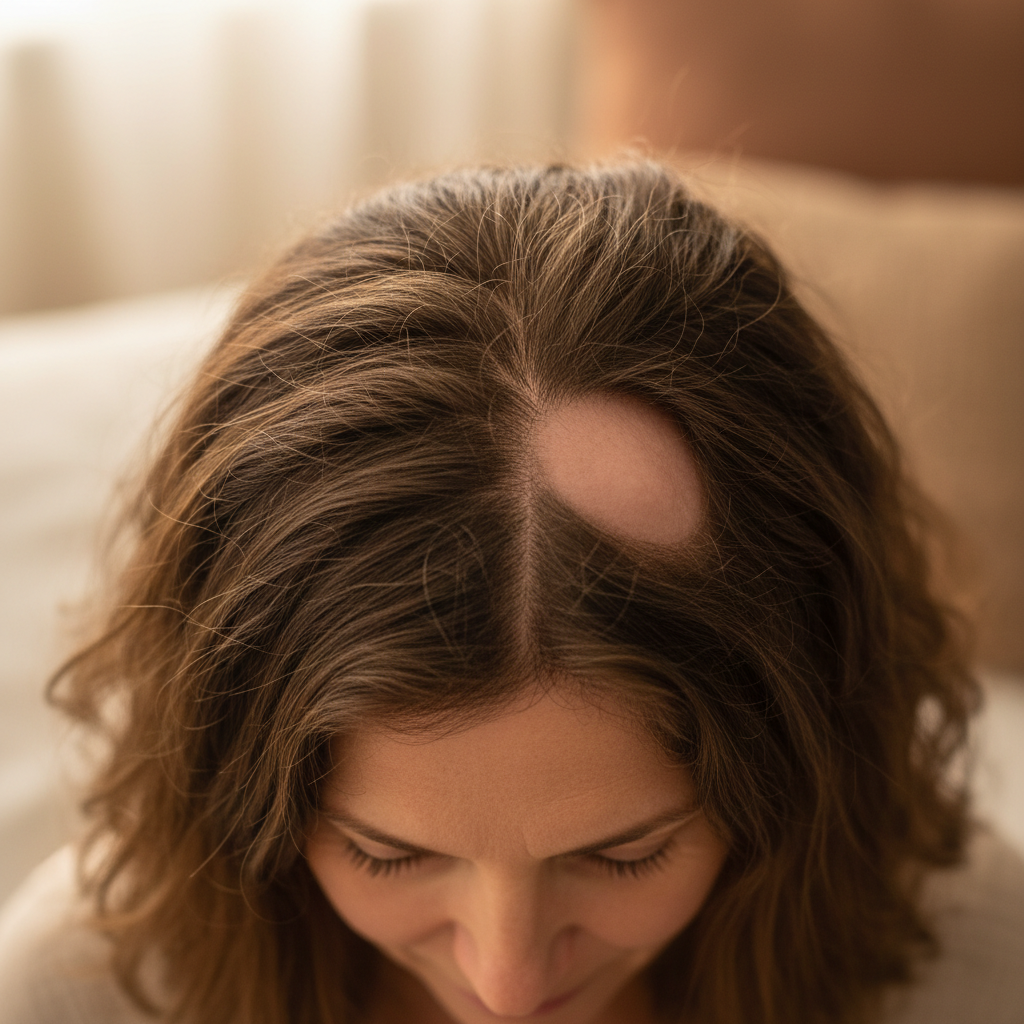
Finding more hair than usual in your brush as you approach your 40s is a common experience, but the cause isn't always "just aging." While you might assume your thinning locks are a standard part of the perimenopause symptoms checklist, another culprit could be at play: Alopecia Areata (AA).
Distinguishing between hormonal thinning and an autoimmune attack on your follicles is crucial because the treatments, timelines, and long-term expectations differ significantly. When your estrogen levels begin their erratic decline, your immune system may also shift, sometimes unmasking underlying conditions you didn't know were there.
How can you tell the difference between alopecia areata and hormonal thinning?
The primary difference lies in the pattern and speed of the loss. Perimenopausal hair loss, technically known as female pattern hair loss (FPHL) or androgenetic alopecia, is a slow, diffuse process. According to the Mayo Clinic, hormonal thinning typically involves a widening of the part line or a general loss of volume across the top of the scalp, while the hairline often remains intact.
Alopecia Areata, however, is an autoimmune condition. In AA, your immune system mistakenly attacks the hair follicles, causing hair to fall out in well-defined, often circular patches. Unlike the gradual thinning of perimenopause, AA can appear suddenly—sometimes overnight. While FPHL is driven by the miniaturization of follicles due to hormonal shifts, AA is driven by inflammation and T-cell activity.
| Feature | Perimenopausal Thinning (FPHL) | Alopecia Areata (AA) |
|---|---|---|
| Onset | Gradual, over years | Rapid, often sudden |
| Pattern | Diffuse thinning, wider part | Distinct circular or oval patches |
| Scalp Appearance | Normal, visible through thin hair | Smooth, peach-colored, or slightly red |
| Body Hair | Usually unaffected | Can affect eyebrows, lashes, or body |
| Primary Cause | Hormonal (Estrogen/Androgen ratio) | Autoimmune (T-cell mediated) |
Does perimenopause trigger new autoimmune hair loss flares?
Yes, the transition into menopause is a notorious window for the onset or worsening of autoimmune conditions. Estrogen has a complex, often protective relationship with the immune system. As estrogen levels fluctuate and eventually drop, the "brakes" on certain inflammatory pathways may be released.
Research published via the National Institutes of Health (NIH) suggests that sex hormones significantly influence the immune response, which is why women are disproportionately affected by autoimmune diseases. Much like how you might be monitoring the Hashimoto’s perimenopause overlap, you must also consider that the stress of the menopausal transition can act as a physiological trigger for Alopecia Areata. If you are already managing other inflammatory issues, such as fibromyalgia perimenopause symptoms, your system may be more primed for an AA flare.
What do the patches of alopecia areata look like compared to 40+ thinning?
If you were to look at your scalp under a magnifying glass (or have a dermatologist use a dermatoscope), the differences become stark.
- The "Exclamation Point" Hair: In Alopecia Areata, you will often see short, broken hairs that are narrower at the base than the top. These are diagnostic hallmarks of an active AA flare.
- Smooth Patches: AA usually leaves the skin looking completely smooth, like a "baby’s bottom," within the patch. In perimenopausal thinning, you will still see fine, miniaturized hairs growing in the thinning areas.
- The "Ophiasis" Pattern: Occasionally, AA can occur as a band of hair loss at the base of the neck or behind the ears, which is very distinct from the "top-down" thinning seen in hormonal loss.
- Yellow Dots: Dermatologists look for "yellow dots" in the follicle openings, which represent sebum and keratinous debris trapped in the follicle during an autoimmune attack.
In contrast, perimenopausal thinning is rarely patchy. It feels more like your ponytail is getting thinner or your scalp is becoming more visible under bright lights. If you are also dealing with perimenopause insulin resistance signs, this can exacerbate hormonal thinning by increasing androgen activity, but it still won't typically produce the smooth bald circles characteristic of AA.
Can low estrogen make autoimmune scalp inflammation worse?
Estrogen is generally considered an anti-inflammatory agent in the context of the skin. It helps maintain the "immune privilege" of the hair follicle—a protective barrier that keeps the immune system from noticing and attacking the follicle. According to the Endocrine Society, the loss of estrogen leads to a decrease in skin thickness and collagen, but it also alters the skin's cytokine profile.
When estrogen drops, the inflammatory environment of the scalp can shift. For women with a genetic predisposition to Alopecia Areata, this shift can be the tipping point that allows T-cells to breach the follicle's defenses. Furthermore, the psychological stress of perimenopause—anxiety, sleep deprivation, and mood swings—elevates cortisol. Chronic cortisol elevation is a known trigger for autoimmune flares, creating a "perfect storm" for hair loss in your 40s.
Which blood tests differentiate autoimmune vs. hormonal hair loss?
If you are unsure which type of hair loss you are experiencing, your healthcare provider should run a comprehensive panel. It is rarely just one thing; many women in their 40s experience "comorbid" hair loss, where both hormones and autoimmunity are contributing to the problem.
- Thyroid Panel (TSH, Free T3, Free T4, TPO Antibodies): Thyroid dysfunction is a leading cause of hair loss and often co-occurs with AA.
- Ferritin (Iron Stores): Low iron is a common cause of telogen effluvium (shedding) and can worsen both AA and FPHL. The Cleveland Clinic notes that ferritin levels should ideally be above 50-70 ng/mL for optimal hair regrowth.
- Total and Free Testosterone/DHEAS: To check for androgen excess that drives perimenopausal thinning.
- ANA (Antinuclear Antibody): A general screen for autoimmune activity, though not specific to AA.
- FSH and Estradiol: To determine your current menopausal status.
If the diagnosis is still unclear, a 4mm punch biopsy of the scalp is the gold standard. A pathologist can look at the tissue to see if there is a "swarm of bees" (lymphocytic infiltrate) around the hair bulb, which confirms Alopecia Areata.
Are hair loss treatments for alopecia safe to use during perimenopause?
Treating hair loss in your 40s requires a nuanced approach because your body is in flux. The treatments for AA and hormonal thinning often overlap, but their targets are different.
- Corticosteroids: These are the first line for AA. Intralesional injections (shots directly into the bald patch) are highly effective and generally safe during perimenopause, as the systemic absorption is minimal.
- Minoxidil (Rogaine): Used for both conditions. It helps by prolonging the growth phase of the hair. It is safe, though it does not address the underlying autoimmune attack in AA or the hormonal shift in FPHL.
- JAK Inhibitors: A newer class of FDA-approved drugs specifically for severe AA. These are systemic medications and require careful monitoring by a dermatologist.
- HRT (Hormone Replacement Therapy): While HRT is not a primary treatment for Alopecia Areata, stabilizing your hormones can improve the overall health of your hair follicles. If you are considering this, refer to the HRT for perimenopause beginners guide to understand how it might support your scalp health by mitigating the effects of low estrogen.
It is vital to work with a dermatologist who understands the intersection of endocrinology and hair biology. According to the American Academy of Dermatology (AAD), early intervention is key to preventing permanent follicle scarring, though AA is typically non-scarring.
How do I manage the stress of rapid hair loss in my 40s?
Losing your hair at any age is difficult, but in your 40s, it can feel like a premature loss of femininity or vitality. When that loss is rapid, as with Alopecia Areata, the psychological impact can be profound.
Managing this stress isn't just about "self-care"—it's about clinical management of your nervous system.
- Prioritize Sleep: Lack of sleep increases systemic inflammation. If perimenopause is keeping you up, address the night sweats first.
- Anti-Inflammatory Nutrition: Focus on a diet rich in Omega-3 fatty acids and antioxidants to support the immune system.
- Seek Support: Connect with organizations like the National Alopecia Areata Foundation (NAAF). Knowing you aren't alone reduces the isolation that fuels cortisol.
- Patience with the Process: Hair grows at a rate of about half an inch per month. Whether you are treating an autoimmune flare or hormonal thinning, you won't see results for at least 3 to 6 months.
Understanding whether you are facing an autoimmune challenge or a hormonal transition is the first step toward regaining control. Your hair is often a barometer for your internal health—listen to what it’s telling you, and don't hesitate to seek specialized care.
FAQ
Common questions
How can I tell the difference between perimenopause thinning and Alopecia Areata?
Perimenopause thinning (FPHL) is usually a gradual widening of the part, whereas Alopecia Areata presents as sudden, smooth, circular bald patches.
Can perimenopause cause an autoimmune hair loss flare?
Yes, the hormonal fluctuations and increased physiological stress of perimenopause can trigger autoimmune conditions like Alopecia Areata in predisposed individuals.
Does low estrogen make Alopecia Areata worse?
Estrogen helps protect the hair follicle's immune privilege. When estrogen drops, the scalp may become more susceptible to inflammatory and autoimmune attacks.
What blood tests do I need for hair loss in my 40s?
Standard tests include Ferritin, TSH, Free T3/T4, Testosterone, and sometimes a scalp biopsy to look for specific inflammatory markers.
Are Alopecia Areata treatments safe during perimenopause?
Yes, treatments like Minoxidil and steroid injections are commonly used during perimenopause, though they should be coordinated with your hormone management plan.
Is hair loss from Alopecia Areata permanent?
While perimenopause thinning is usually permanent without treatment, Alopecia Areata hair often has the potential to regrow once the immune flare is managed.
Want this in your inbox each Sunday?
New articles, the science you can actually use, and the occasional rant.
Keep reading

Perimenopause Symptoms Checklist: 38 Signs You're Not Imagining
A comprehensive, doctor-reviewed checklist of perimenopause symptoms — from the obvious hot flashes to the weird ones nobody warned you about.
9 min read

Hashimoto's and Perimenopause: Why Symptoms Overlap (and How to Tell Them Apart)
Fatigue, brain fog, weight gain, hair loss — Hashimoto's and perimenopause share most symptoms. Here's how to tell what's flaring, what's hormonal, and what to ask your doctor.
11 min read

Fibromyalgia and Perimenopause: When Two Storms Collide
Why fibromyalgia almost always flares during perimenopause, what changes in your nervous system, and the small daily shifts that actually help.
10 min read