
Ankylosing Spondylitis vs Perimenopause: Back Pain Guide
Learn to distinguish between ankylosing spondylitis symptoms in women over 40 vs perimenopause back pain. Discover how estrogen affects inflammatory arthritis.
Published:
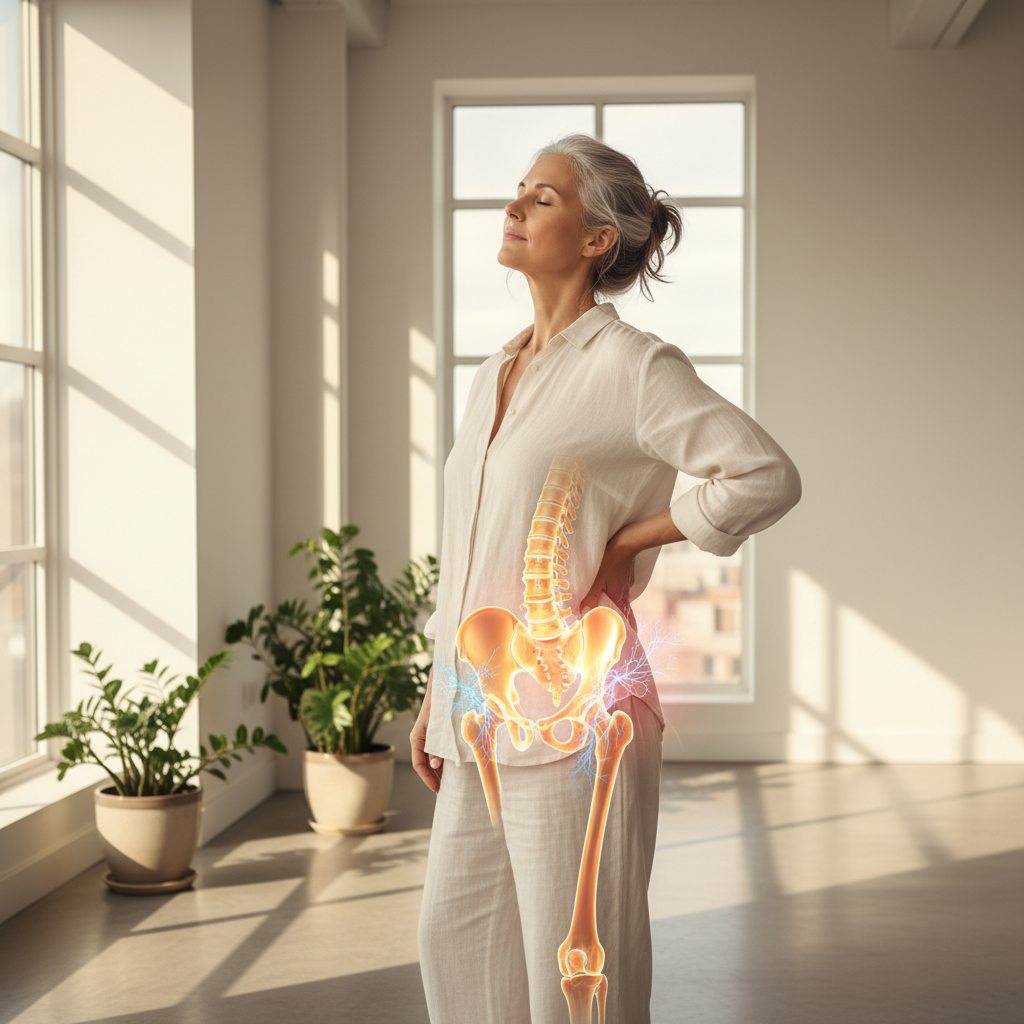
You wake up at 3:00 AM, not because of a night sweat—though you’ve had those, too—but because your lower back feels like it has been fused with concrete. You toss and turn, trying to find a position that doesn't ache, but the stiffness only seems to worsen with rest. By the time your alarm goes off, you hobble to the shower, waiting for the warm water to "thaw" your joints.
If you are a woman over 40, your first instinct is likely to blame perimenopause. After all, fluctuating hormones are notorious for causing systemic aches. However, for a significant number of women, this isn't just "the change." It is the emergence or flare of Ankylosing Spondylitis (AS), a chronic inflammatory arthritis that primarily affects the spine and sacroiliac (SI) joints.
Distinguishing between ankylosing spondylitis symptoms in women over 40 vs perimenopause back pain is critical, as delayed diagnosis in women often leads to irreversible structural damage. Understanding the intersection of autoimmunity and estrogen is your first step toward reclaimed mobility.
Is it just perimenopause or could it be ankylosing spondylitis?
Perimenopause is a systemic transition, and musculoskeletal pain is one of its most common, yet under-discussed, symptoms. As estrogen levels begin their erratic decline, the body loses a key anti-inflammatory protector. Estrogen helps regulate collagen production and maintains joint lubrication; when it drops, you may experience the "twinges" and "creaks" often listed on a perimenopause symptoms checklist.
Ankylosing Spondylitis, however, is not a wear-and-tear issue or a simple hormonal side effect. It is an autoimmune condition where the immune system attacks the entheses—the sites where ligaments and tendons attach to bone. According to the National Institute of Arthritis and Musculoskeletal and Skin Diseases (NIAMS), AS typically begins in the sacroiliac joints at the base of the spine.
The confusion arises because both conditions often peak in visibility during a woman’s 30s and 40s. While AS was traditionally thought to be a "man’s disease," recent research shows the gender gap is much narrower than previously believed, though women often present with different patterns of pain, such as more involvement in the neck and peripheral joints rather than just the lower back.
Why does inflammatory back pain get worse during the hormonal transition?
If you have underlying AS, perimenopause can feel like gasoline being poured on a fire. Estrogen is naturally neuroprotective and anti-inflammatory. Research published via the National Institutes of Health (NIH) suggests that estrogen modulates the production of pro-inflammatory cytokines like IL-17 and TNF-alpha—the very same cytokines that drive the progression of Ankylosing Spondylitis.
When estrogen fluctuates during perimenopause:
- Cytokine Regulation Fails: The "brakes" on your immune system are lifted, potentially leading to increased spinal inflammation.
- Pain Sensitivity Increases: Lower estrogen levels are linked to a lower pain threshold, making existing inflammatory pain feel more acute.
- Sleep Fragmentation: Perimenopausal insomnia prevents the deep REM sleep required for tissue repair, exacerbating the exhaustion associated with autoimmune flares.
This hormonal shift is also why many women see an overlap with other conditions; for instance, understanding Hashimoto’s and perimenopause overlap is often necessary because thyroid dysfunction—another autoimmune neighbor—can also mimic or worsen joint pain.
How do you tell the difference between 'hormonal' stiffness and AS?
The hallmark of Ankylosing Spondylitis is "inflammatory back pain," which differs significantly from the mechanical back pain caused by aging discs or hormonal laxity. The following table helps break down the clinical differences:
| Feature | Perimenopause Back Pain | Ankylosing Spondylitis (AS) |
|---|---|---|
| Onset of Pain | Often sudden or linked to activity/weight gain. | Gradual onset, usually persisting for >3 months. |
| Morning Stiffness | Usually lasts <30 minutes. | Often lasts >60 minutes; feels like "concrete." |
| Effect of Exercise | May feel worse after strenuous movement. | Pain improves significantly with movement. |
| Effect of Rest | Rest generally provides relief. | Rest and inactivity make the pain worse. |
| Night Pain | Occasional; related to hot flashes/positioning. | Common in the second half of the night; forces you up. |
| Systemic Symptoms | Hot flashes, mood swings, cycle changes. | Fatigue, eye inflammation (uveitis), heel pain. |
If your back pain improves after a 20-minute walk but feels excruciating after sitting through a two-hour movie, the needle points toward inflammatory AS rather than simple perimenopausal aches.
Does estrogen loss trigger ankylosing spondylitis flares in your 40s?
There is a mounting body of evidence suggesting that the "menopausal transition" is a high-risk period for autoimmune flares. Just as perimenopause and insulin resistance are linked through metabolic shifts, AS is linked through immunological shifts.
For many women, AS symptoms may have been mild or "smoldering" in their 20s and 30s, perhaps dismissed as "pregnancy back pain" or "stress." When the protective buffer of estrogen drops in your 40s, the disease may transition into a more aggressive phase. The Mayo Clinic notes that while the disease often starts in early adulthood, diagnosis is frequently delayed in women by an average of 7–10 years, often placing the final diagnosis square in the middle of perimenopause.
Why are women with AS often misdiagnosed with fibromyalgia or perimenopause?
The medical bias in rheumatology historically prioritized the "bamboo spine" look—a late-stage AS feature more common in men. Women tend to have "non-radiographic axial spondyloarthritis," meaning the inflammation is active and painful, but the bone fusion hasn't shown up on an X-ray yet.
Because women report more widespread pain (neck, shoulders, and hips) rather than isolated lower back pain, they are frequently misdiagnosed. Common misdiagnoses include:
- Fibromyalgia: Since both involve widespread pain and fatigue. You can read more about the fibromyalgia-perimenopause symptoms overlap to see how these profiles mimic each other.
- Perimenopause/PMS: Pain is attributed to hormonal "crankiness" or water retention.
- Degenerative Disc Disease: Attributed to "normal aging."
This delay is dangerous. While you wait for a correct diagnosis, the inflammation can lead to permanent fusion of the vertebrae or damage to the heart and lungs.
What specific blood tests and imaging should you ask for?
If you suspect your pain is inflammatory, you must be your own advocate. Standard blood work often comes back "normal" in women with AS because systemic markers of inflammation (like CRP and ESR) are not elevated in every patient.
Ask your doctor for these specific evaluations:
- HLA-B27 Genetic Test: While not everyone with this gene has AS, the vast majority of AS patients carry it.
- MRI of the Sacroiliac (SI) Joints: This is the gold standard for catching AS in women. Unlike X-rays, an MRI can see "bone marrow edema" (active inflammation) before permanent bone damage occurs.
- C-Reactive Protein (CRP) and Erythrocyte Sedimentation Rate (ESR): To check for systemic inflammation.
- Full Hormone Panel: Including FSH and Estradiol to determine your menopausal status.
If your doctor dismisses your concerns as "just aging," seek a referral to a rheumatologist who specializes in axial spondyloarthritis in women.
Can HRT help manage autoimmune back pain and joint stiffness?
This is a burgeoning area of research. While Hormone Replacement Therapy (HRT) is not a primary treatment for Ankylosing Spondylitis, it can be a vital adjunctive therapy. By stabilizing estrogen levels, HRT may help dampen the systemic inflammatory response and improve the "baseline" pain threshold.
According to the North American Menopause Society (NAMS), HRT is effective for treating the vasomotor symptoms and joint aches associated specifically with the menopause transition. For a woman with both AS and perimenopause, HRT might:
- Reduce the "background noise" of hormonal joint stiffness.
- Improve sleep quality, which helps the body manage autoimmune stress.
- Protect bone density, which is a major concern for AS patients who are at higher risk for osteoporosis.
If you are considering this path, our HRT for perimenopause beginners guide provides a framework for discussing options with your provider.
Which lifestyle changes support both hormonal balance and spinal health?
Managing the dual burden of AS and perimenopause requires a multi-pronged approach. You aren't just managing a spine; you're managing an ecosystem.
- Anti-Inflammatory Nutrition: Focus on a Mediterranean-style diet. The American College of Rheumatology emphasizes that omega-3 fatty acids (found in salmon and walnuts) can help inhibit inflammatory pathways.
- Strategic Movement: Unlike mechanical back pain where you might rest, AS requires movement. Swimming, yoga, and Pilates are excellent because they promote spinal extension and flexibility without high impact.
- Postural Awareness: Perimenopausal "tech neck" combined with AS inflammation is a recipe for fusion. Set timers to check your posture every 30 minutes.
- Stress Management: High cortisol triggers autoimmune flares. Practices like Mindfulness-Based Stress Reduction (MBSR) have been shown in clinical trials to reduce the perception of chronic pain.
- Vitamin D and K2: Vital for both bone health (threatened by AS) and hormonal synthesis. Ensure your levels are optimal, not just "sufficient."
The transition into your 40s and 50s should be a time of stepping into your power, not retreating because of pain. By decoding whether your back pain is a result of shifting hormones or an underlying autoimmune condition like Ankylosing Spondylitis, you can access the targeted treatments—from biologics to HRT—that will keep you moving forward.
Don't let "it's just perimenopause" be the end of the conversation. It might be the beginning of the answer you've been looking for.
FAQ
Common questions
How can I tell if my back pain is inflammatory or mechanical?
Inflammatory back pain (AS) usually improves with exercise and gets worse with rest, whereas mechanical or hormonal back pain often feels better with rest and may worsen with strenuous activity.
Can menopause trigger an autoimmune flare?
Yes, estrogen has anti-inflammatory properties. When levels drop during perimenopause, the 'brakes' on the immune system are reduced, which can lead to a flare-up of autoimmune conditions like AS.
Is an X-ray enough to diagnose Ankylosing Spondylitis?
Early X-rays often appear normal in women with AS. An MRI is much more sensitive and can detect active inflammation in the sacroiliac joints before permanent bone changes occur.
Does HRT help with AS symptoms?
While HRT is not a cure for AS, it can help reduce the overall inflammatory load and improve joint lubrication, potentially making AS symptoms more manageable during the transition.
What are the specific 'red flags' for AS in women?
Symptoms include morning stiffness lasting over an hour, pain that wakes you up in the middle of the night, buttock pain that alternates sides, and improvement with movement.
What doctor should I see for chronic inflammatory back pain?
A rheumatologist is the appropriate specialist to diagnose and treat Ankylosing Spondylitis and other forms of inflammatory arthritis.
Want this in your inbox each Sunday?
New articles, the science you can actually use, and the occasional rant.
Keep reading

Perimenopause Symptoms Checklist: 38 Signs You're Not Imagining
A comprehensive, doctor-reviewed checklist of perimenopause symptoms — from the obvious hot flashes to the weird ones nobody warned you about.
9 min read

Hashimoto's and Perimenopause: Why Symptoms Overlap (and How to Tell Them Apart)
Fatigue, brain fog, weight gain, hair loss — Hashimoto's and perimenopause share most symptoms. Here's how to tell what's flaring, what's hormonal, and what to ask your doctor.
11 min read

Fibromyalgia and Perimenopause: When Two Storms Collide
Why fibromyalgia almost always flares during perimenopause, what changes in your nervous system, and the small daily shifts that actually help.
10 min read