
AS or Perimenopause? Decoding Lower Back Pain After 40
Struggling with lower back pain after 40? Discover if it's ankylosing spondylitis or perimenopause. Learn the signs, tests, and treatment differences today.
Published:
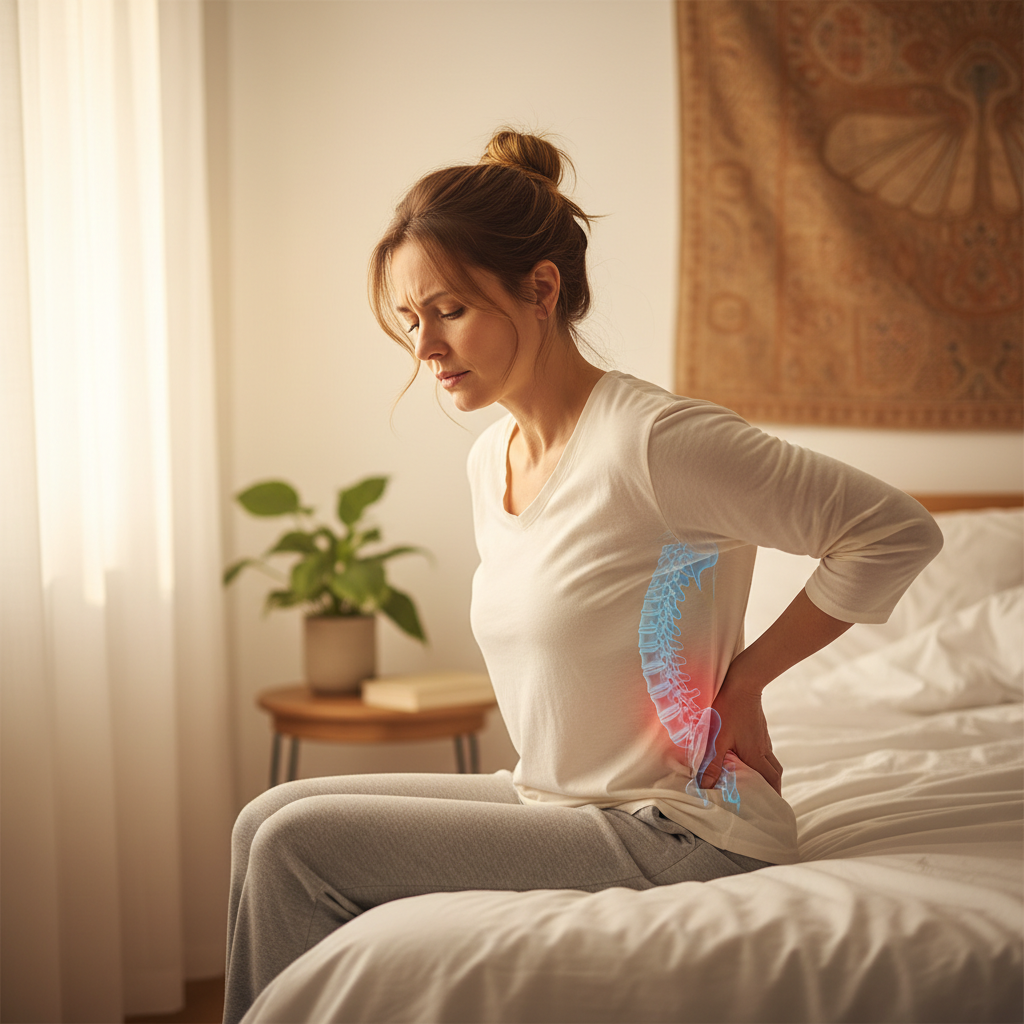
As you navigate your 40s, you expect a few more "creaks" in your step. Perhaps you blame your stiff lower back on a long day at the desk or a challenging yoga class. But for many women, that nagging ache in the sacroiliac (SI) region is more than just age—it’s a biological puzzle. Is it the natural decline of estrogen, or is it an underlying autoimmune condition like Ankylosing Spondylitis (AS)?
Distinguishing between ankylosing spondylitis vs perimenopause back pain after 40 is critical because, while the symptoms often overlap, the treatment paths are worlds apart. One requires hormonal support; the other requires aggressive management to prevent permanent spinal fusion.
Is your lower back pain perimenopause or ankylosing spondylitis?
Lower back pain is one of the most common complaints during the menopausal transition, affecting a significant portion of women entering their 40s and 50s. However, because AS has historically been viewed as a "man’s disease," women are often misdiagnosed with general fibromyalgia or simple age-related wear and tear.
Perimenopausal back pain is typically "mechanical." It often results from the thinning of intervertebral discs and the weakening of core muscles due to shifting hormones. In contrast, Ankylosing Spondylitis is an inflammatory, autoimmune form of arthritis that primarily targets the spine and the SI joints (where your spine meets your pelvis).
The primary differentiator is how the pain responds to activity. According to the Mayo Clinic, AS pain actually improves with movement and worsens with rest. If you wake up in the middle of the night with searing back pain that only feels better once you start walking around, you are likely looking at an inflammatory process rather than simple perimenopausal muscle strain.
How does estrogen loss affect inflammatory back pain?
Estrogen is not just a reproductive hormone; it is a powerful anti-inflammatory agent and a protector of musculoskeletal integrity. Estrogen helps maintain the "slickness" of your joints and the density of your bones. As levels fluctuate and eventually plummet during perimenopause, the body’s natural defense against systemic inflammation weakens.
Research published via the National Institutes of Health (NIH) suggests that estrogen plays a protective role in the progression of spondyloarthritis. When estrogen drops, the inflammatory cytokines (like IL-17 and TNF-alpha) that drive AS can become more active. This creates a "perfect storm" where a woman who may have had very mild, undiagnosed AS for years suddenly experiences a massive flare-up as she enters her mid-40s.
Furthermore, estrogen deficiency is linked to perimenopause insulin resistance, which can further fuel systemic inflammation, making the joints feel even more stiff and painful.
What does AS morning stiffness feel like compared to hormonal aches?
Almost everyone in their late 40s feels slightly stiff for five minutes after waking up. However, the "morning stiffness" associated with Ankylosing Spondylitis is a different beast entirely.
- Duration: Perimenopausal stiffness usually resolves within 15–30 minutes of moving and stretching. AS stiffness often lasts 60 minutes or longer, sometimes persisting until midday.
- The "Gelling" Phenomenon: If you sit in a cinema or a car for an hour and feel like your spine has "turned to stone" or "gelled" together when you try to stand, this is a hallmark of inflammatory back pain.
- Location: While perimenopause can cause generalized aches (as seen on the perimenopause symptoms checklist), AS pain is specifically localized deep in the glutes or the lower lumbar spine, often alternating from one side to the other.
| Feature | Perimenopausal Back Pain | Ankylosing Spondylitis (AS) |
|---|---|---|
| Primary Cause | Estrogen deficiency, disc thinning | Autoimmune inflammation (HLA-B27 link) |
| Pain Pattern | Worse after activity/long day | Worse after rest/middle of night |
| Response to Exercise | Usually feels worse or needs rest | Significant improvement with movement |
| Morning Stiffness | < 30 minutes | > 60 minutes |
| Systemic Symptoms | Hot flashes, night sweats | Fatigue, eye inflammation (uveitis) |
| Treatment | HRT, PT, Lifestyle | Biologics, NSAIDs, PT |
Can perimenopause trigger a latent autoimmune spine condition?
It is a common clinical observation that many women receive their first autoimmune diagnosis during times of profound hormonal shift—puberty, postpartum, and perimenopause. The immune system is highly sensitive to the endocrine environment.
If you have a genetic predisposition to AS—such as carrying the HLA-B27 gene—the drop in estrogen during perimenopause may act as a "trigger." The loss of estrogen’s dampening effect on the immune system can allow a latent autoimmune condition to flare into full view. This is similar to how many women discover they have Hashimoto's during perimenopause, as the two conditions often overlap in their timing and shared symptoms of fatigue and joint pain.
The Cleveland Clinic notes that while AS often begins in young adulthood, women frequently experience a more "atypical" presentation that leads to later diagnosis, often right when menopause begins to cloud the clinical picture.
What diagnostic tests distinguish AS from perimenopausal joint issues?
Because the symptoms of perimenopause and AS can be so similar, your doctor must use specific tools to "tease" them apart. If you are experiencing chronic back pain that lasts for more than three months, you should request a more thorough workup than just a physical exam.
- Blood Work: Doctors will look for inflammatory markers like C-reactive protein (CRP) and Erythrocyte Sedimentation Rate (ESR). While these can be elevated in perimenopause due to general systemic inflammation, extremely high levels point toward an autoimmune process. Testing for the HLA-B27 genetic marker is also common, though not everyone with the gene has the disease.
- Imaging: X-rays can show "bamboo spine" in advanced cases, but this is a late-stage sign. The gold standard for early AS detection is an MRI of the Sacroiliac (SI) joints, which can catch "bone marrow edema" (swelling inside the bone) long before permanent damage appears on an X-ray.
- Hormone Panels: Assessing FSH and Estrogen levels can help determine where you are in the menopausal transition. However, be aware that "normal" labs don't rule out perimenopausal symptoms, as levels fluctuate daily.
How do treatments differ for hormonal vs. autoimmune back pain?
This is where the distinction becomes life-altering. If your pain is purely perimenopausal, the first line of defense is often stabilizing your hormones. Many women find relief through a beginner's guide to HRT, which restores the estrogen necessary to keep joint tissues healthy and reduce systemic inflammation.
However, if you have Ankylosing Spondylitis, HRT may help your general well-being, but it will not stop the autoimmune attack on your spine.
- AS Treatment: Focuses on Biologics (TNF inhibitors or IL-17 inhibitors) that specifically target the immune system's overreaction. High-dose NSAIDs are also used to manage daily inflammation.
- Perimenopause Treatment: Focuses on Hormone Replacement Therapy (HRT), magnesium supplementation, pelvic floor physical therapy, and anti-inflammatory diets.
The American College of Rheumatology emphasizes that early intervention in AS is vital to prevent the vertebrae from fusing together, a process that cannot be reversed once it begins.
Why does SI joint pain often flare during the perimenopause transition?
The Sacroiliac (SI) joint is the "shock absorber" of the body. It is held together by some of the strongest ligaments in the human body—ligaments that are heavily populated with estrogen receptors.
When estrogen levels drop:
- Ligament Laxity: Ligaments can become "looser" or less stable, leading to SI joint dysfunction.
- Muscle Wasting: The gluteal and core muscles that support the SI joint may weaken (sarcopenia), leading to increased strain on the joint itself.
- Increased Pain Sensitivity: Low estrogen lowers your pain threshold, meaning an SI joint that was slightly irritated in your 30s may become excruciating in your late 40s.
For a woman with AS, this natural perimenopausal SI instability adds "insult to injury." The joint is already being attacked by the immune system; now, it is also losing its structural support from estrogen. This is why many women find their AS symptoms become significantly more difficult to manage during the transition to menopause.
Moving Forward: Your Advocacy Strategy
If you are a woman over 40 with persistent lower back pain, do not settle for "it’s just hormones" or "it’s just getting older."
- Track your pain: Is it worse at 3:00 AM? Does it improve after a hot shower and a walk?
- Check for "Extra-Articular" symptoms: Do you have unexplained redness in your eyes (uveitis), painful rashes (psoriasis), or digestive issues (IBD)? These are often linked to AS.
- Demand Imaging: If your pain has lasted more than three months and wakes you up at night, ask for an MRI of your SI joints specifically.
- Consult a Specialist: While your OBGYN is the expert in perimenopause, a Rheumatologist is the only specialist qualified to rule out or treat Ankylosing Spondylitis.
Understanding the difference between ankylosing spondylitis vs perimenopause back pain after 40 is about more than just comfort—it’s about preserving your mobility and quality of life for the decades to come. Whether you need a change in hormones or a change in your immune management, the first step is always getting the right name for your pain. By bridging the gap between endocrinology and rheumatology, you can find a path back to the radiant, active life you deserve.
FAQ
Common questions
How can I tell the difference between AS and perimenopausal back pain?
Perimenopausal back pain is usually mechanical and worsens with movement, while AS pain is inflammatory and typically improves with exercise but worsens with rest or sleep.
Can perimenopause trigger a flare of Ankylosing Spondylitis?
Yes. The decline in estrogen—a natural anti-inflammatory—can cause latent autoimmune conditions like AS to flare or become more symptomatic.
How long does morning stiffness last in AS vs perimenopause?
Morning stiffness from perimenopause usually lasts about 15-30 minutes. In AS, morning stiffness typically lasts over an hour and may stay with you until mid-day.
Does HRT treat Ankylosing Spondylitis?
Not necessarily. While HRT helps reduce general inflammation and joint pain caused by estrogen deficiency, it cannot stop the progression of an autoimmune disease like AS.
What are the 'red flag' symptoms of AS in women?
Inflammation in the eyes (uveitis), chronic fatigue, and pain that moves between the left and right side of the buttocks (SI joint involvement) are common red flags.
What is the best scan to diagnose AS during perimenopause?
An MRI of the SI joints is the most effective way to detect early AS-related inflammation before permanent bone damage is visible on an X-ray.
Want this in your inbox each Sunday?
New articles, the science you can actually use, and the occasional rant.
Keep reading

Perimenopause Symptoms Checklist: 38 Signs You're Not Imagining
A comprehensive, doctor-reviewed checklist of perimenopause symptoms — from the obvious hot flashes to the weird ones nobody warned you about.
9 min read

Hashimoto's and Perimenopause: Why Symptoms Overlap (and How to Tell Them Apart)
Fatigue, brain fog, weight gain, hair loss — Hashimoto's and perimenopause share most symptoms. Here's how to tell what's flaring, what's hormonal, and what to ask your doctor.
11 min read

Fibromyalgia and Perimenopause: When Two Storms Collide
Why fibromyalgia almost always flares during perimenopause, what changes in your nervous system, and the small daily shifts that actually help.
10 min read