
Autoimmune Blistering or Perimenopause? Skin Signs at 40+
Unsure if your skin rash is perimenopause or something more? Learn the signs of autoimmune blistering diseases in women over 40 and how to get a diagnosis.
Published:
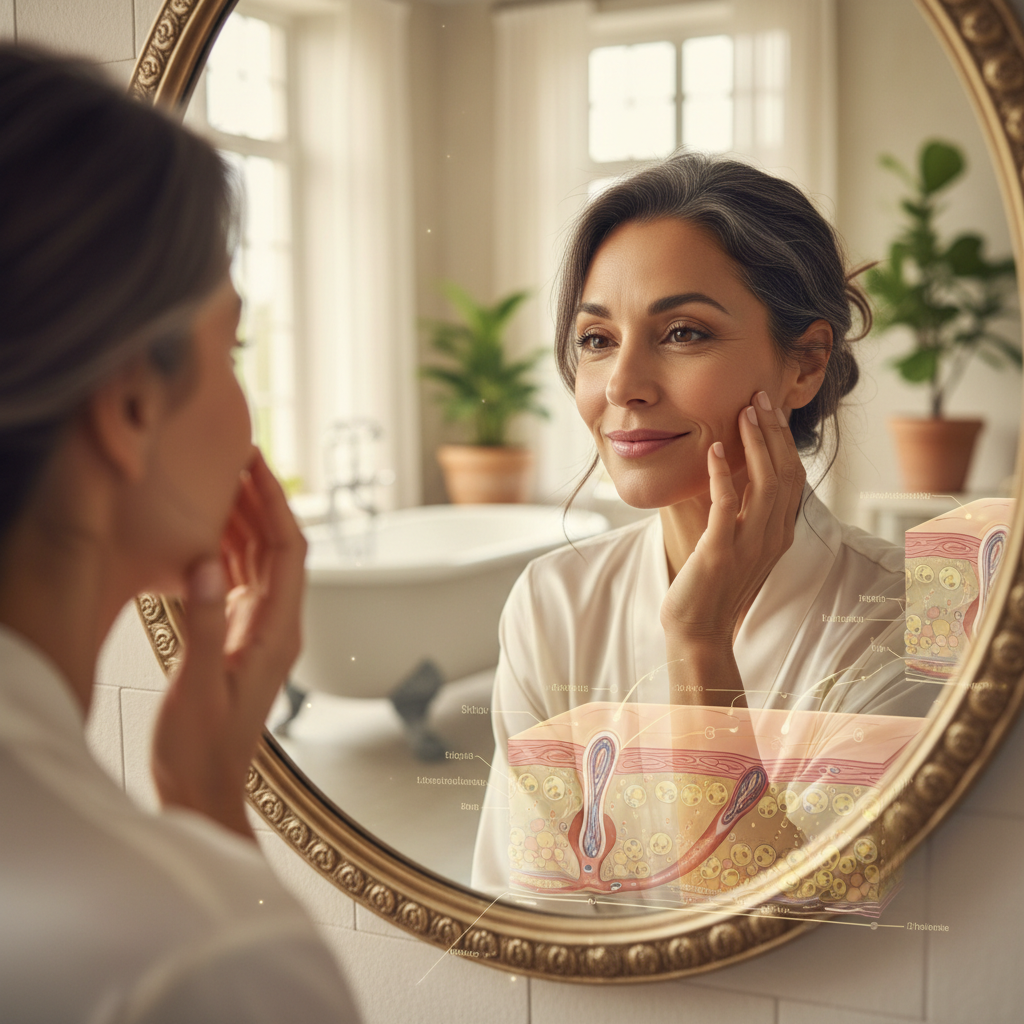
For many women navigating their 40s and 50s, a new rash or a persistent itch is often dismissed as another symptom of the "change." You might check your perimenopause symptoms checklist and assume the dryness or irritation is just your hormones acting up. However, when skin irritation turns into painful erosions or fluid-filled sacs, it is time to look deeper.
Understanding autoimmune blistering diseases symptoms in women over 40 is critical because these conditions—such as bullous pemphigoid or pemphigus vulgaris—often peak in incidence during the same years that estrogen begins its erratic decline. Distinguishing between a hormonal "menopause rash" and a serious autoimmune condition can be the difference between months of discomfort and a targeted treatment plan that preserves your skin's integrity.
What are the first signs of autoimmune blistering diseases after 40?
Autoimmune blistering diseases (AIBDs) occur when your immune system mistakenly attacks the proteins that hold your skin layers together. In women over 40, the onset can be insidious, often mimicking more common midlife skin complaints.
The first signs typically fall into two categories: pre-eruptive and eruptive.
- Intense Pruritus (Itching): Long before a blister appears, many women experience debilitating itching that feels like it is "under the skin." This can last for weeks or months.
- Urticarial Plaques: You may notice red, raised welts that look remarkably like hives. Unlike standard hives, these tend to stay in one place for more than 24 hours.
- Mucosal Sensitivity: Tenderness in the mouth, throat, or genital area is a hallmark sign. If brushing your teeth or eating acidic foods suddenly becomes painful, it may indicate pemphigus vulgaris, which often starts in the mouth.
- Tense vs. Flaccid Blisters: Depending on the specific disease, you may see "tense" blisters (hard to break, filled with clear fluid) or "flaccid" blisters (thin-walled, rupture easily, leaving painful raw patches).
Because midlife is often a time when other conditions emerge, such as perimenopause insulin resistance signs or Hashimoto's perimenopause overlap, these skin changes are frequently misattributed to general systemic inflammation.
How does low estrogen impact the skin’s mucosal barrier?
As you enter perimenopause, your ovaries produce less estrogen. Estrogen is a powerhouse for skin health; it stimulates collagen production, maintains skin thickness, and promotes the production of acid mucopolysaccharides and hyaluronic acid, which keep the skin hydrated.
When estrogen levels drop, the skin and mucosal barriers become thinner and more fragile. According to the North American Menopause Society (NAMS), this thinning—known as atrophy—makes the skin more susceptible to micro-tears and environmental irritants.
For a woman predisposed to autoimmune issues, this barrier dysfunction can be a "second hit." The weakened basement membrane zone (the "glue" between skin layers) may become more vulnerable to the autoantibodies circulating in the bloodstream. This is why many women report their first blistering episode coinciding with the transition into late perimenopause or early menopause.
Is it a perimenopause rash or pemphigoid?
Distinguishing between a benign hormonal rash and a chronic autoimmune condition like bullous pemphigoid is essential for proper management. A "perimenopause rash" is usually a form of estrogen-deficiency dermatitis or a flare-up of existing eczema/rosacea due to hormonal shifts. Pemphigoid, however, is a systemic immune failure.
| Feature | Perimenopause Rash | Autoimmune Blistering (Pemphigoid) |
|---|---|---|
| Primary Appearance | Red, dry, scaly, or small bumps | Large fluid-filled blisters or deep erosions |
| Location | Face, neck, chest, or arms | Trunk, limbs, and often mucosal surfaces |
| Itch Intensity | Mild to moderate; worse at night | Severe, often sleep-depriving |
| Duration | Fluctuates with cycle | Persistent and progressive without meds |
| Healing | Resolves without scarring | May leave hyperpigmentation or scars |
If your "rash" involves skin peeling off in sheets or blisters that appear on the gums or genitals, it is rarely just "hormones." These are red flags that require a referral to a dermatologist for a biopsy.
Can hormone replacement therapy help manage autoimmune skin flares?
This is a nuanced area of clinical study. While HRT is primarily used to manage vasomotor symptoms like hot flashes, its role in autoimmune skin health is emerging. Estrogen has complex immunomodulatory effects; it can be anti-inflammatory in some contexts and pro-inflammatory in others.
For many women, stabilizing the hormonal environment with HRT for perimenopause can reduce the overall "stress" on the body, potentially lowering the frequency of flares. Research published via the National Institutes of Health (NIH) suggests that estrogen can enhance wound healing and strengthen the skin barrier.
However, it is important to note:
- HRT is not a primary treatment for blistering diseases. You will still likely need immunosuppressants like corticosteroids or biologics.
- Progesterone's role: Some women suffer from "Autoimmune Progesterone Dermatitis," where they are actually allergic to their own progesterone. In these rare cases, standard HRT could theoretically worsen symptoms.
- Holistic Management: Balancing hormones often helps manage the secondary symptoms of autoimmune disease, such as the fatigue often seen in fibromyalgia perimenopause symptoms.
Why do autoimmune skin issues often worsen during the luteal phase?
If you are still cycling, you may notice that your skin becomes angrier in the week before your period. This is known as the luteal phase, when progesterone is high and estrogen begins to drop.
The "luteal flare" is a recognized phenomenon in many autoimmune conditions. High levels of progesterone can increase skin permeability and alter immune cell signaling. Specifically, the shift in the Th1/Th2 immune response during the late luteal phase can trigger the production of autoantibodies that attack the skin.
Furthermore, the drop in estrogen just before menstruation reduces the skin’s ability to retain moisture and repair itself, making the physical manifestation of blisters more severe. If you track your symptoms, you might find a predictable pattern that helps your doctor time your treatments more effectively.
What diagnostic tests should you request for chronic skin blistering?
If you are over 40 and experiencing unexplained blistering, do not settle for a visual diagnosis alone. The gold standard for identifying autoimmune blistering diseases involves specific laboratory and pathological tests.
- Punch Biopsy for Histology: A small piece of a fresh blister is removed to see where the "split" in the skin layers is occurring under a microscope.
- Direct Immunofluorescence (DIF): A second biopsy is taken from the unblistered skin adjacent to a lesion. This test looks for antibody deposits (like IgG, IgA, or C3) in the skin. According to the Mayo Clinic, DIF is the definitive way to diagnose pemphigoid.
- Indirect Immunofluorescence (IIF) / ELISA: This is a blood test to detect specific circulating autoantibodies in your serum (such as BP180 or BP230 for bullous pemphigoid).
- Hormone Panel: While not diagnostic for blistering, checking your FSH, LH, and estradiol levels can help determine if perimenopause is a contributing factor to your skin’s fragility.
How to distinguish between hormonal hives and autoimmune dermatosis?
Hormonal hives (urticaria) are incredibly common during perimenopause. They are often triggered by the release of histamine as the body reacts to fluctuating estrogen. However, "hormonal hives" should resolve within minutes to hours and should not leave a blister or a wound behind.
Autoimmune dermatosis, specifically Pemphigoid Gestationis (which can rarely occur outside of pregnancy in women with specific hormonal profiles) or early-stage Bullous Pemphigoid, starts with hive-like plaques. The key difference is the permanence and progression.
- Hormonal Hives: Transient, migrate across the body, respond well to antihistamines.
- Autoimmune Dermatosis: Fixed in place, eventually develop a central "bubble" or blister, and usually require topical or oral steroids rather than just antihistamines.
If your "hives" are painful rather than just itchy, or if they leave behind a dark stain (hemosiderin staining) after they fade, you are likely dealing with an autoimmune process or vasculitis, not simple hormonal urticaria.
Supporting Your Skin Through the Transition
Living with an autoimmune blistering disease during the perimenopausal transition requires a two-pronged approach: managing the overactive immune system and supporting the thinning skin barrier.
- Cooling Compresses: Use saline-soaked compresses to soothe active erosions.
- Gentle Cleansing: Avoid soaps with sodium lauryl sulfate, which can further compromise a weak barrier.
- Nutrition: Support your skin from the inside. High-protein diets are often necessary if you have large areas of blistering, as you lose protein through the blister fluid.
- Stress Management: Stress is a known trigger for both autoimmune flares and perimenopausal symptoms.
By advocating for the right tests and recognizing that "skin changes after 40" aren't always benign, you can take control of your dermatological health and find the radiance you deserve, even in the face of an autoimmune challenge.
Medical Disclaimer: This content is for informational purposes only and does not constitute medical advice. Always seek the advice of your physician or other qualified health provider with any questions you may have regarding a medical condition. Never disregard professional medical advice or delay in seeking it because of something you have read on this website.
FAQ
Common questions
What are the first signs of autoimmune blistering in midlife?
Early signs include intense, deep-seated itching, red hive-like welts that don't move, and painful sores inside the mouth or on the gums.
How does menopause affect autoimmune skin conditions?
Estrogen helps maintain collagen and skin thickness. When it drops during perimenopause, the skin becomes thinner and more prone to tearing, which can worsen autoimmune symptoms.
Can hives be a sign of an autoimmune blistering disease?
Standard hives are transient and move around. Autoimmune blistering 'plaques' stay in one spot for over 24 hours and eventually form a fluid-filled blister.
Do hormones trigger autoimmune skin flares?
Yes, many women experience flares during the luteal phase (the week before a period) due to the drop in estrogen and the rise in progesterone affecting the immune response.
What is the most accurate test for bullous pemphigoid?
A dermatologist should perform a punch biopsy for Direct Immunofluorescence (DIF) and a blood test (ELISA) to look for specific autoantibodies.
Can HRT help with autoimmune skin issues?
While HRT isn't a cure, it can strengthen the skin barrier and improve wound healing, which may help reduce the severity of flares in some women.
Want this in your inbox each Sunday?
New articles, the science you can actually use, and the occasional rant.
Keep reading

Perimenopause Symptoms Checklist: 38 Signs You're Not Imagining
A comprehensive, doctor-reviewed checklist of perimenopause symptoms — from the obvious hot flashes to the weird ones nobody warned you about.
9 min read

Hashimoto's and Perimenopause: Why Symptoms Overlap (and How to Tell Them Apart)
Fatigue, brain fog, weight gain, hair loss — Hashimoto's and perimenopause share most symptoms. Here's how to tell what's flaring, what's hormonal, and what to ask your doctor.
11 min read

Fibromyalgia and Perimenopause: When Two Storms Collide
Why fibromyalgia almost always flares during perimenopause, what changes in your nervous system, and the small daily shifts that actually help.
10 min read