
Autoimmune Hives During Your Period? The Perimenopause Link
Experiencing itchy welts before your period? Learn about the link between autoimmune hives, estrogen dominance, and the perimenopause transition.
Published:
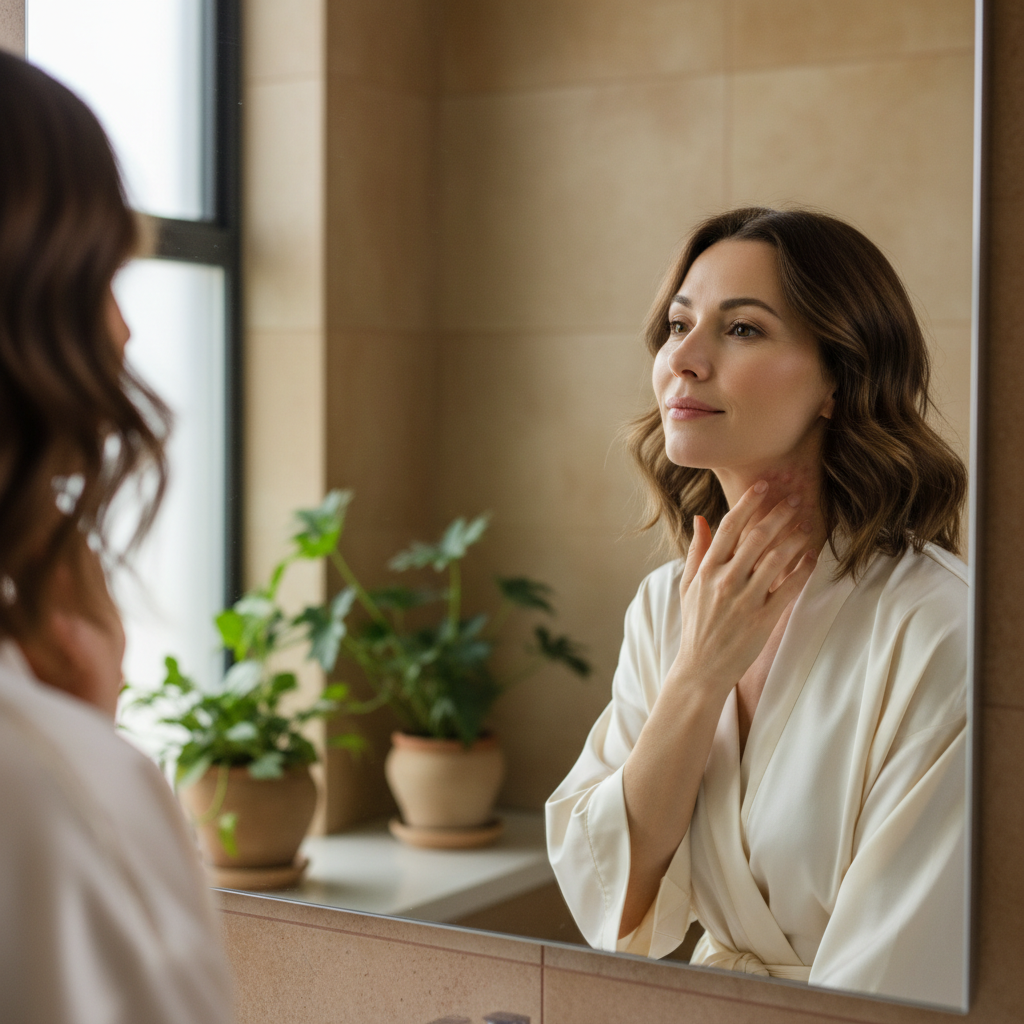
If you suddenly find yourself covered in itchy, red welts every month just as your cycle begins, you aren’t imagining it—and you aren't alone. For many women entering their 40s, the skin becomes a visible map of internal hormonal shifts. While we often expect hot flashes or mood swings, the appearance of autoimmune hives during period perimenopause transition years is a frustrating and often misunderstood symptom.
Chronic Spontaneous Urticaria (CSU) or cyclic hives are frequently tied to the fluctuating levels of estrogen and progesterone that define the road to menopause. Understanding why your immune system is suddenly overreacting to your own hormones is the first step toward reclaiming your skin and your comfort.
Why do I get hives right before or during my period?
The phenomenon of getting hives specifically during the luteal phase (the days leading up to your period) or during menstruation is often categorized as Autoimmune Progesterone Dermatitis (APD). However, in the context of the perimenopause transition, it is more frequently a result of the "allergic" reaction your body has to its own shifting hormonal ratios.
According to the National Institutes of Health (NIH), sex hormones like estrogen and progesterone are potent modulators of the immune system. Mast cells, which are the cells responsible for releasing histamine (the chemical that causes itching and swelling), have specific receptors for estrogen. When estrogen levels spike or fluctuate wildly—as they do during perimenopause—they can cause these mast cells to "degranulate" or burst open, releasing a flood of histamine into your system.
This usually happens in the 7–10 days before your period when progesterone is supposed to be at its peak but estrogen may still be surging. If you are already tracking your symptoms using a perimenopause symptoms checklist, you might notice that your hives correlate exactly with your heaviest flow days or your most intense PMS symptoms.
Is chronic urticaria linked to perimenopause hormone shifts?
Yes, there is a significant link between the onset of chronic urticaria (hives lasting more than six weeks) and the perimenopausal transition. During this phase of life, your ovaries begin to produce hormones erratically. We often see a "yo-yo" effect where estrogen levels climb extremely high before crashing.
This hormonal instability can trigger or worsen underlying autoimmune conditions. In fact, many women find that their Hashimoto’s and perimenopause overlap during this time, as the thyroid and the ovaries are part of the same endocrine feedback loop. When one system falters, the others often follow, leading to increased systemic inflammation that manifests as hives.
Research published via PubMed indicates that women are much more likely than men to suffer from chronic spontaneous urticaria, particularly during times of significant hormonal upheaval like puberty, pregnancy, and—most notably—perimenopause. The drop in progesterone, which is a natural anti-inflammatory and mast-cell stabilizer, leaves the body more vulnerable to these itchy outbreaks.
How does estrogen dominance trigger histamine and hives?
To understand the connection between autoimmune hives during period perimenopause transition phases and your skin, we have to look at the relationship between estrogen and histamine.
In a healthy cycle, estrogen and progesterone balance each other out. However, in perimenopause, it is common to experience "estrogen dominance." This doesn't necessarily mean you have "too much" estrogen in an absolute sense, but rather that you have too much estrogen relative to progesterone.
- Estrogen Stimulates Mast Cells: Estrogen triggers mast cells to release histamine.
- Histamine Stimulates Estrogen: High levels of histamine can signal the ovaries to produce even more estrogen.
- The Downregulation of DAO: Estrogen can downregulate the enzyme Diamine Oxidase (DAO), which is responsible for breaking down histamine in the body.
This creates a "vicious cycle." As histamine levels rise, your skin reacts with hives, redness, and itching. Because your body can't clear the histamine fast enough due to the estrogen dominance, the hives persist or recur every month. This inflammatory state is also why many women report an overlap with other "invisible" illnesses, such as fibromyalgia perimenopause symptoms, which also involve central sensitization and inflammation.
What is the difference between heat rash and autoimmune hives?
It is easy to confuse different skin reactions, especially when perimenopause also brings on "vasomotor symptoms" like hot flashes and night sweats. If you are sweating more, you might think you simply have a heat rash (miliaria). However, autoimmune hives are distinct in their appearance and trigger.
| Feature | Heat Rash (Miliaria) | Autoimmune Hives (Urticaria) |
|---|---|---|
| Appearance | Tiny red bumps or clear blisters | Raised, red or skin-colored welts (wheals) |
| Location | Areas where sweat is trapped (skin folds) | Can appear anywhere; often "migrates" |
| Sensation | Prickly or stinging feeling | Intense itching or burning |
| Trigger | Heat and blocked sweat ducts | Hormonal shifts, stress, or immune triggers |
| Duration | Clears quickly once skin cools | Can last hours or days; recurs cyclically |
If your skin issues are accompanied by other metabolic changes, such as weight gain around the middle or sugar cravings, you may also want to investigate perimenopause insulin resistance signs, as high insulin can further drive the inflammation that makes hives worse.
Can HRT help reduce cycle-related skin flares and itching?
For many women, the solution to cyclic autoimmune hives lies in stabilizing the hormonal environment. Hormone Replacement Therapy (HRT) can be highly effective in "leveling the playing field." By providing a steady, physiological dose of estrogen and—crucially—progesterone, HRT can prevent the wild swings that trigger mast cell degranulation.
Progesterone, in particular, is a known mast cell stabilizer. When administered as part of a comprehensive HRT for perimenopause beginners guide plan, bioidentical progesterone can help calm the immune system and reduce the frequency of hive outbreaks.
According to the Mayo Clinic, HRT is the gold standard for managing many systemic perimenopausal symptoms. While it is primarily used for hot flashes, its systemic anti-inflammatory effects shouldn't be underestimated. Some women find that a low-dose birth control pill or a cyclic HRT regimen stops the "period hives" entirely by preventing the hormonal withdrawal that triggers the skin's mast cells.
What lifestyle changes help calm autoimmune skin reactions?
While medical intervention is often necessary, managing autoimmune hives during period perimenopause transition also requires a "bottom-up" approach to lower your overall "histamine bucket."
1. Adopt a Low-Histamine Diet
During the week before your period, try to avoid "histamine liberators" and high-histamine foods. This includes aged cheeses, fermented products (like sauerkraut or kombucha), alcohol (especially red wine), and processed meats. Lowering the histamine you ingest can prevent your "bucket" from overflowing when your hormones strike.
2. Support Your Liver
The liver is responsible for processing and excreting excess estrogen. If the liver is sluggish, estrogen recirculates, worsening estrogen dominance. Support liver health by eating cruciferous vegetables (broccoli, cauliflower, Brussels sprouts) which contain sulforaphane, a compound that aids estrogen metabolism.
3. Stress Management
Stress is a well-known trigger for both hives and hormonal imbalances. Cortisol, the stress hormone, can drive up inflammation and worsen mast cell sensitivity. Practices like yoga, meditation, or even magnesium baths can help soothe the nervous system.
4. Supplement Wisely
Certain supplements act as natural antihistamines or mast cell stabilizers:
- Quercetin: A natural plant flavonoid that stabilizes mast cells.
- Vitamin C: Helps the body break down histamine more efficiently.
- Magnesium: Essential for hundreds of enzymatic reactions, including those that regulate the stress response and hormone production.
5. Temperature Control
While the hives may be autoimmune in nature, heat can act as a secondary trigger by dilating blood vessels and allowing more inflammatory mediators to reach the skin. Keep your bedroom cool and wear breathable, natural fibers like cotton or silk.
If you find that your skin is becoming increasingly reactive, it's vital to speak with a healthcare provider who understands the nuances of the perimenopausal transition. You don't have to "just live with it" until menopause. By balancing your hormones and supporting your immune system, you can find relief from the itch and return to feeling comfortable in your own skin.
For more information on managing the complex symptoms of this transition, consult the North American Menopause Society (NAMS) for resources and provider directories. Dealing with the skin-hormone connection is a marathon, not a sprint—but with the right tools, it is entirely manageable.mount of histamine your body is forced to process.
The journey through perimenopause is often a period of "unmasking." Issues that were simmering under the surface—like a slight sensitivity to histamine or a mild autoimmune tendency—suddenly become full-blown symptoms because the protective buffer of regular progesterone is gone. By addressing the root hormonal cause, you can stop the cycle of hives and rediscover your radiance.
Medical Disclaimer: This article is for informational purposes only and does not constitute medical advice. Always consult with a qualified healthcare professional regarding any medical condition or treatment.
FAQ
Common questions
Can hormones cause hives every month?
Yes, hormonal fluctuations—especially the drop in progesterone and the rise in estrogen—can trigger mast cells to release histamine, resulting in hives before or during your period.
Why do hives start in perimenopause?
Perimenopause causes unpredictable spikes and drops in estrogen. High estrogen levels are known to stimulate mast cells, which release the histamine that causes itchy hives.
Does progesterone help with hives?
Progesterone acts as a natural antihistamine and mast cell stabilizer. When progesterone levels drop during perimenopause, the body loses this protective effect, making skin flares more likely.
Can diet affect autoimmune hives during my cycle?
High-histamine foods (aged cheese, wine, fermented foods) can add to the 'histamine bucket,' making it more likely for a hormonal shift to trigger a full-blown hive outbreak.
How do I know if it's hives or just a heat rash?
Hives (urticaria) are raised, itchy welts that often move around, while heat rash consists of small, prickly red bumps primarily in areas where you sweat.
Does HRT help with chronic hives?
Many women find relief with HRT because it stabilizes hormone levels, preventing the dramatic shifts that trigger the immune system's inflammatory response.
Want this in your inbox each Sunday?
New articles, the science you can actually use, and the occasional rant.
Keep reading
Perimenopause Symptoms Checklist: 38 Signs You're Not Imagining
A comprehensive, doctor-reviewed checklist of perimenopause symptoms — from the obvious hot flashes to the weird ones nobody warned you about.
9 min read

Hashimoto's and Perimenopause: Why Symptoms Overlap (and How to Tell Them Apart)
Fatigue, brain fog, weight gain, hair loss — Hashimoto's and perimenopause share most symptoms. Here's how to tell what's flaring, what's hormonal, and what to ask your doctor.
11 min read

Fibromyalgia and Perimenopause: When Two Storms Collide
Why fibromyalgia almost always flares during perimenopause, what changes in your nervous system, and the small daily shifts that actually help.
10 min read