
Autoimmune Hives or Perimenopause? The Progesterone Link
Is it autoimmune progesterone dermatitis vs perimenopause hives? Learn the signs of cyclic rashes, why progesterone triggers skin flares, and treatment options.
Published:
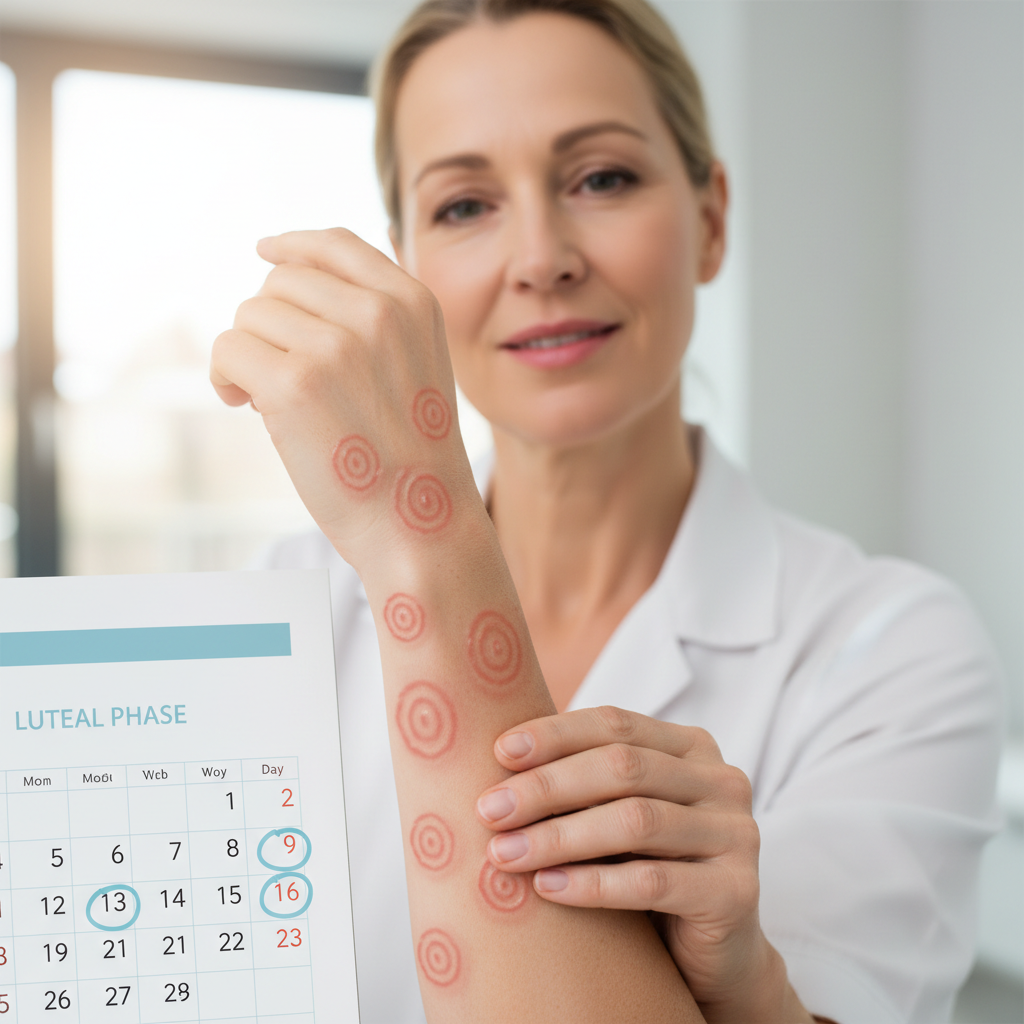
If you have spent the last few months tracking a mysterious, itchy rash that seems to flare up like clockwork every month, you aren't imagining things. For many women in their 40s, the transition into perimenopause brings a host of unexpected skin changes. However, when those changes manifest as chronic hives (urticaria) that align with your menstrual cycle, you might be dealing with a rare but significant condition called Autoimmune Progesterone Dermatitis (APD).
Understanding the nuance between autoimmune progesterone dermatitis vs perimenopause hives is essential for getting the right treatment. While both are driven by the hormonal fluctuations characteristic of this life stage, their mechanisms—and how you manage them—differ significantly.
What exactly is autoimmune progesterone dermatitis and how does it start?
Autoimmune Progesterone Dermatitis (APD) is a rare condition where a woman’s immune system mistakenly identifies her own progesterone as a foreign threat. Progesterone is one of your primary sex hormones, produced mainly in the ovaries after ovulation during the luteal phase of your cycle.
In women with APD, the body develops an autoimmune-like sensitivity to this hormone. The condition typically starts with "cyclical" symptoms. This means the skin reactions appear 3 to 10 days before your period begins (when progesterone levels are at their peak) and usually resolve or significantly improve within a few days after your period starts (when progesterone levels drop).
The exact trigger for why someone suddenly develops APD is still being researched, but it often emerges after a significant hormonal event. This could be a pregnancy, the use of oral contraceptives containing synthetic progestins, or the onset of perimenopause. Because your body is already navigating a complex perimenopause symptoms checklist, identifying a new skin condition can be frustratingly difficult.
How can you tell the difference between perimenopause hives and APD?
Distinguishing between general "perimenopause hives" and true Autoimmune Progesterone Dermatitis requires careful observation of timing and morphology.
General perimenopause hives are often related to broader systemic changes. As estrogen fluctuates and begins to decline, your skin’s barrier function weakens, and your body becomes more sensitive to histamine. You might experience hives due to stress, temperature changes, or new sensitivities to laundry detergents that never bothered you before. These hives can happen at any time of the month because the hormonal "background noise" of perimenopause is chaotic.
In contrast, APD is strictly tied to the luteal phase of the menstrual cycle. If your hives disappear completely during the first week of your period and stay away until mid-cycle, APD is a much more likely culprit. Furthermore, APD often presents with more diverse skin lesions than standard hives, including eczema-like patches, blistering (vesicles), or target-shaped lesions.
| Feature | Perimenopause Hives | Autoimmune Progesterone Dermatitis (APD) |
|---|---|---|
| Timing | Random or triggered by stress/heat | Predictable (3-10 days before period) |
| Primary Cause | Histamine sensitivity / Estrogen drop | Allergy to endogenous progesterone |
| Resolution | Varies; may persist for weeks | Clears quickly after menstruation starts |
| Rash Type | Raised, itchy welts (wheals) | Hives, eczema, blisters, or "target" spots |
| Response to Antihistamines | Usually high | Often low or temporary |
Why does your own progesterone trigger an allergic reaction in your 40s?
It seems counterintuitive that your body would suddenly reject a hormone it has produced for decades. However, the 40s are a period of significant immunological and endocrinological recalibration.
One theory is "cross-sensitization." Many women have taken exogenous (external) progestins in the form of birth control pills or IUDs. The immune system may become sensitized to these synthetic versions, and later, as natural hormone levels fluctuate wildly during perimenopause, the immune system begins to misidentify natural progesterone as the synthetic "invader" it previously encountered.
Additionally, the perimenopausal transition is a high-risk window for the onset of various autoimmune conditions. Just as many women discover a Hashimoto’s perimenopause overlap during this time, the skin can become a primary site for immune dysregulation. The Endocrine Society notes that sex hormones play a massive role in modulating the immune system, and when the "ratio" of estrogen to progesterone becomes imbalanced, the immune system may become hyper-reactive.
What are the typical skin locations for a progesterone-related rash?
Progesterone-related rashes don't always look like the classic hives you get from a bee sting. While urticaria (hives) is the most common presentation, APD is known as a "polymorphic" condition, meaning it can take many forms.
- The Face and Lips: It is common to experience swelling or "fixed drug eruption" style spots around the mouth.
- The Trunk and Limbs: Hives often appear on the torso, thighs, and arms.
- The Hands and Feet: Some women experience "pompholyx" eczema, which consists of tiny, intensely itchy blisters on the sides of the fingers or soles of the feet.
- Existing Scars: Interestingly, some women report that their APD flares specifically in areas where they have old surgical scars or previous skin injuries.
If you are also managing other inflammatory conditions, such as fibromyalgia perimenopause symptoms, you may find that your skin sensitivity and pain levels peak simultaneously during this luteal window.
Can perimenopause hormone fluctuations make APD symptoms worse?
Yes, and this is where the "autoimmune progesterone dermatitis vs perimenopause hives" debate gets complicated. Perimenopause is defined by erratic hormonal spikes. You aren't just losing hormones; you are often experiencing "estrogen dominance" relative to low progesterone, followed by sudden surges of progesterone as the body tries to ovulate.
These surges can act like fuel on a fire for someone with APD. Furthermore, perimenopause often introduces insulin resistance signs, which increases systemic inflammation. When your body is already in a pro-inflammatory state, the allergic response to progesterone is likely to be more severe, leading to larger welts, more intense itching, and longer recovery times.
How do doctors test for progesterone sensitivity during the transition?
Diagnosing APD can be a challenge because many general practitioners are unfamiliar with it. If you suspect your skin issues are hormonal, you should track your symptoms against your cycle for at least three months.
The gold standard for diagnosis is an intradermal progesterone test. A doctor will inject a tiny amount of progesterone under the skin and monitor the area for an immediate or delayed allergic reaction. However, this test must be performed carefully, as it can occasionally trigger a full-body flare.
According to the American Academy of Allergy, Asthma & Immunology, blood tests for progesterone antibodies are another option, though they are not always definitive. Because perimenopause involves so much hormonal noise, doctors may also test your FSH (follicle-stimulating hormone) and LH (luteinizing hormone) levels to confirm where you are in the transition, as this helps rule out other causes of chronic hives.
What are the best treatment options for cyclic hives in perimenopause?
Treating APD or hormonal hives requires a two-pronged approach: managing the immediate allergic response and stabilizing the hormonal trigger.
1. Inhibiting the Immune Response
High-dose antihistamines are usually the first line of defense, though they are often less effective for APD than for standard hives. In severe cases, doctors may prescribe short courses of oral corticosteroids to calm the inflammation.
2. Suppressing Ovulation
Since the trigger is the natural rise in progesterone after ovulation, the most effective treatment is often to stop ovulation entirely. This can be achieved through specific types of birth control or GnRH agonists, which put the ovaries into a temporary state of rest.
3. Hormone Replacement Therapy (HRT)
For many women, HRT for perimenopause can actually help by stabilizing the wild fluctuations that trigger flares. However, this must be handled with extreme care. If you have APD, you may react to the progestogen component of HRT. In these cases, doctors often recommend bioidentical progesterone or specific delivery methods (like a vaginal cream or a specific IUD) that may be better tolerated than oral synthetics.
4. Lifestyle and Barrier Support
Because the skin is more vulnerable during this time, the Mayo Clinic recommends avoiding hot showers, wearing loose cotton clothing, and using fragrance-free emollients to maintain the skin barrier.
Moving Toward Radiance
Dealing with chronic, itchy welts while navigating the emotional and physical rollercoaster of perimenopause is undeniably taxing. However, by identifying the pattern—the "luteal link"—you can move away from generic creams and toward a targeted hormonal strategy. Whether it is true Autoimmune Progesterone Dermatitis or a heightened sensitivity to perimenopausal shifts, you deserve a treatment plan that addresses the root cause.
If your skin is "screaming" every month, listen to it. Document the timing, advocate for specific testing, and remember that stabilizing your hormones is often the key to quieting the itch and reclaiming your skin's radiance.
FAQ
Common questions
How do I know if my hives are definitely related to my cycle?
Look for a pattern where the rash appears 3–10 days before your period and disappears once bleeding begins. If it follows this cycle every month, it is likely APD.
Can you be allergic to HRT progesterone?
Yes, though it is rare. Some women develop an allergy to the progestin in HRT. If this happens, your doctor may switch you to a different delivery method or a bioidentical version.
Does an APD rash look different from regular hives?
Standard hives are usually itchy, raised welts. APD can look like hives, but it can also appear as eczema, small blisters, or even target-shaped lesions similar to erythema multiforme.
Will Benadryl or Zyrtec fix progesterone hives?
Antihistamines provide some relief but often aren't enough for APD. Treatment usually requires suppressing ovulation or using medications that block the effects of progesterone.
Is there a link between APD and other autoimmune diseases?
While they aren't the same, many women with one autoimmune issue (like Hashimoto's) are more prone to developing others, including progesterone sensitivity, during perimenopause.
Does autoimmune progesterone dermatitis go away after menopause?
Many women find their symptoms resolve after menopause because the body stops the monthly progesterone surges that trigger the reaction.
Want this in your inbox each Sunday?
New articles, the science you can actually use, and the occasional rant.
Keep reading

Perimenopause Symptoms Checklist: 38 Signs You're Not Imagining
A comprehensive, doctor-reviewed checklist of perimenopause symptoms — from the obvious hot flashes to the weird ones nobody warned you about.
9 min read

Hashimoto's and Perimenopause: Why Symptoms Overlap (and How to Tell Them Apart)
Fatigue, brain fog, weight gain, hair loss — Hashimoto's and perimenopause share most symptoms. Here's how to tell what's flaring, what's hormonal, and what to ask your doctor.
11 min read

Fibromyalgia and Perimenopause: When Two Storms Collide
Why fibromyalgia almost always flares during perimenopause, what changes in your nervous system, and the small daily shifts that actually help.
10 min read