
APD vs Perimenopause Rashes: Identification & Relief
Confused by cyclical skin flares? Learn the differences between autoimmune progesterone dermatitis (APD) and perimenopause rashes, including symptoms and treatments.
Published:
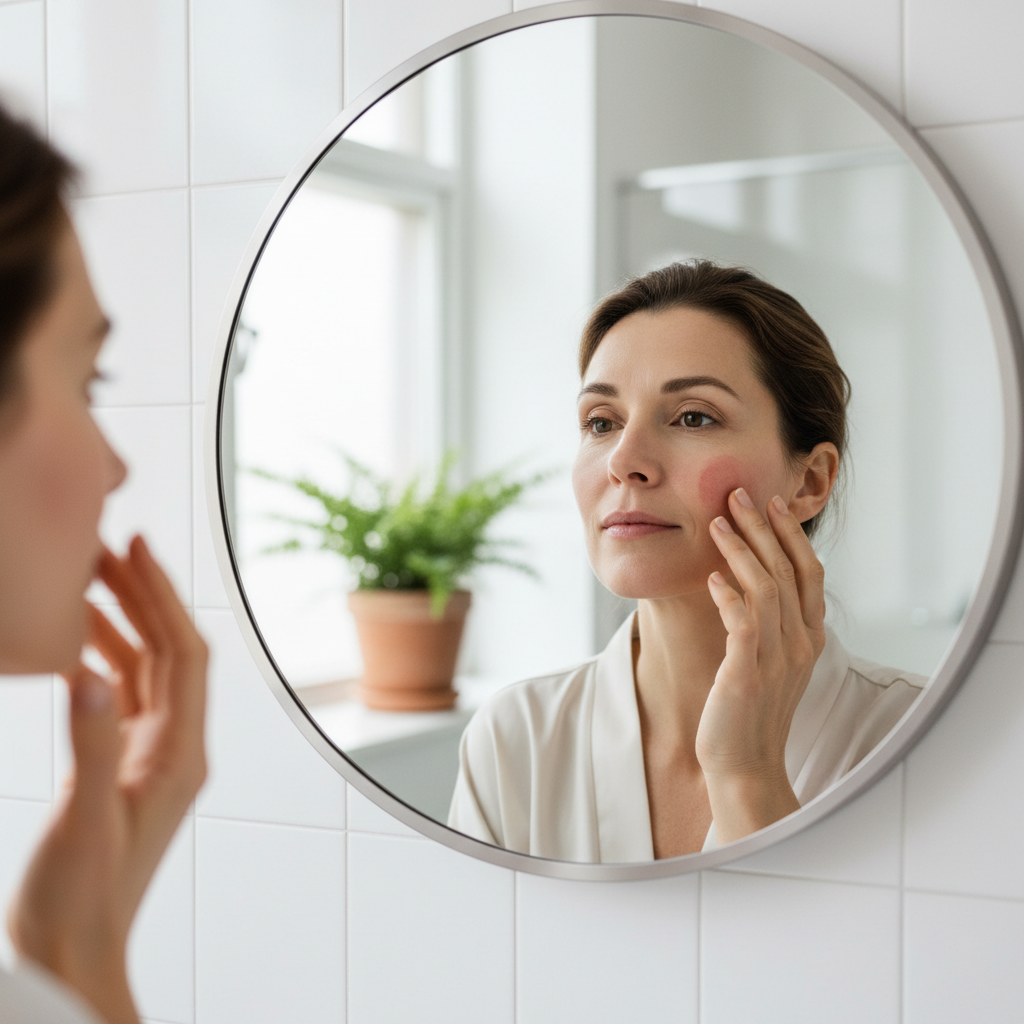
If you find yourself dreading the week before your period—not just because of mood swings, but because your skin begins to itch, welt, or erupt in hives—you are not alone. As you navigate your 40s, the hormonal landscape shifts dramatically. You might wonder if you’re dealing with standard perimenopause symptoms checklist or something more complex, like Autoimmune Progesterone Dermatitis (APD).
Distinguishing between autoimmune progesterone dermatitis vs perimenopause rashes is critical because while they may look similar, their triggers and treatments differ significantly. Understanding whether your body is reacting to a natural hormone decline or developing a rare hypersensitivity to its own progesterone is the first step toward reclaiming your skin’s health.
What exactly is autoimmune progesterone dermatitis and how does it start?
Autoimmune Progesterone Dermatitis (APD) is a rare condition where a woman’s immune system mistakenly identifies her own progesterone as a foreign invader. Progesterone levels naturally rise during the luteal phase of the menstrual cycle (the days following ovulation and leading up to menstruation). In women with APD, this rise triggers an inflammatory skin reaction.
According to the National Institutes of Health (NIH), APD is characterized by skin lesions that appear cyclically. The exact mechanism of how it starts remains a subject of study, but many experts believe it begins with an external exposure to synthetic progestogens—such as those found in oral contraceptives or hormone replacement therapy—which "sensitizes" the immune system. Once sensitized, the body may begin to cross-react with the natural progesterone your ovaries produce.
The onset is typically sudden, often appearing in the late 20s to early 40s. Because it is linked to the menstrual cycle, the symptoms classically appear three to ten days before your period starts and resolve shortly after your period begins, when progesterone levels drop.
How do I tell the difference between a perimenopause hormone rash and APD?
Distinguishing between general perimenopausal skin changes and APD requires careful observation of timing and morphology. During perimenopause, estrogen levels fluctuate and eventually decline. Estrogen is vital for collagen production and skin moisture; as it drops, the skin becomes thinner, drier, and more prone to "estrogen deficiency dermatitis" or general itchiness (pruritus).
| Feature | Autoimmune Progesterone Dermatitis (APD) | Perimenopause Rashes |
|---|---|---|
| Timing | Strictly cyclical (luteal phase) | Random or persistent as hormones fluctuate |
| Primary Cause | Hypersensitivity to progesterone | Estrogen decline and skin barrier thinning |
| Common Appearance | Hives, welts, or target-like lesions | Dry patches, eczema-like redness, or acne |
| Resolution | Clears within days of period starting | May persist throughout the entire month |
| Response to HRT | May worsen if progestin is used | Often improves with balanced HRT for perimenopause beginners guide |
If your rash is persistent, it may be related to perimenopause insulin resistance signs, which can cause skin tags or darkened patches (acanthosis nigricans), rather than an autoimmune reaction. However, if the rash vanishes like magic once your flow starts, APD is a high-probability suspect.
Why do skin flares happen right before my period starts in my 40s?
The "luteal phase flare" is a hallmark of the 40s. During this decade, ovulation becomes irregular. Sometimes you produce an abundance of progesterone; other times, you have "estrogen dominance" because you didn't ovulate at all.
When you do ovulate, progesterone peaks about 7 to 10 days before your period. If you have developed a sensitivity, this peak acts as the "trigger" for your immune mast cells to release histamine. Even if you don't have APD, the high progesterone levels in the late luteal phase can increase body temperature and sebum production, which can exacerbate existing conditions like eczema or acne.
Furthermore, the 40s are a time when many women experience an uptick in autoimmune activity. It is not uncommon to see an overlap between Hashimotos perimenopause overlap and new skin sensitivities, as the immune system becomes more reactive during hormonal shifts.
What does an autoimmune progesterone dermatitis rash look like on the body?
APD is a "great imitator." It doesn't have just one look, which is why it is so frequently misdiagnosed as simple allergies or stress hives. The Mayo Clinic notes that dermatological manifestations of hormonal sensitivities can vary widely between individuals.
Common presentations include:
- Urticaria (Hives): Raised, itchy red welts that may migrate to different parts of the body.
- Erythema Multiforme: "Target" lesions that look like small bulls-eyes.
- Eczema-like Dermatitis: Scaly, red, inflamed patches often found on the hands or face.
- Fixed Drug Eruption: A specific patch of skin that becomes inflamed in the exact same spot every single month.
- Angioedema: Deep swelling, particularly around the lips or eyes.
Unlike a typical heat rash or contact dermatitis, an APD rash is rarely localized to where a piece of clothing rubbed you; it is a systemic reaction that can appear anywhere, though the trunk and extremities are most common.
Can perimenopause trigger a new onset of progesterone sensitivity?
Yes. While APD often starts earlier, the hormonal chaos of perimenopause can be a catalyst for new allergic-type reactions. During this transition, the "buffering" effect of steady estrogen is lost. Estrogen has a complex relationship with mast cells (the cells responsible for histamine release). When estrogen is high and progesterone is fluctuating, mast cells can become more unstable, leading to new-onset sensitivities.
Additionally, many women in their 40s begin using new medications or hormone therapies. If you start a progestin-only birth control or a specific type of HRT, your immune system may suddenly decide it no longer tolerates that specific molecular structure. This is also a time when many women discover other systemic issues, such as the fibromyalgia perimenopause symptoms connection, which highlights how the nervous and immune systems are heightened during this phase.
What testing is required to diagnose an allergy to your own hormones?
Diagnosing APD is a process of elimination combined with specific provocation tests. Because it is rare, you may need to be your own advocate.
- Menstrual Diary: The most important "test" is a three-month log of your symptoms compared to your cycle. If the rash consistently appears 3-10 days before your period and clears when you bleed, the diagnosis is likely cyclical.
- Intradermal Progesterone Test: An allergist or immunologist performs this by injecting a tiny amount of dilute progesterone under the skin. A positive result (a hive or welt forming at the site) suggests a hypersensitivity.
- Serum Progesterone Levels: While blood levels won't tell you if you're allergic, they can confirm if the rash coincides with your peak progesterone levels.
- Skin Biopsy: A doctor may take a small sample of the rash to rule out other conditions like vasculitis or pemphigoid.
According to research published in the Journal of the American Medical Association (JAMA), the gold standard for diagnosis remains the clinical correlation between the menstrual cycle and the skin eruption, supported by positive skin testing.
What are the best treatments for cyclical skin rashes during the transition?
Treatment for APD focuses on two goals: suppressing the immune response and suppressing the hormonal trigger (ovulation).
- Hormone Suppression: The most effective way to stop APD is to stop the progesterone peak. This is often achieved through GnRH agonists or continuous low-dose birth control pills that prevent ovulation.
- Antihistamines: High-dose H1 blockers (like cetirizine or loratadine) can help dampen the itching, though they often don't prevent the rash entirely.
- Corticosteroids: During a severe flare, a short course of topical or oral steroids can reduce inflammation.
- Omalizumab (Xolair): In severe, treatment-resistant cases, this injectable biologic medication used for chronic hives has shown success in treating APD by stabilizing mast cells.
- Surgical Options: In extreme cases where a woman is finished with childbearing and symptoms are debilitating, a bilateral oophorectomy (removal of ovaries) provides a permanent cure by removing the source of progesterone.
For those whose rashes are strictly due to perimenopausal dryness, a different approach—focusing on barrier repair creams and systemic estrogen—is usually preferred.
When should I see an immunologist vs a gynecologist for skin issues?
Navigating "hormone rashes" often requires a multi-disciplinary approach. You shouldn't have to choose one or the other; ideally, your doctors should collaborate.
See a Gynecologist if:
- Your skin issues are accompanied by heavy periods, hot flashes, or other perimenopausal symptoms.
- You want to discuss hormonal suppression (like birth control or HRT) as a way to manage your cycle.
- You need to rule out other gynecological issues that could be causing hormonal imbalances.
See an Immunologist/Dermatologist if:
- The rash is severe, painful, or causing swelling (angioedema).
- Standard antihistamines aren't working.
- You need specialized skin testing (intradermal tests) to confirm a progesterone allergy.
- You suspect your rash might be related to other autoimmune conditions, which are common in midlife according to the American College of Obstetricians and Gynecologists (ACOG).
Understanding the nuances of autoimmune progesterone dermatitis vs perimenopause rashes empowers you to seek the right help. Whether it's a true allergy to your hormones or the result of the "drying out" process of perimenopause, relief is possible. Keep a detailed log, track your flares, and don't settle for "it's just hormones" as an answer. Your skin is a window into your internal health, and it deserves specialized care.
FAQ
Common questions
How common is autoimmune progesterone dermatitis compared to perimenopause rashes?
APD is very rare, affecting only a small percentage of the population, whereas perimenopausal skin changes (like dryness and itching) affect up to 40% of women transitioning into menopause.
Can a progestin-only IUD trigger an autoimmune progesterone rash?
Yes, because APD is triggered by progesterone, using a progestin-only IUD (like Mirena) can potentially trigger or worsen symptoms in sensitive individuals.
Is there a specific 'tell' that my rash is autoimmune?
The classic 'tell' for APD is the timing. If your rash appears 3-10 days before your period and vanishes once bleeding starts, it is likely APD. Perimenopause rashes are usually less predictable.
Will a standard allergy test find a progesterone sensitivity?
Standard allergy tests (like skin prick tests for pollen) usually do not include progesterone. You need a specialized intradermal progesterone test performed by an immunologist.
Can diet help manage hormonal skin rashes?
While diet doesn't cause APD, a low-histamine diet may help reduce the overall 'allergic load' on your body, potentially lessening the severity of the hives or itching.
Does autoimmune progesterone dermatitis go away after menopause?
Yes, once you reach post-menopause and your ovaries stop producing cyclical progesterone, APD typically resolves completely on its own.
Want this in your inbox each Sunday?
New articles, the science you can actually use, and the occasional rant.
Keep reading

Perimenopause Symptoms Checklist: 38 Signs You're Not Imagining
A comprehensive, doctor-reviewed checklist of perimenopause symptoms — from the obvious hot flashes to the weird ones nobody warned you about.
9 min read

Hashimoto's and Perimenopause: Why Symptoms Overlap (and How to Tell Them Apart)
Fatigue, brain fog, weight gain, hair loss — Hashimoto's and perimenopause share most symptoms. Here's how to tell what's flaring, what's hormonal, and what to ask your doctor.
11 min read

Fibromyalgia and Perimenopause: When Two Storms Collide
Why fibromyalgia almost always flares during perimenopause, what changes in your nervous system, and the small daily shifts that actually help.
10 min read