
Autoimmune Skin or Perimenopause? Decoding 40+ Rashes
Deciphering autoimmune skin changes in perimenopause vs low estrogen. Learn to distinguish lupus rashes, psoriasis flares, and thinning skin in your 40s.
Published:
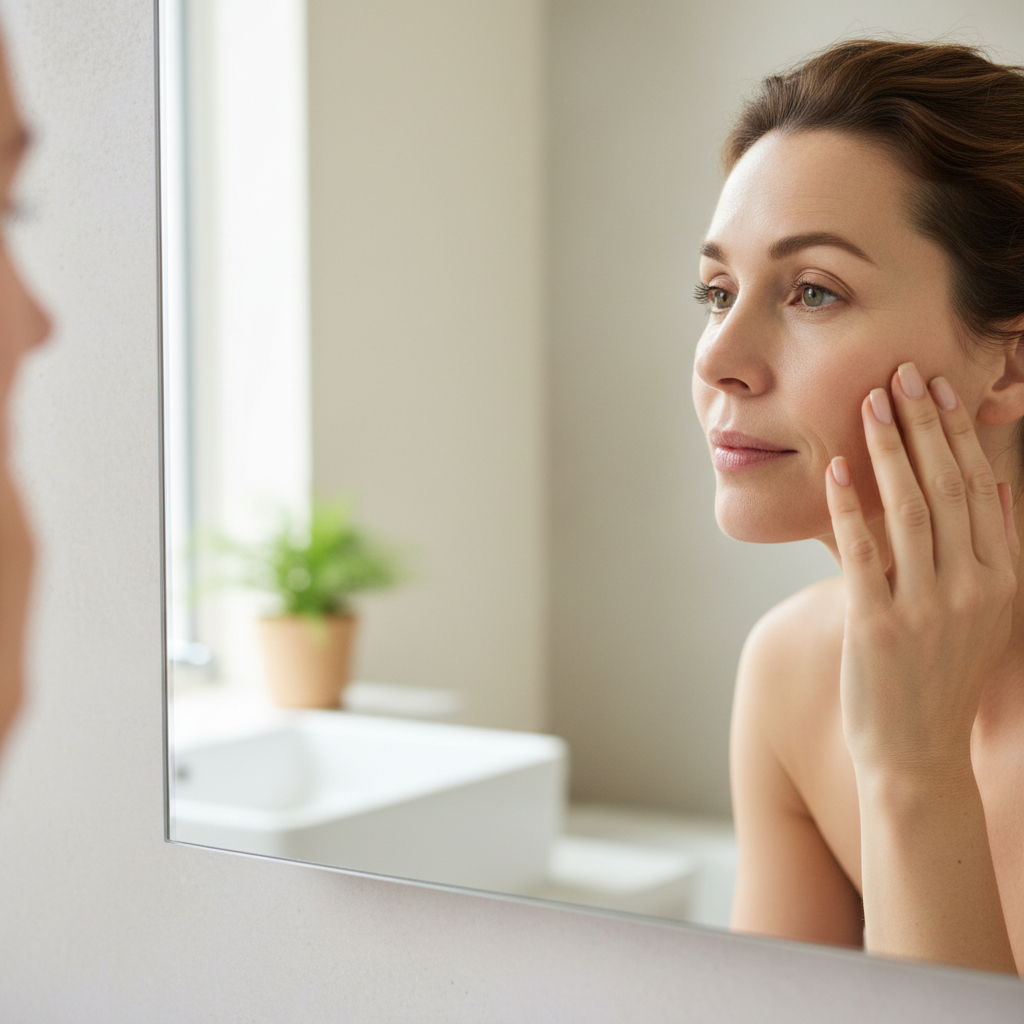
If you have spent your 40s suddenly dealing with a face that turns beet-red after a single glass of wine, or itchy patches that refuse to clear up, you are likely wondering: is this just my hormones, or is something deeper going on?
Distinguishing between autoimmune skin changes in perimenopause vs low estrogen guide parameters is one of the most complex puzzles you might face in midlife. Because estrogen is a potent anti-inflammatory regulator, its decline doesn't just cause hot flashes—it can fundamentally rewrite how your skin reacts to the world and its own immune system.
How does dropping estrogen affect existing autoimmune skin conditions?
Estrogen is more than a reproductive hormone; it is a master modulator of the immune system. Your skin contains estrogen receptors (ER-alpha and ER-beta) that influence everything from collagen production to the "tight junctions" that keep your skin barrier intact.
When you enter perimenopause, the erratic fluctuations and eventual decline in 17β-estradiol can send existing autoimmune conditions into a tailspin. According to research published by the National Institutes of Health (NIH), estrogen helps regulate T-cell function. When estrogen drops, the "brakes" on certain inflammatory pathways are released, which can lead to:
- Psoriasis Flares: Many women report that their psoriasis worsens during periods of low estrogen (the luteal phase of the cycle or perimenopause).
- Eczema and Atopy: Even if you haven't had eczema since childhood, the loss of skin barrier lipids (ceramides) driven by low estrogen can cause "adult-onset" atopic dermatitis.
- Lichen Sclerosus: This autoimmune-related thinning of the vulvar skin is highly sensitive to hormonal shifts and often peaks in prevalence during the menopausal transition.
If you are already managing an autoimmune diagnosis, you might find that your usual medications suddenly feel less effective. This isn't necessarily because the disease has changed, but because your "hormonal foundation" has shifted. This is why reviewing a perimenopause symptoms checklist is essential for anyone with a chronic inflammatory condition; you need to know if your flares are being driven by cycle irregularities.
Is it an autoimmune flare or perimenopause-induced skin thinning?
It is easy to mistake the structural changes of aging for an active disease process. Perimenopause causes a rapid decline in collagen—up to 30% is lost in the first five years of the transition. This leads to "dermatoporosis," or extreme skin fragility.
When your skin thins, the blood vessels underneath become more visible and more vulnerable. You might notice:
- Purpura (Bruising): Thin skin lacks the "cushion" to protect capillaries, leading to bruises that look like purple rashes.
- Pruritus (Itching): The "itchy skin" of perimenopause (formication) can feel like bugs crawling on the skin, often mistaken for allergic reactions or autoimmune hives.
- Increased Permeability: A thinner barrier allows allergens to penetrate deeper, triggering rashes that look like autoimmune dermatitis but are actually contact sensitivity.
To help you decode what you are seeing in the mirror, consider this comparison table:
| Symptom Feature | Perimenopause/Low Estrogen | Autoimmune Skin Change (Lupus/Dermatomyositis) |
|---|---|---|
| Texture | Dry, papery, "crepey" | Scaly, thickened, or raised plaques |
| Sensation | Prickling, generalized itching | Burning, stinging, or deep soreness |
| Symmetry | Often generalized or on dry areas | Often follows specific patterns (like the malar butterfly) |
| Triggers | Heat, alcohol, stress | UV light (sun), systemic illness, medications |
| Response | Improves with heavy emollients/HRT | Requires steroids or immunosuppressants |
If you are also navigating Hashimoto's perimenopause overlap, the dry skin can be doubly severe, as both low thyroid hormone and low estrogen impair the skin's ability to retain moisture.
Why does perimenopause make skin more reactive to environmental triggers?
You might find that the laundry detergent, perfume, or face cream you’ve used for a decade suddenly causes a blistering rash. This isn't "new" allergies; it's a breakdown in your "Immunological Tolerance."
Estrogen supports the production of sebum and hyaluronic acid, which act as a sealant. Without this sealant, your skin develops microscopic cracks. These cracks allow environmental pollutants and chemicals to reach the immune cells (Langerhans cells) deeper in the dermis. Once these cells are activated, they trigger an inflammatory response.
Furthermore, the "mast cells" in your skin—the cells responsible for releasing histamine—become more unstable when estrogen is low. This can lead to:
- Dermatographism: Where even a light scratch turns into a raised red welt.
- Urticaria (Hives): Frequent, unexplained hives that seem to flare right before your period.
This heightened reactivity can be incredibly frustrating, often mirroring the systemic inflammation seen in conditions like fibromyalgia perimenopause symptoms, where the body's nervous and immune systems are in a state of "high alert."
How to distinguish between lupus rashes and perimenopause flushing?
One of the most common fears for women in their 40s is the "Malar Rash"—the butterfly-shaped redness across the nose and cheeks associated with Systemic Lupus Erythematosus (SLE). Because perimenopause causes vasomotor symptoms (hot flashes and flushing), the two are frequently confused.
The Lupus Malar Rash:
- Is typically photosensitive (gets worse after sun exposure).
- Often spares the "nasolabial folds" (the lines from your nose to the corners of your mouth).
- Feels like a distinct, sometimes raised or scaly lesion.
- Does not come and go within minutes.
Perimenopause Flushing:
- Comes on suddenly, often accompanied by a feeling of intense heat.
- Usually lasts from 30 seconds to 10 minutes.
- Affects the face, neck, and chest.
- Is often triggered by caffeine, spicy food, or emotional stress.
If your redness is persistent and doesn't fade after you cool down, or if it is accompanied by joint pain and extreme fatigue, it is time to consult a rheumatologist. The American College of Rheumatology notes that lupus is significantly more common in women, and while it often strikes earlier, new-onset lupus or late-onset flares can certainly occur in your 40s.
Can hormone replacement therapy help improve autoimmune skin symptoms?
For many women, the answer is a resounding yes—but with nuances. Hormone Replacement Therapy (HRT) can restore the skin’s thickness, increase collagen content, and improve the skin’s moisture-holding capacity. By stabilizing the skin barrier, HRT can reduce the frequency of "false" autoimmune flares caused by external irritants.
However, the relationship between HRT and "true" autoimmune disease is complex. For example:
- Lupus: High levels of estrogen were traditionally thought to flare SLE. However, the Lupus Erythematosus in Golden Years (SELENA) trial found that HRT did not significantly increase the risk of severe flares in women with stable lupus, though it did slightly increase the risk of mild-to-moderate flares.
- Rheumatoid Arthritis: Some studies suggest that HRT may actually help reduce joint inflammation and improve quality of life.
If you are considering this path, starting with an HRT for perimenopause beginners guide is a great way to understand your options, such as transdermal patches versus oral pills. Transdermal estrogen is often preferred for those with autoimmune concerns as it has a lower impact on inflammatory markers in the liver.
What topical treatments are safe for autoimmune skin in your 40s?
When your skin is in a state of "autoimmune-perimenopause flux," less is always more. You want to avoid aggressive "anti-aging" ingredients like high-strength retinols or glycolic acids, which can further compromise a thin skin barrier.
Instead, focus on "Barrier Repair" and "Anti-Inflammatory Support":
- Ceramides and Fatty Acids: Look for moisturizers that mimic the skin’s natural lipid bilayer.
- Niacinamide (Vitamin B3): This is a powerhouse for midlife skin. It helps stabilize mast cells, reduces redness, and strengthens the barrier.
- Physical Sunscreens: Zinc oxide and titanium dioxide are less likely to irritate reactive skin than chemical filters (like oxybenzone), which can sometimes act as endocrine disruptors.
- Prescription Steroid-Sparing Agents: If you have an autoimmune component, your dermatologist might suggest calcineurin inhibitors (like tacrolimus) which treat inflammation without the skin-thinning side effects of long-term steroid use.
Maintaining blood sugar stability is also a hidden key to skin health. High insulin can fuel skin inflammation and acne, so understanding perimenopause insulin resistance signs can be just as important as your topical routine.
When to ask your dermatologist for an ANA test for skin issues?
If you are doing "all the right things"—moisturizing, using gentle cleansers, managing stress—and your skin is still angry, it is time for blood work. You should ask for an ANA (Antinuclear Antibody) test and a referral to a dermatologist or rheumatologist if you experience:
- Photosensitivity: You develop a rash within hours of being in the sun, even with sunscreen.
- Raynaud’s Phenomenon: Your fingers or toes turn white or blue in response to cold or stress.
- Scalp Changes: Scarring hair loss or discoid (coin-shaped) sores on the scalp.
- Ulcers: Painful sores inside the mouth or nose.
- Systemic Symptoms: Fevers, night sweats, or joint swelling that accompanies the rash.
According to the Mayo Clinic, an ANA test is a primary screening tool, but it isn't definitive. Many healthy women have a "low-positive" ANA, especially as they age. A positive result is simply a piece of the puzzle, not a diagnosis on its own.
The Path to Radiance
Navigating your 40s requires a new level of "body literacy." Your skin is often the first place your internal environment sends distress signals. Whether your rashes are a result of the "Great Hormonal Shift" or an underlying autoimmune condition, the solution usually involves a multi-pronged approach: stabilizing your hormones, nourishing your skin barrier, and lowering systemic inflammation.
You don't have to accept "angry skin" as an inevitable part of aging. By identifying the triggers and supporting your biology, you can move from reactive to radiant.
Medical Disclaimer: This content is for informational purposes only and does not constitute medical advice. Always consult with a qualified healthcare provider for diagnosis and treatment of autoimmune or hormonal conditions.
6 FAQs About Autoimmune Skin and Perimenopause
1. Can perimenopause cause a positive ANA test? While perimenopause itself doesn't cause autoimmune disease, some studies suggest that the prevalence of low-titer positive ANA (Antinuclear Antibody) tests can increase with age in women. However, a positive ANA should always be evaluated by a doctor to rule out conditions like lupus or Sjogren’s syndrome.
2. Does estrogen deficiency cause itchy skin? Yes. This is known as "pruritus." Low estrogen leads to a decrease in skin oils and moisture-retaining molecules, which makes the nerves in the skin more sensitive, resulting in a persistent, sometimes "crawling" itchy sensation.
3. Is rosacea an autoimmune condition? Rosacea is considered an inflammatory skin condition, not a classic autoimmune disease, though it involves an overactive immune response. It very frequently flares during perimenopause due to hormonal shifts and increased vascular sensitivity (flushing).
4. How can I tell if my rash is from HRT or my autoimmune disease? Rashes caused by HRT (specifically patches) are usually localized to the site of application (contact dermatitis). If you develop a systemic rash after starting HRT, it could be a rare reaction or a flare of an underlying condition, and you should contact your prescriber immediately.
5. Can low estrogen make my psoriasis worse? Yes. Many women report "catamenial" (cycle-related) psoriasis, where plaques worsen during the low-estrogen days before a period. The sustained low estrogen of perimenopause can lead to more frequent and severe psoriasis flares.
6. What is the best way to soothe "hormonal hives"? Stabilizing the skin barrier with ceramide-rich creams and using over-the-counter antihistamines can help. Some women also find relief by addressing "estrogen dominance" or fluctuations through lifestyle changes and, in some cases, progesterone support under medical supervision.
FAQ
Common questions
Can perimenopause cause a positive ANA test?
While perimenopause itself doesn't cause autoimmune disease, some studies suggest that the prevalence of low-titer positive ANA (Antinuclear Antibody) tests can increase with age in women. However, a positive ANA should always be evaluated by a doctor to rule out conditions like lupus or Sjogren’s syndrome.
Does estrogen deficiency cause itchy skin?
Yes. This is known as "pruritus." Low estrogen leads to a decrease in skin oils and moisture-retaining molecules, which makes the nerves in the skin more sensitive, resulting in a persistent, sometimes "crawling" itchy sensation.
Is rosacea an autoimmune condition?
Rosacea is considered an inflammatory skin condition, not a classic autoimmune disease, though it involves an overactive immune response. It very frequently flares during perimenopause due to hormonal shifts and increased vascular sensitivity (flushing).
How can I tell if my rash is from HRT or my autoimmune disease?
Rashes caused by HRT (specifically patches) are usually localized to the site of application (contact dermatitis). If you develop a systemic rash after starting HRT, it could be a rare reaction or a flare of an underlying condition, and you should contact your prescriber immediately.
Can low estrogen make my psoriasis worse?
Yes. Many women report "catamenial" (cycle-related) psoriasis, where plaques worsen during the low-estrogen days before a period. The sustained low estrogen of perimenopause can lead to more frequent and severe psoriasis flares.
What is the best way to soothe "hormonal hives"?
Stabilizing the skin barrier with ceramide-rich creams and using over-the-counter antihistamines can help. Some women also find relief by addressing "estrogen dominance" or fluctuations through lifestyle changes and, in some cases, progesterone support under medical supervision.
Want this in your inbox each Sunday?
New articles, the science you can actually use, and the occasional rant.
Keep reading

Perimenopause Symptoms Checklist: 38 Signs You're Not Imagining
A comprehensive, doctor-reviewed checklist of perimenopause symptoms — from the obvious hot flashes to the weird ones nobody warned you about.
9 min read

Hashimoto's and Perimenopause: Why Symptoms Overlap (and How to Tell Them Apart)
Fatigue, brain fog, weight gain, hair loss — Hashimoto's and perimenopause share most symptoms. Here's how to tell what's flaring, what's hormonal, and what to ask your doctor.
11 min read

Fibromyalgia and Perimenopause: When Two Storms Collide
Why fibromyalgia almost always flares during perimenopause, what changes in your nervous system, and the small daily shifts that actually help.
10 min read