
Autoimmune Skin Rashes in Perimenopause: 40+ Guide
Experience strange skin changes in your 40s? Learn how the perimenopause transition period triggers autoimmune skin rashes and how to find relief.
Published:
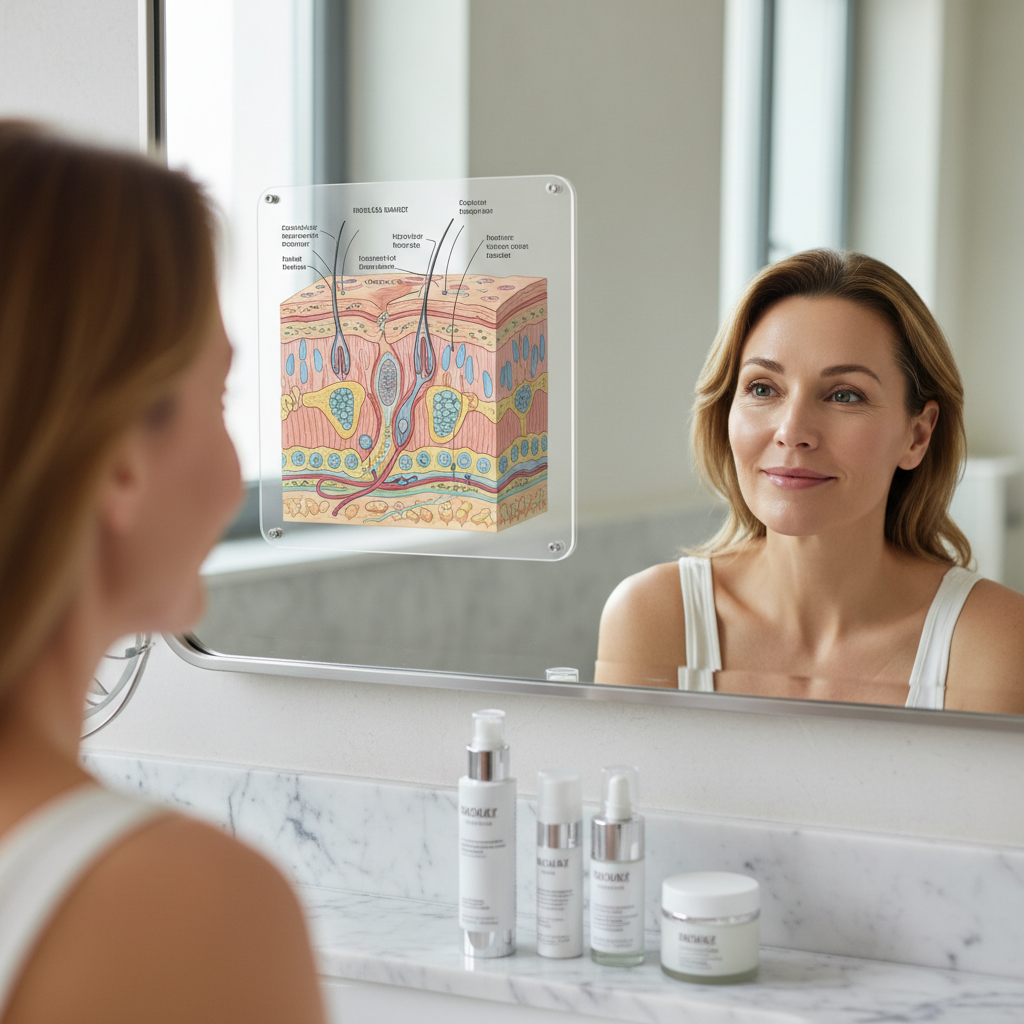
Why are you suddenly developing strange skin rashes in your 40s?
You have spent decades getting to know your skin, but as you hit your 40s, it feels like the rules of engagement have changed. Perhaps you are noticing patches of dry, itchy skin that no amount of moisturizer can soothe, or strange, butterfly-shaped redness across your cheeks. If you are navigating your 40s, you aren’t just aging—you are entering the autoimmune skin rashes during perimenopause transition period, a time when your hormones and your immune system enter a complex, often turbulent dialogue.
The sudden appearance of skin inflammation is rarely "just a rash." For many women, this decade marks the intersection of hormonal shifts and the emergence of latent autoimmune conditions. While you might be familiar with hot flashes or sleep disturbances (which you can track on our perimenopause symptoms checklist), the cutaneous changes can be even more distressing because they are visible to the world. Research indicates that estrogen has a significant role in modulating immune function; as it fluctuates and eventually drops, the "brakes" on your immune system can loosen, leading to heightened sensitivity and the flare-up of autoimmune skin conditions.
How do declining estrogen levels impact the skin barrier and immune response?
Estrogen is the silent architect of your skin’s health. It supports collagen production, maintains lipid barriers, and facilitates wound healing. More importantly, estrogen is a potent immunomodulator. According to the Mayo Clinic, the decline in estrogen during perimenopause leads to thinner, less elastic skin that is more susceptible to environmental irritants.
When estrogen levels drop, three critical things happen to your skin:
- Barrier Dysfunction: The skin’s "acid mantle" and lipid barrier weaken. This allows allergens to penetrate more easily and moisture to escape, a process called transepidermal water loss.
- Shift in Cytokines: Estrogen helps maintain a balance between pro-inflammatory and anti-inflammatory signals. As it wanes, the body may shift toward a pro-inflammatory state, making you more prone to "inflammaging" and autoimmune overactivity.
- Reduced Mast Cell Stability: Estrogen helps stabilize mast cells, which release histamine. In the absence of steady estrogen, these cells can become "twitchy," leading to hives and dermatographism (skin writing).
This hormonal environment can exacerbate existing conditions like fibromyalgia, which often shares systemic inflammatory pathways with skin disorders.
Could it be autoimmune? Identifying lupus, psoriasis, and dermatitis herpetiformis
Distinguishing between a standard hormonal rash and an autoimmune condition is vital for proper treatment. During the perimenopause transition, your body may finally express genetic predispositions that were previously kept in check by high estrogen levels.
1. Systemic Lupus Erythematosus (SLE) and DLE
Lupus often presents with a "malar rash"—a butterfly-shaped redness across the bridge of the nose and cheeks. Unlike a standard flush, this rash is often photosensitive (triggered by the sun) and does not spare the nasolabial folds. The National Institutes of Health (NIH) notes that hormonal shifts, including those in perimenopause, can trigger lupus flares or even a first-time diagnosis.
2. Psoriasis
Psoriasis is perhaps the most common autoimmune skin condition to flare during perimenopause. It appears as silvery, scales (plaques) on a red base. Research suggests a "U-shaped" distribution of psoriasis onset in women, with a significant peak occurring during the menopausal transition when estrogen drops.
3. Dermatitis Herpetiformis
Often linked to Celiac disease, this condition causes extremely itchy, blistering rashes, usually on the elbows, knees, and buttocks. If you are noticing perimenopause insulin resistance signs, it is worth noting that metabolic health and gut-skin health are deeply intertwined.
| Condition | Appearance | Primary Triggers | Common Locations |
|---|---|---|---|
| Psoriasis | Silvery plaques, red base | Stress, Estrogen drop | Elbows, Knees, Scalp |
| Lupus (Malar) | Butterfly redness | UV light, Hormones | Cheeks, Nose |
| Hives (Urticaria) | Raised welts | Histamine, Heat | Trunk, Limbs |
| Dermatitis Herpetiformis | Small, itchy blisters | Gluten, Gut issues | Elbows, Back |
How does the perimenopause transition period trigger autoimmune skin flares?
The autoimmune skin rashes during perimenopause transition period occur because the immune system is sensitive to the fluctuation of hormones, not just the low levels. During perimenopause, estrogen can spike to 300% of its normal level before crashing. This "hormonal rollercoaster" creates a state of systemic instability.
Furthermore, the perimenopause transition is often a time of high cortisol due to life stressors. Cortisol and estrogen have a bidirectional relationship. High cortisol suppresses the immune system's ability to regulate inflammation, while low estrogen makes skin cells more "leaky." This creates a "perfect storm" for autoimmune conditions like Hashimoto's to manifest or worsen. Many women find a significant Hashimoto’s perimenopause overlap, where both the thyroid and the skin suffer under the strain of shifting hormones.
What are the most common areas for hormonal and autoimmune rashes to appear?
The location of your rash can provide significant clues to its origin. While hormonal rashes are often diffuse, autoimmune rashes tend to follow specific patterns:
- The Face and Neck: This is the primary site for Lupus (malar rash) and Rosacea (which, while not strictly autoimmune, has an inflammatory/immune component).
- The Scalp: Psoriasis frequently begins at the hairline or behind the ears. Hormonal hair thinning can often occur alongside these scalp flares.
- Extensor Surfaces (Elbows/Knees): Classic sites for Psoriasis and Dermatitis Herpetiformis.
- The Trunk and Midsection: Hormonal hives and "estrogen pruritus" (itching without a rash) often concentrate on the belly and chest.
If you are experiencing widespread itching accompanied by joint pain, it may be time to investigate systemic causes rather than local ones.
When should you see a dermatologist versus an endocrinologist?
Navigating the healthcare system in your 40s requires a multidisciplinary approach. You shouldn't have to choose between your skin and your hormones; you need both addressed.
- See a Dermatologist if: The rash is blistering, painful, spreading rapidly, or shows the classic "silvery scale" of psoriasis. They can perform a skin biopsy to confirm if the rash is autoimmune.
- See an Endocrinologist (or Menopause Specialist) if: The skin issues are accompanied by irregular periods, night sweats, or severe mood swings. They can help determine if your skin issues are a secondary symptom of the perimenopausal transition.
- See a Rheumatologist if: Your skin rash is accompanied by joint swelling, extreme fatigue, or a positive ANA (Antinuclear Antibody) test.
The Cleveland Clinic emphasizes that because perimenopause symptoms vary so widely, documenting the timing of your flares in relation to your cycle can help your doctors make an accurate diagnosis.
What are the best topical and systemic treatments for 40+ skin inflammation?
Treating autoimmune skin rashes during perimenopause requires a two-pronged strategy: soothing the surface and calming the internal immune response.
- Topical Corticosteroids: These remain the gold standard for calming acute autoimmune flares like psoriasis. However, because perimenopausal skin is already thinning, these must be used sparingly to avoid further skin atrophy.
- Calcineurin Inhibitors: These are non-steroidal creams (like tacrolimus) that are safer for thin-skinned areas like the face and folds.
- Ceramide-Rich Emollients: Since the skin barrier is compromised, using creams containing ceramides and fatty acids is essential to "glue" the skin cells back together and prevent further irritation.
- Anti-Inflammatory Diet: Reducing processed sugars and inflammatory oils can lower the systemic "heat" in the body.
- Phototherapy: Controlled UV exposure under medical supervision can be highly effective for psoriasis.
Can hormone replacement therapy help clear up perimenopausal skin issues?
This is the question on every woman's mind: can HRT save my skin? The answer is often a hopeful yes, but with nuances. Hormone Replacement Therapy (HRT) works by stabilizing the estrogen levels that, when fluctuating, trigger immune sensitivity.
According to a review published by the NIH, estrogen replacement can increase skin thickness, improve moisture retention, and boost collagen content. By stabilizing the hormonal environment, HRT can effectively "lower the volume" on autoimmune flares. For many women, HRT isn't just about stopping hot flashes; it's about restoring the skin barrier's integrity and preventing the immune system from overreacting to every minor trigger.
For those just starting to explore these options, our HRT for perimenopause beginners guide provides a comprehensive look at how systemic hormones affect everything from your brain to your skin cells. While HRT is not a "cure" for an autoimmune disease like Lupus or Psoriasis, it is a powerful tool in your management toolkit that addresses the underlying hormonal instability of your 40s.
Conclusion
The appearance of autoimmune skin rashes during perimenopause transition period is your body's way of signaling that it's struggling to adapt to a new chemical baseline. By understanding the link between your hormones and your immune system, you can move from frustration to action. Whether through topical treatments, lifestyle adjustments, or HRT, your skin can find its radiance again. Do not dismiss these changes as "just a part of getting older"—your skin is a vital organ, and it deserves specialized care during this transition.
Sources & References
- Mayo Clinic: Menopause Symptoms and Skin Changes
- NIH / NIAMS: Understanding Lupus and the Skin
- NCBI/PubMed: The Influence of Estrogens on Skin Ageing and Its Treatment
- Cleveland Clinic: Perimenopause Overview
- Endocrine Society: Menopause and Hormonal Health
FAQ
Common questions
Why does perimenopause cause skin rashes?
Perimenopause causes a decline in estrogen, which weakens the skin's barrier and can lead to a more pro-inflammatory immune response, making you more susceptible to rashes.
How can I tell if my rash is autoimmune or just dry skin?
Autoimmune rashes often have specific shapes (like the butterfly rash of Lupus) or textures (like the silvery scales of Psoriasis) and often don't respond to standard moisturizers.
Can psoriasis start for the first time during perimenopause?
Yes, Psoriasis frequently flares during perimenopause due to the significant drop in estrogen, which otherwise helps regulate skin cell turnover.
Does HRT help with autoimmune skin issues?
While not a cure-all, HRT can stabilize estrogen levels, improve skin thickness, and strengthen the skin barrier, which often reduces the frequency of flares.
What ingredients should I look for in skincare during this time?
Look for products containing ceramides, hyaluronic acid, and niacinamide to help rebuild the skin barrier and soothe inflammation without clogging pores.
When should I see a doctor about a perimenopausal rash?
Seek medical advice if your rash is painful, blistering, spreading rapidly, or accompanied by systemic symptoms like joint pain, fever, or extreme fatigue.
Want this in your inbox each Sunday?
New articles, the science you can actually use, and the occasional rant.
Keep reading

Perimenopause Symptoms Checklist: 38 Signs You're Not Imagining
A comprehensive, doctor-reviewed checklist of perimenopause symptoms — from the obvious hot flashes to the weird ones nobody warned you about.
9 min read

Hashimoto's and Perimenopause: Why Symptoms Overlap (and How to Tell Them Apart)
Fatigue, brain fog, weight gain, hair loss — Hashimoto's and perimenopause share most symptoms. Here's how to tell what's flaring, what's hormonal, and what to ask your doctor.
11 min read

Fibromyalgia and Perimenopause: When Two Storms Collide
Why fibromyalgia almost always flares during perimenopause, what changes in your nervous system, and the small daily shifts that actually help.
10 min read