
Behcet’s Disease or Perimenopause? Symptoms After 40
Distinguish Behcet’s Disease symptoms from perimenopause in women over 40. Learn about mouth sores, joint pain, and how estrogen affects autoimmune flares.
Published:
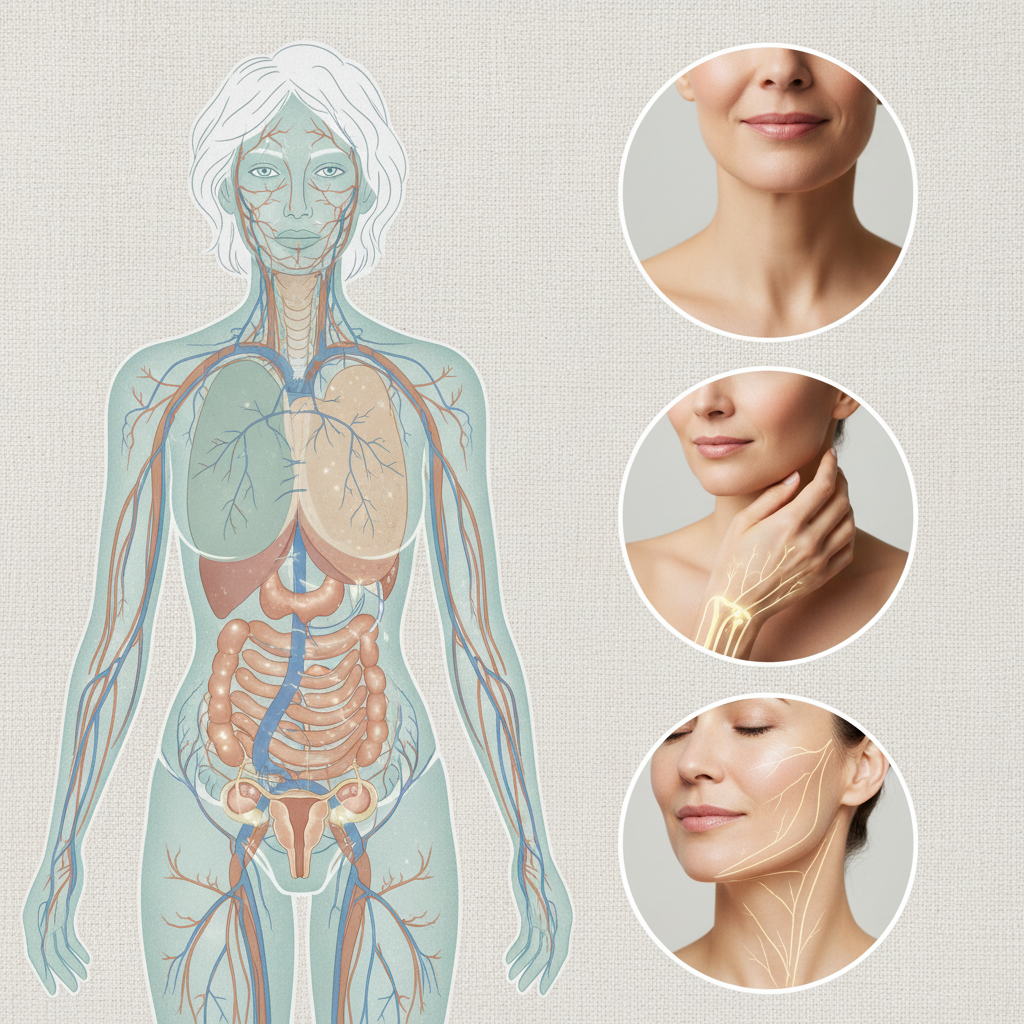
What are the early signs of Behcet’s Disease in women over 40?
When you reach your 40s, your body begins a complex transition. For many, this is the onset of perimenopause, but for a subset of women, it may also be the time when an underlying autoimmune or inflammatory condition like Behcet's Disease (BD) begins to surface or flare with new intensity. Behcet’s Disease is a rare, chronic autoinflammatory disorder caused by blood vessel inflammation (vasculitis) throughout your body.
In women over 40, the early signs of Behcet’s can be deceptively subtle because they often mimic the "body aches and pains" we associate with aging. The hallmark early sign is recurrent oral ulcers—painful mouth sores that look like canker sores but occur three or more times within a single year. According to the American College of Rheumatology, these ulcers are often the first "red flag."
Beyond the mouth, you might notice:
- Genital sores that resemble classic aphthous ulcers.
- Skin lesions that look like acne or red, tender nodules (erythema nodosum) usually on the shins.
- Inflammation of the eye (uveitis), which causes blurred vision, redness, and pain.
- Migratory joint pain, often affecting the knees, ankles, or elbows.
Because these symptoms are systemic, they can easily be confused with other conditions. If you are already tracking your cycle using a perimenopause symptoms checklist, you might notice these "flares" seem to align with certain points in your month, making the diagnosis even more elusive.
Can perimenopause hormones cause mouth sores and joint pain?
The short answer is yes—but the nature of these symptoms differs from Behcet’s. As you enter perimenopause, your estrogen levels begin to fluctuate wildly before ultimately declining. Estrogen has a profound effect on the mucosal linings of your body and your pain threshold.
When estrogen drops, the oral mucosa becomes thinner and more sensitive. This can lead to "Burning Mouth Syndrome" or an increase in minor canker sores. However, the deep, ragged, and excruciatingly painful ulcers seen in Behcet’s are not a "normal" symptom of hormone withdrawal.
Joint pain is perhaps the most common overlap. Research cited by the National Institutes of Health (NIH) suggests that estrogen plays a protective role in joint tissues. When it wanes, many women experience "menopausal arthritis," characterized by stiffness and dull aching. This is strikingly similar to the fibromyalgia and perimenopause symptoms many women report during this transition. However, in Behcet’s, joint pain is often accompanied by visible swelling or redness, indicating active vasculitis rather than just hormonal depletion.
How does estrogen loss affect Behcet's Disease flares?
The relationship between reproductive hormones and Behcet's Disease is a subject of intense study. Estrogen is known to modulate the immune system. For many women with autoimmune profiles, estrogen acts as a "buffer." As levels drop during perimenopause, that buffer disappears, potentially leading to more frequent or severe flares.
Interestingly, many women with Behcet's report that their symptoms follow a cyclical pattern, worsening during the luteal phase (just before the period) when estrogen and progesterone drop. This is a common theme in autoimmune health; for instance, the Hashimoto's and perimenopause overlap often sees a similar spike in antibodies as ovarian function declines.
In your 40s, the "estrogen rollercoaster" means your immune system is receiving inconsistent signals. This can trigger the vascular inflammation at the heart of Behcet's. Furthermore, the systemic stress caused by perimenopause—including sleep deprivation and hot flashes—can increase cortisol levels, which is a known trigger for inflammatory flares.
Is it a Behcet's flare or just perimenopause inflammation?
Distinguishing between a "normal" perimenopausal inflammatory response and an active Behcet’s flare requires careful observation. Perimenopause tends to cause generalized, low-grade inflammation. You might feel "puffy," sluggish, or experience metabolic shifts, such as perimenopause insulin resistance signs, which can contribute to a sense of systemic unwellness.
Behcet’s flares, however, are usually more localized and "violent" in their presentation. To help you differentiate, consider the following table:
| Symptom Category | Perimenopause Presentation | Behcet’s Disease Presentation |
|---|---|---|
| Oral Issues | Dry mouth, burning sensation, occasional small sore. | Multiple, deep, painful ulcers (3+ times/year). |
| Joint Pain | Stiffness in the morning, general "achiness." | Swelling, heat, and acute pain in specific joints. |
| Skin Changes | Thinning skin, adult acne, dryness. | Red nodules (erythema nodosum) or pustules. |
| Eye Health | Dry eyes, light sensitivity. | Uveitis (redness, pain, blurred vision)—Medical emergency. |
| Fatigue | Linked to poor sleep/night sweats. | Profound exhaustion often accompanied by low-grade fever. |
If your symptoms include "pathergy"—where a minor scratch or needle prick turns into a large sore or bump—this is a specific indicator of Behcet’s and is not associated with perimenopause.
What tests distinguish Behcet's from standard perimenopause?
One of the most frustrating aspects of Behcet's Disease is that there is no single laboratory test to confirm it. It is a "clinical diagnosis," meaning a doctor identifies it based on a pattern of symptoms over time.
However, your provider will likely run several tests to rule out other conditions and confirm systemic inflammation:
- The Pathergy Test: A small needle prick is made on the forearm. If a bump or pustule forms within 24–48 hours, it is a positive sign for Behcet's.
- Inflammatory Markers: Erythrocyte Sedimentation Rate (ESR) and C-Reactive Protein (CRP) tests. These will be elevated during a Behcet's flare but are usually normal or only slightly elevated in standard perimenopause.
- HLA-B51 Genetic Testing: While not definitive, the presence of this gene is more common in people with Behcet’s, particularly those of Mediterranean or Silk Road ancestry.
- Hormone Panel: Testing FSH and Estradiol can help confirm if you are in the perimenopause transition, though these levels fluctuate daily.
According to the Mayo Clinic, diagnosis requires recurrent mouth sores plus at least two other hallmark signs (genital sores, skin lesions, or eye inflammation).
Managing vascular and skin symptoms when hormones are shifting
Managing Behcet’s in your 40s requires a two-pronged approach: calming the overactive immune system and stabilizing the hormonal environment.
For the vascular symptoms—the inflammation of the blood vessels—corticosteroids and immunosuppressants are often the first line of defense. However, these can have side effects that mimic or worsen perimenopause symptoms, such as mood swings or bone density loss.
To support your skin and vessels naturally during this time:
- Anti-inflammatory Diet: Focus on Omega-3 fatty acids and antioxidants.
- Stress Reduction: Stress is a primary trigger for both vasculitis flares and perimenopausal hot flashes.
- Vascular Support: Gentle exercise like walking or swimming helps maintain circulation without overstressing the joints.
If you are struggling with the systemic "burnout" of these combined conditions, understanding HRT for perimenopause beginners may be a vital step in your management plan.
Can HRT help with autoimmune mouth ulcers and skin issues?
There is growing evidence that Hormone Replacement Therapy (HRT) can provide a stabilizing effect for women with autoimmune conditions during the menopausal transition. By providing a steady dose of estrogen, HRT may prevent the mucosal thinning that makes the mouth and genital area more susceptible to the ulcers characteristic of Behcet’s.
A study published in The Lancet emphasizes that hormonal stability can improve the quality of life for women with chronic inflammatory diseases. For a woman with Behcet's, HRT may:
- Maintain the integrity of vaginal and oral tissues.
- Reduce the systemic "background noise" of inflammation.
- Improve sleep, which in turn helps regulate the immune system.
However, because Behcet’s is a vascular disease involving blood vessels, the type of HRT matters. Transdermal estrogen (patches or gels) is generally preferred over oral pills because it does not increase the risk of blood clots—a critical consideration for anyone with vasculitis. Always consult with both a rheumatologist and a menopause-informed gynecologist to coordinate care.
Closing Thoughts
Navigating your 40s is enough of a challenge without the added complexity of a rare condition like Behcet's Disease. By tracking your symptoms closely and understanding the biological intersection of hormones and inflammation, you can advocate for the specific care you need. You don't have to dismiss your pain as "just part of getting older." Whether it's a flare or a fluctuating hormone, there are pathways to relief and radiance.
FAQ
Common questions
How is Behcet’s Disease diagnosed in women over 40?
The 'gold standard' for diagnosis is a clinical pattern: recurrent mouth ulcers (3x in 12 months) plus two other signs like genital sores, eye inflammation, or skin lesions.
Is Behcet’s Disease triggered by hormonal changes?
Yes, although researchers aren't entirely sure why. Many women report flares during the week before their period when estrogen drops, suggesting a hormonal link.
Can perimenopause cause mouth ulcers like Behcet’s?
While perimenopause causes thinning tissues and occasional canker sores, Behcet's ulcers are typically deeper, more numerous, and significantly more painful.
What is a pathergy test?
The pathergy test involves a small needle prick; a positive result (a bump or pustule) indicates the hyper-inflammatory response seen in Behcet's.
Can HRT help with Behcet’s symptoms during perimenopause?
Yes, transdermal HRT can help stabilize mucosal linings and reduce systemic inflammation, potentially decreasing the frequency of sores and joint pain.
Does Behcet’s cause joint pain?
Both can cause joint pain, but Behcet's pain is often accompanied by visible swelling (arthritis) or redness, whereas perimenopause pain is usually stiffness.
Want this in your inbox each Sunday?
New articles, the science you can actually use, and the occasional rant.
Keep reading

Perimenopause Symptoms Checklist: 38 Signs You're Not Imagining
A comprehensive, doctor-reviewed checklist of perimenopause symptoms — from the obvious hot flashes to the weird ones nobody warned you about.
9 min read

Hashimoto's and Perimenopause: Why Symptoms Overlap (and How to Tell Them Apart)
Fatigue, brain fog, weight gain, hair loss — Hashimoto's and perimenopause share most symptoms. Here's how to tell what's flaring, what's hormonal, and what to ask your doctor.
11 min read

Fibromyalgia and Perimenopause: When Two Storms Collide
Why fibromyalgia almost always flares during perimenopause, what changes in your nervous system, and the small daily shifts that actually help.
10 min read