Behcet’s Disease or Perimenopause? Overlap After 40
Explore the symptoms of Behcet’s disease in women over 40 vs perimenopause. Learn how to distinguish autoimmune ulcers and joint pain from hormonal changes.
Published:
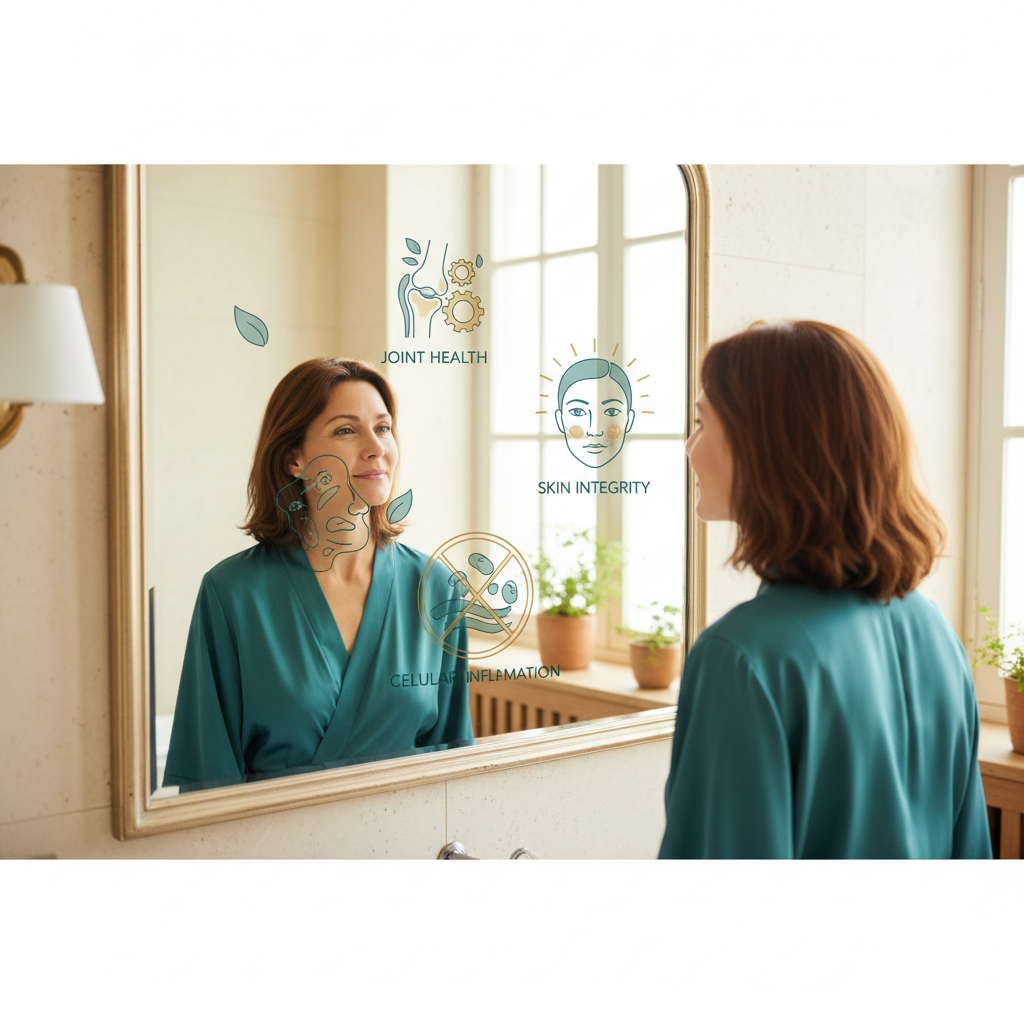
Entering your 40s brings a host of physiological changes, and for many, it marks the beginning of the perimenopausal transition. However, when new, painful symptoms like recurring mouth sores, joint stiffness, and extreme fatigue emerge, it is easy to assume they are simply part of the "change." For a specific subset of women, these symptoms may actually signal Behcet’s Disease, a rare chronic condition that causes blood vessel inflammation throughout the body.
Understanding Behcet’s disease symptoms in women over 40 vs perimenopause is critical because the management strategies for an autoimmune vasculitis differ significantly from hormonal replacement therapy. While perimenopause is a natural life stage, Behcet’s is a systemic inflammatory disorder that requires specialized rheumatological care.
What are the early signs of Behcet’s disease in women over 40?
Behcet’s Disease (also known as Behcet’s Syndrome) is characterized by a "triple-symptom complex" of recurrent oral ulcers, genital ulcers, and uveitis (eye inflammation). In women over 40, these symptoms can be particularly deceptive. While younger patients often present with more aggressive ocular involvement, post-menopausal and perimenopausal women may experience a shift in how the disease manifests, often involving more skin and joint issues.
Early signs usually begin with painful aphthous ulcers in the mouth. Unlike a standard canker sore that heals in a week, Behcet’s ulcers are often multiple, deeper, and recur frequently—sometimes appearing in crops of three or more. Women in their 40s may also notice:
- Genital Sores: These are often mistaken for herpes or severe yeast infections but are non-contagious inflammatory lesions.
- Skin Abnormalities: Red, tender lumps on the legs (erythema nodosum) or acne-like sores.
- Eye Inflammation: Blurred vision or redness that doesn't resolve with standard drops.
Because these symptoms are episodic, many women dismiss them as stress-related, especially when navigating the perimenopause symptoms checklist that already includes fatigue and skin changes.
How do Behcet’s mouth sores differ from perimenopause aphthous ulcers?
It is common for women to experience oral health changes during perimenopause. Decreasing estrogen levels can lead to a thinning of the oral mucosa, causing dryness or burning mouth syndrome. Occasionally, this hormonal shift leads to occasional aphthous ulcers.
However, the mouth sores in Behcet’s Disease are systemic and inflammatory. According to the American Behcet’s Disease Association, oral ulcers are the hallmark first sign in 95% of cases.
| Feature | Perimenopause Oral Ulcers | Behcet’s Disease Mouth Sores |
|---|---|---|
| Frequency | Occasional, often linked to cycle | Chronic, recurring at least 3x/year |
| Quantity | Usually single | Often multiple (crops) |
| Pain Level | Mild to moderate | Severe, can interfere with eating/speech |
| Healing Time | 7–10 days | Can take weeks; may leave scarring |
| Associated Signs | Dry mouth, burning tongue | Genital sores, eye pain, skin lesions |
If you are finding that your "canker sores" are preventing you from eating or are appearing alongside joint pain, it is time to look beyond hormones and consider an autoimmune evaluation. This overlap is similar to how Hashimoto's and perimenopause can share a profile of fatigue and metabolic shifts.
Can perimenopause hormone shifts trigger a Behcet’s flare-up?
The relationship between sex hormones and autoimmune diseases is well-documented but complex. Estrogen is generally considered an "immunomodulator." When estrogen levels fluctuate wildly during perimenopause, the immune system can become dysregulated.
Some researchers suggest that the drop in estrogen during the late luteal phase or perimenopause can trigger inflammatory cytokines, potentially worsening Behcet’s symptoms. Much like how perimenopause and insulin resistance create a cycle of inflammation, the hormonal chaos of the 40s can make a dormant case of Behcet’s suddenly flare or make an existing diagnosis much harder to manage.
For women already diagnosed with Behcet’s, the transition into menopause may see a change in disease activity. While some studies suggest that systemic vasculitis may quiet down after menopause, the "perimenopausal window" of high-hormone volatility is often a period of increased symptom flares.
Why does Behcet’s joint pain get confused with estrogen-related aches?
"Arthralgia" (joint pain) is one of the most common complaints in the perimenopausal transition. As estrogen levels fall, the anti-inflammatory protection for joints decreases, leading to stiffness and "morning aches." This is a primary reason women seek information on HRT for perimenopause.
Behcet’s joint pain, however, is often more localized and inflammatory. It typically affects the larger joints—knees, ankles, elbows, and wrists. While it usually doesn't cause permanent joint destruction like rheumatoid arthritis, the swelling (arthritis) can be significant.
- Symmetry: Perimenopause aches are often generalized and symmetrical. Behcet’s may affect one knee or one ankle at a time.
- Swelling: True joint swelling (effusion) is common in Behcet’s but rare in standard hormonal joint aches.
- Duration: Behcet’s joint flares usually last 1–3 weeks and then subside, whereas perimenopausal aches may be persistent and daily.
This confusion is not unique to Behcet's; it mirrors the diagnostic hurdles found in fibromyalgia vs perimenopause, where systemic pain is the primary overlapping symptom.
Is it perimenopause skin sensitivity or Behcet’s skin lesions?
Perimenopause often causes the skin to become thinner, drier, and more prone to "formication" (the sensation of itchy skin or insects crawling). You might also experience adult-onset acne due to the relative increase in androgens.
Behcet’s skin manifestations are distinct and potentially serious. The most common is erythema nodosum—painful, red, warm nodules that usually appear on the shins. Another specific sign is pathergy, a condition where the skin is hyper-irritable. If you get a minor scratch, needle prick, or insect bite, a Behcet’s patient might develop a large pustule or ulcer at the site within 24 to 48 hours.
If your skin issues include deep, painful lumps rather than just surface dryness or typical acne, you should consult a dermatologist or rheumatologist for a pathergy test.
How do doctors differentiate between Behcet’s fatigue and hormonal exhaustion?
Fatigue is perhaps the most difficult symptom to pin down. In perimenopause, fatigue is often secondary to night sweats, insomnia, and fluctuating progesterone. It feels like a "heavy" tiredness that may improve with better sleep hygiene or hormone support.
In Behcet’s Disease, fatigue is "inflammatory exhaustion." It is the result of the body’s immune system constantly attacking its own blood vessels. According to the Mayo Clinic, this fatigue often occurs alongside a "flu-like" feeling, low-grade fevers, and brain fog.
Because both conditions cause significant cognitive clouding, doctors look for "objective" markers. If your fatigue is accompanied by elevated C-reactive protein (CRP) or Erythrocyte Sedimentation Rate (ESR) in blood tests, it points more toward an inflammatory process like Behcet's rather than purely hormonal shifts.
What tests should you ask for if you suspect an autoimmune overlap?
Diagnosing Behcet’s is notoriously difficult because there is no single definitive blood test. It is a clinical diagnosis based on a pattern of symptoms. However, if you are over 40 and experiencing these symptoms, you should request a comprehensive workup to rule out other causes.
- The Pathergy Test: A physician pricks the skin with a sterile needle and observes the site 48 hours later for a specific inflammatory reaction.
- Inflammatory Markers: Tests for CRP and ESR to check for systemic inflammation.
- HLA-B51 Genetic Test: While not everyone with Behcet’s has this gene, its presence can support a diagnosis, especially in certain ethnic populations (NIH).
- Hormone Panel: Checking FSH and Estradiol levels to confirm your perimenopausal status, which helps separate hormonal symptoms from autoimmune ones.
- Ophthalmic Exam: A slit-lamp exam by an ophthalmologist to look for signs of uveitis, even if you don't have active eye pain.
How is Behcet’s managed differently than standard perimenopause symptoms?
This is where the distinction becomes vital. If you treat Behcet’s with only lifestyle changes and HRT, the underlying vascular inflammation remains unaddressed, which can lead to serious complications like vision loss or vascular aneurysms.
- Perimenopause Management: Focused on hormone stabilization. Treatments include Hormone Replacement Therapy (HRT), vaginal estrogen, and lifestyle adjustments to manage cortisol and insulin.
- Behcet’s Management: Focused on immunosuppression and inflammation control.
- Topical Treatments: Corticosteroid creams or mouthwashes for ulcers.
- Colchicine: Often the first-line systemic treatment for joint pain and skin lesions.
- Biologics: In severe cases, medications that target TNF-alpha (like adalimumab) are used to prevent organ damage.
It is possible to manage both concurrently. Many women find that stabilizing their hormones with HRT helps reduce the frequency of Behcet’s flares by reducing the total "stress load" on the body. However, the autoimmune component requires a rheumatologist’s expertise.
The journey through your 40s is about listening to your body’s signals. If the symptoms don't fit the standard perimenopausal mold—especially if you are dealing with painful ulcers and inflammatory skin changes—don't hesitate to advocate for an autoimmune screening. Recognizing the difference between a natural transition and a rare disease is the first step toward reclaiming your radiance and long-term health.
Frequently Asked Questions
Is Behcet’s disease hereditary? While there is a genetic predisposition, specifically the HLA-B51 gene, Behcet’s is not considered a directly inherited disorder. Many people carry the gene and never develop the disease, suggesting that environmental triggers are also necessary for the condition to manifest.
Can I take HRT if I have Behcet’s disease? In many cases, yes. However, because Behcet’s is a form of vasculitis (blood vessel inflammation) and HRT can slightly affect blood clot risk, the decision must be made in consultation with both a rheumatologist and a gynecologist to ensure the safest delivery method, such as transdermal patches.
Does Behcet’s get better after menopause? Clinical observations suggest that for many patients, the severity of Behcet’s flares may decrease with age, particularly after age 50. However, this is not universal, and some women may experience their first significant symptoms during the hormonal upheaval of perimenopause.
Are the mouth sores in Behcet's contagious? No. Behcet’s is an autoimmune/autoinflammatory condition, not an infection. The oral and genital ulcers are caused by the body's immune system attacking its own tissues and cannot be spread to others through kissing or sexual contact.
What kind of doctor treats Behcet’s disease? A rheumatologist is the primary specialist for Behcet’s, as they specialize in systemic inflammatory and autoimmune diseases. Depending on your symptoms, you may also work with a dermatologist (skin), ophthalmologist (eyes), or gastroenterologist (digestive tract).
Can stress trigger both perimenopause symptoms and Behcet's flares? Yes. Stress elevates cortisol, which can worsen hormonal imbalances in perimenopause and act as a major trigger for autoimmune flares. Managing stress through mindfulness, sleep, and anti-inflammatory nutrition is beneficial for both conditions.
FAQ
Common questions
Is Behcet’s disease hereditary?
While there is a genetic predisposition (HLA-B51 gene), it is not directly inherited; environmental triggers are usually required for it to manifest.
Can I take HRT if I have Behcet’s disease?
Yes, but it requires coordination between a rheumatologist and gynecologist, often favoring transdermal delivery to minimize vascular risks.
Does Behcet’s get better after menopause?
Some studies suggest disease activity may decrease with age, but the hormonal volatility of perimenopause can often trigger new or worsening flares.
Are the mouth sores in Behcet's contagious?
No. Behcet’s is an autoimmune inflammatory condition, not an infection. The ulcers are not contagious.
What kind of doctor treats Behcet’s disease?
A rheumatologist is the lead specialist, often coordinating with dermatologists, ophthalmologists, and gynecologists.
Can stress trigger both perimenopause symptoms and Behcet's flares?
Yes. High cortisol levels from stress can exacerbate hormonal imbalances and trigger autoimmune inflammatory responses.
Want this in your inbox each Sunday?
New articles, the science you can actually use, and the occasional rant.
Keep reading
Perimenopause Symptoms Checklist: 38 Signs You're Not Imagining
A comprehensive, doctor-reviewed checklist of perimenopause symptoms — from the obvious hot flashes to the weird ones nobody warned you about.
9 min read
Hashimoto's and Perimenopause: Why Symptoms Overlap (and How to Tell Them Apart)
Fatigue, brain fog, weight gain, hair loss — Hashimoto's and perimenopause share most symptoms. Here's how to tell what's flaring, what's hormonal, and what to ask your doctor.
11 min read

Fibromyalgia and Perimenopause: When Two Storms Collide
Why fibromyalgia almost always flares during perimenopause, what changes in your nervous system, and the small daily shifts that actually help.
10 min read