Bruising and Fatigue: A Scary Perimenopause Duo Explained
Experiencing unexplained bruising and fatigue in perimenopause after 40? Discover how declining estrogen affects collagen, iron levels, and skin health.
Published:
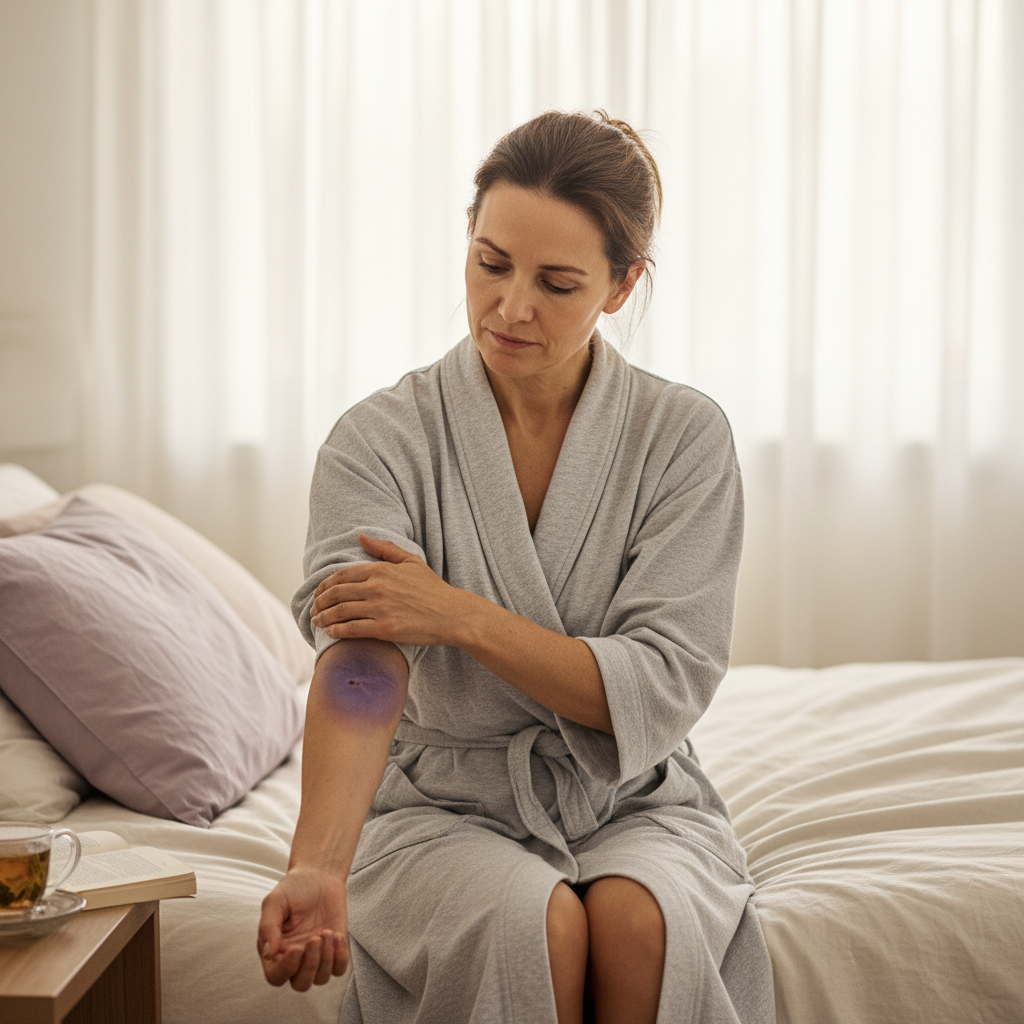
You’re getting ready for bed when you notice it: a dark purple splotch on your thigh the size of a half-dollar. You don’t remember bumping into anything. Then you catch another one on your forearm. These mysterious marks are appearing alongside a heavy, bone-deep exhaustion that doesn't go away with a good night's sleep.
If you’re over 40, experiencing unexplained bruising and fatigue in perimenopause can feel alarming. You might worry about underlying blood disorders or serious illnesses. While you should always discuss new symptoms with your healthcare provider, there is a distinct physiological connection between your declining hormones and the integrity of your skin and energy levels.
In this guide, we will explore why your 40s bring this "scary duo" and how to support your body through the transition.
Why am I bruising so easily in perimenopause?
The primary culprit behind easy bruising during the transition to menopause is the decline of estrogen. Estrogen is not just a reproductive hormone; it is a vital component in the maintenance of your skin’s structure and the strength of your blood vessel walls.
As estrogen levels fluctuate and eventually drop, your body produces less collagen and elastin. According to the American Academy of Dermatology, women's skin loses about 30% of its collagen during the first five years of menopause, but this decline begins significantly in perimenopause.
When your skin loses this "cushioning," the small blood vessels (capillaries) near the surface become more exposed. Even a minor, unnoticed bump—one that wouldn't have left a mark ten years ago—can now cause those capillaries to rupture, leaking blood under the skin and creating a bruise. Furthermore, estrogen helps maintain the fatty layer under the skin. As this layer thins, your natural shock absorbers vanish, making you more prone to "spontaneous" bruising.
If you are tracking your transition, you might notice these skin changes appearing alongside other common issues. Checking a perimenopause symptoms checklist can help you see if these bruises are part of a larger hormonal pattern.
Is the combination of bruises and exhaustion a sign of something serious?
When you experience both bruising and fatigue, it is natural to feel anxious. While often hormonal, this combination can sometimes point to systemic issues that require medical attention.
Fatigue in your 40s is rarely "just" one thing. It can be a result of perimenopause insulin resistance signs, which disrupt how your cells use glucose for energy, or it could be related to thyroid dysfunction. Many women find a significant Hashimoto’s perimenopause overlap, where autoimmune thyroid issues trigger both extreme lethargy and changes in skin health.
However, the specific "bruise-fatigue" duo often points toward nutritional deficiencies or hematological shifts. For instance, Vitamin C deficiency (scurvy, though rare in developed nations) causes both easy bruising and exhaustion because Vitamin C is essential for collagen synthesis and energy metabolism. Similarly, Vitamin K plays a crucial role in blood clotting; if your levels are low, you'll bruise easily and feel run down.
| Potential Cause | Why it causes Bruising | Why it causes Fatigue |
|---|---|---|
| Estrogen Decline | Loss of collagen/capillary support | Disrupted sleep & neurotransmitters |
| Iron Deficiency | Reduced platelet function (severe) | Reduced oxygen transport to tissues |
| Vitamin C Deficiency | Fragile blood vessel walls | Impaired adrenal function |
| Hypothyroidism | Thinned skin & slowed healing | Decreased metabolic rate |
| Medication Use | Blood thinning (NSAIDs, Aspirin) | Potential side effects/underlying pain |
How does declining collagen affect skin bruising in your 40s?
Collagen is the "glue" of the human body. In your skin, it provides the structural framework that keeps everything tight and resilient. In your 40s, the rate at which you degrade collagen begins to outpace the rate at which you produce it.
This structural decline isn't just about wrinkles. The Cleveland Clinic notes that collagen is a major component of blood vessels. When collagen levels drop:
- Capillary Walls Weaken: The microscopic vessels that carry blood to your skin cells become brittle.
- Dermal Thinning: The middle layer of your skin (the dermis) loses volume. This means there is less tissue to protect your capillaries from external pressure.
- Slower Repair: Your body’s ability to "patch" small leaks in the circulatory system slows down, meaning bruises may appear larger and take longer to fade.
This fragility is a hallmark of the aging process, but the perimenopausal hormone "cliff" accelerates it significantly. If you are also dealing with widespread aches, you might be differentiating this from fibromyalgia perimenopause symptoms, where skin sensitivity and fatigue are also prevalent.
Could perimenopause fatigue and bruising be a sign of iron issues?
Yes, and this is one of the most common "hidden" culprits. Perimenopause is often characterized by "flooding" or heavy menstrual periods (menorrhagia) due to progesterone deficiency and estrogen dominance.
Heavy bleeding leads to a depletion of iron stores (ferritin). According to the National Institutes of Health (NIH), iron deficiency anemia is a leading cause of fatigue. While iron deficiency itself doesn't always cause bruising, the reason for the iron deficiency—heavy periods—often occurs alongside hormonal imbalances that weaken capillaries.
Furthermore, some research suggests that very low iron levels can affect platelet function or count, although this is usually seen in more advanced stages of anemia. If you are exhausted and notice your bruises are accompanied by pale skin, cold hands, or shortness of breath, an iron panel (including ferritin) is essential.
When should I see a doctor about easy bruising and low energy?
While hormonal changes are often the cause, you should not self-diagnose. It is important to rule out more serious conditions such as idiopathic thrombocytopenic purpura (ITP), leukemia, or liver disease.
Schedule an appointment if you notice:
- Size and Frequency: Bruises larger than a quarter that appear frequently (more than 2 or 3 at a time) without known trauma.
- Location: Bruising on the trunk, back, or face, rather than just the shins and arms.
- Petechiae: Small, pin-prick-sized red or purple spots that look like a rash but are actually tiny hemorrhages under the skin.
- Bleeding elsewhere: Frequent nosebleeds, bleeding gums, or excessively heavy periods that require changing a pad every hour.
- Systemic Symptoms: Sudden weight loss, fever, or night sweats alongside your fatigue.
Your doctor will likely run a Complete Blood Count (CBC) to check your platelet levels and a metabolic panel to ensure your liver and kidneys are functioning correctly.
Are there specific vitamins that stop perimenopause bruising?
Nutrition plays a massive role in vascular integrity. If you are bruising easily, your body may be asking for specific co-factors to help rebuild collagen and support blood clotting.
- Vitamin C: Essential for collagen production. A study published by the NIH highlights Vitamin C's role in skin health and its antioxidant capacity to protect blood vessels.
- Vitamin K: Found in leafy greens, Vitamin K is a necessary component of the blood coagulation cascade. Without it, your blood doesn't clot as efficiently.
- Bioflavonoids: Often found in citrus fruits (the white pith), substances like quercetin and rutin have been shown to strengthen capillary walls.
- Zinc: Crucial for tissue repair and skin health.
Supplements can help, but they should be used to augment a diet rich in colorful vegetables, lean proteins (for amino acids like proline and glycine), and healthy fats.
Does HRT help with skin thinning and capillary fragility?
Hormone Replacement Therapy (HRT) is often discussed for hot flashes and night sweats, but its impact on the "integumentary system" (your skin) is profound.
Research indicates that systemic or even topical estrogen can increase skin thickness, moisture, and elasticity. By stabilizing estrogen levels, HRT can help slow the rapid degradation of collagen that happens in your 40s. According to the North American Menopause Society (NAMS), estrogen therapy can help maintain skin collagen and improve its ability to heal.
For those just starting to explore this option, an HRT for perimenopause beginners guide can provide clarity on the types of hormones available and how they might address both your skin fragility and the crushing fatigue caused by hormonal fluctuations.
Practical Steps for Management
While waiting for your hormones to level out or for your supplements to kick in, you can take these steps to protect your skin:
- Sun Protection: UV rays further degrade collagen. Use SPF 30+ daily on exposed areas.
- Moisturize: Keeping the skin hydrated improves its barrier function.
- Gentle Movement: Regular exercise improves circulation, which helps bruises heal faster, but avoid high-impact sports if you are currently experiencing a "bruising flare."
- Review Medications: Speak with your pharmacist or doctor about whether your current medications (like ibuprofen or certain supplements like Ginkgo Biloba) might be thinning your blood.
In conclusion, while unexplained bruising and fatigue in perimenopause after 40 can feel "scary," they are often the visible and physical manifestations of a significant biological shift. By focusing on collagen support, checking your iron levels, and considering hormonal support, you can reclaim your energy and your skin's resilience.
Always remember: your symptoms are real, and you deserve a healthcare provider who takes both your exhaustion and your "mysterious" bruises seriously.
FAQ
Common questions
Can perimenopause cause easy bruising?
Estrogen is crucial for collagen production. As it declines during perimenopause, your skin thins and blood vessel walls weaken, making you bruise much easier than before.
Is bruising and fatigue a normal part of aging?
While fatigue is a common perimenopause symptom, the combination of fatigue and easy bruising should be evaluated by a doctor to rule out anemia, thyroid issues, or platelet disorders.
How does iron deficiency relate to bruising in my 40s?
Heavy perimenopausal periods can lead to iron deficiency (anemia), which causes extreme fatigue. While anemia's primary symptom is lethargy, the underlying hormonal imbalance often causes skin thinning and bruising.
What vitamins help with perimenopausal bruising?
Vitamin C, Vitamin K, and Bioflavonoids are the most important nutrients for strengthening capillary walls and supporting collagen synthesis to reduce bruising.
Can HRT stop my skin from thinning?
Yes, HRT can help maintain skin thickness and collagen levels by replacing the estrogen that your body is no longer producing in sufficient quantities.
When should I be worried about my bruises?
See a doctor if bruises are larger than a quarter, appear on your torso or face, occur alongside petechiae (tiny red spots), or if you have other symptoms like night sweats or fever.
Want this in your inbox each Sunday?
New articles, the science you can actually use, and the occasional rant.
Keep reading
Perimenopause Symptoms Checklist: 38 Signs You're Not Imagining
A comprehensive, doctor-reviewed checklist of perimenopause symptoms — from the obvious hot flashes to the weird ones nobody warned you about.
9 min read
Hashimoto's and Perimenopause: Why Symptoms Overlap (and How to Tell Them Apart)
Fatigue, brain fog, weight gain, hair loss — Hashimoto's and perimenopause share most symptoms. Here's how to tell what's flaring, what's hormonal, and what to ask your doctor.
11 min read

Fibromyalgia and Perimenopause: When Two Storms Collide
Why fibromyalgia almost always flares during perimenopause, what changes in your nervous system, and the small daily shifts that actually help.
10 min read