
Autoimmune Blisters vs Perimenopause: Decoding Skin Issues
Worried about bullous pemphigoid vs perimenopause skin changes? Learn how to distinguish autoimmune blisters from hormonal hives and when to see a doctor.
Published:
What is bullous pemphigoid and why does it affect women over 40?
When you reach your 40s or 50s, you expect a few hot flashes or perhaps a change in your cycle. You don't expect your skin to suddenly erupt in tense, fluid-filled blisters. Yet, for an increasing number of women, the transition into perimenopause coincides with the onset of rare but serious autoimmune skin conditions, most notably bullous pemphigoid.
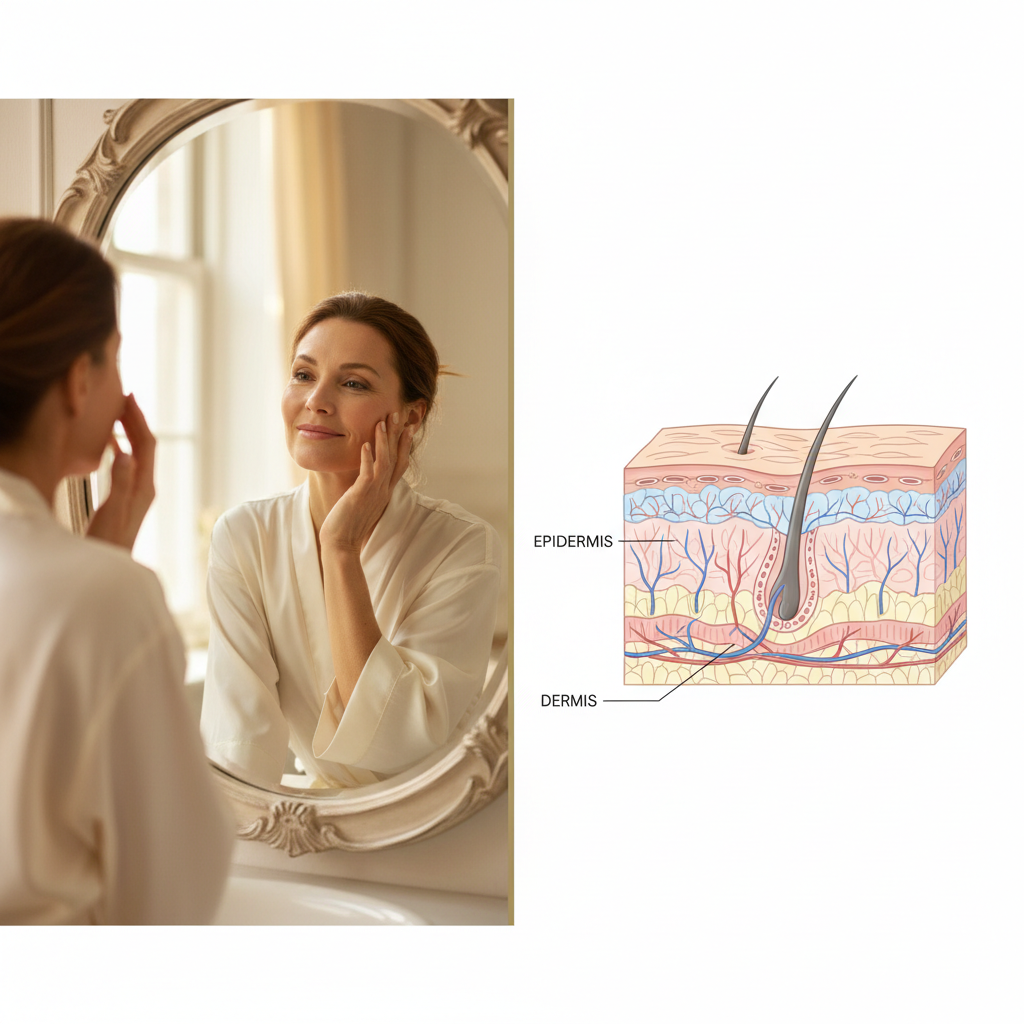
Bullous pemphigoid (BP) is a chronic, autoimmune subepidermal blistering disease. In simple terms, your immune system mistakenly attacks the "glue" that holds your outer layer of skin (epidermis) to the inner layer (dermis). While traditionally associated with the elderly, recent clinical observations show a rising incidence in younger populations, particularly women navigating the hormonal shifts of midlife. According to research published via the National Institutes of Health (NIH), BP is characterized by the formation of autoantibodies against specific proteins (BP180 and BP230) in the skin’s basement membrane zone.
For women over 40, this condition is particularly distressing because the early stages—often referred to as the "non-bullous phase"—can mimic many other common perimenopause symptoms checklist items, such as hives, intense itching (pruritus), or even eczema. The question remains: why now? Science suggests that the immune system is highly sensitive to the neuroendocrine environment. As estrogen levels begin to fluctuate and decline, the "immune-modulating" effects of these hormones are lost, potentially lowering the threshold for latent autoimmune conditions to flare.
How do autoimmune blisters differ from perimenopause hives?
Distinguishing between a standard perimenopausal skin reaction and a serious autoimmune condition is vital for your long-term health. Many women in perimenopause experience "urticaria" or hives. These are typically itchy, raised red welts that come and go—often linked to the body’s increased histamine response during hormonal chaos.
However, bullous pemphigoid and other autoimmune blistering diseases are fundamentally different. While they may start as itchy red patches (resembling hives), they eventually evolve into "bullae"—large, tense blisters that do not rupture easily when touched.
| Feature | Perimenopause Hives (Urticaria) | Bullous Phemphigoid (Autoimmune) |
|---|---|---|
| Primary Sensation | Intense itching or stinging | Intense itching, often preceding blisters by months |
| Appearance | Raised, pale red bumps or "wheals" | Tense, clear or blood-filled blisters (bullae) |
| Duration | Individual lesions disappear within 24 hours | Blisters persist for days; new ones form constantly |
| Location | Anywhere; often shifts locations | Often on the trunk, inner thighs, and armpits |
| Hormonal Link | High; often cycles with your period | Triggered by immune dysregulation, potentially exacerbated by low estrogen |
| Healing | Leaves no marks | May leave temporary dark spots (hyperpigmentation) or milia |
If you notice that your "hives" are staying in the same spot for more than 24 hours or are beginning to develop a fluid-filled head, it is time to look beyond your hormone replacement therapy (HRT) and consult a dermatologist. While you may be researching an HRT for perimenopause beginners guide, remember that hormones alone may not resolve an active autoimmune attack.
Is there a link between estrogen decline and skin blistering?
The relationship between estrogen and skin integrity is profound. Estrogen is responsible for collagen production, skin thickness, and moisture retention. More importantly, estrogen acts as a significant immunomodulator. According to the Endocrine Society, the drop in estrogen during perimenopause and menopause can lead to a shift in the body’s inflammatory profile.
When estrogen levels fall, the balance of T-helper cells (specifically the Th1/Th2 balance) shifts. This shift can sometimes "unmask" a predisposition to autoimmune diseases. While bullous pemphigoid is not directly caused by a lack of estrogen, the systemic inflammation associated with perimenopause can create a "perfect storm."
Furthermore, the skin’s barrier function weakens as we age and lose estrogen. This increased permeability makes the skin more susceptible to external triggers and internal immune malfunctions. We see similar overlaps in other conditions; for instance, many women discover they have Hashimoto’s perimenopause overlap around the same time their skin begins to change, as both involve the immune system attacking healthy tissue during a period of endocrine fragility.
Why is this autoimmune skin condition misdiagnosed as menopause?
Misdiagnosis is incredibly common in the "pre-bullous" stage of BP. Because the most prominent early symptom is intense, generalized itching without a visible rash—or with a rash that looks like simple dry skin—many practitioners dismiss it as "senile pruritus" or "menopausal itchy skin."
Skin changes are so common during the transition that doctors often stop looking for deeper causes once they confirm a patient is in perimenopause. Common reasons for misdiagnosis include:
- The "Itch" Overlap: Menopause causes dry skin (xerosis) which itches. BP causes an immune-mediated itch. Without blisters, they look identical to the naked eye.
- Age Bias: BP was long considered a disease of the 70+ demographic. Seeing it in a 45-year-old woman is still surprising to some primary care providers.
- Symptom Clusters: A woman experiencing fibromyalgia perimenopause symptoms and skin issues might have her complaints grouped under a broad "central sensitization" or "menopause" umbrella, delaying the specific skin biopsies needed to diagnose BP.
- Comorbidities: Issues like perimenopause insulin resistance signs can also cause skin darkening (acanthosis nigricans) or slow healing, which can further muddy the diagnostic waters.
According to the Mayo Clinic, a definitive diagnosis requires a skin biopsy and a specific test called "direct immunofluorescence" (DIF) to detect the antibodies attacking the skin. If your doctor only offers a topical steroid cream without suggesting a biopsy for persistent blisters, it’s time for a second opinion.
What are the warning signs of an autoimmune skin flare?
Recognizing the transition from "annoying menopause symptom" to "serious autoimmune flare" is critical. Autoimmune blistering diseases can become life-threatening if the skin's protective barrier is compromised over large areas of the body, leading to infection or electrolyte imbalances.
Keep a close eye on these 5 warning signs:
- Intractable Nocturnal Itching: Itching that is so severe it prevents sleep and does not respond to standard antihistamines or heavy moisturizers.
- The Appearance of "Wheals": Red, hive-like patches that remain fixed in the same location for more than 48 hours.
- Mouth Sores: Some forms of autoimmune blistering, like Pemphigus Vulgaris, start with painful ulcers in the mouth or on the gums that refuse to heal.
- Tense Blisters: Unlike a friction blister (from a shoe) or a burn blister, BP blisters are usually very firm. They feel like a grape under the skin and do not pop easily.
- Positive Nikolsky Sign (in some cases): While more common in Pemphigus than Bullous Pemphigoid, if the top layer of your skin slips off easily when rubbed with a finger, this is a medical emergency.
According to ACOG (American College of Obstetricians and Gynecologists), sudden changes in skin health during hormonal transitions should always be evaluated, as the skin is often a window into systemic health.
How do you manage chronic skin inflammation in perimenopause?
Managing bullous pemphigoid while navigating perimenopause requires a dual-track approach: calming the overactive immune system and stabilizing the fluctuating hormonal environment.
- Medical Intervention: The primary treatment for BP involves corticosteroids (like prednisone) to dampen the immune response. According to Cochrane Reviews, potent topical steroids can be as effective as oral steroids for many patients, with fewer systemic side effects.
- Hormonal Support: While not a cure for BP, stabilizing estrogen levels through HRT may help improve the skin’s baseline barrier function and reduce the systemic inflammatory burden.
- Anti-Inflammatory Nutrition: Reducing sugar and ultra-processed foods can help lower overall inflammation. This is particularly important because steroids—the main treatment for BP—can worsen insulin resistance, making it even more important to monitor perimenopause insulin resistance signs.
- Gentle Skin Care: Switch to soap-free cleansers and fragrance-free emollients. The "thinning" of the skin during perimenopause makes it more vulnerable to the mechanical trauma that can trigger new blisters (a phenomenon known as the Koebner phenomenon).
- Stress Management: Autoimmune flares are famously sensitive to cortisol. Cortisol and estrogen have a "tug-of-war" relationship in perimenopause. High stress can lead to an increase in pro-inflammatory cytokines, potentially worsening a BP flare.
Managing this condition is a marathon, not a sprint. By understanding the distinction between bullous pemphigoid vs perimenopause skin changes symptoms, you empower yourself to seek the right specialists—combining the expertise of a dermatologist with the hormonal insight of a menopause-informed gynecologist. You do not have to suffer through the "itch" alone; clarity begins with the right diagnosis.
FAQ
Common questions
How do I know if my skin rash is bullous pemphigoid or just perimenopause hives?
Bullous pemphigoid is an autoimmune condition where the body attacks the basement membrane of the skin, while perimenopause hives are usually a histamine reaction to fluctuating estrogen levels. Hives disappear within 24 hours; BP blisters persist for days.
Is it common for women in perimenopause to get bullous pemphigoid?
While BP is most common in those over 70, it can occur in women in their 40s and 50s. The hormonal shifts during perimenopause can influence the immune system, potentially triggering or unmasking autoimmune tendencies in susceptible individuals.
What tests are needed to diagnose autoimmune blistering?
A dermatologist can diagnose BP through a skin biopsy and a test called Direct Immunofluorescence (DIF), which looks for specific antibody deposits in the skin. A simple visual exam is often not enough to distinguish it from other conditions.
Can estrogen dominance or low estrogen cause skin blisters?
Low estrogen levels during perimenopause lead to less collagen, thinner skin, and a weaker skin barrier. This 'fragility' can make the skin more susceptible to inflammatory conditions and potentially exacerbate autoimmune flares.
Is bullous pemphigoid related to other autoimmune diseases?
Yes, many women with one autoimmune condition, like Hashimoto's or Celiac disease, are at a higher risk for developing others, including bullous pemphigoid, especially during the hormonal turbulence of perimenopause.
Is there a cure for bullous pemphigoid?
Yes, though it is usually a long-term treatment. BP is typically managed with corticosteroids (topical or oral) or other immunosuppressants. With proper care, many patients achieve long-term remission, even as they transition through menopause.
Want this in your inbox each Sunday?
New articles, the science you can actually use, and the occasional rant.
Keep reading

Perimenopause Symptoms Checklist: 38 Signs You're Not Imagining
A comprehensive, doctor-reviewed checklist of perimenopause symptoms — from the obvious hot flashes to the weird ones nobody warned you about.
9 min read

Hashimoto's and Perimenopause: Why Symptoms Overlap (and How to Tell Them Apart)
Fatigue, brain fog, weight gain, hair loss — Hashimoto's and perimenopause share most symptoms. Here's how to tell what's flaring, what's hormonal, and what to ask your doctor.
11 min read

Fibromyalgia and Perimenopause: When Two Storms Collide
Why fibromyalgia almost always flares during perimenopause, what changes in your nervous system, and the small daily shifts that actually help.
10 min read