Chronic Hives and Perimenopause: Why Your Skin Is So Itchy
Discover the link between chronic hives and perimenopause after 40. Learn how estrogen, progesterone, and Hashimoto's affect itchy skin and how HRT can help.
Published:
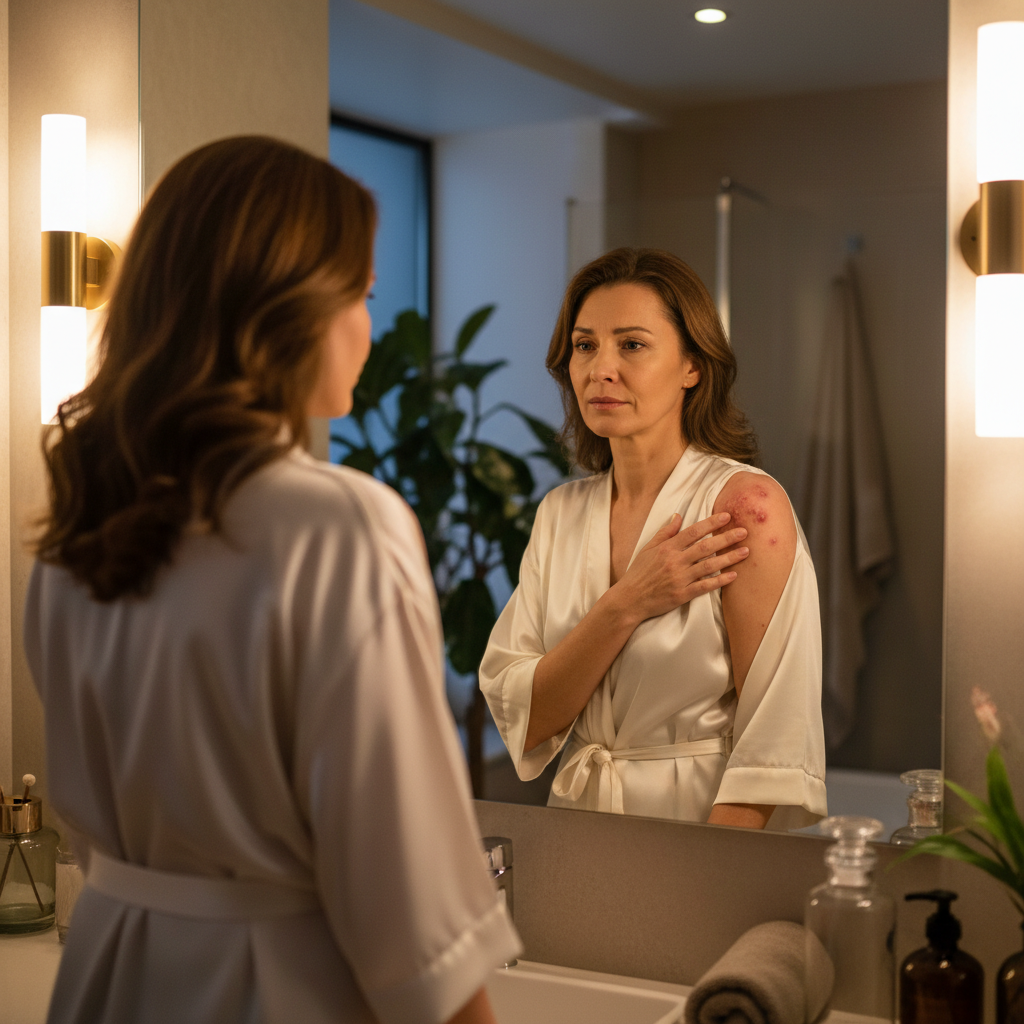
You’re standing in your kitchen, it’s 3:00 AM, and your skin feels like it’s on fire. You look in the mirror and see raised, red welts blooming across your torso and thighs. You haven’t changed your laundry detergent, you didn’t eat anything unusual, and you definitely don’t have a new perfume. If you are in your 40s or early 50s, you might be surprised to learn that these welts aren't just a random "allergy"—they are often a hallmark of the hormonal chaos known as perimenopause.
The chronic hives and perimenopause link after 40 is a frustrating reality for many women, yet it is rarely discussed in the doctor's office. This skin condition, clinically known as chronic spontaneous urticaria (CSU), involves hives that appear and disappear for six weeks or more. When it aligns with your perimenopausal transition, the culprit is often the dramatic fluctuation of sex hormones.
Are these itchy hives part of my perimenopause transition?
If you feel like your skin has suddenly become "dramatic," you aren't alone. Perimenopause is the window of time leading up to menopause when your ovaries begin to produce less estrogen and progesterone. While we often focus on hot flashes and mood swings, the skin is actually one of the largest targets for hormone receptors.
During this transition, your skin undergoes significant structural changes. According to the American Academy of Dermatology, the drop in estrogen leads to a decrease in collagen and oils, making the skin barrier more permeable and prone to irritation. In perimenopause, the immune system can become hyper-reactive. This means things that never bothered you before—heat, pressure, or minor allergens—suddenly trigger a full-blown hive outbreak.
To see how this fits into the broader picture of your health, you might want to look at our perimenopause symptoms checklist to see if other "invisible" symptoms are clustering alongside your itchy skin.
How do estrogen fluctuations trigger chronic urticaria?
Estrogen is more than just a reproductive hormone; it is a powerful modulator of the immune system. Specifically, estrogen has a direct relationship with mast cells. Mast cells are the "alarm bells" of your immune system located in your skin and mucosal linings. When they are triggered, they release histamine—the chemical responsible for the itching, swelling, and redness of hives.
Research indicates that estrogen can stimulate mast cell degranulation, causing them to release histamine more easily. During perimenopause, estrogen doesn't just drop; it swings wildly. These "estrogen spikes" can lead to a sudden flood of histamine in the body. Furthermore, estrogen helps regulate the enzyme diamine oxidase (DAO), which is responsible for breaking down histamine. When estrogen levels are unstable, your body may struggle to clear histamine effectively, leading to what many call "histamine intolerance."
The National Institutes of Health (NIH) have documented how sex steroids influence the inflammatory response in the skin. When your levels are high, your mast cells are more "twitchy." When they crash, your skin becomes drier and more vulnerable. It is a dual-edged sword that keeps you constantly reaching for the calamine lotion.
Can low progesterone cause random skin welts and hives?
While estrogen often takes the blame for "triggering" the hives, progesterone’s role is primarily about "calming" the storm. Progesterone is a natural anti-inflammatory and an immunosuppressant in certain contexts. It helps stabilize mast cells, preventing them from overreacting.
During perimenopause, progesterone is often the first hormone to decline significantly. This creates a state of "estrogen dominance," where even if your estrogen levels are technically "low," they are high relative to your progesterone. Without the stabilizing influence of progesterone, your immune system loses its "off switch."
This hormonal imbalance can lead to:
- Increased sensitivity to environmental triggers (pollen, animal dander).
- Slower healing times for skin irritation.
- Random "pressure hives" (dermatographia) from tight clothing or handbags.
- Nighttime itching that coincides with the evening dip in core body temperature.
Understanding this balance is crucial. If you are experiencing other signs of low progesterone, such as heavy periods or anxiety, you may be seeing a pattern of perimenopause insulin resistance signs or other metabolic shifts that further inflame the skin.
How to tell the difference between a perimenopause hive flare and an allergy?
One of the most frustrating aspects of perimenopause-related hives is that they often look identical to a standard allergic reaction. However, there are key differences in timing and triggers.
| Feature | Standard Allergy Hives | Perimenopause/Hormonal Hives |
|---|---|---|
| Trigger | Specific food, drug, or sting | Stress, heat, or "nothing at all" |
| Timing | Minutes to hours after exposure | Often flares premenstrually or during hot flashes |
| Duration | Resolves once trigger is removed | Reoccurs for weeks or months (chronic) |
| Location | Often localized to contact area | Can migrate all over the body |
| Associated Symptoms | Sneezing, runny nose | Night sweats, insomnia, irritability |
If your hives are "idiopathic" (meaning your doctor can't find a cause) and they seem to flare during certain points in your cycle—or alongside a hot flash—they are likely linked to your perimenopause transition. According to the Mayo Clinic, chronic hives are often linked to underlying immune issues rather than an external "allergy."
Is there a connection between Hashimoto's and perimenopause hives?
There is a significant and often overlooked triangle between the thyroid, the ovaries, and the skin. Women in perimenopause are at a higher risk for developing autoimmune thyroiditis, or Hashimoto’s disease. Interestingly, a high percentage of patients with chronic spontaneous urticaria also test positive for thyroid antibodies.
When your thyroid is underactive (hypothyroidism), your skin becomes dry and the barrier functions are compromised. Furthermore, Hashimoto's creates a state of systemic inflammation. When this meets the hormonal volatility of perimenopause, it creates the "perfect storm" for hives.
If you are struggling with weight gain, fatigue, and hives, you should investigate the Hashimotos perimenopause overlap. Often, treating the thyroid and stabilizing the hormones together is the only way to get the skin to quiet down. Many women also find that their skin symptoms mirror other inflammatory conditions, such as fibromyalgia perimenopause symptoms, which also involve a heightened sensitivity to pain and external stimuli.
What are the best antihistamine and hormone protocols for relief?
Managing perimenopause hives requires a two-pronged approach: immediate symptom relief and long-term hormonal stabilization.
1. H1 and H2 Blockers Standard antihistamines like cetirizine or loratadine (H1 blockers) are the first line of defense. However, some specialists suggest adding an H2 blocker (like famotidine, typically used for acid reflux). Because there are histamine receptors in both the gut and the skin, this duo can be more effective for chronic cases.
2. Low-Histamine Diet Temporarily reducing high-histamine foods (aged cheeses, fermented foods, wine, and processed meats) can lower the "histamine bucket" in your body, making you less likely to overflow into a hive flare.
3. Stress Management Cortisol (the stress hormone) is a major trigger for mast cell degranulation. During perimenopause, the body's ability to handle stress decreases. Breathwork, magnesium glycinate supplements, and improved sleep hygiene can help lower the systemic inflammatory load.
4. Topical Support Using ceramides and fragrance-free moisturizers is essential. The Cleveland Clinic recommends avoiding hot showers, which can trigger histamine release through heat.
Can HRT help reduce chronic hives during perimenopause?
For many women, the traditional "allergy" route provides only temporary relief. This is because the root cause isn't the environment; it’s the lack of hormonal stability. This is where Hormone Replacement Therapy (HRT) enters the conversation.
By providing a steady, physiological dose of estrogen and progesterone, HRT can prevent the wild fluctuations that cause mast cells to "misfire."
- Estrogen: Helps maintain the skin barrier and keeps the immune system from becoming hyper-reactive due to "withdrawal" symptoms.
- Progesterone: Acts as a natural stabilizer for mast cells and helps lower overall systemic inflammation.
According to the North American Menopause Society (NAMS), HRT is the gold standard for managing systemic symptoms of the transition. If your hives are clearly tied to your cycle or other perimenopausal symptoms, you should consult our HRT for perimenopause beginners guide to understand your options.
It is important to work with a provider who understands that skin issues in your 40s are rarely "just a rash." They are a signal from your internal system that the hormonal landscape is changing. By addressing the root cause—hormonal volatility—you can finally stop the itch and reclaim your skin's radiance.
The journey through perimenopause is unique for every woman, but you don't have to tolerate chronic discomfort. If your hives are accompanied by swelling of the lips or tongue, or difficulty breathing, seek emergency medical care immediately, as this can indicate a more severe type of reaction called angioedema. For most, however, the "itchy 40s" can be managed with a combination of hormonal support, lifestyle adjustments, and a little bit of patience.
Summary of Next Steps
If you are currently flaring, try these immediate steps:
- Take a cool (not cold or hot) shower using a soap-free cleanser.
- Wear loose-fitting, breathable cotton clothing.
- Track your hives in a journal alongside your menstrual cycle (if you still have one) and your hot flashes.
- Discuss a full thyroid panel and "hormonal hives" with your healthcare provider.
You deserve to feel comfortable in your own skin. Understanding the chronic hives and perimenopause link is the first step toward finding your way back to radiance.
FAQ
Common questions
Can perimenopause cause chronic hives?
Yes, fluctuations in estrogen and progesterone can trigger mast cells to release histamine, leading to chronic hives in many women over 40.
How does estrogen affect skin itching?
Estrogen spikes can trigger histamine release, while the sudden drop in estrogen can weaken the skin barrier, making it more susceptible to irritants.
Do antihistamines work for hormonal hives?
Standard antihistamines (H1 blockers) may help, but many women find more success combining them with H2 blockers or stabilizing hormones via HRT.
Is there a link between thyroid issues and perimenopause hives?
Yes, Hashimoto’s is common in perimenopause and is frequently linked to chronic spontaneous urticaria (hives) due to systemic inflammation.
Can HRT stop perimenopause hives?
By smoothing out hormone fluctuations, HRT can stabilize mast cells and improve the skin barrier, often reducing the frequency and severity of hives.
When should I see a doctor for perimenopause hives?
Consult a doctor if hives last more than six weeks, cause significant distress, or are accompanied by swelling of the face or difficulty breathing.
Want this in your inbox each Sunday?
New articles, the science you can actually use, and the occasional rant.
Keep reading
Perimenopause Symptoms Checklist: 38 Signs You're Not Imagining
A comprehensive, doctor-reviewed checklist of perimenopause symptoms — from the obvious hot flashes to the weird ones nobody warned you about.
9 min read
Hashimoto's and Perimenopause: Why Symptoms Overlap (and How to Tell Them Apart)
Fatigue, brain fog, weight gain, hair loss — Hashimoto's and perimenopause share most symptoms. Here's how to tell what's flaring, what's hormonal, and what to ask your doctor.
11 min read

Fibromyalgia and Perimenopause: When Two Storms Collide
Why fibromyalgia almost always flares during perimenopause, what changes in your nervous system, and the small daily shifts that actually help.
10 min read