
Dermatomyositis, Lupus, or Perimenopause? Decoding Overlap
Explore the confusing overlap between dermatomyositis, lupus, and perimenopause symptoms. Learn how to distinguish hormonal shifts from autoimmune flares.
Published:
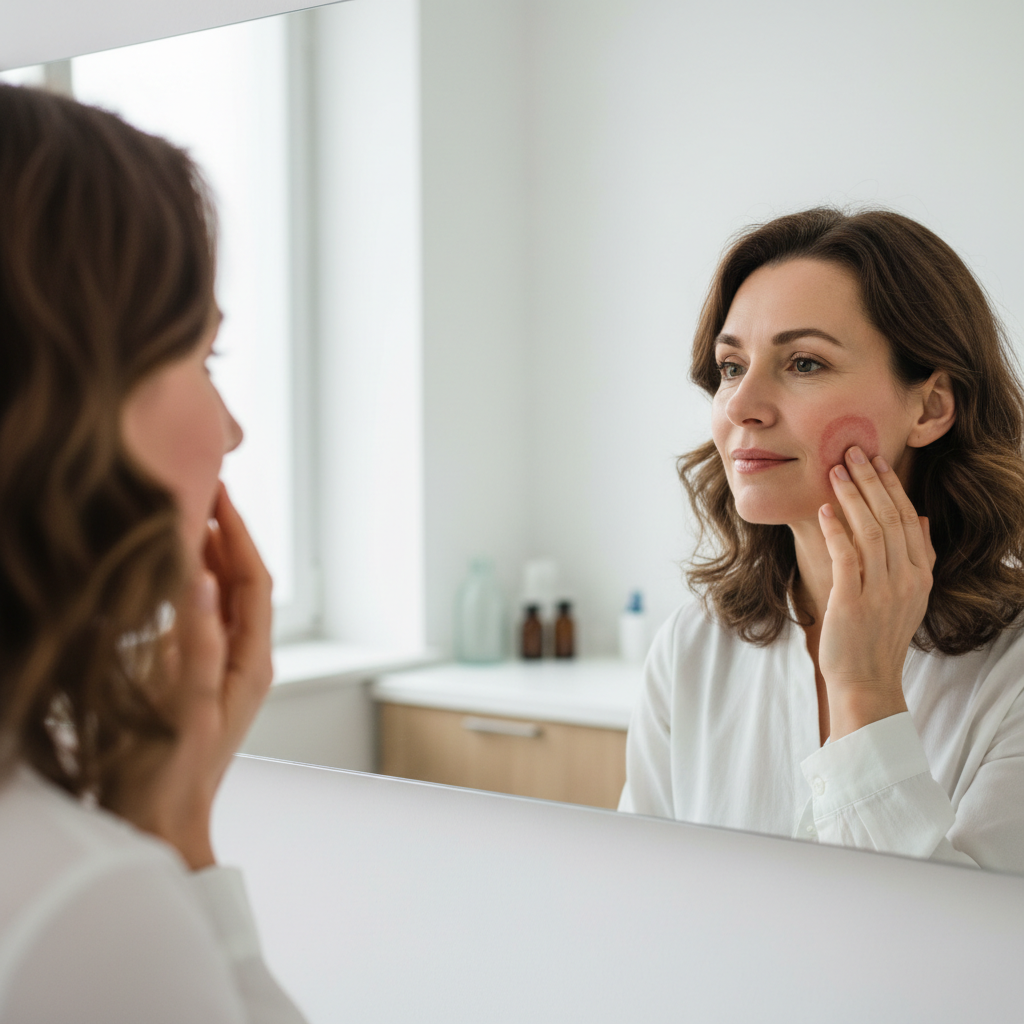
For women in their 40s and early 50s, the body often begins to send confusing signals. You might notice a strange redness across your cheeks, a persistent ache in your knees, or a level of exhaustion that a full night’s sleep can’t touch. Because perimenopause symptoms can mirror several autoimmune conditions, it is common to wonder: is this just "the change," or is it something more serious like Lupus or Dermatomyositis?
Navigating this transition requires a sharp eye for detail. While perimenopause is a natural biological process, the hormonal shifts involved can sometimes mask—or even trigger—autoimmune flares. This guide will help you decode the overlap between dermatomyositis, lupus, and perimenopause symptoms so you can advocate for the right care.
Is it a butterfly rash or perimenopause skin flushing?
One of the most visually striking overlaps occurs on the face. In Systemic Lupus Erythematosus (SLE), the "malar rash" or butterfly rash typically spans the bridge of the nose and the cheeks, but notably spares the nasolabial folds (the lines from your nose to the corners of your mouth). This rash is often photosensitive, meaning it flares up after sun exposure, and may be raised or scaly.
In contrast, perimenopause skin flushing—often associated with hot flashes—is transient. It usually comes on suddenly, often accompanied by a feeling of intense heat and sweating, and disappears within minutes. However, low estrogen can lead to chronic skin changes, including thinning, increased sensitivity, and rosacea-like redness that doesn't disappear as quickly as a hot flash.
Dermatomyositis presents differently. It often features a "heliotrope rash," which is a purplish-red discoloration on the upper eyelids, sometimes accompanied by swelling. You might also notice Gottron papules—reddish bumps on the knuckles. If your skin changes are persistent, itchy, or painful, and do not fluctuate with your temperature or emotions, a perimenopause symptoms checklist can help you determine if other hormonal markers are present, but a skin biopsy or blood work is often needed for a definitive diagnosis.
How do I distinguish muscle weakness from perimenopause fatigue?
Fatigue is the hallmark of perimenopause, often driven by sleep disturbances and fluctuating progesterone. You might feel "tired in your bones," but you can still physically perform tasks like lifting a grocery bag or climbing stairs, even if it feels like a monumental effort.
Dermatomyositis, however, is characterized by true proximal muscle weakness. According to the American College of Rheumatology, this weakness typically affects the muscles closest to the trunk, such as the hips, thighs, shoulders, and upper arms.
Ask yourself these three questions to distinguish the two:
- Can I physically lift my arms above my head to wash my hair? (Difficult in dermatomyositis).
- Can I rise from a low chair without using my hands for leverage? (Difficult in dermatomyositis).
- Is my "weakness" actually just a lack of energy, or is the muscle failing to respond?
If you find that you are physically unable to perform these movements, rather than just feeling too tired to do them, this is a red flag for inflammatory myopathy. This is distinct from the generalized "brain fog" and lethargy described in our guide on fibromyalgia and perimenopause symptoms, which focuses more on widespread pain and central nervous system sensitization.
Can perimenopause trigger a dermatomyositis or lupus flare?
The relationship between sex hormones and the immune system is profound. Estrogen is an immunomodulator; it generally enhances the humoral immune response. Research suggests that the dramatic fluctuations of estrogen during perimenopause can destabilize a previously quiet autoimmune condition.
According to the Lupus Foundation of America via NIH resources, many women experience their first lupus symptoms or significant flares during periods of hormonal upheaval, such as puberty, pregnancy, or the menopausal transition. When estrogen levels drop and spike erratically, it can trigger inflammatory cytokines.
Furthermore, the loss of estrogen’s protective effect on tissues can make existing autoimmune symptoms feel worse. This is why many women find their Hashimoto’s and perimenopause overlap becomes particularly difficult to manage during their late 40s. The body is essentially losing its "buffer," making it more reactive to internal and external stressors.
What blood tests distinguish autoimmune disease from hormone shifts?
Because symptoms like joint pain and fatigue are so non-specific, laboratory testing is the gold standard for decoding what is happening under the surface. If you are experiencing symptoms that overlap with Lupus or Dermatomyositis, your doctor should look beyond simple FSH (Follicle Stimulating Hormone) levels.
| Symptom Category | Potential Autoimmune Marker | Perimenopause Indicator |
|---|---|---|
| Inflammation | Elevated CRP or ESR (Sed Rate) | Usually normal CRP |
| Muscle Integrity | Creatine Kinase (CK) or Aldolase | Normal muscle enzymes |
| Antibodies | ANA, Anti-dsDNA, Anti-Jo-1 | Negative or low-titer ANA |
| Hormones | Normal thyroid/estrogen | High FSH, Low Estradiol |
| Blood Counts | Low WBC or Platelets (Lupus) | Generally normal CBC |
While an ANA (Antinuclear Antibody) test is a common screening tool for Lupus, it is important to note that a "weak positive" ANA can sometimes occur in healthy middle-aged women or those with perimenopause insulin resistance signs and metabolic inflammation. A high-titer ANA combined with specific antibodies like Anti-Smith or Anti-double-stranded DNA is much more indicative of Lupus.
Why do joint pains feel worse during my period in my 40s?
Many women in perimenopause notice that their joint stiffness and muscle aches follow a cyclical pattern, worsening right before or during their period. This is often due to the "prostaglandin surge" and the sharp drop in estrogen, which has anti-inflammatory properties.
In Lupus, joint pain (arthralgia) is often migratory, meaning it moves from one joint to another, and is frequently accompanied by morning stiffness that lasts longer than 30 minutes. The Mayo Clinic notes that lupus-related joint pain is often associated with visible swelling or warmth in the joints.
If your joint pain is purely hormonal, you may find significant relief through HRT for perimenopause, as replacing estrogen can lubricate the connective tissues and dampen the systemic inflammatory response. However, if the pain persists despite hormone therapy, a rheumatological evaluation is essential.
How does estrogen loss affect connective tissue disease?
Estrogen plays a vital role in maintaining the structural integrity of collagen and cartilage. As levels decline, the "scaffolding" of your body becomes more brittle. For women with an underlying connective tissue disease like Dermatomyositis or Lupus, this can lead to a "double whammy" effect.
- Vascular Changes: Estrogen helps keep blood vessels flexible. Loss of estrogen can worsen Raynaud’s phenomenon (fingers turning white or blue in the cold), which is common in both Lupus and Dermatomyositis.
- Mucosal Dryness: The Sjögren’s-like symptoms (dry eyes and dry mouth) often seen in Lupus are exacerbated by the systemic dryness caused by perimenopause.
- Bone Density: Both Lupus (and its treatment, like prednisone) and menopause increase the risk of osteoporosis. According to The North American Menopause Society (NAMS), the rapid decline in estrogen during the first five years of menopause is the primary driver of bone loss in women.
Managing these overlapping risks requires a multi-disciplinary approach. It isn't just about treating the autoimmune disease; it's about supporting the body's changing hormonal landscape to prevent secondary complications like fractures or cardiovascular disease.
When should I see a rheumatologist vs an OBGYN?
The "wait and see" approach can be frustrating when you feel unwell. If your symptoms are primarily related to your cycle—such as night sweats, irregular periods, and mood swings—your OBGYN is the best first stop. They can evaluate you for perimenopause and discuss whether you are a candidate for hormone replacement therapy.
However, you should seek a referral to a rheumatologist if you experience any of the following "red flag" symptoms:
- A persistent rash that is worsened by sunlight.
- Physical inability to perform tasks like getting out of a car or brushing your hair.
- Unexplained fevers or unintentional weight loss.
- Soaring inflammatory markers (CRP/ESR) in your blood work.
- Sores in the mouth or nose that don't heal.
- Blue or white discoloration of the fingers in response to cold.
It is possible to have both perimenopause and an autoimmune condition. In fact, many women find that once their hormones are stabilized through HRT for perimenopause beginners, their autoimmune symptoms become much easier to manage because the body is no longer in a state of constant hormonal "alarm."
Summary of Differences
While the symptoms can feel identical on a Tuesday morning when you're too tired to move, the underlying mechanisms differ. Perimenopause is a transition of withdrawal (of hormones), whereas Lupus and Dermatomyositis are conditions of attack (by the immune system).
Don't let a doctor dismiss your symptoms as "just age" or "just menopause" if you feel something deeper is wrong. By tracking your symptoms against your menstrual cycle and requesting specific inflammatory markers, you can get to the bottom of whether you’re dealing with a hormonal shift, an autoimmune challenge, or a complex combination of both. Your radiance isn't lost; it’s just waiting for the right clinical roadmap to bring it back to the surface.
FAQ
Common questions
How can I tell the difference between a lupus rash and a perimenopause flush?
Lupus rashes (like the butterfly rash) are often scaly, photosensitive, and last days or weeks. Perimenopause flushing is typically a sudden, hot sensation that resolves within minutes.
Can perimenopause trigger a lupus flare?
Yes. Hormonal fluctuations during perimenopause can trigger the immune system, potentially leading to flares in conditions like Lupus or Dermatomyositis.
Is muscle weakness always a sign of dermatomyositis?
Perimenopause causes fatigue (feeling tired), while dermatomyositis causes true muscle weakness (inability to physically perform movements like lifting arms).
What blood tests distinguish lupus from perimenopause?
Key tests include ANA, Anti-dsDNA, and Anti-Jo-1 for autoimmune issues, while FSH and Estradiol levels help identify perimenopause.
Why does my autoimmune pain get worse right before my period?
Yes. Estrogen is anti-inflammatory; when it drops before your period, joint and muscle pain associated with autoimmune conditions often intensifies.
When should I stop seeing my OBGYN and see a rheumatologist?
See a rheumatologist if you have persistent rashes, physical muscle failure, unexplained fevers, or positive ANA/inflammatory markers.
Want this in your inbox each Sunday?
New articles, the science you can actually use, and the occasional rant.
Keep reading

Perimenopause Symptoms Checklist: 38 Signs You're Not Imagining
A comprehensive, doctor-reviewed checklist of perimenopause symptoms — from the obvious hot flashes to the weird ones nobody warned you about.
9 min read

Hashimoto's and Perimenopause: Why Symptoms Overlap (and How to Tell Them Apart)
Fatigue, brain fog, weight gain, hair loss — Hashimoto's and perimenopause share most symptoms. Here's how to tell what's flaring, what's hormonal, and what to ask your doctor.
11 min read

Fibromyalgia and Perimenopause: When Two Storms Collide
Why fibromyalgia almost always flares during perimenopause, what changes in your nervous system, and the small daily shifts that actually help.
10 min read