
Dermatomyositis vs Lupus: Identifying Overlap in Perimenopause
Learn the key differences between Dermatomyositis and Lupus during perimenopause. Discover how to identify rashes, muscle weakness, and joint pain today.
Published:
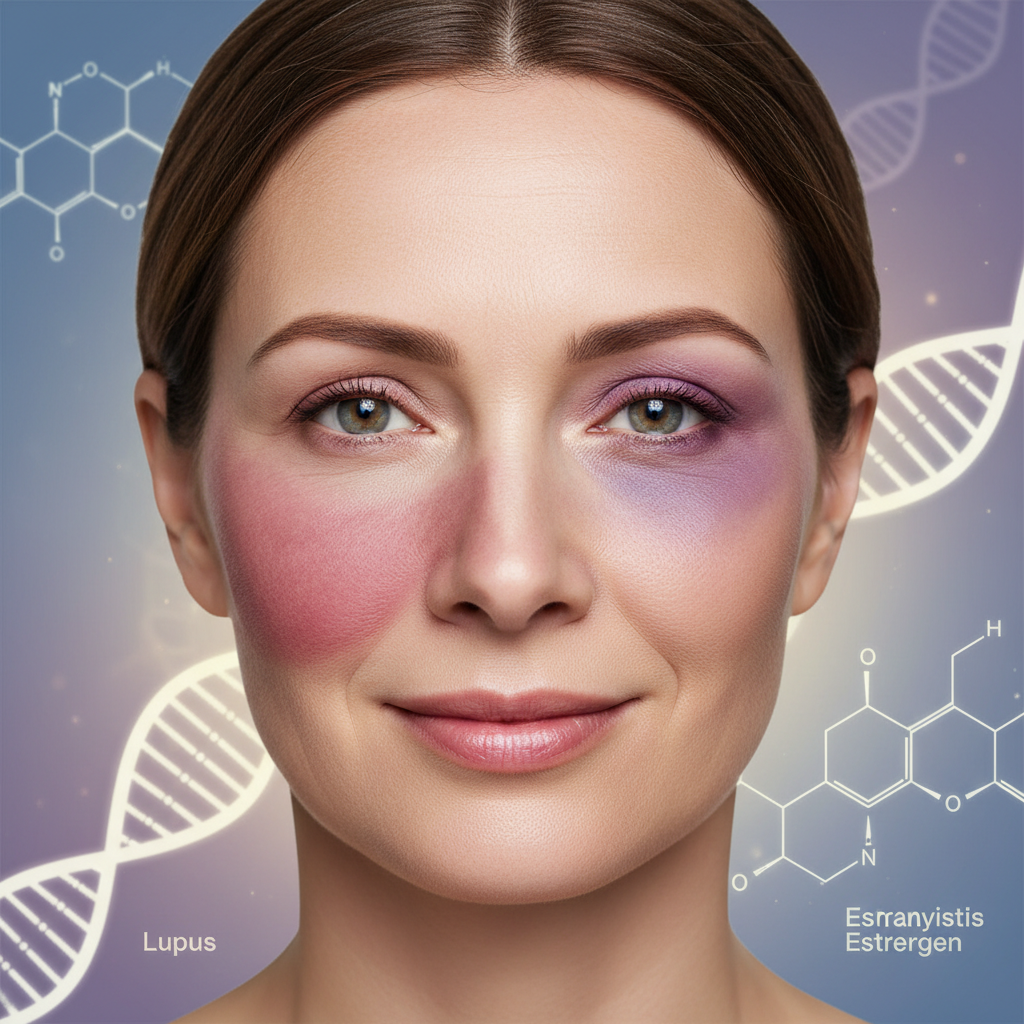
Why do autoimmune symptoms often peak during the perimenopause transition?
If you are navigating your 40s or early 50s, you are likely intimately familiar with the erratic nature of the perimenopause transition. However, for many women, the traditional symptoms of night sweats and irregular cycles are joined by more concerning signs: profound fatigue, persistent rashes, and muscle aches. It is not your imagination—autoimmune conditions like Systemic Lupus Erythematosus (SLE) and Dermatomyositis (DM) often present or flare during this period of intense hormonal flux.
The link lies in the profound immunomodulatory effects of estrogen. Estrogen is not just a reproductive hormone; it is a key player in how your immune system functions. Research suggests that estrogen fluctuations can alter the activity of B cells and T cells, the very components of your immune system responsible for distinguishing "self" from "invader." When estrogen levels begin their perimenopausal roller coaster, the immune system can become dysregulated, leading to the onset of autoimmune disease or the worsening of pre-existing conditions.
Because the perimenopause symptoms checklist includes fatigue, joint pain, and skin changes, many women (and unfortunately, some physicians) dismiss these early autoimmune warning signs as "just part of getting older." Distinguishing between dermatomyositis vs systemic lupus erythematosus in perimenopause is critical because, while they share a genetic and hormonal landscape, their treatments and long-term risks—including internal organ involvement and malignancy—differ significantly.
Dermatomyositis vs systemic lupus erythematosus: how do the skin rashes differ?
Both Lupus and Dermatomyositis are famous for their dermatological manifestations, and in the mirror, they can look frustratingly similar. However, a closer look at the location and texture of the rash provides the first clue for your rheumatologist.
Systemic Lupus Erythematosus (SLE) is most well-known for the "butterfly rash" (malar rash). This is a flat or raised red rash that spreads across the bridge of the nose and the cheeks, notably sparing the nasolabial folds (the lines running from your nose to the corners of your mouth). This rash is highly photosensitive; a few minutes of sun exposure can trigger a flare that lasts for weeks.
In contrast, Dermatomyositis presents with several "pathognomonic" (signature) signs that you won't see in Lupus:
- The Heliotrope Rash: A reddish-purple discoloration on the upper eyelids, often accompanied by swelling.
- Gottron Papules: Reddish, scaly bumps found over the knuckles, elbows, or knees. Unlike the Lupus rash, which often avoids the knuckles, DM specifically targets them.
- The Shawl Sign: A diffuse, reddened rash over the back of the neck, shoulders, and upper chest, resembling the pattern of a shawl.
The Mayo Clinic notes that the skin changes of dermatomyositis may precede muscle weakness by weeks or even months. During perimenopause, when skin already becomes thinner and more prone to irritation due to dropping estrogen, these rashes can be mistakenly attributed to adult-onset rosacea or contact dermatitis.
| Feature | Systemic Lupus Erythematosus (SLE) | Dermatomyositis (DM) |
|---|---|---|
| Primary Facial Rash | Malar "Butterfly" rash (spares nasolabial folds) | Heliotrope rash (purplish eyelids) |
| Hand Involvement | Rash between the joints (interarticular) | Gottron Papules (directly on the knuckles) |
| Photosensitivity | Extremely High | High |
| Itching | Less common | Very common (pruritus) |
| Nail Changes | Periungual redness | Ragged cuticles and dilated capillaries |
Is your joint pain from lupus, dermatomyositis, or estrogen loss?
Joint pain is perhaps the most common overlap between perimenopause and autoimmune disease. Estrogen acts as a natural anti-inflammatory in the joints; as it declines, many women experience "menopausal arthritis," a self-limiting but painful stiffness. However, distinguishing this from SLE or DM is vital.
In Systemic Lupus, joint pain (arthralgia) or inflammation (arthritis) affects over 90% of patients. It is typically "migratory" and symmetrical, meaning it might move from your left wrist to your right knee. While it causes significant pain and stiffness, SLE arthritis is usually non-erosive, meaning it doesn't typically destroy the bone like Rheumatoid Arthritis might.
In Dermatomyositis, joint pain is also common but is usually secondary to the primary issue: the muscles. The pain is often felt in the "girdle" areas—the hips and shoulders.
If you are also navigating fibromyalgia-perimenopause symptoms, the diagnostic picture becomes even cloudier. Fibromyalgia involves widespread musculoskeletal pain and tenderness but lacks the inflammatory markers (like an elevated CRP or ESR) found in Lupus and Dermatomyositis. If your "aches" are accompanied by visible joint swelling or a persistent low-grade fever, it is less likely to be simple perimenopause and more likely to be an inflammatory autoimmune process.
Why does muscle weakness in your 40s require immediate investigation?
While Lupus can cause fatigue and general malaise, true muscle weakness is the hallmark of Dermatomyositis. This is not the "I'm too tired to go to the gym" feeling often associated with perimenopause insulin resistance signs. This is functional, proximal muscle weakness.
Proximal muscles are those closest to the trunk of your body. In your 40s, you might notice:
- Difficulty rising from a seated position without using your arms.
- Trouble lifting your arms above your head to brush your hair or reach a high shelf.
- Difficulty climbing stairs or a feeling that your legs are "heavy."
The American College of Rheumatology emphasizes that inflammatory myopathies like DM involve actual inflammation of the muscle fibers. If left untreated, this can lead to permanent muscle atrophy or even affect the muscles used for swallowing and breathing.
If you find yourself struggling with these specific tasks, do not wait. While Hashimoto’s-perimenopause overlap can also cause muscle aches due to thyroid dysfunction, the specific "power loss" of Dermatomyositis requires an Urgent Care or Rheumatology evaluation to check for elevated muscle enzymes (CK or Aldolase).
How do hormonal shifts trigger flares in both SLE and dermatomyositis?
The relationship between sex hormones and autoimmunity is a "U-shaped" curve. We know that SLE is overwhelmingly a disease of women of childbearing age, suggesting that high estrogen can be a trigger. However, the withdrawal or fluctuation of estrogen during perimenopause creates a different kind of vulnerability.
During perimenopause, the ratio of estrogen to progesterone shifts dramatically. Progesterone has known anti-inflammatory properties, and its decline can leave the immune system's pro-inflammatory cytokines unchecked. According to research published in the NIH database, the decline in ovarian function can lead to an increase in IL-6 and TNF-alpha, both of which are implicated in the pathogenesis of SLE and inflammatory myositis.
Furthermore, the stress of perimenopausal sleep disruption and vasomotor symptoms (hot flashes) can trigger the hypothalamic-pituitary-adrenal (HPA) axis. Chronic activation of the stress response is a well-documented trigger for autoimmune flares. This creates a vicious cycle: hormonal shifts trigger a flare, the flare causes stress and sleep loss, which in turn worsens the autoimmune activity.
What labs should you request to distinguish autoimmune disease from perimenopause?
If you suspect your symptoms go beyond the "normal" transition, a comprehensive blood panel is your best tool for advocacy. Relying solely on a FSH (Follicle Stimulating Hormone) test will only tell you if you are in perimenopause—it won't rule out Lupus or Dermatomyositis.
Request the following labs from your healthcare provider:
- ANA (Antinuclear Antibody) with Titer and Pattern: An ANA is a screening tool. While a positive ANA can occur in healthy women, a high titer (1:160 or higher) in the presence of symptoms is a red flag for SLE or DM.
- Extractable Nuclear Antigen (ENA) Panel: This looks for specific antibodies like Anti-dsDNA (highly specific for Lupus) or Anti-Jo-1 (associated with Dermatomyositis and lung involvement).
- Muscle Enzymes (CK and Aldolase): If muscle weakness is present, these will be elevated in Dermatomyositis but usually normal in Lupus and perimenopause.
- Inflammatory Markers (CRP and ESR): These indicate systemic inflammation, which is common in autoimmune diseases but generally absent in uncomplicated perimenopause.
- C3 and C4 Complement Levels: Low levels of these proteins often indicate active Systemic Lupus, as the body "consumes" them during an autoimmune attack.
It is also wise to check your metabolic health, as perimenopause insulin resistance signs can sometimes mimic the fatigue and brain fog of Lupus.
Can HRT help manage autoimmune symptoms after age 40?
The use of Hormone Replacement Therapy (HRT) in women with autoimmune diseases was once highly controversial. Early studies suggested that estrogen might worsen Lupus. However, more recent data, including the Lupus ERAS randomized trial, suggests that for women with stable, inactive-to-moderately active Lupus, HRT does not significantly increase the risk of severe flares.
For women with Dermatomyositis, the data is even more encouraging. Since HRT can help maintain muscle mass and bone density—both of which are threatened by the corticosteroids often used to treat DM—it can be a vital part of a recovery plan.
The benefits of HRT for the autoimmune patient include:
- Stabilizing the Immune Environment: By smoothing out the "peaks and valleys" of estrogen, HRT may prevent the hormonal triggers that lead to flares.
- Joint and Muscle Support: Estrogen helps maintain the collagen in joints and supports muscle repair.
- Improved Sleep and Stress Resilience: By treating hot flashes and night sweats, HRT reduces the systemic stress that often precedes an autoimmune flare.
If you are considering this path, our HRT for perimenopause beginners guide offers a deep dive into the different delivery methods. Transdermal estrogen (patches or gels) is generally preferred for autoimmune patients as it carries a lower risk of blood clots compared to oral pills—a crucial consideration since SLE itself increases clot risk.
Ultimately, the journey through perimenopause with an autoimmune condition requires a multidisciplinary approach. You are not just a set of hormones, and you are not just a diagnosis. By identifying the nuances of dermatomyositis vs systemic lupus erythematosus in perimenopause, you can work with your care team to reclaim your vitality and shine through the transition.
Medical Disclaimer: This content is for informational purposes only and does not constitute medical advice. Always seek the advice of your physician or other qualified health provider with any questions you may have regarding a medical condition.
FAQ
Common questions
How can I tell the difference between a Lupus rash and a Dermatomyositis rash?
While both cause facial redness, the Lupus malar rash typically spares the nasolabial folds (smile lines), whereas Dermatomyositis often presents as a purplish 'heliotrope' rash on the eyelids and scaly Gottron papules on the knuckles.
Can perimenopause trigger the onset of Systemic Lupus Erythematosus?
Yes. Estrogen fluctuations during perimenopause can dysregulate the immune system, potentially triggering the onset of SLE or causing flares in existing autoimmune conditions due to changes in B and T cell activity.
Is my muscle weakness just perimenopausal fatigue or Dermatomyositis?
Muscle weakness in Dermatomyositis is 'proximal,' meaning it affects the muscles closest to the trunk. You might struggle to rise from a chair, climb stairs, or lift your arms to brush your hair. Perimenopausal fatigue is generally a lack of energy, not a loss of physical strength.
Is HRT safe for women with Lupus or Dermatomyositis?
Yes, but it must be managed carefully. Recent studies show that transdermal HRT is generally safe for women with stable Lupus and may even help stabilize the immune response by preventing drastic estrogen fluctuations.
What specific blood tests distinguish autoimmune disease from menopause?
Standard labs include an ANA with titer, an ENA panel (checking for Anti-dsDNA or Anti-Jo-1), muscle enzymes (CK and Aldolase), and inflammatory markers like CRP and ESR to distinguish autoimmune activity from hormonal shifts.
Can you have both Lupus and Dermatomyositis at the same time?
It is rare but possible. Some women experience 'overlap syndromes' where they meet diagnostic criteria for both SLE and Dermatomyositis, requiring a very tailored treatment approach by a rheumatologist.
Want this in your inbox each Sunday?
New articles, the science you can actually use, and the occasional rant.
Keep reading

Perimenopause Symptoms Checklist: 38 Signs You're Not Imagining
A comprehensive, doctor-reviewed checklist of perimenopause symptoms — from the obvious hot flashes to the weird ones nobody warned you about.
9 min read

Hashimoto's and Perimenopause: Why Symptoms Overlap (and How to Tell Them Apart)
Fatigue, brain fog, weight gain, hair loss — Hashimoto's and perimenopause share most symptoms. Here's how to tell what's flaring, what's hormonal, and what to ask your doctor.
11 min read

Fibromyalgia and Perimenopause: When Two Storms Collide
Why fibromyalgia almost always flares during perimenopause, what changes in your nervous system, and the small daily shifts that actually help.
10 min read