
DHEA for Perimenopause Fatigue: Benefits & Risks
Explore how DHEA for perimenopause fatigue and brain fog can restore energy, balance cortisol, and clear cognitive clouds during the midlife transition.
Published:
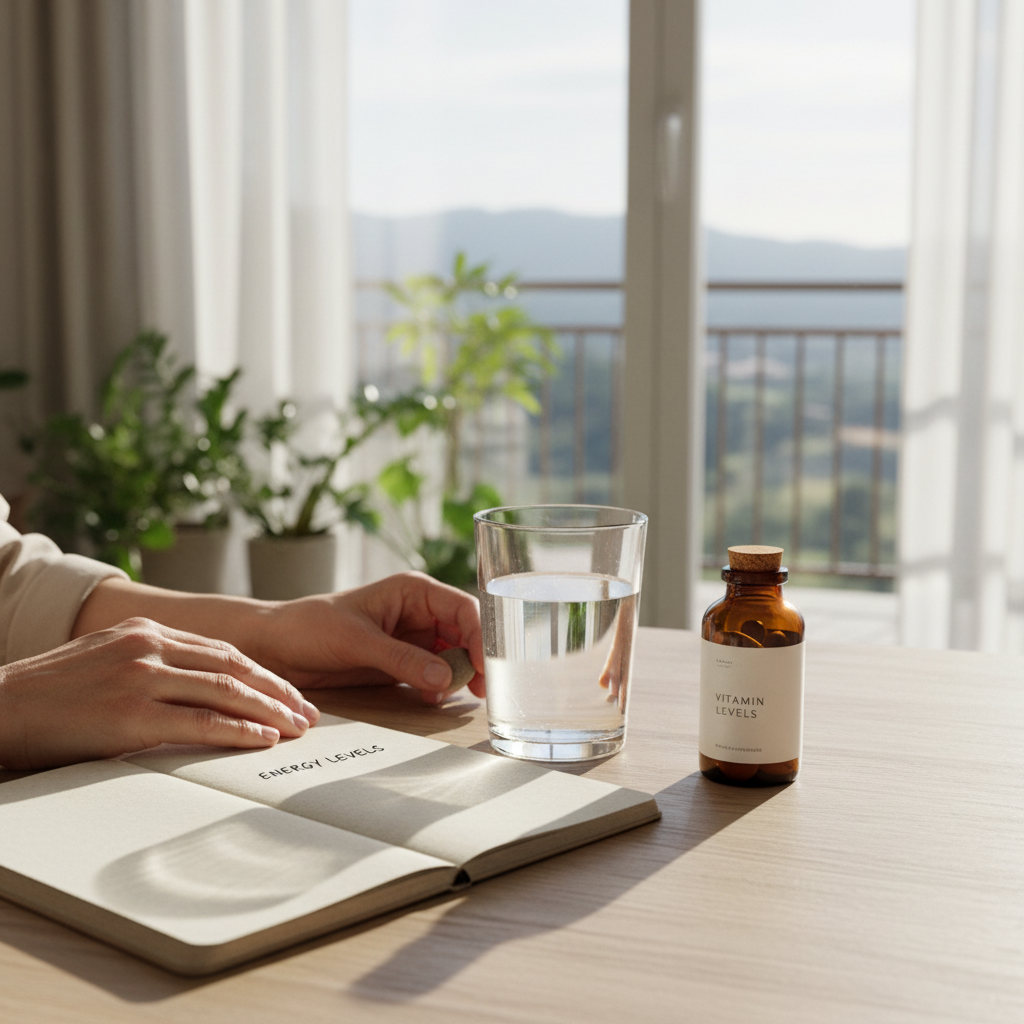
You wake up after eight hours of sleep feeling like you’ve been hit by a freight train. By 3:00 PM, your brain feels like it’s wading through thick molasses, and despite your exhaustion, you’re often "wired but tired" when your head finally hits the pillow. If this sounds familiar, you aren’t just "getting older." You are likely navigating the hormonal turbulence of the perimenopause transition.
While estrogen and progesterone get most of the spotlight, there is a third, silent player in your endocrine system: DHEA. Understanding the role of DHEA for perimenopause fatigue and brain fog is often the missing piece of the puzzle for women who feel they’ve lost their spark.
What is DHEA and why does it drop so sharply after age 40?
Dehydroepiandrosterone (DHEA) is a pro-hormone produced primarily by your adrenal glands, with smaller amounts made in the ovaries and brain. It serves as a precursor—a biological "raw material"—that your body converts into other hormones, including estrogen and testosterone.
According to the Cleveland Clinic, DHEA production peaks in your mid-20s and begins a steady, sharp decline thereafter. By the time you reach age 40, your levels may have dropped by as much as 50%. This decline is so predictable that researchers often use DHEA levels as a biological marker for aging.
In perimenopause, this decline becomes more problematic. As your ovaries begin to fluctuate and eventually wind down their hormone production, your adrenal glands are expected to pick up the slack. If your adrenals are already depleted of DHEA, you lose that vital hormonal "buffer," leading to the profound exhaustion many women report. This drop often precedes the more well-known perimenopause symptoms checklist items, acting as an early warning sign of the transition.
How does DHEA deficiency contribute to 'wired but tired' perimenopause fatigue?
The "wired but tired" phenomenon is a hallmark of adrenal dysregulation. You feel physically exhausted, yet your nervous system is stuck in a state of high alert, making it impossible to rest. DHEA plays a critical role here as the "anti-cortisol" hormone.
While cortisol is your primary stress hormone, DHEA acts as its counterbalance. When DHEA levels are optimal, they help protect your tissues from the catabolic (breaking down) effects of chronic cortisol exposure. When DHEA is low, cortisol goes unchecked. Research published via the National Institutes of Health (NIH) suggests that a low DHEA-to-cortisol ratio is strongly associated with burnout, chronic fatigue, and reduced resilience to stress.
Without enough DHEA to buffer the stress response, your body remains in a state of "sympathetic dominance." This drains your cellular energy (ATP) while keeping your brain in a state of hyper-vigilance. If you are also dealing with fibromyalgia perimenopause symptoms, this lack of DHEA can exacerbate muscle pain and localized fatigue, as DHEA is involved in tissue repair and protein synthesis.
Can DHEA supplements help clear persistent perimenopause brain fog?
Brain fog is perhaps the most frustrating symptom of the transition. It manifests as forgetfulness, losing your train of thought, and a literal "heaviness" in your cognitive processing. Because DHEA is a neurosteroid—meaning it is produced and used directly in the brain—it has a profound impact on cognitive function.
Studies cited by the Mayo Clinic indicate that DHEA may improve mood and provide a sense of well-being, though its effects on specific memory tasks are still being debated. However, for women in perimenopause, the benefit often comes from DHEA’s conversion into testosterone. Testosterone is vital for dopamine production and focus in the female brain.
By restoring DHEA levels, you may provide the brain with the precursors it needs to:
- Support neuroplasticity and neuron survival.
- Balance neurotransmitters like GABA and glutamate.
- Reduce neuro-inflammation that contributes to "foggy" feelings.
For women exploring an HRT for perimenopause beginners guide, DHEA is often considered an "adjunct" therapy—not a replacement for estrogen, but a supportive partner that helps clear the cognitive clouds estrogen alone might not reach.
What is the relationship between DHEA, cortisol, and your adrenal health?
To understand DHEA, you must understand the "Adrenal Steal" (also known as the Pregnenolone Steal). All steroid hormones are derived from cholesterol. Cholesterol converts to pregnenolone, which is the "mother hormone." From there, the body has a choice: it can make DHEA or it can make progesterone and cortisol.
In the high-stress environment of modern perimenopause, your body will almost always prioritize survival (cortisol) over vitality (DHEA).
| Feature | Cortisol (The Stress Hormone) | DHEA (The Vitality Hormone) |
|---|---|---|
| Primary Function | Mobilizes energy for immediate threat | Supports tissue repair, libido, and mood |
| Metabolic Effect | Catabolic (breaks down muscle/bone) | Anabolic (builds up muscle/bone) |
| Immune Impact | Suppresses immunity long-term | Enhances immune surveillance |
| Perimenopause Trend | Often stays high or fluctuates wildly | Declines steadily and sharply |
This relationship is why simply taking a supplement isn't always enough. If you are under extreme stress, your body may convert your DHEA supplements into even more cortisol, or your high cortisol will simply continue to "drown out" the benefits of the DHEA. This is particularly relevant if you are managing complex conditions like Hashimoto’s perimenopause overlap, where the endocrine system is already under significant strain.
What are the risks of taking DHEA without a confirmed deficiency?
DHEA is widely available over-the-counter in the United States, which leads many to believe it is a harmless "anti-aging" vitamin. However, DHEA is a powerful steroid hormone. Taking it when your levels are already adequate, or taking too high a dose, can lead to significant side effects.
The Endocrine Society warns that excessive DHEA can cause androgenic side effects in women, including:
- Acne and Oily Skin: Particularly on the chin and jawline.
- Hirsutism: Unwanted hair growth on the face or chest.
- Hair Loss: Thinning of the hair on the scalp (male-pattern baldness).
- Voice Changes: A deepening of the voice (which may be irreversible).
- Irritability: "Roid rage" lite—feeling uncharacteristically angry or aggressive.
Furthermore, because DHEA can convert into estrogen, it may be contraindicated for women with a history of hormone-sensitive cancers (breast, uterine, or ovarian). DHEA can also influence insulin sensitivity. While this can be a benefit for those showing perimenopause insulin resistance signs, it requires careful monitoring to avoid blood sugar instability.
How to test your DHEA-S levels correctly for accurate results?
If you suspect your fatigue is linked to low DHEA, you must test before you treat. The standard marker is DHEA-S (Dehydroepiandrosterone Sulfate). The "S" stands for sulfate, which is the stable, circulating form of the hormone. Unlike DHEA, which fluctuates throughout the day, DHEA-S levels remain relatively constant, making it a much more reliable metric.
When testing, keep these requirements in mind:
- Timing: For menstruating women, it is often best to test during the early follicular phase (Day 3-5 of your cycle), though DHEA-S is less cycle-dependent than estrogen.
- Method: Blood (serum) tests are the gold standard and are widely accepted by conventional doctors. However, functional practitioners may prefer dried urine testing (DUTCH test) to see how your DHEA is breaking down into metabolites like androsterone and etiocholanolone.
- Reference Ranges: Beware the "normal" lab range. A lab may list a normal range for a 45-year-old woman as 35–430 μg/dL. Being at a "36" is technically "normal," but it is far from optimal for energy and cognitive function. Most functional experts look for levels in the upper one-third of the age-matched range.
What is the ideal DHEA dosage for women in the perimenopause transition?
Dosing DHEA is not a one-size-fits-all endeavor. Because women are more sensitive to androgens than men, the doses found in many health store supplements (25mg, 50mg, or 100mg) are often far too high for the female physiology.
According to the North American Menopause Society (NAMS), while DHEA is sometimes used intravaginally for local symptoms (like vulvovaginal atrophy), systemic oral use should be approached with caution.
For systemic fatigue and brain fog, clinicians typically follow these guidelines:
- Micro-dosing: Starting with 5mg to 10mg per day.
- Formulation: Using pharmaceutical-grade (USP) DHEA to ensure purity, as supplements are not strictly regulated by the FDA.
- Timing: Taking it in the morning to mimic the body’s natural diurnal rhythm (DHEA and cortisol are naturally highest in the AM).
- Monitoring: Re-testing DHEA-S levels after 6 to 8 weeks of supplementation to ensure levels are rising without exceeding the optimal range.
A Note on Micronized DHEA: Some practitioners recommend "micronized" DHEA, which has a smaller particle size for better absorption and potentially fewer digestive side effects.
Summary of Action Steps
- Assess: Track your fatigue and brain fog patterns for one month.
- Test: Ask your provider for a DHEA-S and Morning Cortisol blood test.
- Consult: Discuss the results with a provider who understands the nuances of perimenopause.
- Supplement (If needed): Start with a low dose (5-10mg) and monitor for androgenic side effects like oily skin.
- Support: Address the root causes of adrenal stress through sleep hygiene and nervous system regulation.
DHEA is not a magic pill, but it is a vital tool in your hormonal toolkit. By addressing a deficiency, you may find that the "heavy" feeling of perimenopause lifts, allowing you to reclaim your energy and focus for the years ahead.
FAQ
Common questions
What is DHEA exactly?
DHEA (Dehydroepiandrosterone) is a precursor hormone produced by the adrenal glands. It serves as a 'pro-hormone' that the body converts into estrogen and testosterone as needed.
Can low DHEA cause extreme fatigue?
Yes, low DHEA is a major contributor to 'wired but tired' fatigue. Because DHEA buffers the effects of cortisol, a deficiency leaves you feeling exhausted but unable to rest deeply.
How fast does DHEA work for brain fog?
Many women report improved focus and clarity within 2 to 4 weeks of starting a DHEA supplement, provided they have a confirmed deficiency. it works by supporting neurosteroid levels in the brain.
What are the side effects of DHEA for women?
Common side effects of excess DHEA include acne, oily skin, increased facial hair, and irritability. Always test your levels before starting to avoid these androgenic symptoms.
Is DHEA-S the same as DHEA?
DHEA-S (the sulfate form) is the most accurate marker because its levels remain stable throughout the day, unlike free DHEA which fluctuates rapidly.
Who should avoid DHEA supplements?
Women with a history of hormone-sensitive cancers (breast, uterine) or those with PCOS should consult an oncologist or specialist before using DHEA, as it can increase estrogen and testosterone levels.
Want this in your inbox each Sunday?
New articles, the science you can actually use, and the occasional rant.
Keep reading

Perimenopause Symptoms Checklist: 38 Signs You're Not Imagining
A comprehensive, doctor-reviewed checklist of perimenopause symptoms — from the obvious hot flashes to the weird ones nobody warned you about.
9 min read

Hashimoto's and Perimenopause: Why Symptoms Overlap (and How to Tell Them Apart)
Fatigue, brain fog, weight gain, hair loss — Hashimoto's and perimenopause share most symptoms. Here's how to tell what's flaring, what's hormonal, and what to ask your doctor.
11 min read

Fibromyalgia and Perimenopause: When Two Storms Collide
Why fibromyalgia almost always flares during perimenopause, what changes in your nervous system, and the small daily shifts that actually help.
10 min read