
IBD or Perimenopause? Managing Gut Flares After 40
Confused by gut flares and hot flashes? Learn how inflammatory bowel disease and perimenopause symptoms overlap and how to manage Crohn's or Colitis in midlife.
Published:
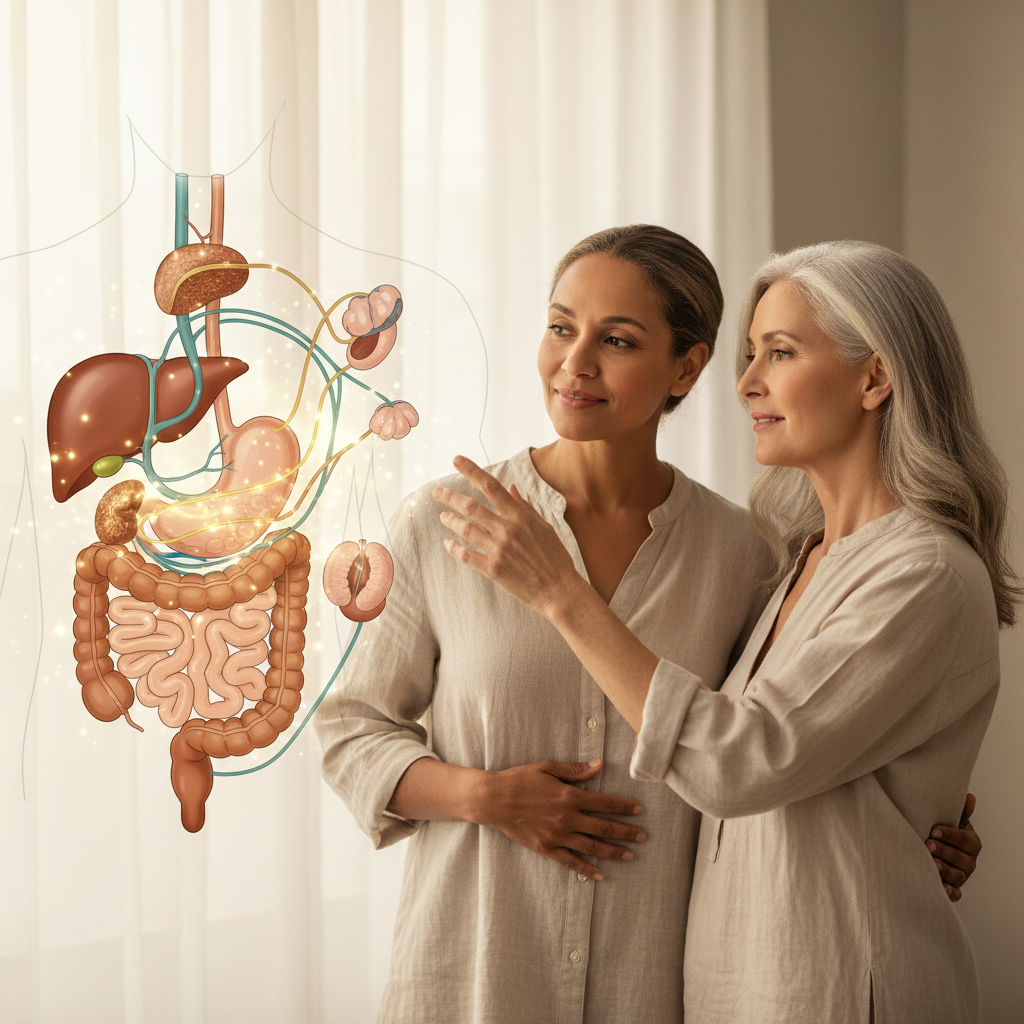
You are in your 40s, navigating the complex terrain of midlife health, when suddenly your gut begins to rebel. If you are living with Inflammatory Bowel Disease (IBD)—whether it is Crohn’s disease or ulcerative colitis—you may notice that the predictable rhythm of your condition has shifted. You find yourself asking: Is this a traditional flare, or is my changing hormonal landscape to blame?
The inflammatory bowel disease and perimenopause symptoms overlap is a significant but often overlooked clinical intersection. As your estrogen levels begin their characteristic fluctuations, the impact on your digestive system can be profound. Because both IBD and perimenopause involve systemic inflammation and can cause overlapping symptoms like fatigue, abdominal pain, and mood changes, distinguishing between them requires a nuanced approach to your body's signals.
Can perimenopause trigger a flare of inflammatory bowel disease?
The short answer is yes, though the relationship is complex. Research indicates that sex hormones, particularly estrogen, play a crucial role in maintaining the integrity of the intestinal barrier and modulating the immune response within the gut. According to the National Institutes of Health (NIH), estrogen has a protective effect on the gut lining; when these levels drop during perimenopause, the intestinal "barrier" may become more permeable, potentially triggering an inflammatory response.
Furthermore, many women report that their IBD symptoms fluctuate in tandem with their menstrual cycle—a phenomenon known as "catamenial" symptoms. As you enter perimenopause, these fluctuations become more erratic. While perimenopause itself may not "cause" IBD, the systemic inflammatory state induced by declining hormones can certainly exacerbate existing Crohn’s or colitis. If you are also managing other autoimmune conditions, you may find that this period of life feels like a "perfect storm" of symptoms, similar to the Hashimoto's perimenopause overlap.
How do I tell the difference between hormonal bloating and IBD inflammation?
Bloating is perhaps the most common symptom shared by both perimenopause and IBD. However, the underlying mechanisms differ. Hormonal bloating is often related to water retention and slowed digestion caused by high progesterone or the relative "estrogen dominance" that occurs when progesterone drops first in early perimenopause. You can track these changes using a perimenopause symptoms checklist to see if the bloating correlates with your cycle or other vasomotor symptoms.
In contrast, IBD-related bloating is usually the result of active inflammation, strictures (narrowing of the bowel), or bacterial overgrowth. IBD inflammation is often accompanied by "red flag" symptoms that are rarely present in standard perimenopause.
| Feature | Hormonal/Perimenopause Bloating | IBD Inflammation Flare |
|---|---|---|
| Pain Location | Generalized, "full" feeling | Often localized (lower right for Crohn's) |
| Stool Quality | Often constipation or slight looseness | Urgency, blood, or mucus |
| Weight Changes | Mild gain due to water/fat redistribution | Unintentional weight loss |
| Fever | Rare (except for hot flashes) | Common during systemic flares |
| Timing | Cyclical or after high-salt meals | Persistent or triggered by specific foods |
If your bloating is accompanied by a change in the frequency of bowel movements or the presence of blood, it is less likely to be "just hormones" and more likely to be an active IBD flare requiring medical intervention.
Why do IBD symptoms get worse right before my period in perimenopause?
During the "luteal phase" (the days leading up to your period), both estrogen and progesterone levels drop sharply. For women with IBD, this hormonal withdrawal can lead to an increase in pro-inflammatory cytokines. This is why many women experience what they call a "mini-flare" every month.
In perimenopause, your cycles may become shorter, longer, or heavier. This unpredictability means your gut might feel like it is in a constant state of flux. The increased production of prostaglandins—chemicals that help the uterus contract—can also affect the smooth muscle of the intestines, leading to increased diarrhea and cramping. This sensitivity is also seen in women dealing with the fibromyalgia perimenopause symptoms complex, where the body's pain processing becomes heightened due to hormonal shifts.
Does estrogen therapy help or hurt Crohn’s and Ulcerative Colitis?
One of the most frequent questions for women in midlife is whether Hormone Replacement Therapy (HRT) is safe. The data regarding HRT and IBD is generally encouraging. According to a study published by the American College of Gastroenterologists (ACG), postmenopausal women using HRT actually had a lower risk of IBD flares compared to those not using hormones.
Estrogen appears to have an anti-inflammatory effect on the colonic mucosa. However, the decision to start HRT should be personalized. If you are considering this path, reading an HRT for perimenopause beginners guide is a great first step to understanding the different delivery methods (patches vs. pills), as transdermal patches are often preferred for those with digestive issues to avoid the "first-pass" metabolism of the liver and potential gastric irritation.
How do perimenopause night sweats differ from IBD systemic flares?
Distinguishing between a hot flash and a fever is vital for IBD management. Night sweats are a hallmark of perimenopause, caused by the hypothalamus (the body's thermostat) becoming hypersensitive to slight temperature changes due to low estrogen.
However, IBD flares can also cause "nocturnal hyperhidrosis" (night sweats) if there is active systemic inflammation or an abscess.
- Check the thermometer: A perimenopausal hot flash usually does not raise your core body temperature above 100.4°F (38°C). A true fever suggests infection or IBD activity.
- Look for the "flush": Perimenopause sweats are often preceded by a sudden feeling of intense heat in the chest and face. IBD sweats are often "cold and clammy" and may be accompanied by abdominal tenderness.
- Monitor other signs: If you are also experiencing perimenopause insulin resistance signs, like increased belly fat or sugar cravings, the night sweats are more likely metabolic and hormonal in nature.
Are there specific supplements for gut health that won't interfere with perimenopause hormones?
Managing gut health in your 40s requires a delicate balance. You want to support the microbiome without triggering a flare or disrupting your endocrine system.
- Vitamin D3: Essential for both bone density (which drops in perimenopause) and immune regulation in IBD. The Mayo Clinic notes that Vitamin D deficiency is common in IBD patients and can worsen symptoms.
- Omega-3 Fatty Acids: Found in high-quality fish oil, these help reduce systemic inflammation.
- Curcumin: Some studies suggest curcumin can help maintain remission in ulcerative colitis, though you should always consult your GI doctor before starting.
- Magnesium Glycinate: Excellent for perimenopausal sleep issues and muscle cramps, and generally gentler on the bowels than magnesium citrate (which can have a laxative effect).
Avoid herbal supplements like Black Cohosh or Soy Isoflavones without medical supervision, as they can sometimes cause GI upset that mimics an IBD flare.
When should I see a gastroenterologist versus an OBGYN for pelvic pain?
The proximity of the uterus and the intestines means that pain in the lower abdomen can be confusing. Is it an ovarian cyst, endometriosis, or a Crohn's flare in the terminal ileum?
You should prioritize a visit to your Gastroenterologist if:
- You see blood or mucus in your stool.
- You have localized pain in the lower right quadrant accompanied by a fever.
- Your Calprotectin (a stool marker for inflammation) levels are elevated.
- The pain is directly linked to eating or bowel movements.
You should prioritize a visit to your OBGYN if:
- The pain is strictly cyclical (e.g., only during ovulation or menstruation).
- You are experiencing heavy, prolonged menstrual bleeding (menorrhagia).
- The pain is felt deep in the pelvis during intercourse.
- You are experiencing vaginal dryness or other classic vasomotor symptoms.
In many cases, a "multi-disciplinary" approach is best. IBD can sometimes cause complications like fistulas that involve the reproductive organs, making it essential that both your specialists are in communication. As noted by the Cleveland Clinic, managing IBD requires lifelong monitoring, and the transition into menopause is simply a new chapter in that management.
Navigating the Road Ahead
Living with IBD during perimenopause requires you to be an expert on your own body. Because the inflammatory bowel disease and perimenopause symptoms overlap so significantly, keeping a detailed symptom diary is your best tool. Track your food, your stress levels, your menstrual cycle, and your bowel habits.
When you approach your healthcare providers with clear data, you empower them to distinguish between a hormonal shift that requires HRT and an IBD flare that requires a change in your biologics or immunosuppressants. Remember, your 40s and 50s are a time of profound transition, but with the right support, you can maintain both gut health and hormonal harmony. Reach out to your care team today to discuss how your IBD management plan might need to evolve alongside your hormones. Sustaining your radiance means listening to your gut—literally and figuratively.
By understanding the physiological links between your endocrine system and your digestive tract, you can move through perimenopause with confidence, ensuring that IBD remains a part of your history, not a barrier to your future. Focus on anti-inflammatory living, prioritize rest, and don't hesitate to seek specialized care for this unique intersection of women's health.
You deserve to feel vibrant, and navigating these flares with knowledge is the first step toward reclaiming your well-being. Keeping an eye on your perimenopause symptoms checklist while staying in close contact with your GI specialist will ensure you don't miss a flare disguised as a hot flash, or vice versa. Health in midlife isn't about perfection; it's about the resilience to adapt to your body's changing needs.
Take it one day, one meal, and one cycle at a time. Your gut—and your hormones—will thank you for the extra attention and care during this transformative decade. The intersection of autoimmune health and hormonal health is the new frontier of personalized medicine, and you are at the heart of it. Stay curious, stay informed, and stay radiant.
For more information on managing systemic symptoms, explore our guides on insulin resistance and the basics of HRT to see how metabolic health influences your inflammatory markers. Knowledge is the ultimate anti-inflammatory. You have the power to navigate this transition with grace and strength, ensuring your digestive health remains stable even as your hormones shift.
FAQ
Common questions
Can hormones make IBD symptoms worse?
Fluctuating estrogen and progesterone can increase gut sensitivity and systemic inflammation, often making IBD symptoms feel more intense during perimenopause.
How can I tell the difference between an IBD flare and hormonal bloating?
IBD flares often include blood in stool, fever, and weight loss, while perimenopause bloating is usually cyclical and lacks these 'red flag' inflammatory markers.
Is HRT safe for women with Crohn’s or Ulcerative Colitis?
Yes, studies suggest that HRT can actually have a protective effect on the gut lining and may reduce the risk of IBD flares in some women.
Why do I get diarrhea right before my period?
Prostaglandins released during your period cause the uterus to contract, but they can also cause the intestines to contract, leading to diarrhea and cramping.
Are my night sweats from perimenopause or my IBD?
Perimenopause night sweats are usually preceded by a sudden flash of heat, whereas IBD-related sweats are often accompanied by fever or abdominal pain.
What supplements are best for gut health during perimenopause?
Vitamin D, Omega-3s, and Magnesium Glycinate are generally safe and beneficial for both gut health and hormonal balance.
Want this in your inbox each Sunday?
New articles, the science you can actually use, and the occasional rant.
Keep reading

Perimenopause Symptoms Checklist: 38 Signs You're Not Imagining
A comprehensive, doctor-reviewed checklist of perimenopause symptoms — from the obvious hot flashes to the weird ones nobody warned you about.
9 min read

Hashimoto's and Perimenopause: Why Symptoms Overlap (and How to Tell Them Apart)
Fatigue, brain fog, weight gain, hair loss — Hashimoto's and perimenopause share most symptoms. Here's how to tell what's flaring, what's hormonal, and what to ask your doctor.
11 min read

Fibromyalgia and Perimenopause: When Two Storms Collide
Why fibromyalgia almost always flares during perimenopause, what changes in your nervous system, and the small daily shifts that actually help.
10 min read