
Lichen Sclerosus or Perimenopause Dryness? How to Tell.
Confused by vulvar itching and dryness in your 40s? Learn the key differences between Lichen Sclerosus and perimenopause dryness to get the right treatment.
Published:
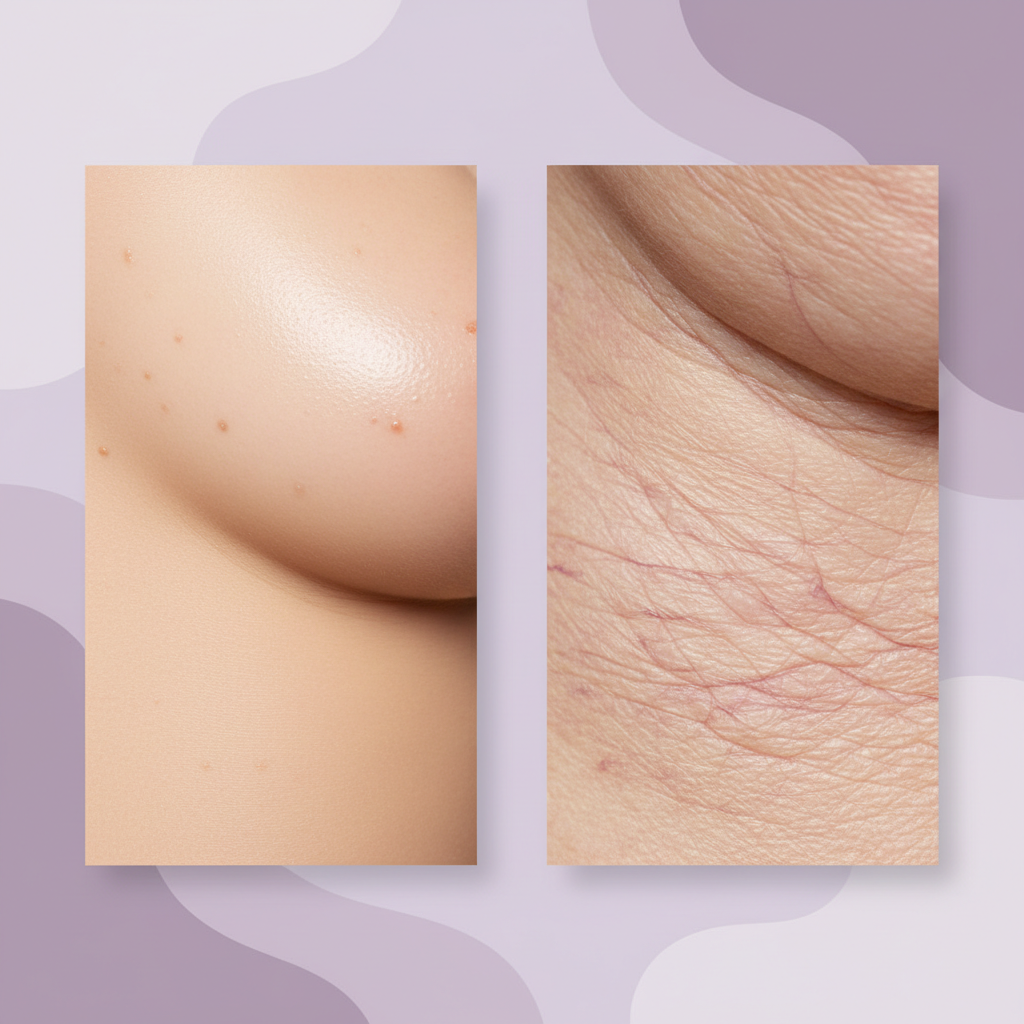
If you have noticed persistent itching, burning, or a sudden change in the appearance of your vulvar skin, your first instinct might be to reach for an over-the-counter yeast infection cream or assume it is just another "fun" symptom of the perimenopause transition. You are not alone. As estrogen levels begin their unpredictable dance in your 40s, the delicate tissues of the pelvic region are often the first to feel the effects.
However, there is a significant difference between Genitourinary Syndrome of Menopause (GSM)—commonly known as vaginal atrophy or dryness—and a chronic inflammatory skin condition called Lichen Sclerosus (LS). While both can cause intense discomfort, one is a hormonal deficiency and the other is an autoimmune-related skin disorder. Misidentifying lichen sclerosus symptoms vs perimenopause dryness after 40 can lead to years of unnecessary pain and even permanent scarring.
What does lichen sclerosus feel like compared to hormonal dryness?
Understanding the sensation is your first step in advocating for the right care. In perimenopause, the primary complaint is often a general feeling of "tightness" or "sandpaper" friction. Because estrogen helps maintain the thickness and elasticity of the vaginal walls, a drop in this hormone causes the tissue to become thin, pale, and dry (Mayo Clinic). This typically feels like an internal and external dryness that worsens during intercourse. You might recognize this as part of your broader perimenopause symptoms checklist.
Lichen Sclerosus, however, feels more like an active "itch-burn" cycle. The itching is often described as "maddening" or "ferocious," frequently peaking at night. Unlike the general dryness of perimenopause, LS involves the immune system attacking the skin cells, leading to structural changes. You might feel a stinging sensation when urinating or notice that the skin feels brittle, like parchment paper, rather than just dry.
| Feature | Perimenopause Dryness (GSM) | Lichen Sclerosus (LS) |
|---|---|---|
| Primary Sensation | Dryness, friction, mild stinging | Intense itching, burning, soreness |
| Location | Internal (vagina) and external (vulva) | Primarily external (vulva and perianal) |
| Skin Appearance | Thin, pale pink, loss of rugae | White patches, "cigarette paper" texture |
| Structural Changes | Shrinkage of the vaginal opening | Fusing of labia, buried clitoris |
| Response to Estrogen | Significant improvement | Little to no change in skin patches |
Can low estrogen trigger a lichen sclerosus flare in your 40s?
While the exact cause of Lichen Sclerosus remains unknown, there is a clear correlation between hormonal shifts and the onset or worsening of the condition. LS has a "bimodal" distribution, meaning it most commonly appears in prepubescent girls and postmenopausal women—both times when estrogen levels are low.
If you are navigating the perimenopause insulin resistance signs or managing other metabolic shifts, your body is already in a state of high inflammatory potential. Research suggests that low estrogen levels may decrease the skin's barrier function, making it more susceptible to the autoimmune processes that drive LS (National Institutes of Health). For many women in their 40s, the decline in systemic estrogen acts as a "trigger" for a dormant autoimmune tendency to finally manifest.
It is also worth noting that LS is frequently comorbid with other autoimmune issues. If you have been looking into a Hashimoto's perimenopause overlap, you should be aware that women with LS have a significantly higher rate of thyroid disorders and other autoimmune conditions compared to the general population.
Why is lichen sclerosus often misdiagnosed as a yeast infection at 40?
The "itch" is the great masquerader. When a woman in her 40s presents with vulvar itching, many healthcare providers (and patients themselves) default to a diagnosis of candidiasis (yeast infection) or bacterial vaginosis.
The danger of this misdiagnosis is twofold:
- Ineffective Treatment: Anti-fungal creams do nothing to stop the autoimmune progression of Lichen Sclerosus.
- Delayed Steroid Use: LS requires high-potency topical steroids to prevent scarring. Every month spent treating a "phantom" yeast infection is a month where the skin can undergo permanent structural changes, such as the fusing of the labia minora or the narrowing of the vaginal introitus.
If you have treated a "yeast infection" three times in six months and the itch persists, it is time to stop the Monistat and request a visual exam by a specialist who understands vulvar dermatology. Chronic itching is not a "normal" part of aging or perimenopause.
What are the visual differences between atrophy and autoimmune skin changes?
If you were to look at your vulva with a mirror—a practice we highly recommend for all women in perimenopause—you would see distinct markers for each condition.
Perimenopause Atrophy (GSM):
- The tissue looks pale pink or slightly yellowish.
- The "rugae" (the folds inside the vagina) appear smoother.
- The skin looks thin but generally retains its normal architecture.
Lichen Sclerosus:
- White Patches: You will see distinct, "porcelain-white" plaques or patches. These may look like a figure-eight pattern around the vulva and anus.
- Cigarette Paper Texture: The skin appears crinkled, shiny, and thin.
- Ecchymoses: Small purple or red spots (purpura) can appear under the skin due to broken capillaries.
- Architectural Loss: This is the hallmark of LS. The labia minora may seem to "disappear" or fuse to the labia majora, and the clitoral hood may become scarred, "burying" the clitoris.
These structural changes do not happen with simple hormonal dryness. If you notice any "fusing" or loss of definition in your anatomy, seek a referral to a gynecologist or dermatologist immediately (Cleveland Clinic).
How do I treat lichen sclerosus during the perimenopause transition?
Managing LS during perimenopause requires a multi-pronged approach that addresses both the autoimmune inflammation and the hormonal environment.
- Ultra-Potent Topical Steroids: The "gold standard" treatment for LS is Clobetasol propionate 0.05%. Unlike a standard rash, LS requires a specific "soak and smear" technique. You typically soak in a warm bath for 15-20 minutes to hydrate the skin, then apply a pea-sized amount of the ointment to the affected white patches (British Association of Dermatologists).
- Emollients: Because the skin barrier is compromised, using a medical-grade emollient (like plain petrolatum or specific vulvar balms) helps trap moisture and protects the skin from the irritating effects of urine.
- Trigger Management: Just as you might manage triggers for fibromyalgia perimenopause symptoms, you must identify vulvar irritants. Switch to 100% cotton underwear, avoid scented soaps, and use a peri-bottle with lukewarm water after urinating to prevent salt crystals from irritating the skin.
- Pelvic Floor Physical Therapy: Chronic LS often leads to "guarding," where the pelvic floor muscles become chronically tight due to the pain. A therapist can help relax these muscles, which improves blood flow to the area and aids healing.
Does HRT help with lichen sclerosus or just vaginal dryness?
This is a common point of confusion. Hormone Replacement Therapy (HRT) is highly effective for treating the symptoms of vaginal atrophy and dryness by restoring the thickness of the vaginal lining. If you are reading our HRT for perimenopause beginners guide, you know that systemic or local estrogen can revitalize pelvic tissues.
However, HRT is not a treatment for Lichen Sclerosus.
Because LS is an inflammatory, autoimmune-mediated disease, estrogen alone cannot stop the white patches from forming or prevent the skin from scarring. That said, most experts recommend using both topical steroids (for the LS) and topical estrogen (for the atrophy) concurrently. The estrogen helps "plump" the tissue and improve the skin's resilience, which may actually help the steroid ointment penetrate more effectively. They work as a team, but they serve different masters.
When should you ask for a biopsy for chronic vulvar itching?
A skin biopsy is the only way to definitively diagnose Lichen Sclerosus and rule out other conditions like Lichen Planus or Vulvar Intraepithelial Neoplasia (VIN). While many doctors diagnose LS based on visual inspection, a biopsy is recommended if:
- The skin does not respond to standard steroid treatment after 4-12 weeks.
- There are thickened areas (hyperkeratosis) that look suspicious.
- There is any concern for malignancy, as LS carries a small (approx. 3-5%) increased risk of squamous cell carcinoma of the vulva (Journal of the American Medical Association).
- The diagnosis is uncertain, and you are about to embark on a long-term steroid protocol.
Asking for a biopsy is not "overreacting." It is a vital step in ensuring you aren't using the wrong medication for a condition that requires precise, long-term management.
In your 40s, your body is changing rapidly. Don't let a "little itch" go ignored. Whether it is the common dryness of the perimenopause transition or the more complex challenge of Lichen Sclerosus, there are effective treatments available to restore your comfort and protect your long-term health. Be proactive, look in the mirror, and don't hesitate to ask your provider for a specialist referral if your symptoms aren't resolving. You deserve to feel radiant and comfortable in your own skin.
References
- Mayo Clinic. (2023). Vaginal Atrophy. Retrieved from https://www.mayoclinic.org/diseases-conditions/vaginal-atrophy/symptoms-causes/syc-20352261
- National Institute of Arthritis and Musculoskeletal and Skin Diseases. (2021). Lichen Sclerosus. Retrieved from https://www.niams.nih.gov/health-topics/lichen-sclerosus
- British Association of Dermatologists. (2018). Guidelines for the Management of Lichen Sclerosus. Retrieved from https://www.bad.org.uk/pils/lichen-sclerosus-female/
- Cleveland Clinic. (2022). Lichen Sclerosus: Symptoms, Causes, and Treatment. Retrieved from https://my.clevelandclinic.org/health/diseases/16564-lichen-sclerosus
- Kirtschig, G. (2016). Lichen Sclerosus—Presentation, Diagnosis and Management. Deutsches Ärzteblatt International. Retrieved from https://www.ncbi.nlm.nih.gov/pmc/articles/PMC4954773/
- The North American Menopause Society (NAMS). (2020). The Genitourinary Syndrome of Menopause. Retrieved from https://www.menopause.org/for-women/sexual-health-menopause-online/causes-of-sexual-problems/vaginal-atrophy-genitourinary-syndrome-of-menopause-(gsm)
FAQ
Common questions
Is Lichen Sclerosus the same as vaginal atrophy?
While they share itching as a symptom, Lichen Sclerosus (LS) is an autoimmune-mediated skin condition that causes white patches and scarring. Perimenopause dryness (GSM) is a hormonal condition caused by low estrogen, leading to thinning and lack of lubrication without the white patches.
Can you develop Lichen Sclerosus during perimenopause?
Yes, LS can occur at any age. In your 40s, the decline in estrogen during perimenopause may trigger a flare-up or make the skin more vulnerable to the inflammation associated with LS.
Does estrogen cream treat Lichen Sclerosus?
The gold standard for LS is an ultra-potent topical steroid (like Clobetasol). For perimenopause dryness, the treatment is typically topical estrogen or non-hormonal lubricants. Estrogen does not treat LS.
What are the visual signs of Lichen Sclerosus?
White, porcelain-like patches, skin that looks like crinkled cigarette paper, and structural changes like the 'disappearing' of the labia minora are specific to LS and not seen in standard dryness.
What happens if Lichen Sclerosus is left untreated?
Untreated LS can lead to permanent scarring, fusing of the vulvar anatomy, narrowing of the vaginal opening, and a small (3-5%) increased risk of vulvar skin cancer.
Can I have both Lichen Sclerosus and perimenopause dryness?
Yes. Many women suffer from both the autoimmune inflammation of LS and the tissue thinning of perimenopause. They require both steroids and estrogen to manage symptoms effectively.
Want this in your inbox each Sunday?
New articles, the science you can actually use, and the occasional rant.
Keep reading

Perimenopause Symptoms Checklist: 38 Signs You're Not Imagining
A comprehensive, doctor-reviewed checklist of perimenopause symptoms — from the obvious hot flashes to the weird ones nobody warned you about.
9 min read

Hashimoto's and Perimenopause: Why Symptoms Overlap (and How to Tell Them Apart)
Fatigue, brain fog, weight gain, hair loss — Hashimoto's and perimenopause share most symptoms. Here's how to tell what's flaring, what's hormonal, and what to ask your doctor.
11 min read

Fibromyalgia and Perimenopause: When Two Storms Collide
Why fibromyalgia almost always flares during perimenopause, what changes in your nervous system, and the small daily shifts that actually help.
10 min read