
Lichen Sclerosus vs. Perimenopause: Decoding the Itch
Confused by vulvar itching? Learn the key differences between Lichen Sclerosus and perimenopause dryness, including symptoms, diagnosis, and safe treatments.
Published:
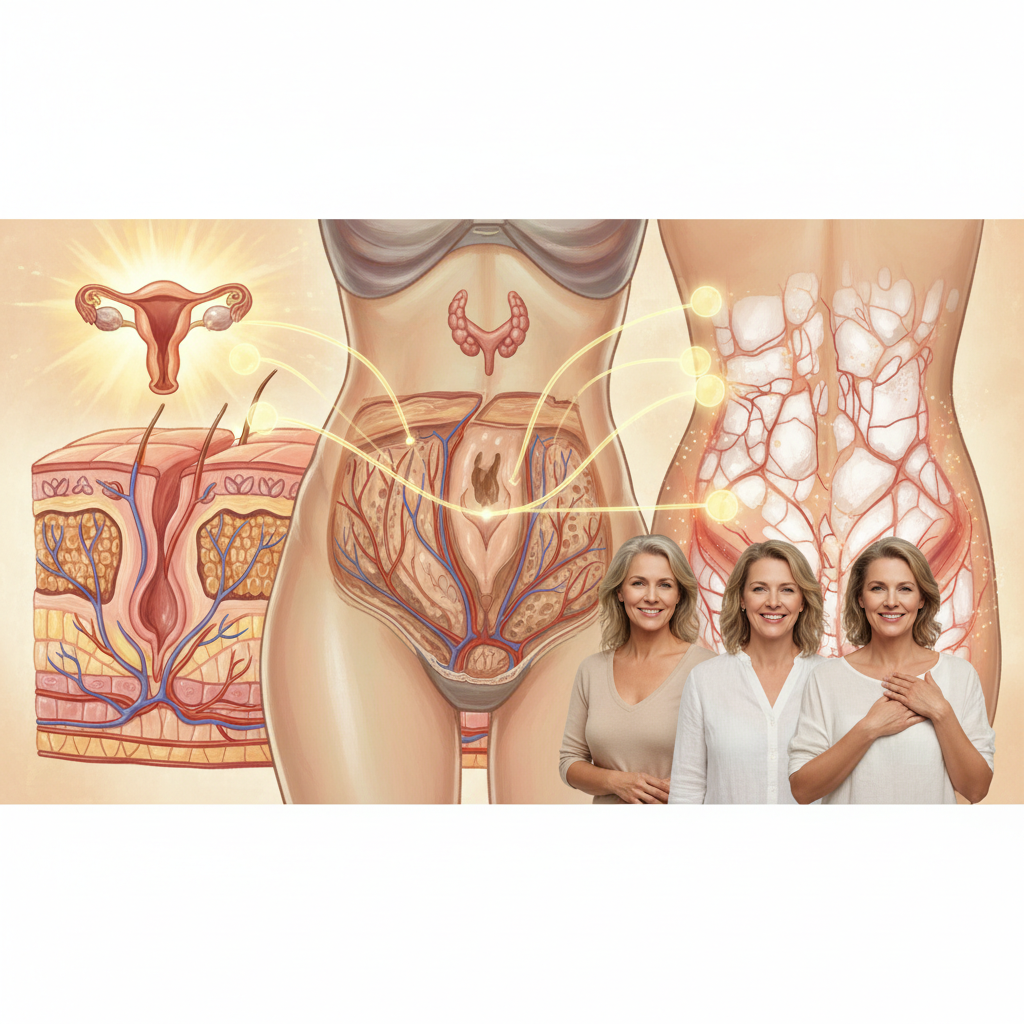
If you are over 40 and experiencing persistent vulvar discomfort, you might immediately assume your hormones are to blame. After all, the transition into perimenopause is notorious for causing "down there" changes that range from mild irritation to significant distress. However, not every itch is caused by declining estrogen. Distinguishing between lichen sclerosus vs perimenopause dryness symptoms is critical for your long-term health, as the treatments for these two conditions are vastly different.
In this guide, we will explore the intersection of autoimmune skin conditions and the hormonal shift, helping you understand when your symptoms require a simple moisturizer and when they demand a specialist's intervention.
Is it lichen sclerosus or just perimenopause vaginal dryness?
At first glance, Lichen Sclerosus (LS) and genitourinary syndrome of menopause (GSM)—the medical term for perimenopausal dryness—look remarkably similar. Both cause itching, burning, and pain during intercourse. However, their root causes are distinct.
Perimenopause dryness is a direct result of declining estrogen levels, which leads to the thinning of the vaginal and vulvar tissues. This is often part of a broader perimenopause symptoms checklist that includes hot flashes and sleep disturbances. According to the North American Menopause Society (NAMS), vaginal atrophy affects up to 50% of postmenopausal women.
Lichen Sclerosus, conversely, is an inflammatory, chronic skin condition—often suspected to be autoimmune in nature—that primarily affects the genital and anal areas. While it can occur at any age, it has a bimodal peak, frequently appearing in girls before puberty and in women during or after the menopausal transition. Unlike simple dryness, LS creates structural changes in the skin that can lead to scarring and an increased risk of vulvar cancer if left untreated.
| Feature | Perimenopause Dryness (GSM) | Lichen Sclerosus (LS) |
|---|---|---|
| Primary Cause | Low Estrogen | Autoimmune/Inflammatory |
| Skin Appearance | Pale, thin, pink | Porcelain white patches, "parchment" texture |
| Internal Involvement | High (Vaginal canal dryness) | Rare (Primarily external vulva/anus) |
| Structural Changes | Thinning only | Scarring, fusing of labia, buried clitoris |
| Cancer Risk | None | Small increased risk of Squamous Cell Carcinoma |
What are the unique signs of lichen sclerosus in women over 40?
For women in their 40s and 50s, LS can be "stealthy" because it mimics the thinning skin of aging. However, there are hallmark signs that differentiate it from hormonal atrophy.
- The "Figure-Eight" Pattern: LS often affects the skin around the vulva and the anus in a shape resembling a figure eight.
- Cigarette Paper Texture: The skin may become extremely thin, wrinkled, and white, resembling crumpled tissue or cigarette paper.
- Ecchymosis (Bruising): Because the skin is so fragile, small blood blisters or purple "bruises" may appear under the surface, even without significant trauma.
- Structural Resorption: This is the most significant warning sign. LS can cause the labia minora to shrink or "fuse" to the labia majora, and the prepuce (hood) of the clitoris may scar over, trapping the clitoris underneath.
The National Institutes of Health (NIH) notes that while itching is the most common symptom, some women may remain asymptomatic until structural changes are well-advanced. This is why self-exams are vital during perimenopause.
How does estrogen loss affect autoimmune skin conditions?
There is a complex relationship between your hormones and your immune system. Estrogen is generally considered immuno-modulatory. When levels fluctuate and eventually drop during perimenopause, it can trigger or exacerbate underlying autoimmune tendencies. This is similar to how many women first notice Hashimoto’s perimenopause overlap or the onset of fibromyalgia perimenopause symptoms during this stage of life.
Low estrogen makes the vulvar skin more permeable and less resilient. When the skin barrier is compromised by hormonal decline, the inflammatory processes of Lichen Sclerosus can accelerate. Research published via PubMed Central suggests that the lack of estrogen may decrease the local immune defense of the vulvar skin, making the inflammatory response in LS more aggressive.
If you are already managing metabolic issues, such as perimenopause insulin resistance signs, the systemic inflammation in your body may further complicate the management of autoimmune skin flares.
Can you have both lichen sclerosus and perimenopause at once?
Yes, and unfortunately, it is quite common. Because both conditions are prevalent in the same age demographic, many women suffer from a "double whammy" of hormonal atrophy and autoimmune inflammation.
When you have both, the symptoms are compounded. The dryness from perimenopause makes the LS-affected skin even more prone to tearing (fissures). If you only treat the dryness with lubricants or moisturizers, the underlying autoimmune destruction of LS continues. Conversely, if you only treat LS with steroid creams but ignore the hormonal decline, the tissues may remain too thin and brittle to heal properly.
This is why a HRT for perimenopause beginners guide often emphasizes that systemic or local estrogen can be a supportive therapy for women with LS, even though estrogen is not the primary cure for the skin condition itself.
Why is my vulvar itching worse at night during my cycle?
If you notice your "lichen sclerosus vs perimenopause dryness symptoms" worsening at night or right before your period, you aren't imagining it. There are three primary reasons for this:
- Circadian Rhythm of Cortisol: Natural anti-inflammatory cortisol levels drop in the evening, which often causes itching (pruritus) from inflammatory conditions like LS to peak at bedtime.
- The Progesterone Drop: In the days leading up to your period (the luteal phase), both estrogen and progesterone drop. This withdrawal can increase skin sensitivity and dryness.
- Body Heat: At night, as you settle under covers, increased skin temperature can intensify the sensation of itching.
Distinguishing between a cyclical hormonal itch and a constant LS itch is a key step in diagnosis. LS itching is often described as "intractable"—an intense, deep itch that feels like it cannot be satisfied by scratching.
How do doctors diagnose lichen sclerosus vs. hormonal atrophy?
Because the treatments for LS and hormonal atrophy are so different, an accurate diagnosis is non-negotiable.
- Visual Examination: A gynecologist or dermatologist trained in vulvar disorders will look for the tell-tale white patches and architectural changes (like labial fusion) that characterize LS.
- The "Tug Test": Doctors may check for skin elasticity. Atrophic skin from perimenopause is thin but usually maintains its basic structure, whereas LS-affected skin loses its architecture.
- Biopsy: This is the gold standard for diagnosing Lichen Sclerosus. A small 3mm-4mm punch biopsy is performed under local anesthesia. According to the British Association of Dermatologists, a biopsy is often necessary to confirm the diagnosis and rule out pre-cancerous changes (VIN).
- Response to Therapy: Sometimes, a doctor will prescribe a trial of local vaginal estrogen. If the dryness improves but the white patches and itching remain, LS is the likely culprit.
What are the safest treatments for autoimmune vulvar changes?
Treatment for LS requires a different approach than standard perimenopause care. While perimenopause dryness might respond to over-the-counter hyaluronic acid gels or hormone replacement therapy, LS requires potent anti-inflammatory intervention.
- Ultra-Potent Topical Corticosteroids: The first-line treatment for LS is typically Clobetasol propionate 0.05%. Unlike using steroids on other parts of the body, the vulvar skin in LS patients requires this high potency to stop the immune system from attacking the skin. The Mayo Clinic emphasizes that consistent use is necessary to prevent scarring.
- Calcineurin Inhibitors: For those who cannot tolerate steroids, medications like Tacrolimus may be used to suppress the immune response.
- Local Estrogen Therapy: Even if you have LS, using local vaginal estrogen cream can improve the health of the surrounding tissue, making the steroid treatments more effective and reducing the pain of intercourse.
- Barrier Ointments: Using a plain petrolatum-based ointment can protect the skin from the irritating effects of urine and sweat, which can trigger flares.
Summary of Care Steps
If you suspect your symptoms go beyond simple perimenopause dryness, follow these steps:
- Stop all soaps and scents: The vulva should only be washed with plain water or a very mild, soap-free cleanser.
- Schedule a Vulvar Exam: Specifically ask your provider to look for signs of Lichen Sclerosus or architectural changes.
- Request a Biopsy: If white patches are visible, do not rely on a visual diagnosis alone.
- Monitor for Changes: Use a hand mirror once a month to check for new white spots, fissures, or changes in the shape of your labia.
Understanding the difference between lichen sclerosus vs perimenopause dryness symptoms is the first step in reclaiming your comfort and protecting your long-term vulvar health. While perimenopause is a natural transition, LS is a medical condition that requires lifelong monitoring. By addressing both the hormonal and inflammatory components of your health, you can move from irritation to radiance.
FAQ
Common questions
How can I tell the difference between LS and perimenopause dryness?
Perimenopause dryness is caused by low estrogen and usually involves thinning, pinkish tissue. Lichen Sclerosus is an inflammatory condition that causes white, thickened, or 'parchment-like' patches and can lead to scarring or fusing of the labia.
Can you have both Lichen Sclerosus and perimenopause at the same time?
Yes, many women experience both. Declining estrogen during perimenopause can make the vulvar skin more fragile, which may exacerbate the symptoms of Lichen Sclerosus or make flares more frequent.
Is Lichen Sclerosus an autoimmune disease?
Yes, Lichen Sclerosus is considered an autoimmune-mediated inflammatory disease. It is common for women with LS to also have other autoimmune conditions, such as Hashimoto’s thyroiditis or vitiligo.
What is the best way to get a definitive diagnosis for LS?
The gold standard for diagnosis is a punch biopsy. A specialist (gynecologist or dermatologist) will take a tiny sample of the affected skin to look for specific inflammatory markers under a microscope.
Will lubricants or moisturizers fix Lichen Sclerosus?
Standard vaginal moisturizers and lubricants do not treat the underlying inflammation of LS. While they may provide temporary relief for hormonal dryness, LS requires potent prescription steroid creams to prevent scarring.
Is Lichen Sclerosus dangerous if left untreated?
Untreated Lichen Sclerosus carries a small but significant risk (about 3-5%) of developing into vulvar squamous cell carcinoma. This is why lifelong monitoring and proper treatment are essential.
Want this in your inbox each Sunday?
New articles, the science you can actually use, and the occasional rant.
Keep reading

Perimenopause Symptoms Checklist: 38 Signs You're Not Imagining
A comprehensive, doctor-reviewed checklist of perimenopause symptoms — from the obvious hot flashes to the weird ones nobody warned you about.
9 min read

Hashimoto's and Perimenopause: Why Symptoms Overlap (and How to Tell Them Apart)
Fatigue, brain fog, weight gain, hair loss — Hashimoto's and perimenopause share most symptoms. Here's how to tell what's flaring, what's hormonal, and what to ask your doctor.
11 min read

Fibromyalgia and Perimenopause: When Two Storms Collide
Why fibromyalgia almost always flares during perimenopause, what changes in your nervous system, and the small daily shifts that actually help.
10 min read