
Myasthenia Gravis or Perimenopause? Muscle Fatigue Guide
Is it perimenopause fatigue or Myasthenia Gravis? Learn the 'red flags' of muscle weakness in women over 40, including eyelid drooping and the fatigability test.
Published:
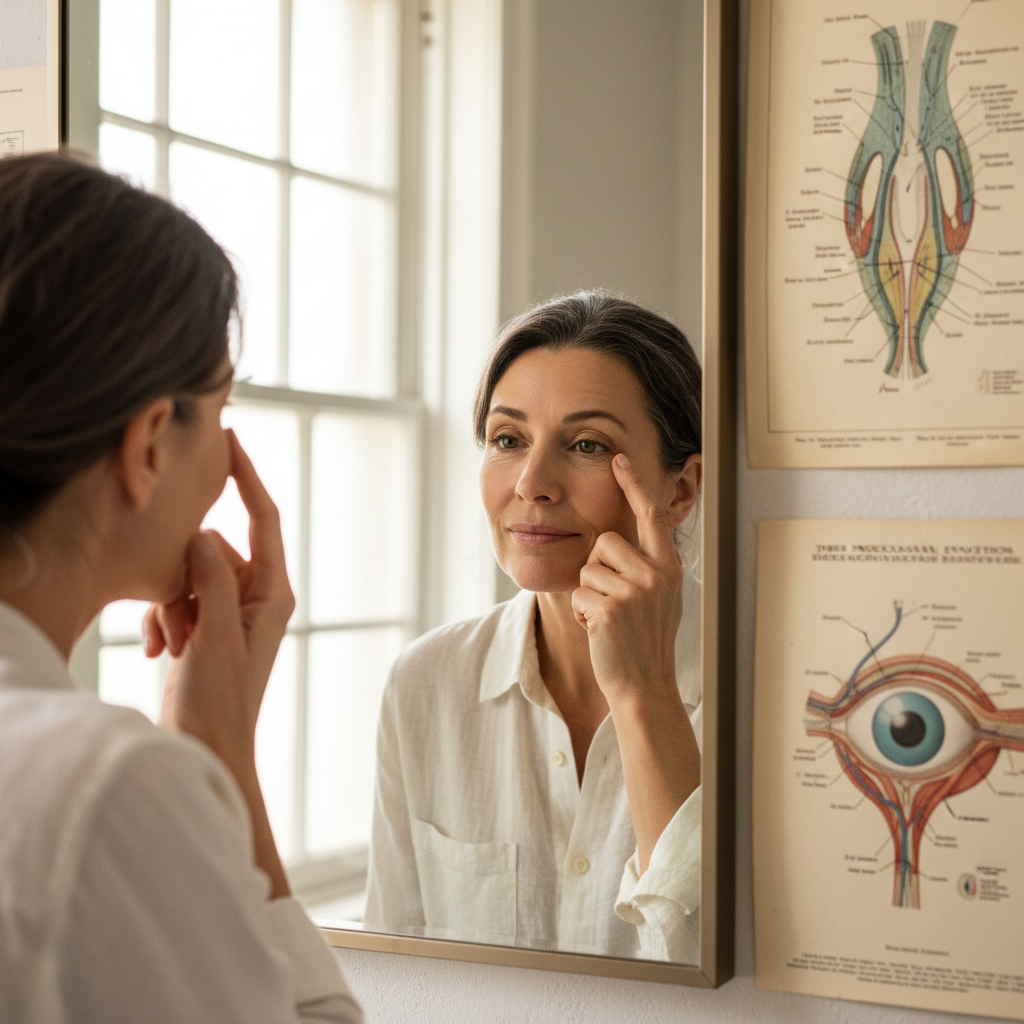
Is it just perimenopause fatigue or something more serious?
You wake up feeling like your limbs are made of lead. By mid-afternoon, even holding your phone or typing an email feels like an Olympic feat. If you are a woman over 40, your first instinct is likely to blame your fluctuating hormones. After all, "crashing fatigue" is a hallmark of the transition to menopause. According to the North American Menopause Society, sleep disturbances and hormonal shifts can cause profound exhaustion.
However, there is a distinct difference between being "tired" and experiencing true muscular weakness. Myasthenia Gravis (MG) is a rare chronic autoimmune neuromuscular disease that causes weakness in the skeletal muscles, which are responsible for breathing and moving parts of your body. While perimenopause can make you feel drained, MG affects the communication between your nerves and muscles.
Distinguishing between the two is critical because the onset of MG can mimic several perimenopause symptoms checklist items, such as brain fog or physical lethargy. Understanding the nuances of how you are tired—rather than just that you are tired—is the first step in reclaiming your health.
What are the early signs of Myasthenia Gravis in women over 40?
Myasthenia Gravis often has a "bimodal" distribution, meaning it frequently hits women in their 20s and 30s, and then sees another peak in men and women over the age of 50. For women in their 40s, the diagnosis is often delayed because symptoms are frequently attributed to stress, thyroid issues, or the perimenopausal transition.
The National Institutes of Health (NIH) notes that the hallmark of MG is muscle weakness that worsens after periods of activity and improves after periods of rest. This is fundamentally different from hormonal fatigue, which often lingers regardless of immediate physical exertion.
Early signs of MG in women over 40 include:
- Ocular symptoms: Drooping of one or both eyelids (ptosis).
- Vision changes: Double vision (diplopia), which may improve when closing one eye.
- Bulbar symptoms: Altered speaking voice (nasal sounding), difficulty swallowing, or problems chewing.
- Limb weakness: Difficulty lifting your arms above your head or rising from a seated position.
Because these symptoms can come and go, many women dismiss them as "just getting older." This is why looking for an autoimmune overlap like Hashimoto’s is so important; if you already have one autoimmune condition, your risk for others like MG may be increased.
Why does eyelid drooping often get mistaken for perimenopause aging?
In your 40s, you might notice your eyelids look "heavy" or "hooded." Most women head to a dermatologist or consider a blepharoplasty, assuming it is simply a loss of skin elasticity (elastosis) due to declining estrogen. While estrogen does play a role in skin thickness, a drooping eyelid caused by Myasthenia Gravis is a neuromuscular event, not a cosmetic one.
In MG, the body produces antibodies that block the nicotinic acetylcholine receptors at the junction between the nerve and the muscle. According to the Mayo Clinic, this prevents the muscle from contracting properly.
| Feature | Perimenopause/Aging Ptosis | Myasthenia Gravis Ptosis |
|---|---|---|
| Symmetry | Usually bilateral and symmetrical | Often asymmetrical (one eye more than the other) |
| Timing | Constant throughout the day | Worsens as the day progresses or with use |
| Response to Rest | No change with rest | Improvers significantly after a nap or rest |
| Associated Signs | General skin laxity | May be accompanied by double vision |
If you notice that your eyes look bright and open at 8:00 AM but one lid is significantly lower by 5:00 PM, this is a "red flag" that points away from hormonal aging and toward a neuromuscular issue.
How does hormone fluctuation affect muscle weakness and MG?
The relationship between female sex hormones and Myasthenia Gravis is complex. Estrogen is an immunomodulator, meaning it can influence the behavior of the immune system. Research published through NCBI suggests that fluctuations in estrogen and progesterone—common during the menstrual cycle and perimenopause—can trigger "myasthenic flares."
Many women report that their MG symptoms worsen during the premenstrual phase, a time when estrogen levels drop sharply. This creates a diagnostic "perfect storm." A woman might complain of increased weakness and fatigue just before her period. A doctor might see this as typical PMS or perimenopause, while in reality, the hormonal drop is unmasking or exacerbating an underlying neuromuscular disorder.
Furthermore, managing perimenopause insulin resistance is crucial for MG patients, as fluctuations in blood sugar can further impact energy levels and muscle function, making the "fatigue" feel even more insurmountable.
Could my difficulty swallowing be related to perimenopause or MG?
Difficulty swallowing (dysphagia) or a frequent need to clear your throat is rarely a symptom of perimenopause. While some women experience "burning mouth syndrome" or dry throat due to low estrogen, true difficulty moving food to the back of the throat or liquid coming out of the nose is a sign of bulbar muscle weakness.
The Cleveland Clinic explains that bulbar muscles control speech and swallowing. If these are affected, you might notice:
- Your voice becomes hoarse or "nasal" by the end of a long conversation.
- You have to support your chin with your hand to help you chew.
- You struggle to swallow pills that you used to take easily.
If you are experiencing these symptoms alongside fibromyalgia-like body aches, it is easy to get lost in a sea of vague diagnoses. However, bulbar weakness is a serious symptom that requires immediate neurological evaluation, as it can progress to respiratory distress.
The 'fatigability' test: How MG weakness differs from hormonal exhaustion.
The most important distinction to learn is the difference between "fatigue" and "fatigability."
- Fatigue: A general sense of tiredness, lack of energy, or "brain fog." You might feel like you need a cup of coffee or a long vacation. This is common in perimenopause.
- Fatigability: A specific muscle's inability to perform a task after repeated use. For example, you can brush your hair for the first 30 seconds, but then your arm literally drops and you cannot lift it again until you rest for a few minutes.
You can perform a simple "fatigability" observation at home:
- Look Up: Look at a point on the ceiling for two minutes without blinking. Does one eyelid start to drift down?
- Arm Raise: Hold both arms out to your sides (like a "T") for two minutes. Does one arm begin to sag or shake uncontrollably?
- Repeated Squats: Perform 10-15 deep squats. Is the weakness disproportionate to your fitness level?
If your "fatigue" improves significantly with just 15 minutes of quiet rest, it is more likely to be the fatigability of Myasthenia Gravis. Perimenopausal fatigue usually requires a full night's sleep (and sometimes not even then) to feel any different. If you are exploring HRT for perimenopause beginners and find that your "weakness" persists even after stabilizing your hormones, it is time to look deeper.
What should I ask my neurologist if I suspect an autoimmune overlap?
If the descriptions of muscle fatigability resonate with you, the next step is seeking a specialist. Diagnosing MG involves blood tests to look for specific antibodies (like AChR or MuSK antibodies) and electrodiagnostic tests like Electromyography (EMG).
When you meet with a neurologist, come prepared. Women’s symptoms are frequently dismissed as "psychosomatic" or "stress-related," especially during the midlife transition. Use specific language to ensure you are heard.
Questions to ask your doctor:
- "I am experiencing specific muscle fatigability rather than general exhaustion. Can we test for Acetylcholine Receptor (AChR) antibodies?"
- "My eyelid drooping is worse in the evening than in the morning. Does this suggest a neuromuscular junction disorder?"
- "Because I have a history of autoimmune issues, could my perimenopause symptoms be masking Myasthenia Gravis?"
- "Can we perform a 'Single Fiber EMG' if my initial blood tests come back negative?" (Note: "Seronegative MG" exists, where antibodies aren't found but the disease is present).
By using the term "fatigability" and pointing to the timing of your symptoms, you move the conversation from "lifestyle stress" to "clinical neurology."
Conclusion: Balancing Hormones and Neuromuscular Health
Navigating your 40s and 50s requires a keen eye for detail. While you are likely dealing with the very real shifts of perimenopause, don't allow "hormones" to become a catch-all explanation for every new symptom. Myasthenia Gravis is a treatable condition. With modern therapies, most people with MG can lead full, active lives.
The goal is to move from "feeling aged" to "feeling empowered." Whether your journey involves balancing your estrogen through HRT or managing a neuromuscular condition with a neurologist, your voice is the most important tool in the exam room. Don't let your "heavy eyelids" be dismissed as just another sign of a long day; they might be the very clue your body is giving you to get the help you truly need.
If you find that your muscles aren't just tired, but are actually failing to "fire," please reach out to a healthcare provider. The S.H.I.N.E. approach means looking at the Whole You—and that includes the delicate bridge where your nerves meet your muscles.
Resource Summary Table
| Resource | Purpose | Recommended For |
|---|---|---|
| Neurologist | Diagnosis of MG | Weakness, drooping eyes, swallowing issues |
| Endocrinologist | Hormonal balance | Perimenopause symptoms, HRT, Insulin |
| S.H.I.N.E. Checklist | Symptom tracking | Women wondering "Is this normal?" |
| MG Foundation | Community Support | Those newly diagnosed with MG |
Managing your health in midlife isn't about choosing one diagnosis—it's about understanding how your systems interact. You deserve to feel strong, not just "not tired." Myasthenia Gravis and perimenopause can coexist, but with the right information, they don't have to control you. Refer to the perimenopause symptoms checklist to see how your experiences align with common hormonal shifts, and never be afraid to ask for the specific tests that could change your life.
By staying informed on everything from insulin resistance to autoimmune overlaps, you ensure your radiance isn't dimmed by a misdiagnosis. Stay curious, stay vocal, and stay Radiant. For more deep dives into the intersection of autoimmune health and midlife, explore our guides on Fibromyalgia and Hashimoto’s disease. Your body is a complex, beautiful machine—let's keep it running optimally together.
FAQ
Common questions
How is Myasthenia Gravis fatigue different from 'normal' perimenopause tiredness?
Unlike perimenopause fatigue, which feels like general exhaustion or sleepiness, Myasthenia Gravis (MG) causes muscle 'fatigability.' This means a specific muscle (like your arm or eyelid) becomes weaker the more you use it but recovers quickly with rest.
Can perimenopause hormones make Myasthenia Gravis symptoms worse?
Yes. Fluctuating estrogen levels can worsen MG symptoms. Many women report 'myasthenic flares' during the premenstrual phase or during the hormonal shifts of perimenopause.
Is my drooping eyelid just a sign of aging or MG?
While hooded eyes can be a sign of aging, an MG-related droop (ptosis) often fluctuates throughout the day, looks uneven, and may improve after a short nap. Aging-related skin laxity is constant.
What blood tests confirm Myasthenia Gravis in women?
You should ask for an Acetylcholine Receptor (AChR) antibody test and a MuSK antibody test. You may also need a Single Fiber EMG (electromyography) to check how your nerves and muscles communicate.
Can perimenopause cause difficulty swallowing?
Difficulty swallowing (dysphagia) is a hallmark of bulbar Myasthenia Gravis and is rarely caused by perimenopause. If you are choking on liquids or pills, seek medical attention immediately.
Is it possible to develop Myasthenia Gravis for the first time in my 50s?
Yes. Postmenopausal women and those over 50 are a high-risk group for 'late-onset' MG. It is frequently misdiagnosed as aging or general frailty.
Want this in your inbox each Sunday?
New articles, the science you can actually use, and the occasional rant.
Keep reading

Perimenopause Symptoms Checklist: 38 Signs You're Not Imagining
A comprehensive, doctor-reviewed checklist of perimenopause symptoms — from the obvious hot flashes to the weird ones nobody warned you about.
9 min read

Hashimoto's and Perimenopause: Why Symptoms Overlap (and How to Tell Them Apart)
Fatigue, brain fog, weight gain, hair loss — Hashimoto's and perimenopause share most symptoms. Here's how to tell what's flaring, what's hormonal, and what to ask your doctor.
11 min read

Fibromyalgia and Perimenopause: When Two Storms Collide
Why fibromyalgia almost always flares during perimenopause, what changes in your nervous system, and the small daily shifts that actually help.
10 min read