
Myasthenia Gravis or Perimenopause? Decoding Heavy Fatigue
Distinguishing between myasthenia gravis vs perimenopause symptoms in women over 40 is crucial. Learn how to tell the difference between hormonal fatigue and autoimmune muscle weakness.
Published:
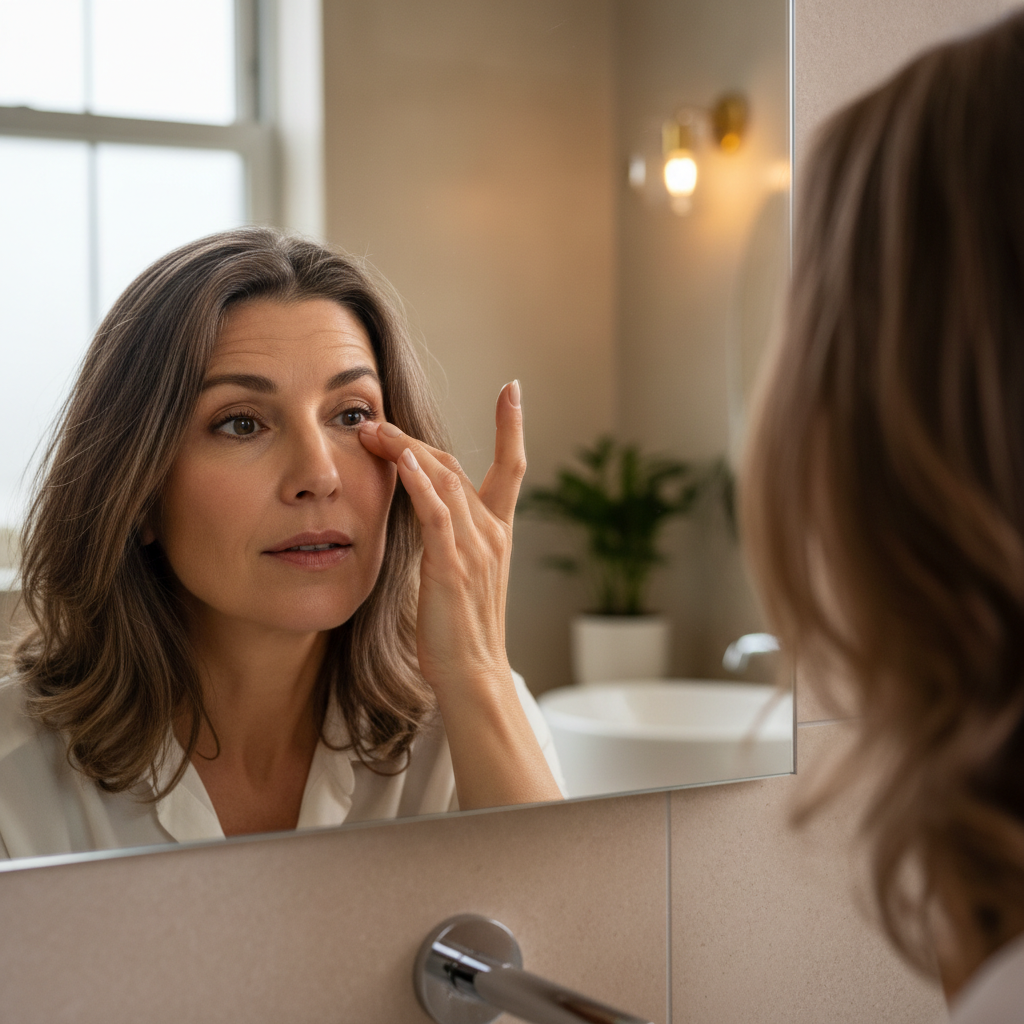
You know the feeling: it is 3:00 PM, and your body feels like it’s made of lead. You might blame your age, your busy schedule, or the fluctuating hormones of your 40s. While "brain fog" and "fatigue" are cornerstones of the perimenopause symptoms checklist, there is a specific type of exhaustion that goes beyond simple tiredness.
If your eyelids feel heavy, your smile feels forced, or your limbs feel physically weak rather than just "tired," you might be navigating the complex overlap of myasthenia gravis vs perimenopause symptoms in women over 40. Myasthenia Gravis (MG) is a chronic autoimmune neuromuscular disease characterized by weakness in the skeletal muscles, and its onset in women often peaks during the reproductive years and again during the transition to menopause. Distinguishing between the two is vital for your long-term mobility and health.
Why does muscle weakness feel so much like perimenopause exhaustion?
In perimenopause, fatigue is often systemic. It is the result of fluctuating estrogen affecting your mitochondria, sleep quality, and mood. You might feel "wiped out" or "drained." However, Myasthenia Gravis presents a very specific type of muscle weakness called "fatigability." This means the muscle works fine initially but weakens significantly with repetitive use.
In MG, the immune system produces antibodies that block or destroy nicotinic acetylcholine receptors at the junction where nerve impulses meet muscle fibers. According to the National Institutes of Health (NIH), this prevents the muscle from contracting effectively.
Women in their 40s often dismiss MG symptoms because they mirror the "crashing fatigue" of perimenopause. Much like Hashimoto’s perimenopause overlap, MG is an autoimmune condition that disproportionately affects women, often flaring during times of significant hormonal shift. While perimenopause fatigue might improve with a nap or a boost in progesterone, MG weakness typically worsens as the day progresses and requires specific medical intervention to manage the neuromuscular blockade.
How can you distinguish ocular myasthenia gravis from aging eyes?
Many women over 40 begin to notice changes in their vision. You might reach for reading glasses or blame dry eyes on declining estrogen. However, Ocular Myasthenia Gravis presents distinct symptoms that are frequently misdiagnosed as "tired eyes" or age-related changes.
The two hallmark signs of ocular MG are:
- Ptosis: A drooping of one or both eyelids. This isn't just the saggy skin (dermatochalasis) we see with aging; it is a functional failure of the muscle to hold the lid open, often worsening when looking upward for long periods.
- Diplopia: Double vision caused by weakness in the muscles that control eye movement. Unlike the blurred vision common in perimenopause, this is a true misalignment where you see two distinct images.
According to the American Academy of Ophthalmology, these ocular symptoms are the first sign of the disease in about 50% of patients. If you notice that one eyelid droops more at night than it does in the morning, or if your double vision resolves when you cover one eye, this is a red flag that your "aging eyes" may actually be a neuromuscular issue.
Can hormone fluctuations trigger a myasthenia gravis flare in your 40s?
The relationship between sex hormones and Myasthenia Gravis is profound. Estrogen is an immunomodulator; it influences how your immune system behaves. For many women, symptoms of MG follow a catamenial pattern, meaning they worsen right before menstruation when estrogen and progesterone levels drop.
As you enter your 40s and hormone levels become erratic, these "mini-flares" can become more frequent or severe. Research published by the National Center for Biotechnology Information (NCBI) suggests that the menopausal transition can exacerbate autoimmune symptoms due to the loss of estrogen’s protective effects on the neuromuscular junction.
Furthermore, the stress of perimenopause—sleep deprivation, night sweats, and anxiety—can act as a physiological trigger for MG symptoms. If you find that your "perimenopause" is suddenly making it difficult to lift your arms to brush your hair or climb stairs, it is time to look beyond the ovaries and toward the immune system.
Why does your voice change or swallowing get harder during perimenopause?
Bulbar symptoms—those affecting the mouth and throat—are perhaps the most frightening points of confusion between perimenopause and MG. In perimenopause, you might experience a dry mouth or a "lump in the throat" feeling (globus pharyngeus) due to anxiety or acid reflux.
However, Myasthenia Gravis causes true bulbar weakness. This can manifest as:
- Dysarthria: Your speech may become slurred or nasal, especially after talking for a long time.
- Dysphagia: Difficulty swallowing, where liquids may come out of your nose, or you feel you might choke on solid food.
- Vertical Smile: The muscles around the mouth weaken, causing a "snarling" appearance when you try to smile.
| Symptom | Perimenopause Presentation | Myasthenia Gravis Presentation |
|---|---|---|
| Fatigue | General exhaustion, "heavy" head, brain fog. | Specific muscle failure after use; improves with rest. |
| Vision | Blurred vision, dry eyes, needing more light. | Drooping eyelids (ptosis), double vision (diplopia). |
| Speech | Forgetting words (word retrieval issues). | Slurred, nasal, or "muffled" speech after talking. |
| Swallowing | Feeling of a lump in the throat (anxiety-related). | Choking on food, liquids regurgitating through nose. |
| Exercise | Lower stamina, longer recovery time. | Muscle gives out entirely; "jelly legs" after walking. |
If you are experiencing these symptoms alongside fibromyalgia perimenopause symptoms, the diagnostic picture becomes even more clouded, as both conditions involve chronic pain and fatigue.
What are the key diagnostic tests for myasthenia gravis vs. hormone imbalance?
If you suspect your fatigue is more than just hormones, you must advocate for specific testing. A standard "wellness panel" will not catch Myasthenia Gravis. While your doctor may check your FSH and LH levels to confirm perimenopause, MG requires a different approach.
- AChR Antibody Test: This blood test looks for antibodies to the acetylcholine receptor. Most people with generalized MG have these antibodies.
- Anti-MuSK Antibody Test: For those who test negative for AChR, this test looks for Muscle-Specific Kinase antibodies.
- Electromyography (EMG): Specifically, a "repetitive nerve stimulation" test. Doctors stimulate a nerve to see if the muscle's ability to respond diminishes with use.
- Single-Fiber EMG: The most sensitive test for MG, identifying impaired nerve-to-muscle transmission.
- Edrophonium (Tensilon) Test: A doctor injects a chemical that briefly increases acetylcholine levels. If your muscle strength suddenly improves for a few minutes, it’s a strong indicator of MG.
Distinguishing these from perimenopause insulin resistance signs is critical, as metabolic dysfunction can also cause muscle weakness, but the underlying mechanism is entirely different.
How does estrogen loss affect neuromuscular junction signaling?
Estrogen isn't just for reproduction; it plays a role in maintaining the integrity of the neuromuscular junction (NMJ). Estrogen receptors are present on muscle fibers and nerves. Estrogen helps regulate the synthesis of acetylcholine and the density of the receptors that receive these signals.
When estrogen levels plummet in your 40s, the "safety margin" of neuromuscular transmission may decrease. For a healthy woman, this might just feel like a slight decrease in muscle tone or strength. But for a woman with undiagnosed subclinical Myasthenia Gravis, this hormonal drop can be the "tipping point" that brings latent symptoms to the surface.
This is why some women find that starting HRT for perimenopause slightly improves their MG symptoms—not because HRT cures MG, but because it stabilizes the environment in which the nerves and muscles must communicate. However, the Mayo Clinic emphasizes that while hormones play a role, MG is primarily an antibody-mediated attack that requires immunosuppression or cholinesterase inhibitors for primary treatment.
What should you tell your doctor if your fatigue feels heavy and physical?
Medical gaslighting is a significant hurdle for women over 40. Too often, profound physical weakness is dismissed as "stress" or "menopause." To get an accurate diagnosis, you must change the way you describe your symptoms.
Instead of saying "I'm tired," try using these specific descriptors:
- "My weakness is task-specific." (e.g., "I can't finish brushing my hair because my arm won't stay up.")
- "My symptoms are diurnal." (e.g., "I feel normal at 8:00 AM, but I can't keep my left eye open by 6:00 PM.")
- "I am experiencing double vision that goes away when I rest my eyes."
- "I have noticed my voice changes its tone after I've been speaking for five minutes."
According to the Myasthenia Gravis Foundation of America, the average time to diagnosis for women is often longer than for men because symptoms are frequently attributed to psychosomatic causes or hormonal shifts. By documenting the "fatigability" of your muscles—the way they fail after use and recover after rest—you provide the clinical evidence needed to look beyond the ovaries.
In conclusion, while perimenopause is a universal transition, Myasthenia Gravis is a specific medical condition that requires a specialized treatment plan. You don't have to accept "heavy" fatigue as your new normal. Whether it is managing your hormones or treating an autoimmune condition, understanding the nuances of your body’s signals is the first step toward reclaiming your radiance and your strength.
If you are struggling with a complex mix of symptoms, remember that you are your own best advocate. Whether you are dealing with the perimenopause symptoms checklist or something more systemic like MG, seeking clarity is not just about feeling better—it's about ensuring your body has the support it needs to function at its best.
Disclaimer: This article is for informational purposes and does not constitute medical advice. Always consult with a healthcare professional for diagnosis and treatment.
FAQ
Common questions
How can I tell the difference between 'heavy fatigue' and normal perimenopause tiredness?
The hallmark of MG fatigue is 'fatigability,' meaning the muscle gets weaker with repetitive use and improves with rest. Perimenopause fatigue is usually a constant, systemic sense of exhaustion or low energy that doesn't necessarily result in physical muscle failure.
Can perimenopause cause drooping eyelids like Myasthenia Gravis?
Yes, Ocular Myasthenia Gravis specifically causes ptosis (drooping eyelids) and diplopia (double vision). While perimenopause can cause dry eyes or blurred vision due to hormone shifts, it does not typically cause the eyelids to physically fail to stay open.
Do hormones affect Myasthenia Gravis symptoms?
Hormonal fluctuations, especially the drop in estrogen before menstruation or during the menopausal transition, can worsen MG symptoms. Estrogen has a protective effect on neuromuscular signaling, so its loss can trigger or exacerbate flares.
What are the red flag symptoms that point to MG rather than menopause?
If you have difficulty swallowing, slurred speech that worsens as you talk, or a smile that looks like a 'snarl,' these are bulbar symptoms of MG and require immediate medical evaluation, as they differ from the 'lump in the throat' feeling often linked to perimenopause anxiety.
Will a standard menopause blood test show if I have Myasthenia Gravis?
Standard blood tests for perimenopause (FSH/LH) will not detect MG. You need specific tests like the AChR antibody test, MuSK antibody test, and a specialized EMG (electromyography) to confirm a diagnosis of Myasthenia Gravis.
Is it common to be diagnosed with Myasthenia Gravis in your 40s?
The average age of onset for MG in women has a peak in the 20s and 30s, but a second significant peak occurs in women over 40 and 50, which is precisely when perimenopause and menopause begin, leading to frequent misdiagnosis.
Want this in your inbox each Sunday?
New articles, the science you can actually use, and the occasional rant.
Keep reading

Perimenopause Symptoms Checklist: 38 Signs You're Not Imagining
A comprehensive, doctor-reviewed checklist of perimenopause symptoms — from the obvious hot flashes to the weird ones nobody warned you about.
9 min read

Hashimoto's and Perimenopause: Why Symptoms Overlap (and How to Tell Them Apart)
Fatigue, brain fog, weight gain, hair loss — Hashimoto's and perimenopause share most symptoms. Here's how to tell what's flaring, what's hormonal, and what to ask your doctor.
11 min read

Fibromyalgia and Perimenopause: When Two Storms Collide
Why fibromyalgia almost always flares during perimenopause, what changes in your nervous system, and the small daily shifts that actually help.
10 min read