
Oral Lichen Planus or Perimenopause? Mouth Changes at 40+
Noticed white lacy patches or a burning mouth in your 40s? Explore the link between oral lichen planus and perimenopause, and how to soothe hormonal mouth changes.
Published:
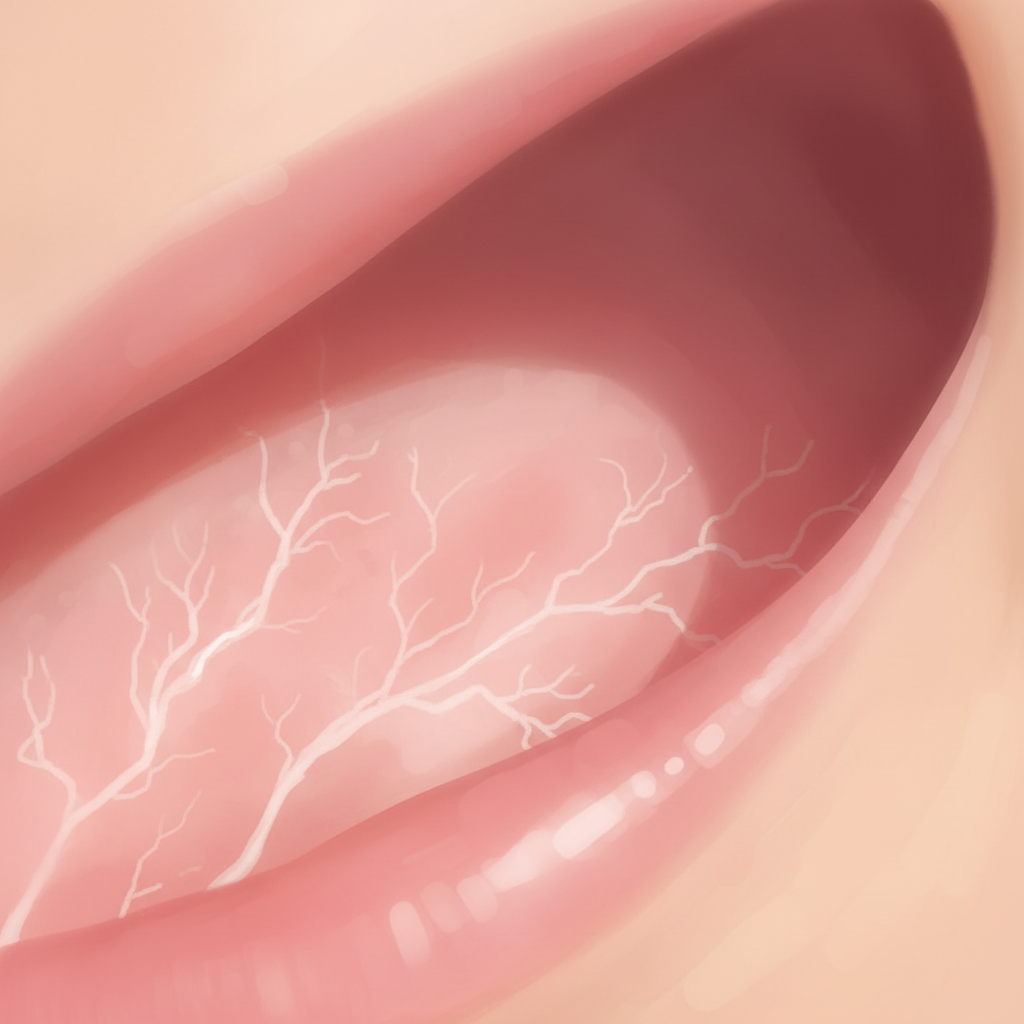
You are sitting down to enjoy your morning coffee when a sudden, sharp sting hits your tongue. You check the mirror, expecting a minor burn, but instead, you see something unfamiliar: faint white, lacy lines on the inside of your cheeks or perhaps a patch of gums that looks unusually red and angry. If you are in your 40s or 50s, your first thought might be a simple canker sore or even a reaction to a new toothpaste. However, for many women, these changes are the first signs of a complex intersection between autoimmune activity and the hormonal shifts of the menopause transition.
Understanding the difference between oral lichen planus vs perimenopause mouth changes is essential because while they often occur simultaneously, their management requires different strategies. The oral cavity is highly sensitive to the decline in systemic estrogen, yet it is also a primary site for Oral Lichen Planus (OLP), a chronic inflammatory condition that disproportionately affects women in midlife.
Why does the inside of my mouth feel sore and irritated after 40?
As you navigate the perimenopause symptoms checklist, you might be surprised to find that oral health is a major player. Estrogen receptors are located throughout the oral mucosa, salivary glands, and even the jawbone. When estrogen levels begin to fluctuate and eventually drop, the tissues in your mouth undergo physiological changes.
According to the National Institutes of Health (NIH), the decline in sex hormones leads to a thinning of the oral mucosa, making it more susceptible to injury and infection. This thinning can manifest as a general feeling of soreness, "burning" sensations, or a heightened sensitivity to acidic and spicy foods.
Furthermore, perimenopause is often a time of heightened systemic inflammation. Just as many women notice a hashimotos perimenopause overlap during this window, the immune system can become "twitchy," leading to the emergence of inflammatory conditions like Oral Lichen Planus. If your mouth feels irritated, it could be a simple case of "menopausal gingivostomatitis," or it could be the start of a more persistent autoimmune-mediated process.
What is oral lichen planus and how does it affect women in perimenopause?
Oral Lichen Planus (OLP) is a chronic inflammatory condition that affects the mucous membranes inside your mouth. It isn't a yeast infection, and it isn't contagious. Instead, it is a T-cell-mediated autoimmune disease where your own immune system attacks the cells of the oral lining.
The Mayo Clinic notes that OLP most commonly appears in women over the age of 40. The timing is rarely a coincidence. The hormonal turbulence of perimenopause can act as a "trigger" or an exacerbating factor for OLP.
OLP generally presents in three ways:
- Reticular: The most common form, characterized by painless, white, lacy patches (known as Wickham striae).
- Erosive: The most painful form, involving bright red, ulcerated areas where the top layer of the mucosa has worn away.
- Bullous: A rarer form involving fluid-filled blisters that pop and leave behind sore spots.
For a woman in midlife, OLP can be particularly frustrating because it adds another layer of discomfort to an already challenging transition. The inflammation can make eating, drinking, and even speaking difficult during a flare-up.
Can declining estrogen cause white patches or lacy patterns in the mouth?
While declining estrogen itself causes thinning and dryness (atrophic changes), it does not typically create the "lacy" white patterns characteristic of OLP. However, the two are inextricably linked. The Cleveland Clinic explains that while the exact cause of OLP is unknown, it is considered an immune-mediated disorder.
In perimenopause, the loss of estrogen’s protective, anti-inflammatory effects can leave the oral tissues vulnerable. Think of your estrogen as a buffer. When that buffer is removed, your immune system may overreact to local triggers—such as dental work, stress, or minor trauma—leading to the development of those white, lacy patterns.
It is important to distinguish these patches from other conditions. For example, if you are also managing perimenopause insulin resistance signs, you may be at a higher risk for oral thrush (candidiasis), which also presents as white patches. However, thrush patches can usually be scraped off, whereas the white lines of OLP are integrated into the tissue.
| Feature | Perimenopausal Dry Mouth | Oral Lichen Planus (OLP) |
|---|---|---|
| Primary Symptom | Dryness, "sticky" feeling | Soreness, white lacy lines, ulcers |
| Visual Appearance | Pale, thin, shiny mucosa | White striae (lace) or red erosions |
| Pain Level | Mild to moderate burning | Can be severely painful/burning |
| Trigger | Estrogen deficiency | Autoimmune response / Stress |
| Risk of Malignancy | Negligible | Low, but requires monitoring |
Is your burning mouth a hormone shift or an autoimmune response?
This is the "million-dollar question" for women in their 40s. Burning Mouth Syndrome (BMS) is a common complaint during the menopause transition, characterized by a scalding sensation in the absence of visible sores. OLP, on the other hand, usually presents with visible clinical signs (the white lines or red erosions).
However, the lines are often blurred. A woman can have both OLP and BMS simultaneously. The North American Menopause Society (NAMS) highlights that the drop in estrogen can lead to a decrease in saliva production. Saliva is vital for neutralizing acids and protecting the oral mucosa. When saliva is sparse, the delicate tissues are more prone to the inflammation seen in OLP.
If you are also experiencing widespread pain, you might be looking at a fibromyalgia perimenopause symptoms profile, where central sensitization makes the burning sensation in the mouth feel even more intense. In these cases, the "burning" is a neurological and hormonal symptom, whereas the "soreness" of OLP is an inflammatory, tissue-based symptom.
How do dermatologists diagnose oral lichen planus in middle-aged women?
If you notice persistent changes in your mouth that last longer than two weeks, it is time to see a specialist. While dentists are often the first to spot OLP, a dermatologist or an oral pathologist typically handles the definitive diagnosis and long-term management.
The diagnostic process usually involves:
- Clinical Examination: The provider will look for the tell-tale "Wickham striae" (lacy lines) and check other areas of your body, as lichen planus can also affect the skin, scalp, nails, and vaginal mucosa.
- Biopsy: A small tissue sample is taken (usually under local anesthesia) to be examined under a microscope. This is crucial to rule out other conditions, including oral cancer or discoid lupus.
- Blood Work: To check for related conditions or nutritional deficiencies (like Vitamin B12 or Iron) that can mimic OLP symptoms.
- Review of Medications: Some medications used for blood pressure or arthritis can cause "lichenoid reactions" that look exactly like OLP.
Because OLP is a chronic condition, a formal diagnosis is the first step in creating a long-term management plan that accounts for your hormonal status.
Can HRT help with autoimmune mouth sores during perimenopause?
The role of Hormone Replacement Therapy (HRT) in treating OLP is a topic of significant interest. While HRT is primarily indicated for vasomotor symptoms (hot flashes) and bone health, many women report an improvement in oral symptoms once their hormones are stabilized.
As detailed in our hrt for perimenopause beginners guide, systemic estrogen helps maintain the thickness and moisture of the mucosal linings. By strengthening the "barrier" of the mouth, HRT may indirectly reduce the frequency and severity of OLP flares.
A study published via PubMed/NIH suggests that topical estrogen or systemic HRT can improve the health of oral tissues in postmenopausal women. However, HRT is rarely used as a standalone treatment for OLP. It is typically used as a supportive therapy alongside traditional OLP treatments like topical corticosteroids. If your OLP flares seem to follow your menstrual cycle (which can still happen in early perimenopause), this is a strong indicator that hormonal stabilization may be beneficial.
What are the best soothing treatments for hormonal mouth sensitivity?
Managing OLP and perimenopausal mouth sensitivity requires a dual approach: suppressing the immune overactivity and soothing the delicate tissue.
- Topical Corticosteroids: The "gold standard" for OLP. These come in gels, ointments, or rinses (like dexamethasone) to reduce inflammation during a flare.
- Calcineurin Inhibitors: Medications like tacrolimus may be used for cases that don't respond to steroids.
- Hydration and Saliva Substitutes: If you have dry mouth, use alcohol-free mouthwashes and xylitol-containing lozenges to keep the mucosa lubricated.
- Nutritional Support: Ensure you are not deficient in B-complex vitamins, Vitamin D, or Zinc, all of which are vital for mucosal repair.
- Stress Management: Stress is one of the most common triggers for autoimmune flares. Practices like yoga or meditation can be surprisingly effective at reducing the frequency of OLP episodes.
- Dietary Adjustments: Avoid the "Big Three" irritants: spicy foods, acidic foods (citrus/tomatoes), and sharp/crunchy foods (chips/crusty bread) that can mechanically irritate the lesions.
By addressing both the autoimmune component and the underlying hormonal shift, you can find a path back to comfort. You don't have to suffer through the "burning" years in silence.
Medical Disclaimer: This content is for informational purposes only and does not constitute medical advice. Always seek the advice of your physician or other qualified health provider with any questions you may have regarding a medical condition.
Oral Lichen Planus and Perimenopause FAQs
Q: Can oral lichen planus turn into cancer? A: There is a very slight increased risk (usually cited at 1-2%) of developing oral squamous cell carcinoma in OLP patients. Because of this, the British Association of Dermatologists recommends regular check-ups every 6 to 12 months to monitor any changes in the lesions.
Q: Why does my OLP flare up right before my period? A: This is often referred to as "catamenial" exacerbation. The sharp drop in estrogen and progesterone just before your period can trigger inflammatory cytokines, leading to a flare-up of OLP or increased mouth sensitivity.
Q: Is oral lichen planus caused by stress? A: Stress does not "cause" OLP in a vacuum, but it is a well-documented trigger for flares. High cortisol levels can dysregulate the immune system, making an existing autoimmune condition more active.
Q: What is the best toothpaste for OLP? A: Most experts recommend a toothpaste that is free of Sodium Lauryl Sulfate (SLS). SLS is a foaming agent that can be highly irritating to the compromised mucosal barrier in OLP patients. Look for "sensitive" or "natural" formulations.
Q: Can I get lichen planus in other places besides my mouth? A: Yes. Lichen planus can affect the skin (usually itchy, purple bumps on the wrists or ankles), the nails, the scalp (leading to hair loss), and the genital mucosa (vulvovaginal lichen planus).
Q: Will oral lichen planus ever go away? A: OLP is considered a chronic condition, meaning it may go through periods of remission and activity. While it may not be "cured" in the traditional sense, it can be very effectively managed so that you are symptom-free for long periods.
FAQ
Common questions
Can oral lichen planus turn into cancer?
There is a very slight increased risk (usually cited at 1-2%) of developing oral squamous cell carcinoma in OLP patients. Regular check-ups every 6 to 12 months are recommended to monitor any changes.
Why does my OLP flare up right before my period?
This is often referred to as catamenial exacerbation. The sharp drop in estrogen and progesterone just before your period can trigger inflammatory cytokines, leading to a flare-up of OLP or increased mouth sensitivity.
Is oral lichen planus caused by stress?
Stress does not cause OLP, but it is a well-documented trigger for flares. High cortisol levels can dysregulate the immune system, making an existing autoimmune condition more active.
What is the best toothpaste for OLP?
Most experts recommend a toothpaste that is free of Sodium Lauryl Sulfate (SLS). SLS is a foaming agent that can be highly irritating to the compromised mucosal barrier in OLP patients.
Can I get lichen planus in other places besides my mouth?
Yes. Lichen planus can affect the skin (itchy, purple bumps), the nails, the scalp (leading to hair loss), and the genital mucosa (vulvovaginal lichen planus).
Will oral lichen planus ever go away?
OLP is considered a chronic condition, meaning it may go through periods of remission and activity. It can be effectively managed so that you are symptom-free for long periods.
Want this in your inbox each Sunday?
New articles, the science you can actually use, and the occasional rant.
Keep reading

Perimenopause Symptoms Checklist: 38 Signs You're Not Imagining
A comprehensive, doctor-reviewed checklist of perimenopause symptoms — from the obvious hot flashes to the weird ones nobody warned you about.
9 min read

Hashimoto's and Perimenopause: Why Symptoms Overlap (and How to Tell Them Apart)
Fatigue, brain fog, weight gain, hair loss — Hashimoto's and perimenopause share most symptoms. Here's how to tell what's flaring, what's hormonal, and what to ask your doctor.
11 min read

Fibromyalgia and Perimenopause: When Two Storms Collide
Why fibromyalgia almost always flares during perimenopause, what changes in your nervous system, and the small daily shifts that actually help.
10 min read