
Sarcoidosis or Perimenopause? Overlapping Symptoms After 40
Wondering if those aches, coughs, and fatigue are perimenopause or sarcoidosis? Learn how sarcoidosis symptoms in women over 40 vs perimenopause can overlap and what to do.
Published:
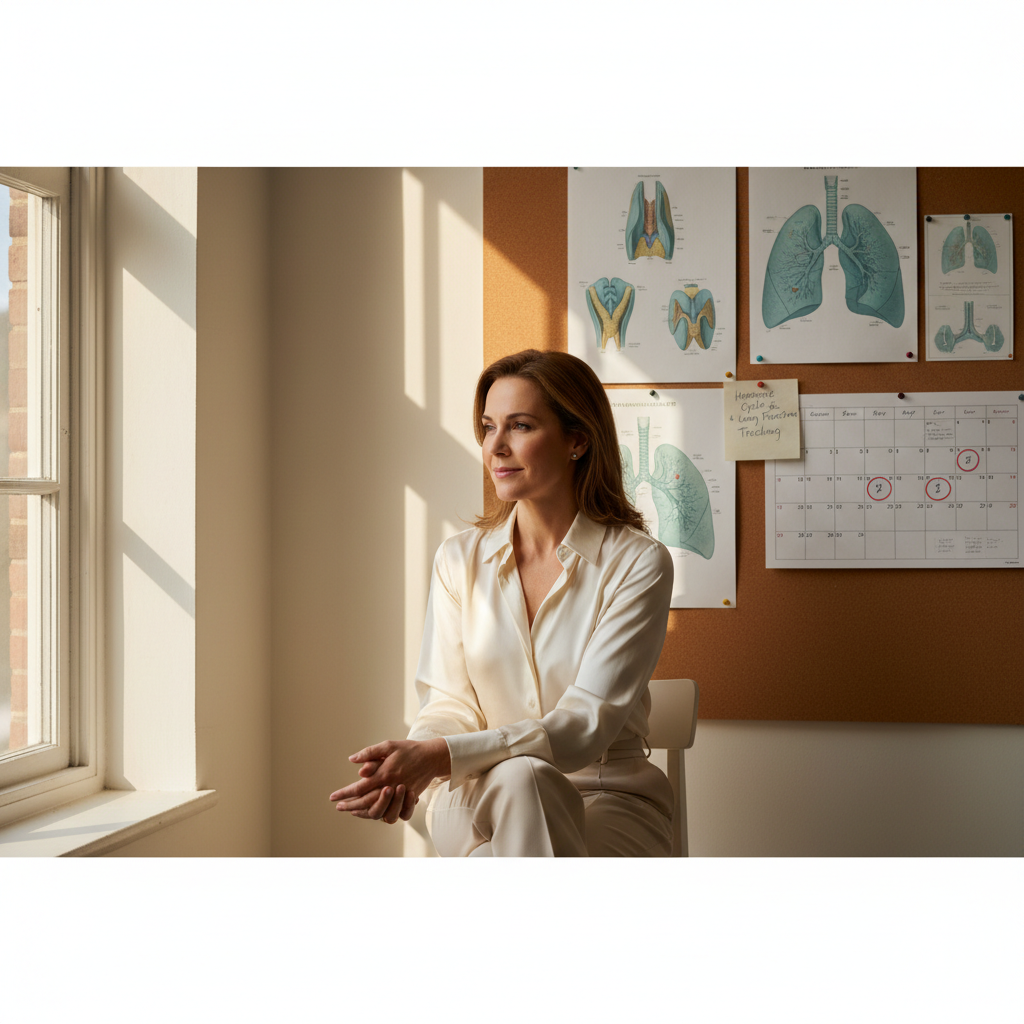
Transitioning into your 40s often feels like a series of "wait, is this normal?" moments. You might experience your first hot flash, notice your periods becoming unpredictable, or feel an exhaustion that caffeine can't touch. For most, these are the hallmarks of perimenopause. However, for a specific group of women, these symptoms mask a more complex multisystem inflammatory disease: sarcoidosis.
Distinguishing between hormonal shifts and an autoimmune-like condition is critical because sarcoidosis often peaks in women between the ages of 45 and 60. When inflammatory granulomas (tiny clumps of immune cells) form in your lungs, skin, or joints, they can mimic the perimenopause symptoms checklist with startling accuracy. Understanding the nuances between these two can be the difference between years of "managing symptoms" and finally achieving a targeted treatment plan.
What are the common signs of sarcoidosis in women over 40?
Sarcoidosis is a systemic inflammatory disease characterized by the growth of tiny collections of inflammatory cells called granulomas. While it can affect any organ, it most commonly strikes the lungs and lymph nodes. In women over 40, the presentation is often more systemic and persistent than in men.
Common signs include:
- Lofgren’s Syndrome: A specific subtype involving fever, enlarged lymph nodes, and painful red bumps on the shins (erythema nodosum).
- Persistent Dry Cough: Unlike a cold, this cough lingers for weeks without mucus.
- Ocular Changes: Blurred vision, eye pain, or severe redness, which can sometimes be dismissed as "dry eye" from perimenopause.
- Skin Lesions: Raised, reddish-purple patches or bumps, often appearing on the face or ankles.
According to the National Institutes of Health (NIH), sarcoidosis is more common and often more severe in African American women, who may experience a higher rate of lung involvement and skin lesions compared to other demographics. This makes it essential to look beyond "hormones" if you belong to a high-risk group and are experiencing persistent systemic issues.
How does sarcoidosis fatigue differ from hormonal exhaustion?
Fatigue is a universal complaint during the transition to menopause. However, there is a distinct difference between "hormonal tired" and "inflammatory exhaustion."
In perimenopause, fatigue is often cyclical or linked to sleep disturbances caused by night sweats. It can often be mitigated by addressing perimenopause insulin resistance signs or balancing estrogen fluctuations.
Sarcoidosis fatigue, however, is often described as a "leaden" heaviness that does not improve with rest. Research published via the American Thoracic Society indicates that up to 80% of sarcoidosis patients suffer from chronic fatigue, which can persist even when the disease is clinically in remission. This fatigue is thought to be driven by a constant state of cytokine activity—your body is perpetually fighting an invisible fire.
| Feature | Perimenopause Fatigue | Sarcoidosis Fatigue |
|---|---|---|
| Primary Cause | Hormonal fluctuations & sleep disruption | Systemic inflammation & cytokine release |
| Recovery | Often improves with better sleep/HRT | Rarely improves with rest alone |
| Pattern | May follow menstrual cycle peaks/valleys | Constant or triggered by inflammatory flares |
| Associated Signs | Night sweats, mood swings | Low-grade fever, swollen lymph nodes |
Can perimenopause trigger a sarcoidosis flare-up?
The relationship between hormones and the immune system is profound. Estrogen is known to have both pro-inflammatory and anti-inflammatory properties depending on its concentration. During perimenopause, the erratic "all or nothing" nature of estrogen levels can create an environment where the immune system becomes hypersensitive.
Just as many women find Hashimoto’s and perimenopause overlap during this time, the decline in progesterone—a natural immunosuppressant—may allow sarcoidosis symptoms to surface or worsen. Stress, which spikes during midlife transitions due to cortisol dysregulation, is also a well-documented trigger for sarcoidosis flares.
While there isn't a singular "sarcoidosis gene" triggered by menopause, the Mayo Clinic notes that environmental and hormonal triggers likely play a role in why the disease often manifests in women during their late 40s and 50s.
Why are shortness of breath and dry cough often misdiagnosed?
When a 45-year-old woman complains of shortness of breath, a busy practitioner might first look at her heart or perhaps assume she is just "deconditioned" or experiencing anxiety related to perimenopausal mood shifts. If she has a dry cough, it might be labeled as "silent reflux" or adult-onset asthma.
However, in sarcoidosis, these are the "big two" red flags for pulmonary involvement.
- Granuloma Obstruction: Tiny clumps of cells can block the small airways in the lungs.
- Fibrosis: In chronic cases, inflammation can lead to permanent scarring of lung tissue.
- Lymphadenopathy: Swollen lymph nodes in the chest (hilar lymphadenopathy) can press against airways, causing a tickle or persistent cough.
The Cleveland Clinic emphasizes that many patients are asymptomatic in the early stages, meaning by the time a woman seeks help for a cough, the inflammation may have been present for quite some time. If you find yourself unable to finish a sentence without catching your breath, don't let it be dismissed as "midlife weight gain" or "anxiety."
Is it joint pain from perimenopause or sarcoidosis inflammation?
Aches and pains are so common in midlife that we often joke about our "check engine" lights being on. Perimenopausal joint pain is typically caused by the loss of the lubricating, anti-inflammatory effect of estrogen on the cartilage and synovial fluid. This is often part of the fibromyalgia and perimenopause symptoms overlap where the central nervous system becomes more sensitive to pain.
Sarcoidosis joint pain (sarcoid arthritis) is different. It is an inflammatory arthropathy. It usually affects the larger joints—ankles, knees, and wrists.
- Symmetry: Unlike estrogen-deficiency pain, sarcoidosis often presents symmetrically (both ankles).
- Swelling: You will often see visible swelling, warmth, and redness in sarcoidosis, whereas perimenopausal joint pain is often "invisible" to the eye.
- Morning Stiffness: While both conditions cause stiffness, sarcoidosis stiffness can last hours, whereas hormonal stiffness usually "walks off" within 30 minutes.
If your joints are visibly swollen or your pain is accompanied by red bumps on your shins, this points strongly toward an inflammatory process like sarcoidosis rather than simple hormonal depletion.
How do doctors distinguish between these two conditions?
Because the symptoms overlap, your medical team must be diligent. A diagnosis of sarcoidosis is usually one of exclusion—ruling out other things first—followed by positive imaging or biopsy.
The diagnostic path usually involves:
- Chest X-Ray or CT Scan: Looking for enlarged lymph nodes or patterns of granulomas in the lungs.
- Pulmonary Function Tests (PFTs): To see how much air your lungs can hold and how well oxygen is moving into your blood.
- Biopsy: Taking a small sample of skin or lung tissue to confirm the presence of non-caseating granulomas.
- Blood Work: Checking for elevated Vitamin D and Calcium levels (sarcoidosis granulomas can produce their own Vitamin D) and ACE (Angiotensin-Converting Enzyme) levels.
In contrast, diagnosing perimenopause is primarily clinical, based on age and symptoms, though FSH (Follicle-Stimulating Hormone) levels can sometimes provide a snapshot of ovarian function. If you are struggling with a complex diagnosis, exploring an HRT for perimenopause beginners guide can help you determine if hormonal support resolves your symptoms; if it doesn't, it’s time to look deeper for sarcoidosis.
What lifestyle changes help manage both sarcoidosis and hormones?
Managing a dual challenge of sarcoidosis and perimenopause requires a "cool down" approach—reducing systemic inflammation while supporting hormonal balance.
- Follow a Mediterranean-Style Diet: Focus on omega-3 fatty acids from smash fish (salmon, mackerel, anchovies) and antioxidants from colorful vegetables. This helps dampen the cytokine storms in sarcoidosis and supports insulin sensitivity in midlife.
- Monitor Your Vitamin D: This is tricky. While perimenopausal women often need Vitamin D for bone health, some sarcoidosis patients develop high calcium levels because the granulomas convert Vitamin D into its active form. Always check your calcium and 1,25-dihydroxyvitamin D levels before supplementing.
- Low-Impact Movement: Avoid high-intensity interval training (HIIT) during a sarcoidosis flare. Opt for yoga, Pilates, or swimming to support joint health without overstressing the lungs.
- Prioritize Sleep Hygiene: Since sarcoidosis fatigue is exacerbated by the sleep disruptions of perimenopause, using magnesium glycinate and maintaining a cool room temperature can be life-changing.
- Stress Management: Cortisol is the fuel for the inflammatory fire. Meditation and breathwork are not just "self-care"; they are biological interventions that help regulate the immune system.
Navigating your 40s and 50s is a journey of self-advocacy. If your body is telling you that your cough, your fatigue, or your joint pain is "more than just menopause," listen to that intuition. While perimenopause is a natural transition, sarcoidosis is a condition that requires careful monitoring to protect your long-term lung and heart health. By understanding the intersection of these two worlds, you can move from a place of confusion to a place of empowered radiance.
FAQ
Common questions
How do I know if my joint pain is from sarcoidosis or menopause?
While perimenopause causes general aches, sarcoidosis often presents with visible swelling, redness, and warmth in large joints like the ankles and knees.
Can sarcoidosis affect my eyes like menopause does?
Yes, sarcoidosis can cause blurred vision, light sensitivity, and eye pain, whereas perimenopause usually causes 'dry eye' or grittiness. Any vision change requires a scan for ocular sarcoidosis.
Is a chronic dry cough a sign of menopause?
A dry, persistent cough that lasts more than three weeks is a hallmark of sarcoidosis and is not a standard symptom of perimenopause.
Can perimenopause trigger sarcoidosis?
While there is no direct proof that menopause causes sarcoidosis, the hormonal shifts of perimenopause can trigger inflammation and may unmask an underlying autoimmune-like condition.
How is 'sarcoid fatigue' different from normal midlife tiredness?
Sarcoidosis fatigue is often a deep, 'leaden' exhaustion that doesn't improve with rest, whereas perimenopause fatigue is frequently linked to poor sleep from night sweats.
Can a blood test tell the difference between the two?
No, perimenopause is a clinical diagnosis based on age and cycle changes, while sarcoidosis requires imaging (X-rays/CT scans) and usually a tissue biopsy to confirm.
Want this in your inbox each Sunday?
New articles, the science you can actually use, and the occasional rant.
Keep reading

Perimenopause Symptoms Checklist: 38 Signs You're Not Imagining
A comprehensive, doctor-reviewed checklist of perimenopause symptoms — from the obvious hot flashes to the weird ones nobody warned you about.
9 min read

Hashimoto's and Perimenopause: Why Symptoms Overlap (and How to Tell Them Apart)
Fatigue, brain fog, weight gain, hair loss — Hashimoto's and perimenopause share most symptoms. Here's how to tell what's flaring, what's hormonal, and what to ask your doctor.
11 min read

Fibromyalgia and Perimenopause: When Two Storms Collide
Why fibromyalgia almost always flares during perimenopause, what changes in your nervous system, and the small daily shifts that actually help.
10 min read