
Periods Getting Closer Together? The Perimenopause Shift
Periods getting closer together in perimenopause? Learn why cycles shorten in your 40s, the role of FSH and estrogen, and when to see a doctor for frequent cycles.
Published:
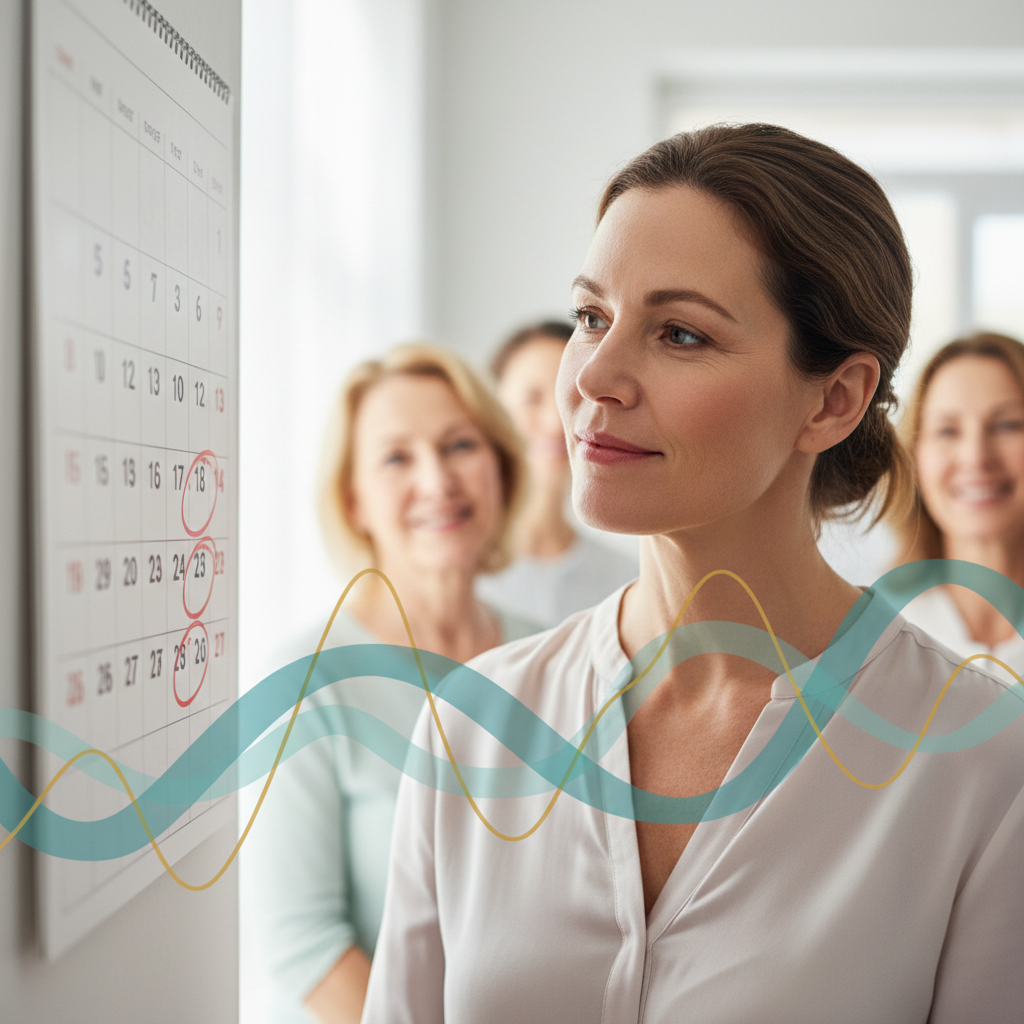
Is it normal for cycles to shorten in your early 40s?
If you have spent your adult life tracking a predictable 28- or 30-day menstrual cycle, the sudden appearance of a period every 21 to 24 days can feel like your internal clock has gone haywire. For many women in their early-to-mid 40s, this is one of the first hallmark signs of the perimenopausal transition. While we often associate "the change" with skipped periods or long gaps between cycles, the reality for many is that things speed up before they slow down.
According to the North American Menopause Society, the early stage of perimenopause is specifically characterized by a persistent change of seven days or more in the length of your menstrual cycle. If your cycle was 31 days and is now consistently 24 days, you are likely in the "early transition." This shortening occurs because of the complex feedback loop between your brain and your ovaries.
In your 40s, your egg reserve (oocytes) is naturally declining. Your brain, specifically the pituitary gland, senses that the ovaries aren't responding as robustly as they once did. In an attempt to jumpstart ovulation, it pumps out higher levels of Follicle Stimulating Hormone (FSH). This "revved up" hormonal signal often causes a follicle to mature much faster than usual, leading to earlier ovulation and, consequently, a shorter overall cycle.
Understanding this shift is a foundational part of managing your health during this decade. Many women find it helpful to cross-reference these cycle changes with a perimenopause symptoms checklist to see if other subtle signs, like night sweats or mood swings, are also appearing.
Why are my periods getting closer together in perimenopause?
The primary reason you are wondering "why are my periods getting closer together in perimenopause" comes down to the shortening of the follicular phase. This is the first half of your cycle, from day one of your period until ovulation.
In a typical reproductive cycle, the follicular phase lasts about 14 days. However, during perimenopause, the rising levels of FSH accelerate this process. You might ovulate on day 8 or 9 instead of day 14. Because the second half of the cycle—the luteal phase—remains relatively constant at 12 to 14 days, the early ovulation results in a much shorter total cycle.
Several biological factors contribute to this "acceleration":
- Declining Inhibin B: As follicle numbers drop, the ovaries produce less of a hormone called inhibin B. Its job is to keep FSH in check. Low inhibin B means FSH rises earlier and higher, forcing the cycle forward.
- Estrogen Spikes and Dips: While we often think of perimenopause as "low estrogen," it is actually characterized by "wild estrogen." You may have periods of significantly higher-than-normal estrogen as your body tries to compensate for sluggish ovaries.
- Progesterone Insufficiency: Even if you ovulate, the "corpus luteum" (the shell left behind by the egg) may not produce enough progesterone. This can cause the uterine lining to begin breaking down sooner than it should.
It is also important to consider systemic factors. For instance, thyroid health can significantly impact cycle regularity. Many women experience a Hashimoto's perimenopause overlap, where autoimmune thyroid issues further disrupt the delicate hormonal balance, making cycles even more unpredictable.
What does a 21-day cycle mean for your hormone levels?
A 21-day cycle is often the "tipping point" where women begin to feel the physical and emotional toll of frequent periods. From a hormonal perspective, a 21-day cycle usually indicates that the luteal phase (the time after ovulation) is either normal but preceded by a very fast ovulation, or that it is "deficient."
When you have a 21-day cycle, you are spending more time in the "hormonal withdrawal" phase of your month. This is the window right before your period starts when both estrogen and progesterone plumment. If you are having a period every three weeks, you are experiencing this drop-off more frequently than you used to.
As noted by the Mayo Clinic, these fluctuations are what drive the classic symptoms of perimenopause.
| Hormone | Typical Action in Perimenopause | Impact on Cycle |
|---|---|---|
| FSH | Increases | Causes follicles to mature too quickly |
| Estrogen | Erratic (High peaks/Low valleys) | Can cause heavy bleeding or breast tenderness |
| Progesterone | Decreases | Leads to shorter cycles and spotting |
| LH | Spikes earlier | Triggers early ovulation |
The impact of a 21-day cycle isn't just about the bleeding. It’s also about the metabolic stress on your body. Constant hormonal fluctuations can exacerbate underlying conditions. For instance, the stress of frequent cycles can worsen perimenopause insulin resistance signs, making it harder to manage weight and energy levels.
Does a shorter cycle mean you are entering the late transition stage?
Actually, the shortening of the cycle is usually a marker of the early transition.
The Stages of Reproductive Aging Workshop (STRAW + 10) is the gold standard for defining these phases. According to STRAW+10 criteria:
- Early Transition: Cycle length varies by 7 days or more (e.g., your 28-day cycle becomes a 21-day cycle).
- Late Transition: You begin to skip cycles entirely. Specifically, having an interval of 60 days or more between periods marks the entry into the late transition.
So, while it might feel like your periods are never going to end because they are so frequent, this phase is actually a precursor to the skipping phase. For many women, the "closer together" phase lasts for 1 to 3 years before they begin to see the long gaps that lead toward menopause (the point where you have gone 12 months without a period).
If the frequent cycles are accompanied by intense pain or fatigue, it’s worth investigating if other conditions are at play. Some women find that fibromyalgia perimenopause symptoms flare up during these frequent hormonal dips, leading to increased body aches and "fibro fog."
How do you distinguish between a short cycle and breakthrough bleeding?
This is a critical distinction to make. A "short cycle" means you have ovulated and are having a true menstrual period. "Breakthrough bleeding" (or intermenstrual bleeding) is bleeding that happens between periods or is caused by something other than the shedding of the uterine lining after ovulation.
To tell the difference, you may need to track your basal body temperature or use ovulation predictor kits, though these can be notoriously difficult to read during perimenopause.
Here are some signs of each:
-
Short Cycle (Polymenorrhea):
- The flow follows a predictable pattern (light, then heavy, then tapering).
- It is accompanied by your usual PMS symptoms (breast tenderness, cramps).
- It occurs consistently every 21–24 days.
-
Breakthrough Bleeding:
- Spotting that occurs mid-cycle.
- Random "flooding" that happens without warning.
- Bleeding after sexual intercourse.
- Brownish discharge that doesn't evolve into a full flow.
Breakthrough bleeding can be caused by uterine fibroids, polyps, or changes in the cervix. According to the American College of Obstetricians and Gynecologists (ACOG), any "abnormal uterine bleeding"—which includes bleeding between periods or periods that are significantly heavier than usual—should be evaluated by a healthcare provider to rule out endometrial hyperplasia or other uterine issues.
When should you see a doctor for frequent perimenopause periods?
While shortening cycles are "normal" for perimenopause, "normal" does not always mean "healthy" or "tolerable." Frequent bleeding can lead to localized issues like anemia (iron deficiency), which causes profound fatigue, hair loss, and shortness of breath.
You should consult a healthcare professional if:
- Your cycles are shorter than 21 days.
- You are soaking through a pad or tampon every hour for several hours.
- You are passing blood clots larger than a quarter.
- You have bleeding between periods or after sex.
- You are experiencing extreme pelvic pain.
- The frequency of your periods is causing significant distress or interfering with your quality of life.
When you visit your doctor, they may suggest a pelvic ultrasound to look for fibroids or a blood panel to check your thyroid and iron levels. This is also an excellent time to discuss a HRT for perimenopause beginners guide. Hormone replacement therapy can often "smooth out" the hormonal peaks and valleys, helping to regulate the cycle and reduce the heavy bleeding associated with the perimenopausal transition.
Can lifestyle changes help regulate a shortening cycle?
While you cannot stop the natural depletion of eggs in your ovaries, you can support your body’s endocrine system to minimize the "chaos" of the transition. Lifestyle changes work by reducing the overall stress load on the body, which can help stabilize the hypothalamic-pituitary-ovarian (HPO) axis.
1. Blood Sugar Stabilization Insulin and estrogen are closely linked. When your blood sugar spikes and crashes, it triggers cortisol, which can further disrupt progesterone production. Aim for a diet rich in fiber, healthy fats, and protein to keep insulin levels steady.
2. Stress Management The "pregnenolone steal" is a theory (though debated in clinical circles) that suggests when the body is under chronic stress, it prioritizes making cortisol over progesterone. Whether or not this is the exact mechanism, stress is clinically proven to disrupt menstrual regularity. Practices like yoga, meditation, or even consistent walking can lower the sympathetic nervous system's "fight or flight" response.
3. Liver Support Your liver is responsible for metabolizing used estrogen. If the liver is sluggish, estrogen can recirculate, contributing to "estrogen dominance," which often leads to shorter, heavier cycles. Eating cruciferous vegetables (broccoli, cauliflower, kale) provides compounds like Indole-3-carbinol that aid in estrogen clearance.
4. Targeted Supplementation Some women find relief with specific nutrients:
- Magnesium: Helps regulate the nervous system and can ease the intensity of cramps.
- Vitex (Chasteberry): Often used to support progesterone levels and lengthen the luteal phase, though it should be used cautiously in perimenopause as it can sometimes increase LH.
- Iron: If you are bleeding every 21 days, an iron supplement (after testing) is often necessary to maintain energy levels.
In conclusion, having your periods get closer together is a natural, albeit frustrating, sign that your body is moving toward the next phase of life. By understanding the hormonal mechanics behind the shift and seeking support when the bleeding becomes unmanageable, you can navigate the perimenopause transition with more confidence and less disruption to your daily life. Remember that your cycle is a vital sign—pay attention to what it’s telling you, and don't hesitate to advocate for your comfort and health.
FAQ
Common questions
Why is my cycle suddenly only 21 days long?
In your 40s, the follicular phase of your cycle shortens because rising Follicle Stimulating Hormone (FSH) levels cause the egg to mature and ovulate much faster than it did in your 20s and 30s.
Is it normal for periods to be more frequent during perimenopause?
Yes. Cycles getting closer together (shortened by 7 days or more) is one of the primary indicators of the 'early transition' stage of perimenopause.
Does a shorter cycle mean I am almost finished with menopause?
A shorter cycle is usually a sign of early transition. The late transition is characterized by 'skipping' periods and having intervals of 60 days or more between cycles.
Can frequent periods cause anemia?
Frequent periods can lead to iron-deficiency anemia. Symptoms include profound fatigue, brittle nails, and shortness of breath. Your doctor can check this with a simple ferritin blood test.
How do I know if it's a short cycle or just mid-cycle spotting?
A true period usually has a consistent flow and is preceded by PMS symptoms. Breakthrough bleeding is often irregular, lighter (spotting), or happens at random times without the usual cycle cues.
Can I stop my periods from coming so often?
While you can't stop the transition, stabilizing blood sugar, managing stress, and supporting liver health can help minimize hormonal 'spikes' and potentially smooth out the cycle.
Want this in your inbox each Sunday?
New articles, the science you can actually use, and the occasional rant.
Keep reading

Perimenopause Symptoms Checklist: 38 Signs You're Not Imagining
A comprehensive, doctor-reviewed checklist of perimenopause symptoms — from the obvious hot flashes to the weird ones nobody warned you about.
9 min read

Hashimoto's and Perimenopause: Why Symptoms Overlap (and How to Tell Them Apart)
Fatigue, brain fog, weight gain, hair loss — Hashimoto's and perimenopause share most symptoms. Here's how to tell what's flaring, what's hormonal, and what to ask your doctor.
11 min read

Fibromyalgia and Perimenopause: When Two Storms Collide
Why fibromyalgia almost always flares during perimenopause, what changes in your nervous system, and the small daily shifts that actually help.
10 min read