
Acupuncture for Perimenopause: Does It Work?
Can acupuncture help with perimenopause hot flashes and anxiety? Discover how this ancient practice regulates hormones, cools your body, and restores balance.
Published:
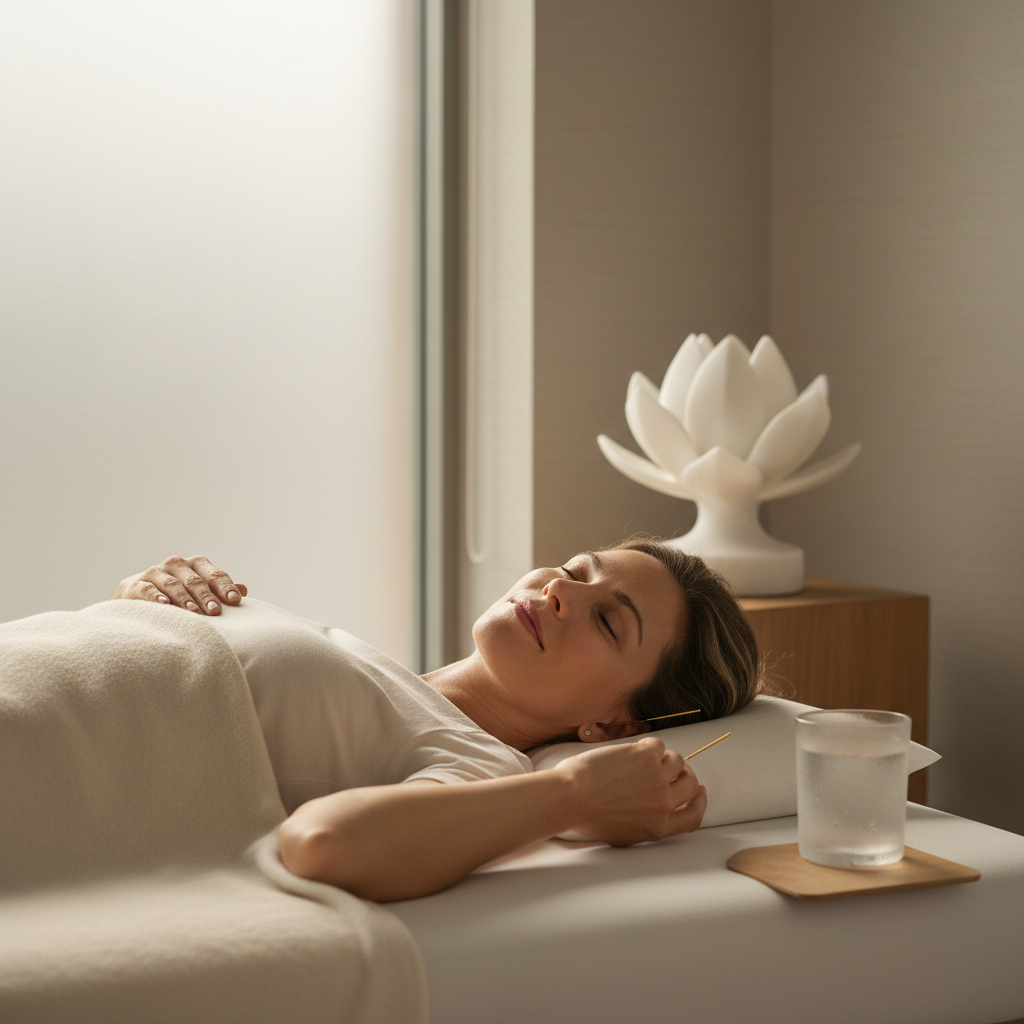
You are likely familiar with the sudden, overwhelming surge of heat that characterizes the perimenopausal transition. Perhaps you find yourself waking up at 3:00 AM, drenched in sweat and gripped by an inexplicable sense of dread. If you are searching for acupuncture for perimenopause hot flashes and anxiety, you are far from alone. As your estrogen levels fluctuate and eventually decline, your body’s internal thermostat—the hypothalamus—becomes highly sensitive, leading to the vasomotor symptoms and emotional turbulence many women face in their 40s.
While many women find relief through medical interventions, it is helpful to cross-reference your experience with a perimenopause symptoms checklist to ensure you are addressing the full scope of your hormonal health. But for those looking to supplement their care or avoid pharmaceuticals, acupuncture offers a time-tested approach to restoring physiological balance.
Does acupuncture actually work for hormonal hot flashes?
The short answer is yes, according to emerging clinical data. Acupuncture—the practice of inserting thin, sterile needles into specific points on the body—is believed to modulate the autonomic nervous system and influence the release of neurotransmitters. For years, the scientific community was skeptical, but recent high-quality studies have provided compelling evidence for its efficacy.
A landmark study published in the journal Menopause (the journal of the North American Menopause Society) found that a course of acupuncture treatment significantly reduced the frequency and severity of hot flashes in perimenopausal and postmenopausal women. Specifically, the "Acupuncture in Menopause" (Acupause) trial demonstrated that participants receiving acupuncture experienced a nearly 36% reduction in hot flashes compared to those who received no treatment.
The mechanism is twofold. First, acupuncture appears to stimulate the production of endorphins—the body's natural painkillers—which help stabilize the thermoregulatory center in the brain. Second, it may lower levels of calcitonin gene-related peptide (CGRP), a vasodilator that is often elevated during a hot flash. If you are also dealing with other complex conditions such as fibromyalgia perimenopause symptoms, acupuncture can provide a "double-duty" benefit by addressing both chronic pain and hormonal heat.
How many sessions are needed to see a change in symptoms?
Acupuncture is rarely a "one-and-done" fix. Because perimenopause is a long-term transition, the goal of acupuncture is to achieve cumulative physiological changes. Most clinical protocols suggest a series of treatments to see a significant shift in the neuroendocrine system.
According to research cited by the National Institutes of Health (NIH), the standard approach for chronic or systemic issues often involves:
- The Loading Phase: 1 to 2 sessions per week for the first 4 to 6 weeks.
- The Consolidation Phase: Once symptoms begin to stabilize, sessions are tapered to once every two weeks.
- The Maintenance Phase: A "tune-up" once a month or once every few months to maintain hormonal harmony.
Individual results vary. Some women report an immediate sense of calm and better sleep after their first visit, while others require at least four weeks of consistent treatment before the "internal furnace" begins to cool. If you are struggling with metabolic shifts during this time, you might also want to look into perimenopause insulin resistance signs, as stabilizing blood sugar can make acupuncture even more effective by reducing systemic inflammation.
What is the 'cooling' theory of acupuncture for perimenopause?
In Traditional Chinese Medicine (TCM), perimenopause is frequently diagnosed as "Kidney Yin Deficiency." Think of Yin as the body’s coolant and moisture, and Yang as its fire and energy. As we age, our Yin energy is said to deplete, leaving the Yang energy unchecked. This "empty heat" rises to the surface, manifesting as hot flashes, night sweats, and irritability.
The "cooling theory" in a modern clinical context involves the regulation of the Hypothalamic-Pituitary-Ovarian (HPO) axis. When this axis is dysregulated, your "fight or flight" (sympathetic) nervous system becomes overactive. This is why acupuncture for perimenopause hot flashes and anxiety is so often grouped together; the same mechanism that causes the heat also triggers the racing heart and panic.
By targeting specific "cooling" points (such as Kidney 3 or Spleen 6), practitioners aim to:
- Lower cortisol levels, which reduces the "edge" of anxiety.
- Improve blood flow to the reproductive organs.
- Reduce systemic inflammation which can exacerbate "flashes."
This cooling effect is particularly helpful for women who feel they are "burning the candle at both ends," especially those navigating the Hashimoto's perimenopause overlap, where autoimmune inflammation and hormonal heat create a perfect storm of discomfort.
Can acupuncture help regulate irregular periods in your 40s?
Irregularity is the hallmark of perimenopause. You might experience cycles that are 21 days apart, followed by a 60-day gap. This is driven by FSH (Follicle-Stimulating Hormone) spikes and declining progesterone. While acupuncture cannot "stop" the natural transition into menopause, it can help smooth the hormonal "peaks and valleys."
Research published via PubMed/NCBI suggests that acupuncture can help regulate the menstrual cycle by modulating the endocrine system and improving ovarian blood flow. By encouraging a more regular cycle, many women report a reduction in the "flooding" (heavy bleeding) and debilitating cramps that often surface in their mid-40s.
| Symptom Category | Potential Acupuncture Benefit | Goal |
|---|---|---|
| Cycle Length | Regulation of FSH/LH levels | More predictable cycles |
| Flow Intensity | Improved pelvic blood circulation | Reduction in heavy "flooding" |
| PMS/Mood | Release of serotonin and dopamine | Reduced irritability and "rage" |
| Cramping | Prostaglandin modulation | Pain relief without NSAIDs |
What should I expect during a hormonal-focused acupuncture session?
If you have never tried acupuncture, your first session will feel more like a comprehensive health consultation than a standard doctor's visit. A practitioner specialized in women’s health will ask about your cycle, sleep quality, digestion, and even your emotional state.
1. The Consultation: Your practitioner will likely look at your tongue and feel your pulse—diagnostic tools in TCM used to determine your "constitutional pattern." 2. The Insertion: You will lie on a comfortable table. The needles are hair-thin—nothing like the needles used for blood draws. Most women feel a slight pinch or a dull "achy" sensation (known as De Qi) followed by deep relaxation. 3. The Retention: You will rest for 20 to 45 minutes with the needles in place. This is often called "acupuncture acupuncture nap." The lights are dimmed, and many women find this the most therapeutic part of their week. 4. Potential Add-ons: Your practitioner might use moxibustion (heat therapy) or auricular acupuncture (ear seeds) to extend the treatment's effects after you leave.
Because acupuncture addresses the nervous system, it is an excellent companion to those reading an HRT for perimenopause beginners guide. The two modalities often work synergistically; HRT replaces the missing hormones, while acupuncture helps the body process those changes more efficiently.
How does acupuncture compare to HRT for symptom relief?
It is important to view acupuncture and Hormone Replacement Therapy (HRT) not necessarily as "either/or" choices, but as different tools in your toolkit.
According to a systematic review from the Cochrane Library, while HRT remains the "gold standard" for the absolute elimination of vasomotor symptoms, acupuncture provides a statistically significant alternative for those who cannot or choose not to take hormones (such as survivors of hormone-positive breast cancer).
| Feature | Acupuncture | HRT (Hormone Replacement Therapy) |
|---|---|---|
| Primary Mechanism | Nervous system / Neurotransmitter modulation | Direct hormone replacement (Estrogen/Progesterone) |
| Side Effects | Minimal (occasional bruising) | Varies (breast tenderness, spotting, etc.) |
| Anxiety Benefit | High (activates parasympathetic system) | Moderate (stabilizes mood via hormones) |
| Regulatory Approval | Recognized by WHO / NIH for various conditions | FDA-approved for vasomotor symptoms |
Many women find that while HRT stops the hot flashes, they still feel "wired" or struggle with sleep. This is where acupuncture excels. It acts as a bridge, calming the nervous system in a way that hormones alone sometimes cannot. Furthermore, for those concerned about the Mayo Clinic's guidelines regarding the timing and duration of HRT, acupuncture offers a long-term maintenance strategy with no hormonal risks.
Final Thoughts on Finding Relief
Navigating your 40s and 50s requires a multi-pronged approach. Whether you choose to pursue acupuncture for perimenopause hot flashes and anxiety as your primary therapy or as a supportive measure alongside medical treatment, the goal remains the same: reclaiming your quality of life. By lowering your stress hormones, regulating your temperature, and providing a dedicated hour of stillness, acupuncture does more than just "fix" a symptom—it helps you transition through this stage of life with more grace and significantly less sweat.
Always ensure you are working with a Licensed Acupuncturist (L.Ac.) who has experience in reproductive endocrinology or women's health to ensure your protocol is tailored to your specific hormonal profile. This journey is uniquely yours, but you don't have to navigate the heat alone.
FAQ
Common questions
Does acupuncture really work for perimenopause hot flashes?
Clinical studies show that acupuncture can reduce the frequency and severity of hot flashes by stabilizing the thermoregulatory center in the brain.
How many sessions do I need to see results?
Most women begin to see significant changes after 4 to 6 weeks of consistent weekly treatment.
Can acupuncture help with perimenopause-related anxiety?
Yes! It is highly effective at lowering cortisol and stimulating the parasympathetic nervous system, which helps reduce hormonal anxiety.
Can acupuncture fix irregular periods in my 40s?
While it doesn't stop menopause, it can help balance the HPO axis to make irregular cycles more predictable and less heavy.
Is acupuncture safer than HRT?
Acupuncture is generally considered safe with very few side effects, unlike some hormonal treatments which may have contraindications.
What happens during a hormonal acupuncture session?
Expect a consultation followed by 20–30 minutes of resting with hair-thin needles in specific points to balance your energy and hormones.
Want this in your inbox each Sunday?
New articles, the science you can actually use, and the occasional rant.
Keep reading

Perimenopause Symptoms Checklist: 38 Signs You're Not Imagining
A comprehensive, doctor-reviewed checklist of perimenopause symptoms — from the obvious hot flashes to the weird ones nobody warned you about.
9 min read

Hashimoto's and Perimenopause: Why Symptoms Overlap (and How to Tell Them Apart)
Fatigue, brain fog, weight gain, hair loss — Hashimoto's and perimenopause share most symptoms. Here's how to tell what's flaring, what's hormonal, and what to ask your doctor.
11 min read

Fibromyalgia and Perimenopause: When Two Storms Collide
Why fibromyalgia almost always flares during perimenopause, what changes in your nervous system, and the small daily shifts that actually help.
10 min read