
Ashwagandha vs L-Theanine: Perimenopause Sleep Guide
Deciding between ashwagandha vs l-theanine for perimenopause anxiety and sleep? Learn which supplement calms racing thoughts and lowers cortisol best.
Published:
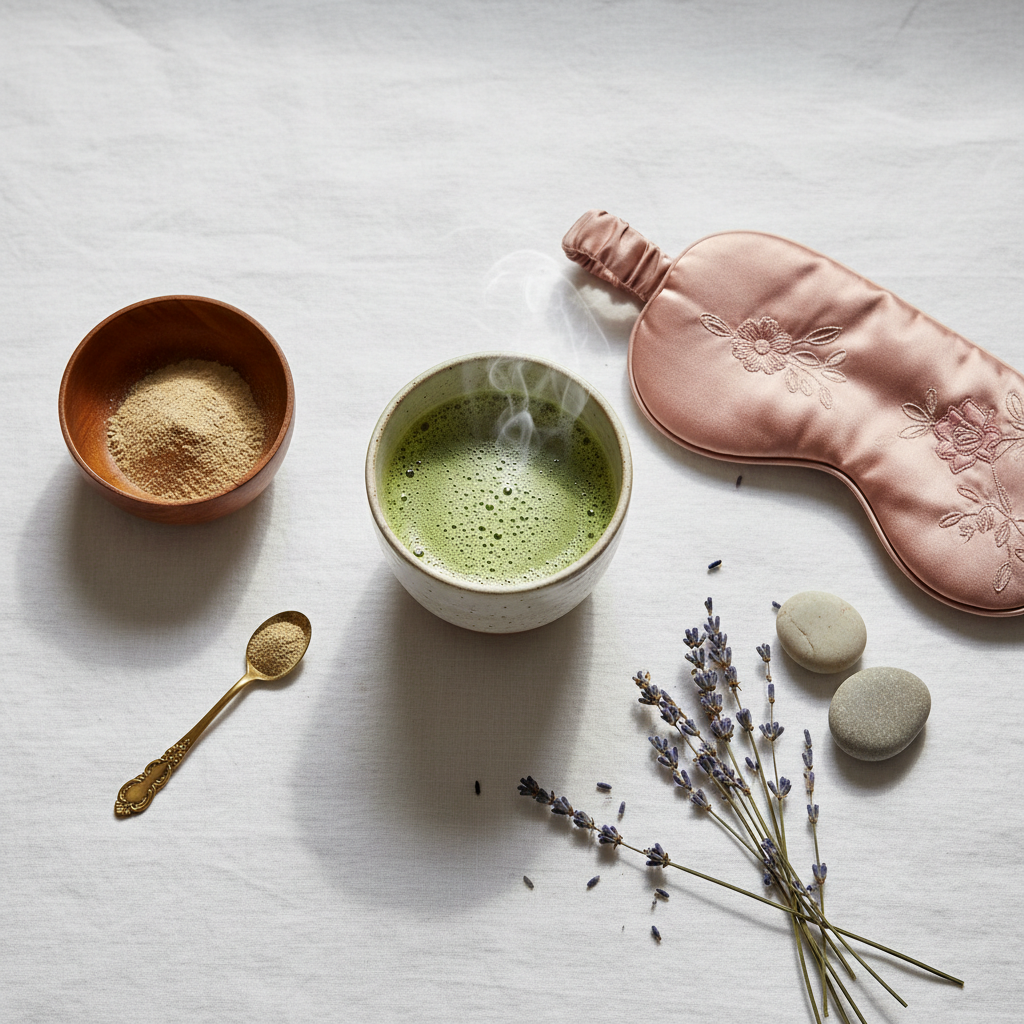
You’re lying in bed, the clock reads 2:14 AM, and your mind is spinning through a to-do list from three days ago while your body feels like it’s plugged into a faulty electrical socket. If you are navigating your 40s or early 50s, this "tired but wired" state is likely a hallmark of your perimenopause symptoms checklist.
As your ovaries begin to fluctuate in their estrogen and progesterone production, your nervous system often bears the brunt of the change. Two supplements have risen to the top of the "natural relief" conversation: Ashwagandha and L-Theanine. But when it comes to ashwagandha vs l-theanine for perimenopause anxiety and sleep, which one actually deserves a spot on your nightstand?
Understanding how these two compounds interact with your shifting hormones is the key to reclaiming your rest. While they both aim to calm the central nervous system, they do so through very different biological pathways.
Should I take ashwagandha or l-theanine for 40+ anxiety?
Choosing between these two depends on the flavor of your anxiety. Are you dealing with a chronic, heavy sense of burnout and physical exhaustion, or are you struggling with acute spikes of "monkey mind" that prevent you from focusing or falling asleep?
Ashwagandha is an adaptogen, a class of herbs that helps your body resist physical and mental stress. It is a "slow-burn" supplement. It doesn't work instantly; rather, it builds up in your system to modulate your overall stress response. If your anxiety feels like a permanent state of high-alertness coupled with fatigue, ashwagandha may be the sturdier tool.
L-Theanine, on the other hand, is an amino acid primarily found in green tea. It works relatively quickly—often within 30 to 60 minutes—by promoting alpha brain waves, which are associated with a state of "relaxed alertness." If your anxiety manifests as sudden jitters or the inability to quiet your mind before a big meeting or at bedtime, L-Theanine provides more immediate, targeted support.
For many women, the transition into perimenopause brings about new metabolic challenges, such as perimenopause insulin resistance signs, which can further destabilize mood. Choosing the right supplement can help stabilize the underlying stress that exacerbates these metabolic shifts.
| Feature | Ashwagandha (Withania somnifera) | L-Theanine (Amino Acid) |
|---|---|---|
| Primary Action | Lowers Cortisol / Adaptogenic | Increases Alpha Brain Waves / GABA |
| Onset of Action | 2–8 weeks for full effect | 30–60 minutes |
| Best For | Chronic stress, burnout, stamina | Acute anxiety, racing thoughts |
| Sleep Impact | Improves sleep quality over time | Helps sleep onset (falling asleep) |
| Origin | Ayurvedic Medicine (Root) | Green Tea Leaves |
How does ashwagandha affect cortisol levels in perimenopause?
During perimenopause, the decline in progesterone—our natural "calming" hormone—often leaves cortisol, the primary stress hormone, unchecked. This hormonal imbalance can lead to the dreaded "middle-age spread" and increased systemic inflammation.
Ashwagandha is renowned for its ability to significantly reduce serum cortisol levels. In a landmark randomized, double-blind, placebo-controlled study, participants taking high-concentration ashwagandha extract saw a significant reduction in stress and cortisol levels compared to the placebo group.
For the perimenopausal woman, lowering cortisol is not just about feeling calmer. High cortisol can worsen fibromyalgia perimenopause symptoms and exacerbate joint pain. By dampening the HPA (hypothalamus-pituitary-adrenal) axis, ashwagandha helps protect your body from the wear and tear of the "fight or flight" response. It’s important to note that because ashwagandha can stimulate the thyroid, women dealing with the Hashimotos perimenopause overlap should consult their doctor, as it may increase T4 levels.
Does l-theanine help with perimenopause racing thoughts at night?
One of the most frustrating symptoms of the menopausal transition is "sleep-onset insomnia." You are exhausted, yet your brain refuses to switch off. This is where L-Theanine shines.
L-Theanine works by increasing levels of GABA, serotonin, and dopamine in the brain. These neurotransmitters are essential for regulating mood and sleep. More importantly, L-Theanine promotes alpha brain wave activity. Research indicates that L-Theanine can improve sleep quality by promoting relaxation without the sedative "heavy" feeling associated with sleep medications.
Unlike traditional sedatives, L-Theanine doesn't make you drowsy during the day; it simply lowers the "noise" of your thoughts. If your perimenopause anxiety feels like a constant internal monologue that won't stop, L-Theanine helps bridge the gap between "active day mode" and "restful night mode." It is particularly effective when combined with magnesium glycinate for a synergistic calming effect.
Can you safely take ashwagandha and l-theanine together?
The short answer is: Yes, for most women, taking these two together is safe and often highly effective. They address the stress response from two different angles.
- The Foundation (Ashwagandha): It works in the background to lower your baseline cortisol and build resilience over weeks and months.
- The Rescue (L-Theanine): It provides the immediate "brake" for the nervous system when you feel a spike of agitation or need to sleep.
When combined, they create a comprehensive approach to perimenopausal mood swings. However, it is always wise to start one supplement at a time. This allows you to monitor how your body responds to each before layering them. For instance, some women find that ashwagandha gives them too much energy if taken too late in the day, while others find it helps them drift off. By introducing them separately, you can fine-tune your personal timing.
If you are currently following an HRT for perimenopause beginners guide, adding supplements should be done under medical supervision to ensure no interactions with your specific hormone dosages.
Which supplement is better for daytime focus and stress?
Perimenopause often brings "brain fog," a cognitive haze that makes focusing on complex tasks feel like wading through molasses.
L-Theanine is generally superior for daytime focus, especially when paired with a small amount of caffeine. The combination is a favorite in the nootropic community because L-Theanine smooths out the "jitters" of caffeine, providing a state of calm focus. Studies have shown that this combination improves performance on cognitively demanding tasks. If you have a high-stakes job and need to stay sharp despite poor sleep, L-Theanine is your ally.
Ashwagandha is better for "stress endurance." If your day feels like an endless marathon of demands that leave you feeling depleted by 3 PM, ashwagandha helps maintain your energy levels by supporting the adrenal glands. It doesn't provide a "buzz" like caffeine; rather, it prevents the crash.
Are there side effects of adaptogens if you are on HRT?
Many women wonder if natural adaptogens will interfere with Hormone Replacement Therapy (HRT). Generally, ashwagandha and L-Theanine do not directly bind to estrogen or progesterone receptors in a way that would negate HRT.
However, there are nuances to consider:
- Thyroid Interaction: Ashwagandha can increase thyroid hormone production. Since estrogen levels (and HRT) can affect thyroid-binding globulin, you must monitor your thyroid labs closely if you have a pre-existing condition.
- Liver Metabolism: Both HRT and herbal supplements are processed by the liver. While rare, high doses of ashwagandha have been linked to liver sensitivity in specific individuals. The Mayo Clinic notes that while generally safe, supplements are not regulated as strictly as pharmaceuticals.
- Blood Pressure: L-Theanine may slightly lower blood pressure. If you are on blood pressure medication alongside your HRT, keep an eye on any dizziness or lightheadedness.
Always consult your healthcare provider before starting a new regimen, especially if you are using HRT to manage severe symptoms. While these supplements are powerful tools, they work best as part of a holistic plan that includes nutrition, movement, and hormonal support.
Making the Choice for Your Nervous System
In the debate of ashwagandha vs l-theanine for perimenopause anxiety and sleep, the winner is often determined by your specific lifestyle needs.
If you are in a season of deep burnout, feeling "fried" and physically exhausted by the hormonal shifts, Ashwagandha offers the deep-tissue support your adrenals need. It is a marathon runner’s supplement—steady, reliable, and strengthening over time.
If you are struggling with the "modern perimenopause" experience—juggling a career, kids, and aging parents while your brain feels like it has 50 browser tabs open at once—L-Theanine offers the immediate relief you need to focus during the day and quiet your mind at night.
Neither is a "magic pill" that will replace the need for healthy sleep hygiene or potentially HRT, but they are evidence-based allies in the fight against perimenopausal distress. Start with one, track your symptoms for three weeks, and listen to what your body tells you. You don't have to white-knuckle your way through the 2 AM wake-up calls anymore.
Disclaimer: This information is for educational purposes and does not constitute medical advice. Always consult with a healthcare professional before starting new supplements.
The Endocrine Society provides comprehensive resources for those looking to understand the complex interplay of hormones during this life stage. By combining the best of clinical science and natural support, you can navigate perimenopause not just with endurance, but with radiance.
FAQ
Common questions
Which is better for perimenopause anxiety: Ashwagandha or L-Theanine?
Ashwagandha is generally better for chronic stress and lowering cortisol, while L-Theanine is better for acute anxiety and stopping racing thoughts at night.
Can I take Ashwagandha and L-Theanine at the same time?
Yes, many women take them together. Ashwagandha provides long-term adrenal support, while L-Theanine offers immediate relaxation.
How long does it take for these supplements to work?
It varies. L-Theanine works within 30–60 minutes. Ashwagandha usually takes 2 to 8 weeks of consistent use to show significant effects on stress levels.
Does Ashwagandha affect the thyroid?
Ashwagandha can stimulate thyroid hormone production, so women with hyperthyroidism or Hashimoto’s should consult their doctor before use.
Will L-Theanine make me sleepy during the day?
L-Theanine is excellent for daytime use because it promotes 'relaxed alertness' without causing drowsiness, unlike many other sleep aids.
Are there any major side effects to Ashwagandha?
While generally safe, ashwagandha can occasionally cause upset stomach or diarrhea. Rare cases of liver sensitivity have been reported at very high doses.
Want this in your inbox each Sunday?
New articles, the science you can actually use, and the occasional rant.
Keep reading

Perimenopause Symptoms Checklist: 38 Signs You're Not Imagining
A comprehensive, doctor-reviewed checklist of perimenopause symptoms — from the obvious hot flashes to the weird ones nobody warned you about.
9 min read

Hashimoto's and Perimenopause: Why Symptoms Overlap (and How to Tell Them Apart)
Fatigue, brain fog, weight gain, hair loss — Hashimoto's and perimenopause share most symptoms. Here's how to tell what's flaring, what's hormonal, and what to ask your doctor.
11 min read

Fibromyalgia and Perimenopause: When Two Storms Collide
Why fibromyalgia almost always flares during perimenopause, what changes in your nervous system, and the small daily shifts that actually help.
10 min read