
Black Cohosh for Hot Flashes: Benefits, Safety, and Dosing
Learn if black cohosh for perimenopause hot flashes works. Our guide covers benefits, side effects, liver safety, and proper dosing for 40+ women.
Published:
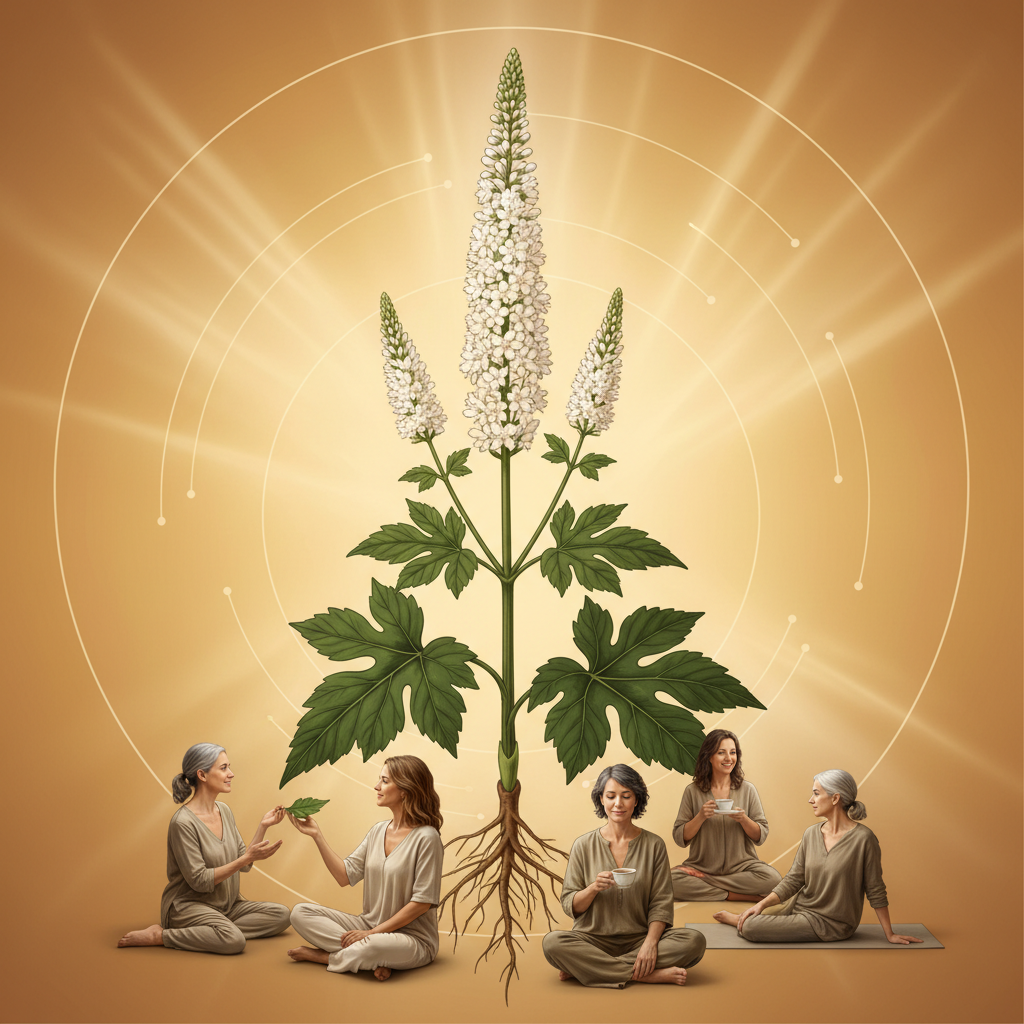
Thinking about black cohosh for perimenopause hot flashes side effects guide? You aren't alone. As you navigate the transition into your 40s and 50s, the sudden surge of internal heat—often described as a "volcano in the chest"—can be disruptive to your sleep, your career, and your quality of life.
Black cohosh (Actaea racemosa), a North American herb with a long history of use in Indigenous medicine, has become the go-to botanical for women seeking non-hormonal relief. But does the science back up the hype, and is it a safe alternative to HRT for perimenopause? Let’s dive into the evidence, the safety profile, and exactly what you need to know before adding this supplement to your cabinet.
Does black cohosh actually work for perimenopause hot flashes?
The efficacy of black cohosh is a subject of significant debate in the medical community. When you look at the NIH Office of Dietary Supplements clinical data, the results are mixed. Some studies show a significant reduction in the frequency and severity of hot flashes, while others find it no more effective than a placebo.
According to a comprehensive Cochrane Review, which analyzed 16 randomized controlled trials involving over 2,000 women, there was insufficient evidence to conclude that black cohosh is consistently effective for menopausal symptoms. However, many individual studies, particularly those using standardized extracts like Remifemin, have shown modest improvements.
Why the discrepancy? It often boils down to:
- The Extract Used: Not all supplements are created equal. Standardized extracts are more likely to yield results.
- Symptom Type: Some women find it more effective for "vasomotor" symptoms (hot flashes and night sweats) than for the mood swings or joint pain often seen in our perimenopause symptoms checklist.
- Individual Biochemistry: Just as some women experience more severe perimenopause insulin resistance signs than others, our bodies process botanical compounds differently.
It is currently believed that black cohosh does not act as a phytoestrogen (bonding to estrogen receptors). Instead, research suggests it may act on the serotonin system, which helps regulate the body’s internal thermostat in the hypothalamus.
How long does it take for black cohosh to start working?
If you are hoping for an overnight fix for your night sweats, you might be disappointed. Unlike some pharmaceutical interventions that work within days, black cohosh usually requires a "loading period."
Most clinical trials suggest that it takes approximately 4 to 8 weeks of consistent daily use to notice a measurable reduction in symptoms. Many women report a gradual decrease—first, the flashes become less intense, then they become less frequent.
| Timeline | Expected Experience |
|---|---|
| Weeks 1-2 | Minimal change; the herb is building up in your system. |
| Weeks 3-4 | Slight reduction in the "heat spike" intensity; potential improvement in sleep quality. |
| Weeks 6-8 | Peak efficacy; noticeable reduction in the number of daily hot flashes. |
| 3 Months | Full assessment period; if no relief by now, the supplement may not work for you. |
Consistency is key. Skipping doses or taking it only when you feel a hot flash coming on won't provide the relief you need. If your symptoms are compounded by other conditions, such as Hashimoto's and perimenopause overlap, you may find that the herb's effects are masked by thyroid-driven temperature swings.
Is black cohosh safe for long-term use in your 40s?
For most healthy women in their 40s, black cohosh is considered safe for short-term use, typically defined as up to six months to one year. However, long-term safety data (extending beyond one year) is limited.
The primary concern for women in their 40s isn't just the herb itself, but how it interacts with the changing hormonal landscape. During perimenopause, your estrogen levels are fluctuating wildly. While black cohosh is often touted as "estrogen-free," women with a history of estrogen-sensitive conditions (like breast cancer or endometriosis) should still proceed with caution. The American College of Obstetricians and Gynecologists (ACOG) suggests that while short-term use may be helpful, women should always consult their physician, especially if they have a complex medical history.
- Monitor your cycle: Keep a log of how your periods change while taking the supplement.
- Check for interactions: Ensure it doesn't interfere with other medications for fibromyalgia perimenopause symptoms or mood.
- Regular check-ups: If you plan to use it for more than 6 months, ask your doctor for periodic liver enzyme tests (ALT and AST).
What are the real risks of black cohosh and liver health?
The most serious concern associated with black cohosh is hepatotoxicity (liver damage). Although rare, there have been several dozen reports worldwide of liver failure and hepatitis linked to black cohosh consumption.
The European Medicines Agency and the NCCIH have investigated these reports. It remains unclear whether the liver damage was caused by the black cohosh itself, or by contaminants and "adulterants" in poorly manufactured supplements. In many cases, products labeled as black cohosh actually contained cheaper, toxic species of Actaea imported from other regions.
Red Flags for Liver Issues:
- Unusual fatigue or weakness.
- Yellowing of the skin or eyes (jaundice).
- Dark urine or pale stools.
- Pain in the upper right abdomen.
To minimize risk, only purchase supplements that carry a third-party seal of approval (such as USP or NSF), which ensures the product actually contains what the label claims and is free from contaminants.
Can you take black cohosh if you are on the birth control pill?
This is a common question for women in their early 40s who are using the pill to manage heavy bleeding or prevent pregnancy during perimenopause.
There is no definitive evidence that black cohosh makes birth control less effective at preventing pregnancy. However, because both substances affect the endocrine system, there is a possibility of "hormonal noise." If you are taking the birth control pill to suppress symptoms, adding black cohosh might make it difficult to determine which treatment is doing the heavy lifting.
Furthermore, some healthcare providers worry that the herb may affect liver enzymes (Cytochrome P450) responsible for metabolizing the pill, though current research suggests this interaction is unlikely to be clinically significant. Still, the gold standard advice remains: Talk to your OB/GYN before combining any botanical with hormonal contraception.
What is the recommended dosage for hormonal night sweats?
Dosing for black cohosh can be confusing because it is available in powders, tinctures, and standardized extracts.
Most clinical studies that showed benefit used a standardized extract providing 20 mg to 40 mg of black cohosh twice daily. Standardized extracts (often labeled as containing 2.5% triterpene glycosides) are preferred because they provide a consistent amount of the active compound.
Dosage Guidelines:
- Standardized Tablet: 20–40 mg, twice a day.
- Liquid Extract (1:1): 2–4 mL, three times daily.
- Dried Root Capsule: 500–1,000 mg, up to three times daily (though this is less precise than standardized extracts).
It is best to take the supplement with food to avoid mild gastrointestinal upset, which is the most common minor side effect. If you find that your night sweats are particularly severe and coupled with joint pain, you might explore how these symptoms relate to other conditions in our fibromyalgia perimenopause symptoms guide, as multi-symptom management often requires a more holistic approach than a single herb can provide.
Conclusion
Black cohosh remains a popular and potentially effective tool for the management of hot flashes, provided you use it with realistic expectations and high-quality products. It isn't a "magic pill" that replaces the need for metabolic health or, in some cases, HRT, but for many women, it offers that much-needed edge during the heat of perimenopause. Always prioritize safety by verifying your source and keeping your doctor in the loop.
Disclaimer: This article is for informational purposes only and does not constitute medical advice. Always consult with a healthcare professional before starting any new supplement.
FAQ
Common questions
Can I take black cohosh with other vitamins?
Yes, black cohosh is generally safe to take with most vitamins and common minerals like Magnesium or Vitamin D. However, it should be used cautiously with other herbs that affect the liver, such as Kava.
What are the most common side effects of black cohosh?
The most common side effects are mild, including stomach upset, headache, a feeling of heaviness in the legs, and occasional weight gain. Rare but serious side effects include liver distress.
Does black cohosh increase estrogen?
Current research suggests black cohosh does not significantly change estrogen levels or bind to estrogen receptors, though its exact mechanism is still being studied.
Can black cohosh be used as a form of contraception?
No. While it may help with hormonal temperature swings, it does not prevent ovulation or protect against pregnancy.
Does black cohosh cause breast tenderness?
Rarely, some women report breast tenderness. If you have a history of breast cancer, the Mayo Clinic recommends consulting an oncologist before use.
How long should I try black cohosh before giving up?
If you have not noticed a reduction in hot flashes after 8 to 12 weeks of consistent use, it is unlikely to work for you, and you should explore other options with your doctor.
Want this in your inbox each Sunday?
New articles, the science you can actually use, and the occasional rant.
Keep reading
Perimenopause Symptoms Checklist: 38 Signs You're Not Imagining
A comprehensive, doctor-reviewed checklist of perimenopause symptoms — from the obvious hot flashes to the weird ones nobody warned you about.
9 min read

Hashimoto's and Perimenopause: Why Symptoms Overlap (and How to Tell Them Apart)
Fatigue, brain fog, weight gain, hair loss — Hashimoto's and perimenopause share most symptoms. Here's how to tell what's flaring, what's hormonal, and what to ask your doctor.
11 min read

Fibromyalgia and Perimenopause: When Two Storms Collide
Why fibromyalgia almost always flares during perimenopause, what changes in your nervous system, and the small daily shifts that actually help.
10 min read