
High Liver Enzymes? The Hidden Perimenopause Connection
Discover why elevated liver enzymes (AST/ALT) often rise in perimenopause after 40. Learn about the estrogen-liver connection, NAFLD risks, and how to protect your metabolic health.
Published:
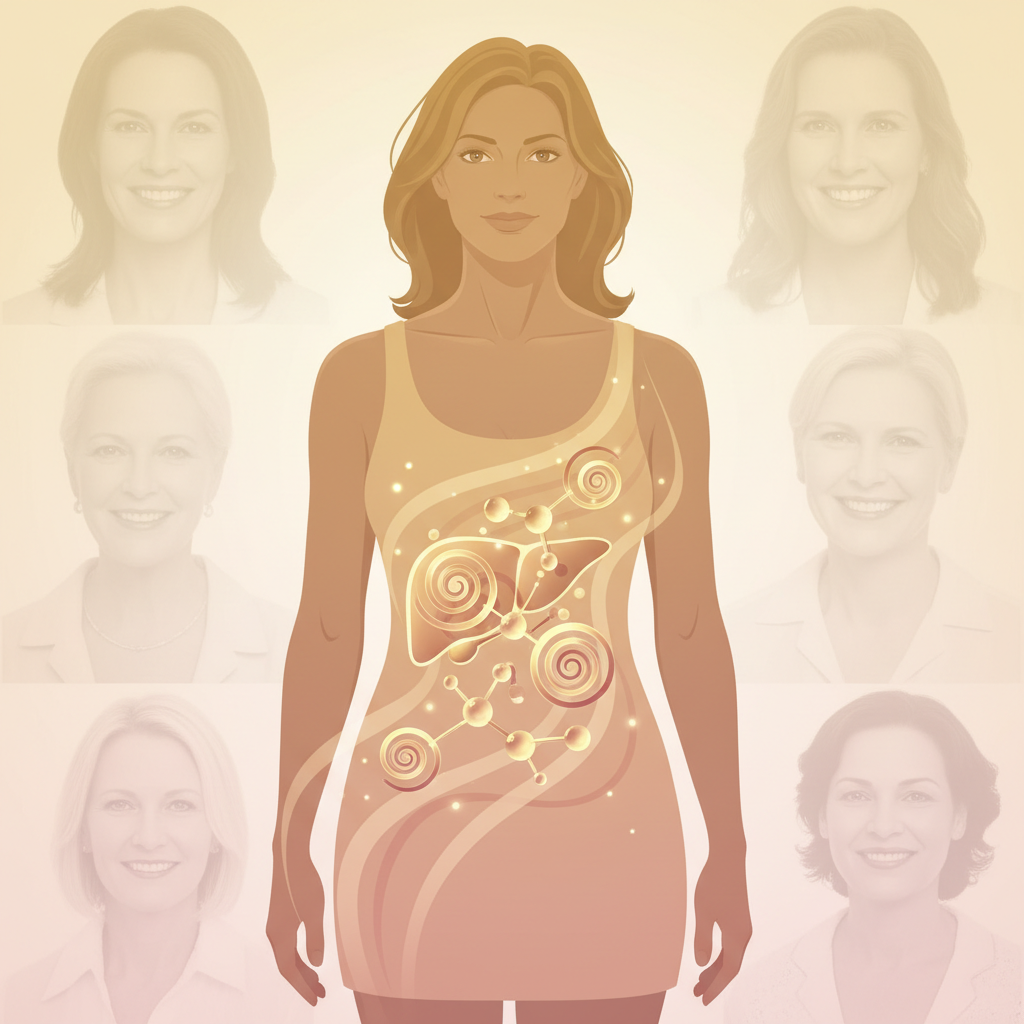
You’ve likely done everything "right"—you’re mindful of your diet, you try to stay active, and you’re keeping up with your annual check-ups. Yet, there it is on your latest blood panel: a red arrow pointing toward elevated AST or ALT levels. If you are in your 40s, your first instinct might be to worry about a serious underlying disease or wonder if that extra glass of wine on Friday night did more damage than you thought.
However, for women navigating the hormonal shift of midlife, there is a hidden player often overlooked by general practitioners: the decline of estrogen. Understanding elevated liver enzymes in perimenopause after 40 causes requires looking past the liver alone and seeing the organ as a central hub in your endocrine system.
Why are my liver enzymes (AST/ALT) rising in my 40s?
When your doctor looks at your liver function tests (LFTs), they primarily focus on two enzymes: Alanine Aminotransferase (ALT) and Aspartate Aminotransferase (AST). These enzymes normally live inside your liver cells. When those cells are stressed, inflamed, or damaged, the enzymes leak into your bloodstream.
In your 40s, several factors converge to push these numbers higher. While viral hepatitis or autoimmune conditions are always possibilities your doctor should rule out, many women find their elevation is tied to the metabolic shift of perimenopause. As estrogen begins its erratic decline, the way your body processes fats and sugar alters significantly. This transition can lead to a "sluggish" liver, where fat begins to accumulate within the hepatocytes (liver cells), triggering inflammation and subsequent enzyme leakage.
It’s also important to cross-reference these findings with other metabolic markers. Often, high liver enzymes don’t travel alone; they frequently appear alongside perimenopause insulin resistance signs, which further complicates the liver's ability to function optimally.
The link between falling estrogen and Non-Alcoholic Fatty Liver?
For decades, we viewed Non-Alcoholic Fatty Liver Disease (NAFLD)—recently renamed Metabolic Dysfunction-Associated Steatotic Liver Disease (MASLD)—as a condition primarily affecting men or postmenopausal women. However, emerging research indicates that the transition into menopause is a high-risk window.
Estrogen is not just a reproductive hormone; it is a metabolic powerhouse. It helps regulate lipid metabolism and has a protective, anti-fibrotic effect on liver tissue. According to the Endocrine Society, the decline in 17β-estradiol during perimenopause is directly associated with an increase in liver fat.
When estrogen levels drop, the body shifts where it stores fat—moving it from the hips and thighs (subcutaneous fat) to the abdomen and internal organs (visceral fat). This visceral fat is metabolically active and "pro-inflammatory." It sends free fatty acids directly to the liver via the portal vein. The liver, overwhelmed by this influx, begins to store the fat, leading to NAFLD.
The prevalence of NAFLD is significantly higher in postmenopausal women compared to premenopausal women, even when adjusting for age and BMI, suggesting that the loss of estrogen itself—not just aging—is the culprit (Source: NIH/NCBI).
| Aspect | Premenopausal Liver | Perimenopausal/Postmenopausal Liver |
|---|---|---|
| Estrogen Levels | High/Cycling | Low/Advancing Decline |
| Fat Distribution | Subcutaneous (Hips/Thighs) | Visceral (Abdominal/Organ) |
| Insulin Sensitivity | Generally Higher | Decreased (Higher Resistance) |
| Liver Enzyme Risk | Lower | Increased Risk of Elevation |
| NAFLD Risk | Protected by Estrogen | Higher Risk of Steatosis |
Can HRT affect your liver enzyme readings?
If you are considering or currently taking Hormone Replacement Therapy (HRT), you may wonder if these medications are to blame for your rising AST or ALT. The answer depends largely on the method of delivery.
When estrogen is taken orally (pills), it must pass through the digestive system and the liver first—a process known as "first-pass metabolism." This can stimulate the production of certain proteins and slightly stress the liver in sensitive individuals. However, modern Hormone Replacement Therapy often utilizes transdermal options (patches, gels, or sprays).
Transdermal HRT bypasses the liver entirely, entering the bloodstream directly through the skin. This method is generally considered liver-neutral and is often preferred for women who already have elevated liver enzymes or a history of gallbladder issues. Interestingly, some studies suggest that HRT may actually improve liver health by restoring the protective effects of estrogen, potentially lowering the risk of NAFLD/MASLD (Source: Journal of Hepatology/Mayo Clinic).
If you’re new to the world of hormones, our HRT for perimenopause beginners guide offers a deep dive into the different formulations and their safety profiles.
Is your 'metabolic health' failing or is it just hormones?
The truth is: they are the same thing. In perimenopause, your hormonal health is your metabolic health. The fluctuations in progesterone and estrogen affect how every cell in your body uses energy.
Many women in their 40s feel like their bodies have suddenly "betrayed" them. They may experience a cluster of symptoms that seem unrelated:
- Unexplained weight gain around the middle.
- Worsening joint pain, which may mimic fibromyalgia perimenopause symptoms.
- Changes in thyroid function—it’s very common to see a Hashimotos perimenopause overlap where liver stress and thyroid antibodies rise simultaneously.
- Extreme fatigue that isn't solved by sleep.
When liver enzymes rise, it’s a signal that the body’s metabolic machinery is struggling to adapt to the lower estrogen environment. It is not necessarily a sign of "failure," but rather a biological "SOS" asking for lifestyle and hormonal support. To see the full scope of how these changes manifest, check our perimenopause symptoms checklist to see if your liver stress aligns with other midlife shifts.
The role of alcohol and sugar in perimenopausal liver stress?
In our 20s and 30s, our livers were remarkably resilient. We could enjoy cocktails and sugary treats with minimal impact on our bloodwork. In perimenopause, the "buffer" is gone.
- Alcohol Tolerance: During perimenopause, many women notice they become much more sensitive to alcohol. This is partly due to changes in body composition (less water, more fat) and a decrease in the enzymes that break down ethanol. Alcohol is an immediate stressor to the liver, and even "moderate" drinking can push already-stressed AST/ALT levels into the "elevated" range.
- Fructose and the Liver: Refined sugar, especially high-fructose corn syrup, is processed almost exclusively by the liver. When perimenopausal insulin resistance kicks in, the liver converts this sugar to fat more efficiently than ever before. This process, called de novo lipogenesis, is a primary driver of fatty liver in midlife.
- Chronic Inflammation: Both alcohol and sugar increase systemic inflammation. Since the liver is the primary filter for the blood, it bears the brunt of this inflammatory load.
Reducing these two inputs—even temporarily—can lead to a dramatic "cool down" of liver enzymes within just a few weeks.
How to support liver detox naturally during the transition?
Supporting your liver doesn't require expensive "teas" or aggressive "cleanses." Instead, it requires consistent, science-backed habits that lower the toxic load and provide the raw materials the liver needs for its natural detoxification phases (Phase I and Phase II).
- Focus on Cruciferous Vegetables: Broccoli, kale, Brussels sprouts, and cauliflower contain sulforaphane and glucosinolates, which support the liver's detoxification pathways and help metabolize "used" estrogen safely.
- Prioritize Fiber: Fiber binds to toxins and excess hormones in the gut, ensuring they are excreted rather than reabsorbed. This takes a significant burden off the liver.
- Hydrate with Intent: Water is essential, but adding lemon or consuming bitter herbs like dandelion root tea can stimulate bile flow, which is how the liver flushes out waste.
- Monitor Medications: Many over-the-counter drugs, especially acetaminophen (Tylenol), are processed by the liver. In perimenopause, when you might be reaching for pain relief more often due to aches, be mindful of the cumulative dose.
- Resistance Training: Building muscle is one of the best ways to combat NAFLD. Muscle acts as a "sink" for glucose, improving insulin sensitivity and reducing the amount of sugar the liver must convert to fat.
According to the National Institutes of Health, weight loss—specifically the reduction of visceral fat—is the most effective way to reverse early-stage fatty liver and normalize enzymes. Even a 5-10% reduction in body weight can lead to significant improvements in liver histology.
Summary: Listening to the Signal
Elevated liver enzymes in perimenopause are rarely an isolated event. They are a window into your changing internal landscape. By addressing the decline in estrogen, managing insulin levels, and being more selective about alcohol and sugar, you can protect your liver and thrive through the transition.
If you see these elevations on your labs, don’t panic. Instead, use it as a catalyst to look deeper at your hormonal health. Your liver is incredibly regenerative, and with the right support, it can return to its role as your body's most powerful filter and metabolic engine.
Medical Disclaimer: This content is for informational purposes only and does not constitute medical advice. Always consult with a healthcare professional before starting new supplements or HRT, especially if you have existing liver conditions.
FAQ
Common questions
Should I worry about mildly elevated liver enzymes in my 40s?
Mildly elevated liver enzymes in your 40s are often linked to the metabolic shifts of perimenopause, specifically the loss of estrogen's protective effect on liver fat metabolism.
Does estrogen deficiency cause fatty liver?
Estrogen helps prevent fat accumulation in the liver. As levels drop during perimenopause, women become more susceptible to Non-Alcoholic Fatty Liver Disease (NAFLD), which raises ALT/AST levels.
Can HRT make my liver enzymes go up?
Oral HRT can sometimes stress the liver due to first-pass metabolism. However, transdermal HRT (patches or gels) bypasses the liver and is generally safer for those with enzyme concerns.
Is there a connection between liver enzymes and weight gain?
High ALT or AST levels are frequently associated with insulin resistance and midlife weight gain, both of which are common during the hormonal transition of perimenopause.
Can alcohol impact my liver more during perimenopause?
Many women find they become less tolerant of alcohol in their 40s. Alcohol places additional stress on a liver already struggling with hormonal changes, leading to higher enzyme readings.
Are elevated liver enzymes reversible in perimenopause?
Yes. With dietary changes (lower sugar/alcohol), increased fiber, and sometimes hormonal support, liver enzymes can often be normalized as the liver is a highly regenerative organ.
Want this in your inbox each Sunday?
New articles, the science you can actually use, and the occasional rant.
Keep reading

Perimenopause Symptoms Checklist: 38 Signs You're Not Imagining
A comprehensive, doctor-reviewed checklist of perimenopause symptoms — from the obvious hot flashes to the weird ones nobody warned you about.
9 min read

Hashimoto's and Perimenopause: Why Symptoms Overlap (and How to Tell Them Apart)
Fatigue, brain fog, weight gain, hair loss — Hashimoto's and perimenopause share most symptoms. Here's how to tell what's flaring, what's hormonal, and what to ask your doctor.
11 min read

Fibromyalgia and Perimenopause: When Two Storms Collide
Why fibromyalgia almost always flares during perimenopause, what changes in your nervous system, and the small daily shifts that actually help.
10 min read