
Estradiol Patch vs. Cream: Which Is Best for Perimenopause?
Compare estradiol patches vs. creams for perimenopause. Learn about absorption, stability, weight gain, and bone health to find the best HRT delivery method.
Published:
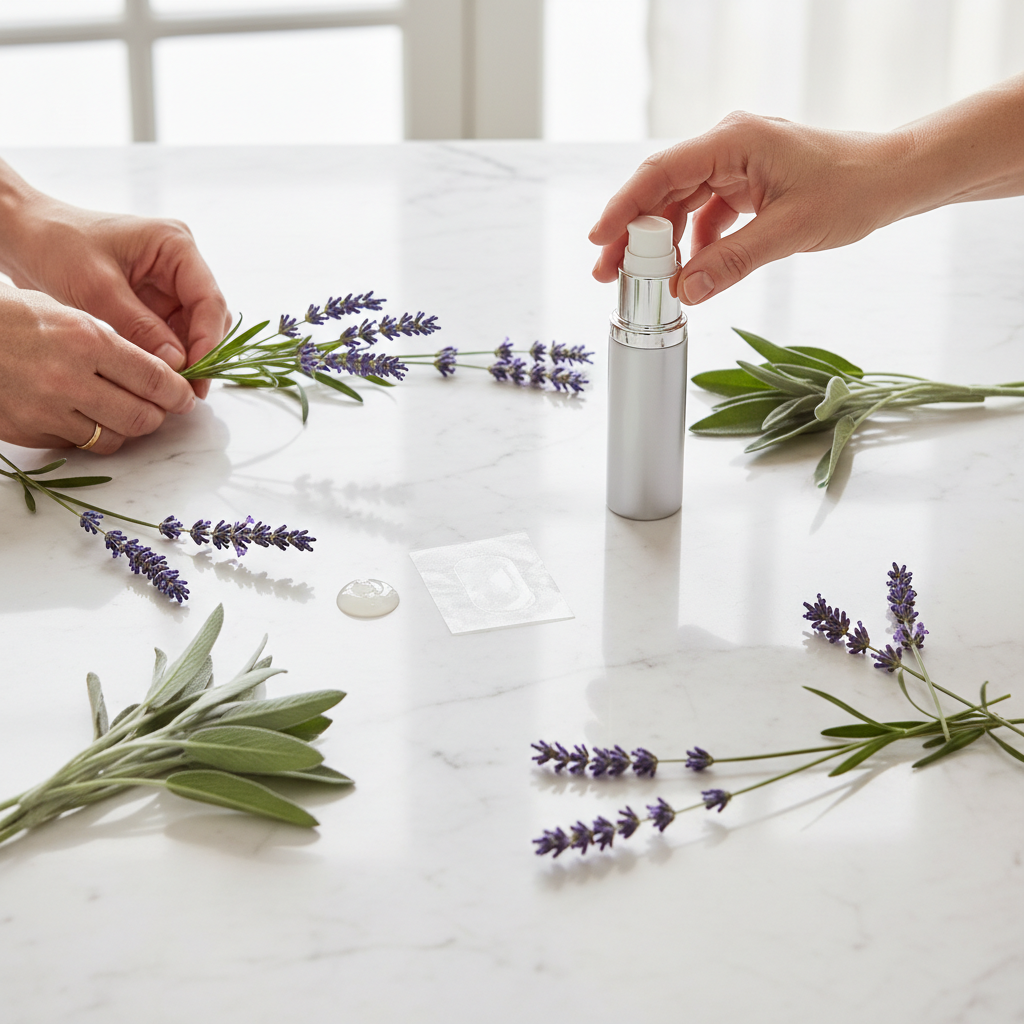
If you’re navigating the turbulent waters of perimenopause, you know that the "second puberty" is anything but predictable. One day you’re dealing with night sweats, and the next, you’re scrolling through a perimenopause symptoms checklist wondering if your brain fog and joint pain are all part of the same puzzle.
When lifestyle changes aren't enough, Hormone Replacement Therapy (HRT) often becomes the next step. But once you decide to start, you face a critical fork in the road: estradiol patch vs cream. Both deliver bioidentical estrogen through the skin (transdermally), bypassing the liver and reducing the risk of blood clots compared to oral pills. However, the way your body absorbs and utilizes these two formats can vary significantly.
This guide will break down the science, the pros and cons, and the clinical nuances to help you decide which delivery method will help you regain your radiance.
Estradiol patch vs cream: which delivers more consistent hormones?
The primary goal of HRT during perimenopause is to smooth out the jagged peaks and valleys of estrogen production. Consistency is king.
The estradiol patch (often referred to as a reservoir or matrix patch) is designed for "steady-state" delivery. Once applied to the skin—usually on the lower abdomen or buttocks—it releases a controlled, metered dose of estradiol over the course of several days (typically 3.5 to 7 days depending on the brand). According to the Mayo Clinic, transdermal patches provide a highly stable blood level of estrogen, which is often preferred for women experiencing severe vasomotor symptoms (hot flashes).
Estradiol creams and gels, on the other hand, provide a daily "bolus" or peak. You apply the product once a day, your skin absorbs it, and blood levels of estradiol rise quickly and then gradually taper off until the next application.
For some women, this daily pulse feels more natural, mimicking a rhythmic cycle. However, for others, the "trough" at the end of the 24-hour period can lead to a return of symptoms like irritability or headaches before the next dose is applied. If you are a beginner looking for a foundational understanding of these options, our HRT for perimenopause beginners guide offers a deeper dive into starting doses.
| Feature | Estradiol Patch | Estradiol Cream/Gel |
|---|---|---|
| Application Frequency | 1-2 times per week | Daily |
| Delivery Style | Continuous, steady release | Daily peak and decline |
| Visibility | Visible sticker on skin | Invisible once absorbed |
| Dose Adjustability | Fixed strengths (0.025, 0.05, etc.) | Highly customizable by volume |
| Risk of Transfer | Low | Moderate (can rub off on others/pets) |
Why do some women absorb estrogen patches better than creams?
Bioavailability—the amount of a drug that actually enters your bloodstream—is not universal. You might find that a 0.05 mg patch leaves you feeling fantastic, while a theoretically equivalent dose of cream does nothing.
Several factors influence absorption:
- Skin Thickness and Lipids: The patch relies on a concentrated delivery system that forces the hormone through the stratum corneum (the outermost layer of skin). If your skin is very dry or particularly thick, a cream might sit on the surface without penetrating effectively.
- Site Rotation: Patches are usually placed on areas with a layer of fat, like the buttocks. Estrogen is lipophilic (fat-loving), and these areas act as a secondary reservoir. If a cream is applied to a lean area like the inner wrist, it may be metabolized faster than intended.
- The "Saturable" Effect: The skin has a limit on how much it can absorb at once. Research published via the National Institutes of Health (NIH) suggests that transdermal delivery avoids the "first-pass metabolism" of the liver, but individual skin metabolism can still vary. Some women have higher levels of enzymes in the skin that break down estradiol before it reaches the systemic circulation.
- Adhesion Issues: A patch only works if it stays stuck. Sweat, oils, and body hair can interfere with adhesion. If a patch is 20% lifted, you aren't getting 100% of the dose.
If you have a history of autoimmune concerns, you might notice your skin reacts differently to adhesives. It is not uncommon for women to see an overlap between Hashimoto’s and perimenopause symptoms, where skin sensitivity or dryness becomes a factor in which HRT method they tolerate best.
Are there different side effects between patches and topical gels?
While both methods use the same bioidentical hormone (17β-estradiol), the delivery vehicle matters.
Patch-Specific Side Effects:
- Skin Irritation: The most common complaint is redness or itching at the site of the adhesive.
- Sticky Residue: The "gray ring" left behind by the patch can be annoying to clean.
- Adhesive Allergy: Some women develop a true contact dermatitis to the acrylate adhesives used in patches.
Cream/Gel-Specific Side Effects:
- Transfer Risk: This is a major clinical consideration. If you apply a cream to your arms and then hug a child or a pet, you can accidentally transfer the hormone to them.
- Variable Absorption: Because you are manually measuring the dose (via a pump or syringe), there is more room for user error compared to a pre-dosed patch.
- Drying Time: You must wait for the gel or cream to dry completely before dressing, which can be a hurdle in a busy morning routine.
Systemic side effects like breast tenderness, bloating, or breakthrough bleeding can occur with either method if the dose is too high. If you are also managing chronic pain, it's worth noting that fibromyalgia perimenopause symptoms can sometimes be exacerbated by fluctuating hormone levels, making the steady delivery of a patch potentially more favorable for pain management.
How do I know if my estradiol dose is high enough?
In perimenopause, we treat the woman, not the lab slip. Because your own ovaries are still producing sporadic amounts of estrogen, blood tests can be notoriously unreliable—a snapshot in time that might look "normal" while you feel miserable.
According to the North American Menopause Society (NAMS), the goal of HRT is to use the lowest effective dose to manage symptoms. You know your dose is adequate when:
- Hot flashes and night sweats diminish significantly.
- Vaginal dryness improves.
- Sleep quality stabilizes.
- Brain fog begins to lift.
If you are on a 0.0375 mg patch but still waking up drenched in sweat, your provider may increase you to 0.05 mg. Conversely, if you start experiencing significant breast pain or uterine cramping, your dose may be too high.
It is also vital to monitor metabolic markers. Estrogen plays a massive role in how we process carbohydrates. Recognizing perimenopause insulin resistance signs is crucial, as the right dose of estradiol can actually help improve insulin sensitivity, while a dose that is too low may leave you struggling with metabolic shifts.
Can you switch from estrogen cream to a patch mid-cycle?
Yes, you can switch, but it requires a "washout" period or a strategic transition coordinated by your doctor.
Unlike birth control pills, which suppress your natural cycle, HRT in perimenopause is additive. If you move from a daily cream to a patch, your doctor will usually suggest starting the patch the morning you would have applied your next cream dose.
Why switch?
- Lifestyle: You’re tired of the daily application and want a "set it and forget it" option.
- Symptom Control: You are experiencing "end-of-day" mood crashes on the cream.
- Skin Reaction: You’ve developed a rash from the cream’s base ingredients or the patch’s adhesive.
Note: If you still have a uterus, any change in estrogen delivery must be balanced with your progesterone intake. Progesterone protects the uterine lining from the stimulatory effects of estrogen. If you increase your estrogen dose via a patch, your doctor must ensure your progesterone dose is still sufficient to prevent endometrial hyperplasia.
Which hormone delivery method is best for perimenopause weight gain?
Weight gain, particularly "menopausal belly" or visceral fat, is one of the most distressing symptoms of the transition. This shift is often driven by the drop in estradiol, which leads to a change in fat distribution and a decrease in metabolic rate.
The research suggests that transdermal estradiol (both patches and creams) is superior to oral estrogen for weight management. Oral estrogen can increase sex hormone-binding globulin (SHBG), which lowers free testosterone, potentially making it harder to maintain muscle mass.
Between the patch and the cream, the "best" one is the one that keeps your levels most stable. Spikes and crashes in estrogen can trigger cortisol spikes, and high cortisol is a primary driver of abdominal fat storage. The Endocrine Society highlights that maintaining stable estrogen levels helps preserve lean body mass and metabolic health.
What does the research say about patch vs cream for bone health?
One of the most critical, yet "silent," benefits of estradiol is the preservation of bone mineral density. Estrogen inhibits the cells that break down bone (osteoclasts).
The Women's Health Initiative (WHI) and subsequent studies have confirmed that estrogen therapy significantly reduces the risk of fractures. When comparing patches and creams:
- Dose-Dependency: Bone protection is generally dose-dependent. Very low-dose patches (like 0.014 mg) provide some protection, but standard doses (0.05 mg and higher) are more effective at increasing bone density.
- Consistency: The British Menopause Society emphasizes that consistent transdermal delivery is effective for osteoporosis prevention.
- Absorption: Because patches provide a more guaranteed "24/7" level of estrogen, some clinicians prefer them for women at high risk for osteoporosis, as it ensures there are no periods during the day where bone resorption could accelerate.
Summary: Making the Choice
The "estradiol patch vs cream for perimenopause symptoms comparison" doesn't have a single winner—it has a "best fit for you."
- Choose the Patch if: You want the most stable hormone levels, you travel often, or you want to apply your HRT only twice a week.
- Choose the Cream/Gel if: You have sensitive skin that reacts to adhesives, you need a highly customized dose that isn't available in standard patch strengths, or you prefer a daily routine.
Regardless of the method, the goal is to return to a state of balance. Perimenopause is a transition, not a destination. By working closely with a provider and monitoring your symptoms against a perimenopause symptoms checklist, you can fine-tune your HRT to ensure your years of transition are met with vitality rather than just endurance.
FAQs
1. Can I use both a patch and a cream at the same time? Generally, no. Doubling up on delivery methods can lead to excessively high levels of estradiol, increasing the risk of side effects like heavy bleeding or breast pain. Stick to one method as directed by your doctor.
2. Will the estradiol patch fall off in the pool or shower? Most modern patches are designed to be water-resistant. However, high heat (like hot tubs or saunas) can cause the patch to release estrogen too quickly (dumping) or lose its stickiness. It’s best to cover it with a waterproof medical film if you’re a frequent swimmer.
3. Does insurance usually cover patches or creams? Most insurance plans cover at least one form of transdermal estradiol. Often, generic patches are the most widely covered, while brand-name gels or compounded creams may require a higher co-pay or prior authorization.
4. Is there a difference in breast cancer risk between patches and creams? Current research, including data from the Lancet, indicates that the risk of breast cancer is more closely related to the duration of HRT and the type of progestogen used, rather than whether the estrogen was delivered via a patch or a cream. Transdermal estrogen itself carries a very low risk profile.
5. How long does it take to feel a difference after starting a patch or cream? Some women notice an improvement in hot flashes within a week. However, it typically takes 8 to 12 weeks to see the full effect on mood, skin, and sleep quality.
6. Can I apply estrogen cream to my face for wrinkles? While estrogen does affect skin elasticity, systemic HRT creams are not designed for facial application. They are formulated to be absorbed into the bloodstream. For facial concerns, speak to a dermatologist about specific estriol face creams which act locally rather than systemically.
FAQ
Common questions
Can I use both a patch and a cream at the same time?
Generally, no. Doubling up on delivery methods can lead to excessively high levels of estradiol, increasing the risk of side effects like heavy bleeding or breast pain. Stick to one method as directed by your doctor.
Will the estradiol patch fall off in the pool or shower?
Most modern patches are designed to be water-resistant. However, high heat (like hot tubs or saunas) can cause the patch to release estrogen too quickly (dumping) or lose its stickiness. It’s best to cover it with a waterproof medical film if you’re a frequent swimmer.
Does insurance usually cover patches or creams?
Most insurance plans cover at least one form of transdermal estradiol. Often, generic patches are the most widely covered, while brand-name gels or compounded creams may require a higher co-pay or prior authorization.
Is there a difference in breast cancer risk between patches and creams?
Current research indicates that the risk of breast cancer is more closely related to the duration of HRT and the type of progestogen used, rather than whether the estrogen was delivered via a patch or a cream. Transdermal estrogen itself carries a very low risk profile.
How long does it take to feel a difference after starting a patch or cream?
Some women notice an improvement in hot flashes within a week. However, it typically takes 8 to 12 weeks to see the full effect on mood, skin, and sleep quality.
Can I apply estrogen cream to my face for wrinkles?
While estrogen does affect skin elasticity, systemic HRT creams are not designed for facial application. For facial concerns, speak to a dermatologist about specific estriol face creams which act locally.
Want this in your inbox each Sunday?
New articles, the science you can actually use, and the occasional rant.
Keep reading

Perimenopause Symptoms Checklist: 38 Signs You're Not Imagining
A comprehensive, doctor-reviewed checklist of perimenopause symptoms — from the obvious hot flashes to the weird ones nobody warned you about.
9 min read

Hashimoto's and Perimenopause: Why Symptoms Overlap (and How to Tell Them Apart)
Fatigue, brain fog, weight gain, hair loss — Hashimoto's and perimenopause share most symptoms. Here's how to tell what's flaring, what's hormonal, and what to ask your doctor.
11 min read

Fibromyalgia and Perimenopause: When Two Storms Collide
Why fibromyalgia almost always flares during perimenopause, what changes in your nervous system, and the small daily shifts that actually help.
10 min read