
Estradiol Patch vs. Cream: Which HRT Is Best for You?
Deciding between an estradiol patch and cream for perimenopause? Learn the pros, cons, and absorption differences to find the best HRT delivery for your lifestyle.
Published:
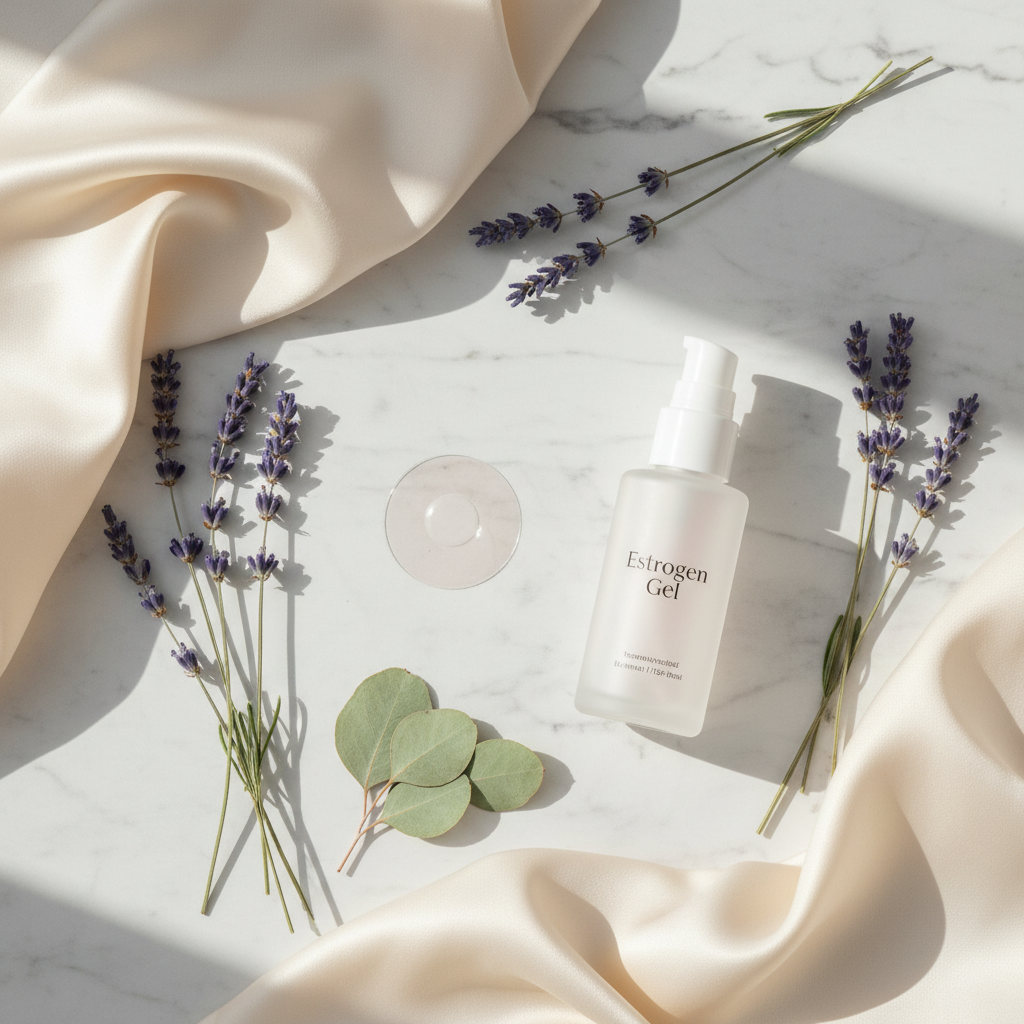
Choosing the right form of Hormone Replacement Therapy (HRT) is one of the most significant decisions you will make during your hormonal transition. Whether you are consulting a perimenopause symptoms checklist to track your progress or you are just beginning to explore HRT for perimenopause, understanding the delivery system of your hormones is just as important as the dose itself.
In the world of Menopausal Hormone Therapy (MHT), two transdermal contenders dominate the conversation: the estradiol patch and estradiol cream (or gel). While both bypass the liver—reducing the risk of blood clots compared to oral pills—they offer vastly different experiences in terms of convenience, stability, and absorption. This guide will help you navigate the nuances of estradiol patch vs cream for perimenopause symptoms so you can advocate for the best fit for your body.
Estradiol patch vs cream: how do delivery methods differ?
Both patches and creams fall under the category of "transdermal" delivery, meaning the hormone is absorbed through the skin directly into the bloodstream. This is widely considered the gold standard for estrogen delivery because it avoids "first-pass metabolism" in the liver. According to the Mayo Clinic, transdermal estrogen carries a lower risk of blood clots and gallbladder issues than oral tablets.
However, the "how" differs significantly:
- The Patch: This is a reservoir or matrix system. You apply a small, clear adhesive square to your lower abdomen or buttocks. It stays in place for either 3.5 days (twice-weekly) or 7 days (once-weekly). It releases a metered, constant dose of estradiol every hour.
- The Cream or Gel: This is a daily application. You pump a specific amount of gel or cream and rub it into your arms, shoulders, or inner thighs. The skin acts as a temporary reservoir, slowly releasing the hormone into the blood over 24 hours.
The primary difference lies in the "set it and forget it" nature of the patch versus the daily ritual of the cream. While the cream allows for more granular dose adjustments, the patch provides a mechanical guarantee of steady release that manual application sometimes lacks.
Which form of estrogen provides more stable blood levels?
Stability is the holy grail of perimenopause management. Because your natural hormones are already fluctuating wildly, adding a delivery method that creates its own "peaks and valleys" can sometimes exacerbate irritability or migraines.
The estradiol patch is generally recognized for providing the most consistent, steady-state serum levels of estradiol. Because the membrane in the patch regulates the release, you don't experience a "spike" immediately after application. Research indexed by the National Institutes of Health (NIH) suggests that transdermal patches maintain a more uniform hormonal environment over a 24-hour period compared to daily topicals.
The estradiol cream or gel, while still superior to pills in terms of stability, creates a "diurnal rhythm." You will have a peak level about 2 to 6 hours after application, which then slowly declines until your next dose. For some women, this "trough" at the end of the 24-hour cycle can lead to the return of breakthrough symptoms like night sweats or early morning anxiety. However, for those who are highly sensitive, the ability to rub in a half-pump or a quarter-pump allows for a level of micro-dosing that a fixed-dose patch cannot provide.
| Feature | Estradiol Patch | Estradiol Cream / Gel |
|---|---|---|
| Application Frequency | 1x or 2x per week | Daily |
| Dose Consistency | High (controlled release) | Moderate (user-dependent) |
| Risk of Transfer | Zero (if adhered) | Potential (to pets/partners) |
| Absorption Surface | Large (under the patch) | Small (spread over skin) |
| Skin Irritation Risk | Higher (adhesive reactions) | Lower (alcohol/base reactions) |
Pros and cons of estrogen patches for perimenopause weight gain?
One of the most common reasons women seek HRT is to combat the sudden shift in fat distribution toward the abdomen. During perimenopause, declining estrogen levels are closely linked to perimenopause insulin resistance signs. When estrogen levels drop, the body becomes less efficient at processing glucose, leading to "visceral" fat storage.
Pros of the Patch for Weight:
- Metabolic Neutrality: Because the patch bypasses the liver, it does not increase sex hormone-binding globulin (SHBG) or inflammatory markers that can sometimes interfere with weight loss.
- Consistent Estrogen: By keeping estrogen levels stable, the patch helps maintain insulin sensitivity. According to the Endocrine Society, maintaining stable estrogen is vital for preserving bone density and metabolic health.
Cons of the Patch for Weight:
- Adhesive Issues: If the patch frequently peels off due to sweat from exercise, you may experience "hormone withdrawal," which can trigger cortisol spikes. Cortisol is a major driver of abdominal weight gain.
- Static Dosing: If your weight gain is tied to a specific phase of your cycle where you need more estrogen, you cannot easily "boost" a patch without changing the whole unit.
For many, the patch is a "metabolic anchor" that prevents the drastic lows that drive sugar cravings and lethargy.
Is estrogen cream more effective for skin and mood than the patch?
When discussing cream, we must distinguish between systemic creams (applied to the body for total hormone levels) and topical creams (applied to the face or vagina for local effects). Here, we are focusing on systemic cream.
The Case for Mood: Many clinicians prefer creams or gels for women struggling with severe perimenopausal mood swings or depression. This is because some women are "rapid metabolizers." They might burn through a 7-day patch in 5 days, leaving them in a hormonal "basement" for the last two days of the week. With a daily cream, you reset your levels every morning. This can provide a psychological sense of control. If you have been tracking symptoms and notice your "lows" correlate with your HRT schedule, a cream might be the solution.
The Case for Skin: While systemic HRT of any kind helps maintain skin collagen and hydration, there is no clinical evidence that rubbing systemic cream on your arm makes your facial skin look better than a patch on your hip. However, estrogen does play a role in managing skin thinning and dryness. For those also dealing with fibromyalgia and perimenopause symptoms, the systemic relief from estrogen can reduce skin sensitivity and "allodynia" (pain from light touch).
According to The North American Menopause Society (NAMS), the primary goal for mood and skin is reaching an adequate serum level, regardless of the delivery method.
How to choose the right form of HRT based on your lifestyle?
Choosing between the patch and the cream often comes down to your daily habits rather than just your biology.
- The Athlete/Swimmer: If you spend hours in a pool, hot tub, or sauna, patches can be frustrating. High heat can cause "dumping" (where the patch releases too much hormone at once), and water can loosen the adhesive. In this case, a daily gel or cream that absorbs within 10 minutes is often a better choice.
- The "Busy Brain": If you struggle to remember a daily pill or vitamin, the twice-weekly patch is a lifesaver. You can set a phone alert for "Monday morning/Thursday night" and forget about it in between.
- The Sensitive Soul: If you have highly sensitive skin or eczema, the medical-grade adhesive on patches might cause a red, itchy square. Estrogen gels/creams are usually formulated with alcohol or simple emollient bases that are better tolerated by reactive skin.
- The Household with Children/Pets: Gels and creams carry a "transfer risk." If you apply a cream to your arms and then hug a child or a pet before it is dry, they may absorb the estrogen. The FDA has previously issued warnings regarding the accidental exposure of children to topical testosterone and estrogen products. If you have "littles" at home, a patch covered by clothing is the safest route.
Absorption issues: why your skin might not like patches or creams.
Not all skin is created equal. Some women find that despite using a high-dose patch, their blood levels remain stubbornly low. This is often due to "low skin permeability."
Patch Absorption Issues:
- Site Rotation: If you keep applying the patch to the exact same spot, the skin can become "saturated" or develop mild scarring (lipoatrophy), which blocks absorption. It is essential to rotate sites.
- Cold Weather: In winter, peripheral circulation to the skin may decrease, potentially slowing the uptake of the hormone from the patch.
Cream/Gel Absorption Issues:
- Application Area: If you spread the cream too thin (over a very large area), it may evaporate before it absorbs. If you clump it too thick, it may not penetrate the stratum corneum.
- Skin Thickness: Women with thicker skin or higher subcutaneous fat levels sometimes find that creams take longer to reach the systemic circulation.
If you find that your HRT isn't "working," it may not be the dose—it might be the delivery. This is especially true if you are managing complex co-morbidities like Hashimoto's and perimenopause, where metabolic rates can fluctuate and affect how you process medications.
What should I ask my doctor when choosing between patch and cream?
When you sit down with your provider, come prepared with data. Use your perimenopause symptoms checklist to show exactly where your "gaps" are.
Key questions to ask include:
- "Based on my history of skin sensitivity/allergies, which adhesive/base is least likely to cause a reaction?"
- "Would a daily gel help stabilize my mid-afternoon mood crashes better than a weekly patch?"
- "If I choose the patch, what is the protocol if it falls off early?"
- "Since I have insulin resistance, is there any reason to prefer one transdermal over the other for metabolic health?"
- "Can we check my serum estradiol levels after 8 weeks to ensure I am absorbing the product correctly?"
According to ACOG (American College of Obstetricians and Gynecologists), the goal of HRT is to use the lowest effective dose for the shortest duration needed. Finding a delivery method that you can use consistently is the first step in achieving that goal.
In the end, the "best" HRT is the one that fits seamlessly into your life. For many, that is the invisible, steady support of the patch. For others, it is the ritual and flexibility of the cream. Neither is inherently superior; they are simply different tools in your toolkit for radiant health.
Summary Checklist for Choosing:
- Check your schedule: Can you remember a daily task, or is twice-a-week better?
- Check your skin: Are you prone to adhesive rashes?
- Check your environment: Do you have small children or pets you cuddle frequently?
- Check your activity: Do you swim or use saunas daily?
- Check your symptoms: Do you feel "low" at the end of the day or the end of the week?
By answering these questions, you and your doctor can select the estradiol delivery system that helps you move from perimenopausal "survival mode" back into your natural radiance. Regardless of the choice, remember that HRT is a journey of adjustment. It is perfectly normal to start with a patch and switch to a cream (or vice versa) as your body’s needs evolve. You deserve to feel balanced, stable, and empowered in your healthcare choices.
FAQ
Common questions
Which provides more consistent hormone levels, the patch or the cream?
While both are effective, patches typically provide more stable, consistent blood levels because they use a controlled-release membrane. Creams create a daily peak and trough.
Can the estradiol patch cause skin irritation?
Yes. If you have sensitive skin or a history of adhesive allergies, the patch may cause redness or itching. In these cases, a daily gel or cream is usually better tolerated.
Is there a risk of transferring estradiol cream to my partner or pets?
If the cream is not fully dry, there is a risk of 'transfer' to others through skin-to-skin contact. To prevent this, apply it to areas covered by clothing and wash your hands after application.
Does heat or exercise affect how the estradiol patch works?
Heat (from saunas, hot tubs, or heavy exercise) can cause 'patch dumping,' where the patch releases medication too quickly. If you are very active in high heat, a cream might be more reliable.
Is the cream safer than the patch regarding blood clots?
No, both are transdermal. Because they bypass the liver, both the patch and the cream carry a significantly lower risk of blood clots compared to oral estrogen pills.
How long does it take to see results with transdermal estradiol?
Most women see an improvement in hot flashes and night sweats within 2 to 4 weeks, though it may take up to 3 months to see the full benefit for mood and skin changes.
Want this in your inbox each Sunday?
New articles, the science you can actually use, and the occasional rant.
Keep reading

Perimenopause Symptoms Checklist: 38 Signs You're Not Imagining
A comprehensive, doctor-reviewed checklist of perimenopause symptoms — from the obvious hot flashes to the weird ones nobody warned you about.
9 min read

Hashimoto's and Perimenopause: Why Symptoms Overlap (and How to Tell Them Apart)
Fatigue, brain fog, weight gain, hair loss — Hashimoto's and perimenopause share most symptoms. Here's how to tell what's flaring, what's hormonal, and what to ask your doctor.
11 min read

Fibromyalgia and Perimenopause: When Two Storms Collide
Why fibromyalgia almost always flares during perimenopause, what changes in your nervous system, and the small daily shifts that actually help.
10 min read