
Estradiol Patch vs. Gel: Which Is Better for Weight Gain?
Confused about estradiol patch vs gel for perimenopause weight gain? Discover which form of HRT better regulates metabolism and helps stop belly fat today.
Published:
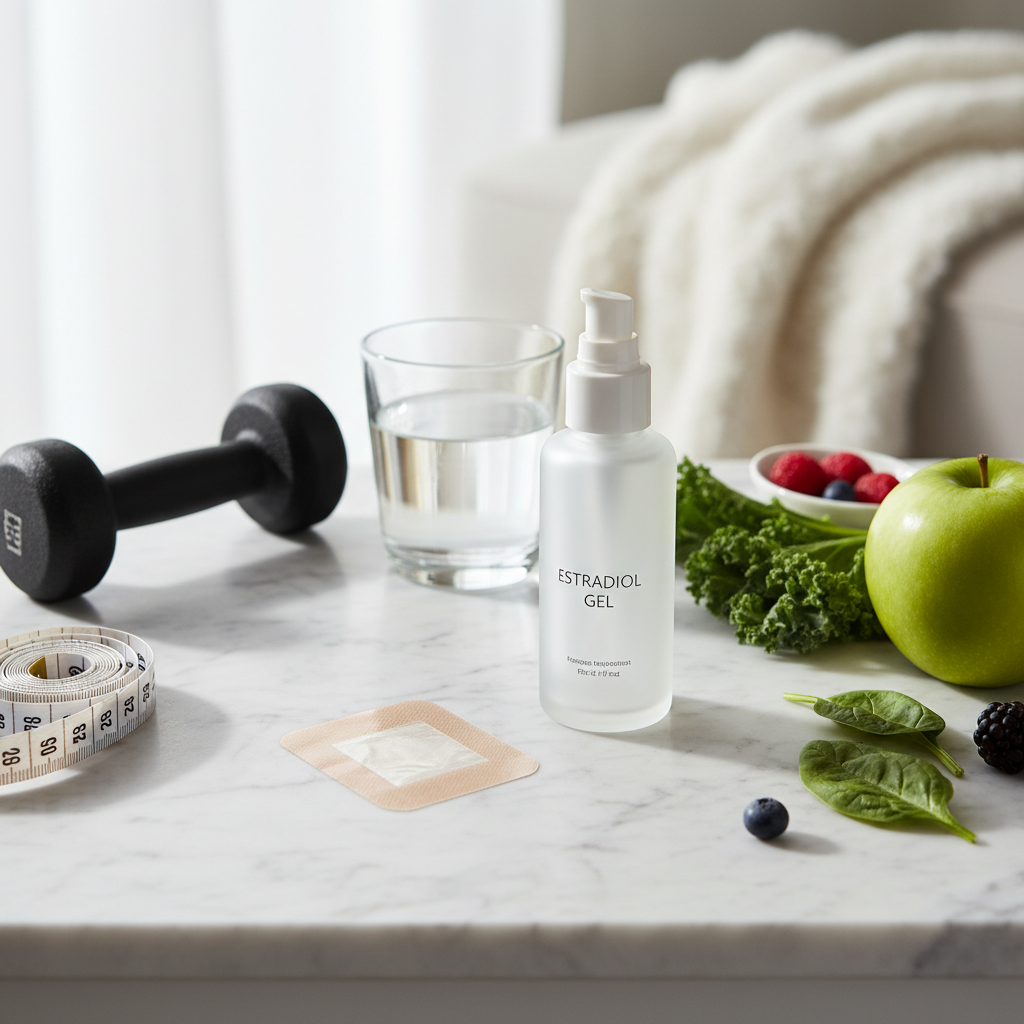
Which form of HRT is better for stopping perimenopause belly fat?
When you notice your favorite jeans feeling snug around the waist despite no change in your diet, you are witnessing the physiological shift of perimenopause. This transition is characterized by a decline in ovarian estradiol production, which directly influences where your body stores fat. Research published by the National Institutes of Health (NIH) confirms that the menopause transition is associated with an increase in total body fat and, more specifically, visceral (belly) fat.
The debate of estradiol patch vs gel for perimenopause weight gain often comes down to delivery consistency. Both the patch and the gel are "transdermal" options, meaning the hormone is absorbed through the skin, bypassing the liver’s "first-pass metabolism." This is crucial because oral estrogen can increase sex hormone-binding globulin (SHBG), which may lower free testosterone and potentially hinder muscle maintenance.
In terms of stopping belly fat, neither form is a "weight loss drug," but they both function as metabolic stabilizers. The patch provides a steady, continuous release of estradiol over 3.5 to 7 days, maintaining a flat line of hormone serum levels. The gel, applied daily, creates a peak in estrogen levels shortly after application which then tapers off. For many women, the patch is slightly superior for weight management because the steady-state delivery prevents the hormonal "dips" that can trigger cortisol spikes and subsequent sugar cravings. However, the "better" form is ultimately the one that brings your specific hormone levels back into a youthful, metabolic range. If you are just starting this journey, reviewing an HRT for perimenopause beginners guide can help you understand the foundational role of estrogen.
How does transdermal estradiol impact your metabolic rate?
Estrogen is a master regulator of female metabolism. It influences how we burn energy, how we sense hunger, and even how our cells respond to insulin. When estradiol levels crater, your basal metabolic rate (BMR) can take a hit. Transdermal estradiol—whether via patch or gel—works to rescue this metabolic slowing by mimicking the body’s natural endocrine environment.
According to the Mayo Clinic, hormone replacement therapy can help redistribute fat from the abdominal area back to the hips and thighs (the "pear" shape), which is metabolically healthier. Estradiol interacts with estrogen receptors in the hypothalamus, the brain's control center for hunger and energy expenditure. By stabilizing these receptors, transdermal estradiol helps:
- Regulate Thermogenesis: Estrogen helps maintain core body temperature and promotes the activity of "brown fat," which burns calories to generate heat.
- Preserve Lean Muscle: By reducing systemic inflammation, estradiol helps protect muscle tissue. Muscle is more metabolically active than fat, so more muscle equals a higher resting metabolic rate.
- Control Appetite: Estrogen modulates leptin (the fullness hormone) and ghrelin (the hunger hormone).
If you are experiencing symptoms like extreme fatigue or joint pain alongside weight gain, it is important to differentiate between standard perimenopause and other conditions. For instance, understanding the Hashimoto's and perimenopause overlap is vital, as thyroid dysfunction will suppress your metabolic rate regardless of which HRT you choose.
Is the estradiol patch or the gel more effective for insulin sensitivity?
Insulin sensitivity is arguably the most important factor in preventing perimenopausal weight gain. As estrogen drops, the body becomes more resistant to insulin, meaning your cells don't "unlock" easily to let glucose in. This leads to higher circulating insulin, a hormone that tells your body to store fat and stop burning it.
Both the patch and the gel are excellent for improving insulin sensitivity because they do not interfere with glucose metabolism the way some oral estrogens might. However, clinical observations suggest that because the patch provides a constant, rhythmic supply of estradiol, it may offer a more stable environment for blood sugar regulation.
| Feature | Estradiol Patch | Estradiol Gel |
|---|---|---|
| Delivery Method | Continuous (Steady State) | Daily Pulsatile (Peak & Trough) |
| Dosing Flexibility | Fixed doses (0.025, 0.05, etc.) | Highly adjustable by pump/sachet |
| Impact on Insulin | Sustained improvement | Daily improvement with minor fluctuations |
| Skin Irritation | Possible adhesive reaction | Rare, but contains alcohol |
| Metabolic Impact | High | High |
High insulin levels are often the "hidden" culprit behind the scale not moving. If you suspect your weight gain is tied to blood sugar, you should look for perimenopause insulin resistance signs. Clinical data from The Endocrine Society suggests that estrogen therapy can decrease the risk of developing Type 2 diabetes in postmenopausal women by improving how the liver and muscles handle glucose.
Why do some women gain weight on the patch but lose it on the gel?
Bio-individuality is the cornerstone of HRT success. There is no one-size-fits-all answer to the estradiol patch vs gel for perimenopause weight gain debate.
Some women experience weight gain on the patch due to:
- Absorption Issues: Some women have thicker skin or lower subcutaneous blood flow, meaning the patch doesn't "deliver" the advertised dose, leaving them in a low-estrogen, low-metabolism state.
- Water Retention: If the patch dose is too high initially, it can cause transient salt and water retention, which feels like weight gain.
- Adhesive Stress: Chronic skin irritation from patch adhesives can slightly raise cortisol, which is counterproductive for weight loss.
Conversely, women may lose weight on the gel because it allows for "micro-dosing." If a standard 0.05mg patch is too much (causing bloating) but 0.025mg is too little (causing hunger), a gel allows the user to find the "sweet spot" (e.g., 1.5 pumps). When the dose is perfectly balanced, the "brain fog" clears, energy returns, and the patient is more likely to engage in the physical activity necessary for weight maintenance. This is often a piece of the puzzle described in a comprehensive perimenopause symptoms checklist.
Does the timing of your HRT dose affect your weight loss efforts?
Timing is less critical for the patch since it releases medication 24/7. However, for the estradiol gel, timing can be a strategic tool for weight management.
Applying estradiol gel in the morning can provide a physiological "boost" that mimics the natural circadian rise of hormones. This can improve mood and morning energy levels, making it easier to stick to an exercise routine. Furthermore, consistent morning application ensures that estrogen levels are at their peak during the hours you are most active and consuming the majority of your daily calories.
Consistency is more important than the specific hour. Fluctuating hormone levels create a stress response in the body. If you apply the gel at 8:00 AM one day and 4:00 PM the next, you are creating "hormonal gaps." These gaps can trigger a rise in cortisol, which The Cleveland Clinic notes is heavily linked to abdominal weight gain.
If you find that your "weight gain" is accompanied by widespread aches that make exercise impossible, it is worth exploring if you are dealing with fibromyalgia and perimenopause symptoms, as pain levels can fluctuate based on the timing and consistency of your estrogen dose.
How to troubleshoot weight gain when starting transdermal estrogen?
If you have started an estradiol patch or gel and the scale is moving in the wrong direction, do not panic. It is rarely the estrogen itself causing "fat" gain; it is usually a dosage or balance issue.
- Check Your Progesterone Balance: If you have a uterus, you must take progesterone with your estrogen. If the ratio is off—specifically if you have "estrogen dominance" relative to your progesterone—you may experience significant bloating and water weight.
- Evaluate Your Thyroid: Perimenopause often masks or triggers thyroid issues. According to the American Thyroid Association, women are five to eight times more likely than men to have thyroid problems. If your HRT is optimized but weight is still climbing, check your TSH, Free T3, and Free T4.
- Assess Gut Health: Transdermal estrogen doesn't pass through the gut, but it is metabolized by the "estrobolome"—a series of gut bacteria. If your gut microbiome is imbalanced, you may not be clearing used estrogens effectively, leading to recycling of hormones and metabolic sluggishness.
- Wait Out the Adjustment Period: Clinical guidelines from NAMS (The North American Menopause Society) suggest that it takes approximately 3 to 6 months for the body to fully equilibrate to a new HRT regimen. Initial fluid shifts are common and usually resolve.
- Audit Your Strength Training: Estrogen helps you build muscle, but it won't do it alone. Because perimenopause involves a natural loss of lean mass (sarcopenia), you must pair your estradiol patch or gel with resistance training to see a metabolic benefit.
Ultimately, the choice between patch and gel for weight gain should be based on which delivery method you can use most consistently and which one stabilizes your specific symptoms most effectively. When your hormones are balanced, your body moves out of "survival mode" (fat storage) and into "thrival mode" (energy expenditure).
Whether you choose the steady delivery of the patch or the customizable nature of the gel, the goal is the same: metabolic flexibility. By restoring estradiol to physiological levels, you provide your body with the tools it needs to maintain a healthy weight, protect your cardiovascular system, and keep your bones strong well into your postmenopausal years. Always work closely with a healthcare provider to monitor your levels and adjust your dose as your perimenopausal journey evolves.
FAQ
Common questions
Is the gel more effective than the patch for weight loss?
While the patch provides a steadier release of hormones, the gel allows for more precise dose adjustments. Neither is inherently 'better' for weight loss, but the gel may be superior for women who need a specific, non-standard dose to stabilize their metabolism.
Does estradiol cause water retention at first?
Estrogen can cause initial sodium and water retention. This is not fat gain and typically resolves within a few weeks as your body adjusts to the HRT.
What is the best time of day to apply estradiol gel for weight management?
Most doctors recommend applying estradiol gel in the morning to keep levels highest during your active hours, though consistency is more important than specific timing.
Can HRT help me lose the 'menopause belly'?
Yes, by improving insulin sensitivity and reducing cortisol-driven hunger, HRT can make it significantly easier to lose visceral belly fat when combined with a healthy diet.
Is there a difference in absorption between the patch and gel?
Bioavailability is high for both. However, some women have skin types that do not absorb the patch well, whereas the gel can be applied to different areas (arms, thighs) for better absorption.
Can I take estradiol alone for weight control?
If you have a uterus, you must take progesterone. If estrogen and progesterone are not balanced, you may experience 'estrogen dominance' symptoms, including bloating and weight gain.
Want this in your inbox each Sunday?
New articles, the science you can actually use, and the occasional rant.
Keep reading

Perimenopause Symptoms Checklist: 38 Signs You're Not Imagining
A comprehensive, doctor-reviewed checklist of perimenopause symptoms — from the obvious hot flashes to the weird ones nobody warned you about.
9 min read

Hashimoto's and Perimenopause: Why Symptoms Overlap (and How to Tell Them Apart)
Fatigue, brain fog, weight gain, hair loss — Hashimoto's and perimenopause share most symptoms. Here's how to tell what's flaring, what's hormonal, and what to ask your doctor.
11 min read

Fibromyalgia and Perimenopause: When Two Storms Collide
Why fibromyalgia almost always flares during perimenopause, what changes in your nervous system, and the small daily shifts that actually help.
10 min read