
Estradiol Patch vs Gel vs Spray: Which HRT is Best?
Compare estradiol patch vs gel vs spray for perimenopause. Learn about absorption, consistency, skin sensitivity, and cost to find the best HRT for you.
Published:
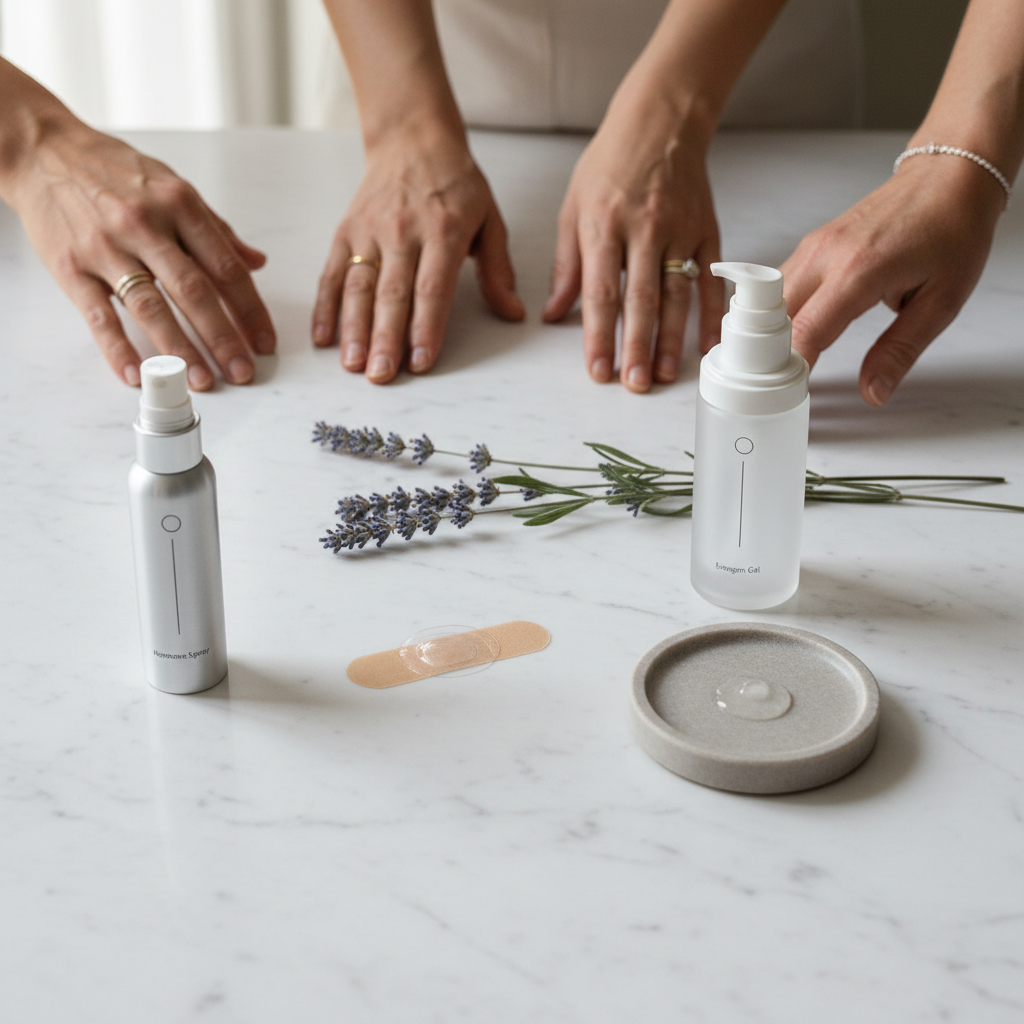
If you are navigating the turbulent waters of perimenopause, you have likely heard the term "transdermal" mentioned by your healthcare provider. Transdermal estrogen—estradiol delivered through the skin—is often considered the gold standard for Hormone Replacement Therapy (HRT) because it bypasses the liver, reducing the risk of blood clots compared to oral pills.
However, choosing between an estradiol patch vs gel vs spray for perimenopause symptoms can feel overwhelming. Each delivery method offers unique benefits regarding absorption, convenience, and lifestyle compatibility. Whether you are dealing with debilitating hot flashes or tracking your progress via a perimenopause symptoms checklist, finding the right delivery system is key to regaining your radiance.
Which transdermal estrogen method is most effective for hot flashes?
When it comes to the "heavy hitters" for vasomotor symptoms (hot flashes and night sweats), all three transdermal methods—patches, gels, and sprays—are clinically proven to be highly effective. The North American Menopause Society (NAMS) notes that transdermal estradiol, regardless of the specific vehicle, is effective at reducing the frequency and severity of hot flashes by up to 75–90%.
The "effectiveness" often comes down to dosage rather than the delivery format itself. However, patches are often the first line of defense because they provide a steady, continuous stream of hormones 24 hours a day. Gels and sprays are applied once daily, which creates a peak in estrogen levels shortly after application, followed by a gradual decline. For women whose hot flashes are particularly aggressive at night, the steady-state delivery of a patch might offer slightly more reliable relief.
If you are just starting your journey, consulting a HRT for perimenopause beginners guide can help you understand how these dosages align with your specific symptom profile.
Estradiol patch vs gel: which offers the most consistent hormone delivery?
Consistency is the hallmark of the estradiol patch. Most patches (like Vivelle-Dot or Climara) use a reservoir or matrix system that releases a specific microgram amount of estradiol every hour. This results in stable serum levels with very little "peak and valley" fluctuation. According to the Mayo Clinic, this stability makes patches a preferred choice for women who experience migraines or mood swings triggered by fluctuating hormone levels.
Estradiol gels (like EstroGel or Divigel), conversely, rely on the skin’s ability to absorb and store the hormone in the subcutaneous fat layer, creating a "depot" that slowly releases into the bloodstream. While effective, the levels can fluctuate slightly more than a patch. However, for women who struggle with perimenopause insulin resistance signs, maintaining a steady metabolic state is crucial, and transdermal methods generally support metabolic health better than oral options.
| Feature | Estradiol Patch | Estradiol Gel | Estradiol Spray (Evamist) |
|---|---|---|---|
| Frequency | Once or twice weekly | Daily | Daily |
| Hormone Stability | High (Steady state) | Moderate (Daily peaks) | Moderate (Daily peaks) |
| Visibility | Visible (Small sticker) | Invisible (Once dried) | Invisible (Once dried) |
| Dose Flexibility | Fixed by patch size | Highly adjustable | Adjustable by number of sprays |
| Skin Irritation | Possible (Adhesive) | Low (Alcohol-based) | Low |
How does the estradiol spray (Evamist) compare to the traditional patch?
Estradiol spray, marketed under the brand name Evamist, is one of the newest additions to the HRT toolkit. It is a metered-dose pump that delivers a small, concentrated amount of estradiol to the inner forearm.
- Drying Time: The spray dries in about 60 to 90 seconds, which is faster than most gels.
- Application Area: Unlike gels which may require a large surface area (like the entire arm or thigh), the spray targets a very small patch of skin.
- Safety Precautions: Because it stays on the surface of the skin briefly, users must be careful to avoid skin-to-skin contact with children or pets for 30 minutes to prevent accidental hormone transfer.
Research published via the National Institutes of Health (NIH) indicates that the spray is bioequivalent in efficacy to the patch for moderate-to-severe vasomotor symptoms, though it may require dose titration (1, 2, or 3 sprays) to match the symptom relief of a higher-dose patch.
Which delivery method is best if you have sensitive skin or allergies?
This is where the debate between estradiol patch vs gel vs spray for perimenopause symptoms gets personal.
The Patch Problem: Many women develop a localized reaction to the adhesive used in patches. This can manifest as redness, itching, or a "dark ring" of residue. If you have a history of contact dermatitis, the patch might not be your best friend.
The Gel/Spray Solution: Gels and sprays are typically better tolerated by those with sensitive skin. Most gels are water-alcohol based. While the alcohol can be slightly drying, it rarely causes the intense allergic reactions seen with medical adhesives. If you are also managing conditions like fibromyalgia-perimenopause symptoms, which can heighten skin sensitivity and allodynia, a non-occlusive gel or spray is often the most comfortable route.
Does the type of transdermal estrogen impact weight gain differently?
A common concern in my practice is whether HRT causes weight gain. The short answer, backed by the Endocrine Society, is that menopause itself—and the loss of estrogen—is the primary driver of visceral (belly) fat accumulation.
Transdermal estrogen (patch, gel, or spray) is generally weight-neutral. In fact, by stabilizing estrogen levels, these treatments can improve insulin sensitivity and reduce the metabolic slowing associated with perimenopause. There is no clinical evidence to suggest that a patch causes more weight gain than a gel. However, because the gel allows for more granular dose adjustments, some clinicians find it easier to "fine-tune" a patient’s dose to minimize side effects like bloating or breast tenderness, which can sometimes be mistaken for permanent weight gain.
For those navigating complex autoimmune overlays, such as the Hashimoto’s perimenopause overlap, managing inflammation through stable hormone levels is far more impactful for weight management than the specific delivery vehicle chosen.
Absorption issues: why some women do better on gel than the patch
Not all skin is created equal. Some women find that despite wearing a high-dose patch, their blood levels of estradiol remain stubbornly low, and their symptoms persist. This is often due to "malabsorption."
Skin thickness, subcutaneous fat distribution, and even local blood flow can affect how well a patch "dumps" its hormones into your system. If the adhesive doesn't maintain 100% contact for the full 3.5 or 7 days, you lose the concentration gradient required for delivery.
Gels can sometimes bypass this because the act of rubbing the gel into the skin may increase local blood flow and absorption. Furthermore, because you apply gel daily, you aren't relying on a single piece of plastic to stay stuck to you through showers, workouts, and sleep. If you find your symptoms return on day 3 of a twice-weekly patch, you may be a better candidate for the daily "top-up" provided by a gel or spray.
Cost and convenience: comparing the three main transdermal options
Cost is a significant factor in the estradiol patch vs gel vs spray debate.
- Patches: These are widely available as generics (e.g., estradiol twice-weekly patches). Because generics exist, they are often the most affordable option covered by insurance.
- Gels: Brand-name gels like EstroGel can be expensive, though generic estradiol gels have become more common in recent years.
- Sprays: Evamist is often the most expensive of the three and may require a prior authorization from your insurance provider, as generic versions are less common.
In terms of convenience, the patch wins for those who want to "set it and forget it." Applying a gel or spray every morning requires a lifestyle habit. However, for women who travel frequently or have an active lifestyle (swimming, hot yoga), the gel or spray eliminates the worry of a patch peeling off in the pool or under high-sweat conditions.
How to choose the right estrogen delivery method with your doctor
Choosing the right HRT is a collaborative process. When you sit down with your practitioner, consider bringing a log of your symptoms and your lifestyle preferences.
Ask yourself these three questions:
- How sensitive is my skin? (If high, lean toward gel/spray).
- How disciplined is my morning routine? (If low, lean toward the patch).
- What is my budget? (If limited, start with the generic patch).
According to ACOG (American College of Obstetricians and Gynecologists), the goal of HRT is to use the lowest effective dose for the shortest duration needed to meet your treatment goals. Whether that is delivered via a tiny sticker or a quick mist on your arm, the "best" method is the one you can use consistently and that makes you feel like yourself again.
Ultimately, your journey through perimenopause is unique. By understanding the nuances of these transdermal options, you are empowered to make a choice that supports your long-term health, bone density, and quality of life. Whether you choose the patch, the gel, or the spray, you are taking a proactive step toward thriving in your second act.
References & Clinical Guidelines:
FAQ
Common questions
Is the patch safer than oral estrogen pills?
Transdermal estrogen (patches, gels, sprays) is generally considered safer than oral estrogen because it does not pass through the liver, which significantly lowers the risk of blood clots and stroke.
Can I switch from a patch to a gel if I have skin irritation?
Yes, if a patch causes redness, itching, or a rash, switching to a gel or spray is often recommended, as these lack the adhesives that typically cause skin irritation.
What happens if my patch falls off or I miss a gel dose?
If a patch falls off, you should clean the area and apply a new one immediately. If you use gels or sprays, try to apply them at the same time each day to maintain steady hormone levels.
How long does it take for estradiol gel to absorb?
Most gels and sprays dry within 2 to 5 minutes. You should wait until the area is completely dry before dressing and avoid washing the application site for at least one to two hours.
Does estradiol gel cause more weight gain than the patch?
No. Clinical studies show that transdermal estradiol is weight-neutral and may even help prevent the accumulation of abdominal fat common during menopause.
How long does it take to see results from transdermal HRT?
While many women find relief within 1 to 2 weeks, it can take up to 8 to 12 weeks to see the full benefits of any transdermal estrogen delivery method.
Want this in your inbox each Sunday?
New articles, the science you can actually use, and the occasional rant.
Keep reading

Perimenopause Symptoms Checklist: 38 Signs You're Not Imagining
A comprehensive, doctor-reviewed checklist of perimenopause symptoms — from the obvious hot flashes to the weird ones nobody warned you about.
9 min read

Hashimoto's and Perimenopause: Why Symptoms Overlap (and How to Tell Them Apart)
Fatigue, brain fog, weight gain, hair loss — Hashimoto's and perimenopause share most symptoms. Here's how to tell what's flaring, what's hormonal, and what to ask your doctor.
11 min read

Fibromyalgia and Perimenopause: When Two Storms Collide
Why fibromyalgia almost always flares during perimenopause, what changes in your nervous system, and the small daily shifts that actually help.
10 min read