
Estrogen Patch vs. Gel vs. Spray: Which HRT is Best?
Compare estrogen patches, gels, and sprays for perimenopause. Learn about absorption, stability, cost, and which delivery method best relieves hot flashes.
Published:
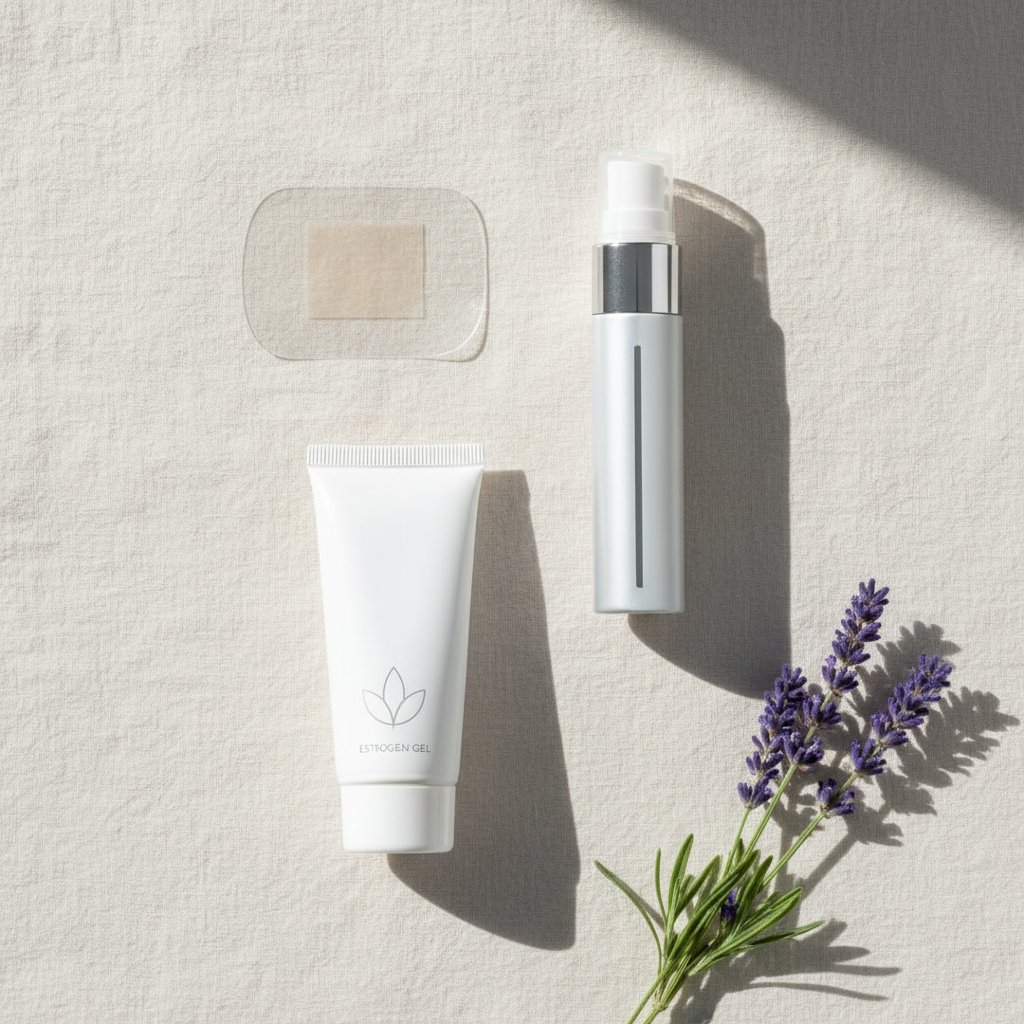
Navigating the transition through perimenopause often feels like trying to solve a puzzle while the pieces are constantly changing shape. If you are experiencing the sudden surge of heat known as hot flashes, you are likely looking for the most efficient way to reclaim your comfort. When lifestyle changes aren't enough, Hormone Replacement Therapy (HRT)—specifically transdermal estrogen—is often the gold standard for relief.
Unlike oral pills, which must be processed by your liver, transdermal options deliver estradiol directly through your skin into your bloodstream. This bypasses the "first-pass metabolism," which research indicates reduces the risk of blood clots and stroke compared to oral tablets. But when you stand at the pharmacy counter, you’re faced with a choice: estrogen patch vs. gel vs. spray. Which one will truly help you feel like yourself again?
Which transdermal estrogen method is most effective for hot flashes?
When it comes to quenching the fire of hot flashes, all three transdermal methods—patches, gels, and sprays—are highly effective. According to the North American Menopause Society (NAMS), systemic estrogen therapy remains the most effective treatment for vasomotor symptoms (hot flashes and night sweats).
The "best" method is often the one that you can use consistently and that your body absorbs efficiently. If you are following our HRT for perimenopause beginners guide, you know that the goal is to find the lowest dose that alleviates your symptoms. For most women, all three delivery systems achieve this, but the speed of relief can vary slightly.
Gels and sprays are applied daily, creating a routine that some find easier to manage, while patches are applied once or twice a week. If your hot flashes are accompanied by other complex issues, such as perimenopause insulin resistance signs, stabilizing your estrogen levels via any of these transdermal routes can also help improve metabolic parameters.
Estrogen patch vs. gel: Which provides the most stable hormone levels?
Stability is the hallmark of the estrogen patch. Because the patch is designed to release a controlled, steady stream of estradiol over 3.5 to 7 days (depending on the brand), it creates a very level hormonal profile in the blood. This constant delivery is often preferred by women who are sensitive to hormonal fluctuations, which can trigger migraines or mood swings.
In contrast, estrogen gels (like EstroGel or Divigel) and sprays (like Lenzetto or Evamist) create a "peak and valley" effect. You apply the product, your blood levels of estradiol rise to a peak within a few hours, and then gradually decline until your next dose 24 hours later.
| Feature | Estrogen Patch | Estrogen Gel | Estrogen Spray |
|---|---|---|---|
| Frequency | Twice weekly or weekly | Daily | Daily |
| Hormone Stability | Very High (Steady release) | Moderate (Daily peaks) | Moderate (Daily peaks) |
| Absorption Site | Lower abdomen or buttocks | Arms, thighs, or shoulders | Inner forearm |
| Visible Residue | Yes (Adhesive ring) | Minimal (Dries in minutes) | Minimal (Fast drying) |
| Dose Flexibility | Fixed by patch size | Highly adjustable | Adjustable by number of sprays |
For women dealing with the perimenopause symptoms checklist, the choice often comes down to how their body handles these daily fluctuations. If you find your symptoms return in the evening after a morning gel application, a patch might provide the 24/7 coverage you need.
Is the estrogen spray easier to dose than the gel for beginners?
The estrogen spray is often lauded for its convenience. It is a small, metered-dose pump that you press against your inner forearm. It dries almost instantly—usually within two minutes—and has a lower volume of liquid compared to some gels. For a beginner, the spray is incredibly "foolproof" because each pump delivers a precise, fixed amount of estradiol.
Gels, while also metered in pumps or individual sachets, require a bit more surface area for application. You have to spread the gel over a specific area (like the entire arm or thigh) and wait for it to dry before dressing. If you have a busy morning routine, the 30-second application of a spray might feel more manageable.
However, the "ease" of dosing also depends on your specific needs. If your doctor wants you to use a very specific, tiny increment of estrogen, a gel sachet (like Divigel) comes in various strengths (0.25mg, 0.5mg, 1.0mg) that allow for fine-tuning.
Absorption issues: Why some women don't respond to the patch
It can be frustrating to start HRT only to find your hot flashes persisting. While patches are generally reliable, some women experience "poor absorption" with them. This can happen for several reasons:
- Skin Thickness and Blood Flow: The thickness of the subcutaneous fat and the blood flow to the application site can affect how much estrogen reaches the bloodstream.
- Adhesion Problems: If the patch isn't making full contact with the skin—perhaps due to sweating, lotions, or high activity levels—the delivery is compromised.
- Local Metabolism: Some women's skin enzymes break down the estradiol before it can enter the systemic circulation.
- Site Rotation: Failing to rotate sites can lead to skin saturation or irritation, slowing down absorption over time.
If you are not responding to the patch, your clinician might suggest switching to a gel or spray. Because these are applied to a larger surface area and absorbed differently, they can sometimes bypass the absorption barrier encountered with a patch. This is particularly important for women managing co-occurring conditions like Hashimoto’s and perimenopause, where metabolic rates might already be slightly altered.
Comparing the cost and convenience of different estrogen delivery methods
Cost and lifestyle are practical factors that shouldn't be overlooked.
The Patch:
- Convenience: Set it and forget it. You only have to think about it twice a week.
- Cost: Generally mid-range, though generic versions are widely available and often covered by insurance.
- Downside: It can leave a sticky grey ring of adhesive on your skin, and it may peel off during hot yoga or swimming.
The Gel:
- Convenience: Daily application becomes a habit like brushing your teeth.
- Cost: Can be more expensive than patches, especially if using brand-name sachets.
- Downside: You must wait for it to dry and avoid letting others (or pets) touch the application site for about an hour to prevent "transfer" of the hormone.
The Spray:
- Convenience: Most portable and fastest drying.
- Cost: Often the most expensive of the three, as it is a newer delivery technology and fewer generic options exist.
- Downside: Limited application sites (usually just the forearm).
For those also managing fibromyalgia and perimenopause symptoms, the physical act of applying a gel might be difficult during a flare-up, making a simple spray or a semi-weekly patch a more accessible option.
Which transdermal option has the lowest risk of skin irritation?
Skin sensitivity is a common concern. The Mayo Clinic notes that skin irritation is a frequent side effect of the patch. The adhesive used to keep the patch in place can cause redness, itching, or even a localized rash in women with sensitive skin or contact dermatitis.
If you have highly sensitive skin, the gel or spray is usually the better choice. These formulations typically use alcohol as a base to help the estrogen penetrate the skin, which evaporates quickly. While the alcohol can be slightly drying, it rarely causes the intense inflammatory response that a patch adhesive might.
To minimize irritation with any method:
- Always apply to clean, dry skin.
- Never apply to broken or irritated skin.
- Rotate your application sites religiously (e.g., left arm one day, right arm the next).
- Wait for the product to dry completely before putting on tight clothing.
How to switch between estrogen methods safely with your doctor
If your current method isn't working—whether due to cost, skin rashes, or lack of symptom relief—switching is a straightforward process, but it must be done under medical supervision. You cannot simply "swap" one pump of gel for one patch without calculating the equivalent dose.
- Track your symptoms: Before switching, keep a log for two weeks of your hot flashes, sleep quality, and mood.
- Consult your provider: Discuss the reasons for the switch. If you are struggling with absorption on the patch, they may start you on a slightly higher relative dose of gel.
- The "Overlap" Period: Usually, there is no overlap needed. You would simply stop the patch on its scheduled change day and start the gel or spray the following morning.
- Blood Work: While not always necessary, the Endocrine Society suggests that monitoring symptoms is the primary way to adjust dosage, though some doctors may check estradiol levels to ensure absorption is occurring with the new method.
Finding the right HRT delivery system is a journey of trial and adjustment. Whether you choose the steady reliability of the patch, the flexibility of the gel, or the modern convenience of the spray, the goal is the same: providing your body with the support it needs to navigate perimenopause with grace and vitality. Always work closely with a healthcare provider to ensure your choice aligns with your overall health profile and symptom severity.
FAQ
Common questions
Which is better: the estrogen patch or the spray?
While there is no single "best" method for everyone, the patch is often favored for providing the most stable, constant hormone levels. However, the spray is frequently cited as the most convenient and fastest-drying for women with busy lifestyles.
Can I switch from a patch to a gel if I get skin irritation?
Yes, you can switch, but you must do so under a doctor's guidance. Since patches provide 24/7 release and gels/sprays are daily, your doctor will need to calculate the equivalent dose to ensure your symptoms don't return during the transition.
How long does it take for estrogen gel or spray to dry?
Wait times vary, but generally, estrogen sprays dry within 2 minutes, while gels may take 5 to 10 minutes. You should avoid showering or swimming for at least 1 to 2 hours after application to ensure full absorption.
What are the signs that my skin isn't absorbing the estrogen patch?
Common signs include persistent hot flashes, night sweats, and vaginal dryness despite using the treatment. If your symptoms haven't improved after 4-8 weeks, your skin may not be absorbing the hormone effectively.
Is the spray safer than estrogen pills?
Yes, transdermal estrogen (patches, gels, and sprays) is generally considered safer than oral pills because it bypasses the liver, significantly lowering the risk of blood clots and gallbladder issues.
Can I touch others after applying estrogen gel or spray?
To prevent 'transfer,' you should cover the application site with clothing once it is dry. Avoid skin-to-skin contact with partners, children, or pets on the application area for at least an hour.
Want this in your inbox each Sunday?
New articles, the science you can actually use, and the occasional rant.
Keep reading

Perimenopause Symptoms Checklist: 38 Signs You're Not Imagining
A comprehensive, doctor-reviewed checklist of perimenopause symptoms — from the obvious hot flashes to the weird ones nobody warned you about.
9 min read

Hashimoto's and Perimenopause: Why Symptoms Overlap (and How to Tell Them Apart)
Fatigue, brain fog, weight gain, hair loss — Hashimoto's and perimenopause share most symptoms. Here's how to tell what's flaring, what's hormonal, and what to ask your doctor.
11 min read

Fibromyalgia and Perimenopause: When Two Storms Collide
Why fibromyalgia almost always flares during perimenopause, what changes in your nervous system, and the small daily shifts that actually help.
10 min read