
Evening Primrose vs Borage Oil: Best for Perimenopause?
Evening Primrose vs Borage Oil: Which is best for perimenopause? We compare GLA content, benefits for breast pain, and skin health to help you choose.
Published:
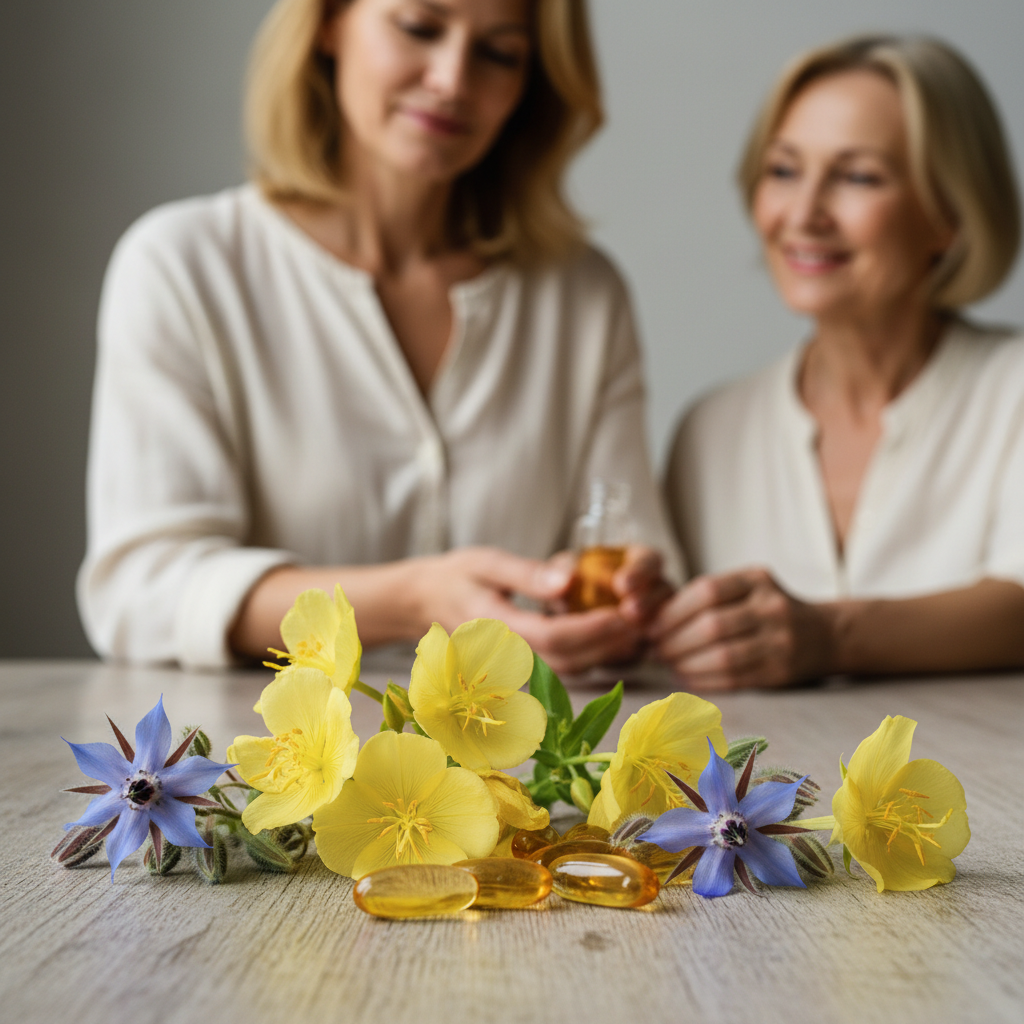
As you navigate your 40s, you might notice your body acting like an unpredictable radio station, tuning in and out of different hormonal frequencies. This transition, known as perimenopause, often brings a host of unwelcome guests: breast tenderness, sudden hot flashes, and skin that feels significantly thinner and drier than it did just a few years ago.
When searching for natural relief, two names consistently rise to the top of the botanical list: Evening Primrose Oil (EPO) and Borage Oil. Both are celebrated for their high concentrations of Gamma-Linolenic Acid (GLA), an omega-6 fatty acid known for its potent anti-inflammatory properties. But when it comes to evening primrose oil vs borage oil for perimenopause, which one deserves a spot in your supplement cabinet?
Understanding how these oils interact with your changing physiology is key to finding relief. Whether you are managing a perimenopause symptoms checklist or looking to supplement your existing routine, let’s dive into the science of these liquid gold seed oils.
Which is better for perimenopause breast pain: Evening Primrose or Borage?
Cyclical mastalgia, or breast pain that fluctuates with your hormonal cycle, is one of the most common reasons women seek out GLA supplements. During perimenopause, erratic estrogen spikes can lead to increased inflammation in breast tissue.
Evening Primrose Oil (Oenothera biennis) has been the traditional "gold standard" for this specific symptom. According to the Mayo Clinic, EPO is frequently used to treat breast pain, as it is thought that women with mastalgia may be deficient in certain fatty acids, making their breast tissue more sensitive to hormonal fluctuations.
Borage Oil (Borago officinalis), however, is the "potency powerhouse." While EPO typically contains about 8% to 10% GLA, Borage oil boasts a massive 20% to 24% GLA content. This means you can often take fewer capsules of Borage oil to achieve the same anti-inflammatory effect.
| Feature | Evening Primrose Oil (EPO) | Borage Oil (Starflower) |
|---|---|---|
| GLA Concentration | 8% - 10% | 20% - 24% |
| Primary Use Case | Breast pain (mastalgia) | Chronic inflammation/Skin |
| Common Dosage | 1,000mg - 3,000mg | 500mg - 1,000mg |
| Traditional Evidence | High (long history of use) | Moderate (higher potency) |
In the battle for breast pain relief, both are effective, but many women find EPO more targeted for hormonal breast sensitivity, while Borage is preferred for those who struggle with swallowing large amounts of oil capsules due to its higher density of active ingredients.
How do GLA supplements actually balance hormones after 40?
It is a common misconception that Evening Primrose or Borage oils contain hormones like estrogen or progesterone. They do not. Instead, they provide the raw materials your body needs to produce Prostaglandin E1 (PGE1).
PGE1 is a hormone-like substance that acts as a powerful anti-inflammatory agent. According to research published via the National Institutes of Health (NIH), GLA helps regulate the inflammatory response and can modulate the way cells respond to circulating hormones.
In your 40s, as you navigate perimenopause insulin resistance signs and fluctuating cortisol, your body’s ability to convert dietary fats into GLA can become impaired. Stress, high sugar intake, and aging all hinder the enzyme (delta-6-desaturase) responsible for this conversion. By supplementing directly with EPO or Borage oil, you bypass this "bottleneck," allowing your body to:
- Reduce systemic inflammation.
- Dampen the inflammatory signals that trigger breast pain.
- Support the structural integrity of cell membranes.
While these oils won't "fix" a low progesterone level, they can significantly lower the "volume" of the symptoms caused by hormonal volatility.
Can Borage oil help with perimenopause skin thinning and dryness?
As estrogen levels decline, the skin loses its ability to retain moisture and produce sebum, leading to that characteristic "parched" feeling. You may notice your skin looks more like crepe paper, or you might experience "formication"—the sensation of insects crawling on the skin.
Borage oil is often considered superior for skin health because of its high GLA concentration. GLA is an essential component of the skin’s lipid barrier. According to the Oregon State University Linus Pauling Institute, essential fatty acids are crucial for maintaining the skin's permeability barrier.
When you supplement with Borage oil, the GLA helps:
- Prevent Trans-Epidermal Water Loss (TEWL): It seals moisture into the skin from the inside out.
- Reduce Redness: Its anti-inflammatory nature helps calm perimenopausal acne or rosacea flare-ups.
- Improve Elasticity: By supporting the lipid layer, the skin appears more "plumped."
If your primary perimenopause concern is "desert-dry" skin or sudden eczema-like patches, Borage oil may offer more rapid relief than Evening Primrose Oil due to its higher GLA payload.
Is there a difference in side effects between these two seed oils?
Both oils are generally considered safe for short-term and long-term use, but they are not identical in their safety profiles.
Evening Primrose Oil Side Effects:
- Mild digestive upset or nausea.
- Headaches in sensitive individuals.
- Potential blood-thinning effects (use caution if on anticoagulants).
Borage Oil Side Effects:
- Pyrrolizidine Alkaloids (PAs): This is the most significant concern. The borage plant contains PAs, which can be toxic to the liver. It is absolutely vital to choose a Borage oil supplement labeled "PA-Free" or "certified free of pyrrolizidine alkaloids."
- Bloating or minor indigestion.
When comparing evening primrose oil vs borage oil for perimenopause, EPO is often viewed as the "gentler" entry point, while Borage requires more scrutiny regarding the manufacturing process to ensure liver safety. If you have co-occurring conditions like Hashimoto’s and perimenopause, always consult your practitioner before adding new oils, as your metabolic needs are more complex.
What is the best dosage for evening primrose oil in perimenopause?
Dosage can be tricky because most clinical trials use varying amounts. However, for perimenopausal support, the following ranges are commonly suggested by practitioners:
- For Breast Pain: 2,400mg to 3,000mg per day, often split into two doses. It can take up to three months of consistent use to feel the full effect.
- For General Hormonal Support: 1,000mg to 2,000mg daily.
- For Skin Health: 500mg to 1,000mg, especially if combined with Vitamin E, which helps prevent the oil from oxidizing in the body.
It is important to take these supplements with food. Because they are fats, your gallbladder needs to release bile to help you absorb them properly. Taking them on an empty stomach is the fastest way to experience "oil burps" or nausea. If you are also dealing with fibromyalgia perimenopause symptoms, the anti-inflammatory boost from these doses may provide a secondary benefit for joint stiffness.
Can you take GLA supplements alongside HRT safely?
For many women, botanical oils are a "both/and" rather than an "either/or" choice. If you are following an HRT for perimenopause beginners guide, you might wonder if adding EPO or Borage oil is overkill.
Generally, GLA supplements are safe to take alongside Hormone Replacement Therapy. In fact, they often complement each other. While HRT addresses the core estrogen/progesterone deficiency, GLA oils work on the inflammatory pathways that HRT might not fully reach.
However, there are two important caveats:
- Surgery: Stop taking either oil at least two weeks before any scheduled surgery, as they can have a mild anti-platelet effect, according to the American Academy of Family Physicians.
- Seizures: There is some older data suggesting that EPO might lower the seizure threshold in people with epilepsy or those taking phenothiazines. While recent reviews suggest this risk is low, caution is advised.
Always inform your prescribing physician about your supplement stack to ensure there are no contraindications with your specific HRT protocol.
Which oil is more effective for reducing perimenopause night sweats?
This is where the marketing often outpaces the science. While many women swear by Evening Primrose Oil for hot flashes and night sweats, the clinical evidence is mixed.
A notable study published in the Journal of Menopausal Medicine found that while EPO did not necessarily reduce the frequency of hot flashes significantly compared to a placebo, it did improve the severity and the "interference" the flashes had on daily life.
Between the two, Evening Primrose Oil has more specific research regarding vasomotor symptoms (hot flashes) than Borage oil. Borage is more often studied for rheumatoid arthritis and inflammatory skin conditions. If night sweats are your primary "villain," start with Evening Primrose Oil. If you don't see results after 8–12 weeks, the higher GLA content of Borage oil might provide the stronger anti-inflammatory push your body needs.
Summary of Choosing Your Oil
Choosing between evening primrose oil vs borage oil for perimenopause depends on your "symptom constellation."
- Choose Evening Primrose Oil if: Your main concerns are cyclical breast tenderness and mild hot flashes, and you prefer a supplement with a long clinical history for female health.
- Choose Borage Oil if: Your main concerns are severe skin dryness, systemic inflammation, or if you prefer taking fewer pills due to the higher GLA concentration (ensuring it is PA-Free).
Ultimately, both oils serve as valuable tools in your perimenopause toolkit. They provide the essential fatty acids that keep your cellular "house" in order while your hormones undergo their final renovations. By supporting your body with these targeted fats, you can move through this transition with more radiance and less discomfort.
Disclaimer: This article is for informational purposes and does not constitute medical advice. Always consult with a healthcare professional before starting new supplements, especially if you have underlying health conditions or are taking prescription medications.
FAQ
Common questions
What is the main difference in GLA content between Evening Primrose and Borage Oil?
Evening Primrose Oil (EPO) typically contains 8-10% GLA, while Borage Oil contains 20-24% GLA, making Borage more potent per milligram.
Which oil is better for perimenopausal breast pain?
Evening Primrose Oil is the most traditional choice for hormonal breast pain (mastalgia) due to its extensive history of use in clinical trials for this specific symptom.
Can Borage oil help with dry skin during perimenopause?
Borage oil is often preferred for skin thinning and dryness because its higher GLA concentration more effectively supports the skin's lipid barrier and moisture retention.
Is it safe to take GLA supplements while on HRT?
Yes, both oils are generally safe to take with HRT, but you should always inform your doctor as these oils may have mild blood-thinning effects.
Are there any safety concerns specific to Borage oil?
It is critical to choose Borage oil labeled 'PA-Free' (Pyrrolizidine Alkaloid-free) because these naturally occurring plant compounds can be toxic to the liver.
What is the standard dosage for Evening Primrose Oil in perimenopause?
Most women take between 1,000mg and 3,000mg of Evening Primrose Oil daily, though it can take up to 12 weeks to see full results for symptoms like breast pain.
Want this in your inbox each Sunday?
New articles, the science you can actually use, and the occasional rant.
Keep reading

Perimenopause Symptoms Checklist: 38 Signs You're Not Imagining
A comprehensive, doctor-reviewed checklist of perimenopause symptoms — from the obvious hot flashes to the weird ones nobody warned you about.
9 min read

Hashimoto's and Perimenopause: Why Symptoms Overlap (and How to Tell Them Apart)
Fatigue, brain fog, weight gain, hair loss — Hashimoto's and perimenopause share most symptoms. Here's how to tell what's flaring, what's hormonal, and what to ask your doctor.
11 min read

Fibromyalgia and Perimenopause: When Two Storms Collide
Why fibromyalgia almost always flares during perimenopause, what changes in your nervous system, and the small daily shifts that actually help.
10 min read