
High Morning Blood Pressure? The Perimenopause Connection
Discover why high morning blood pressure in perimenopause after 40 happens. Learn about the roles of estrogen, cortisol, and insulin resistance in morning spikes.
Published:
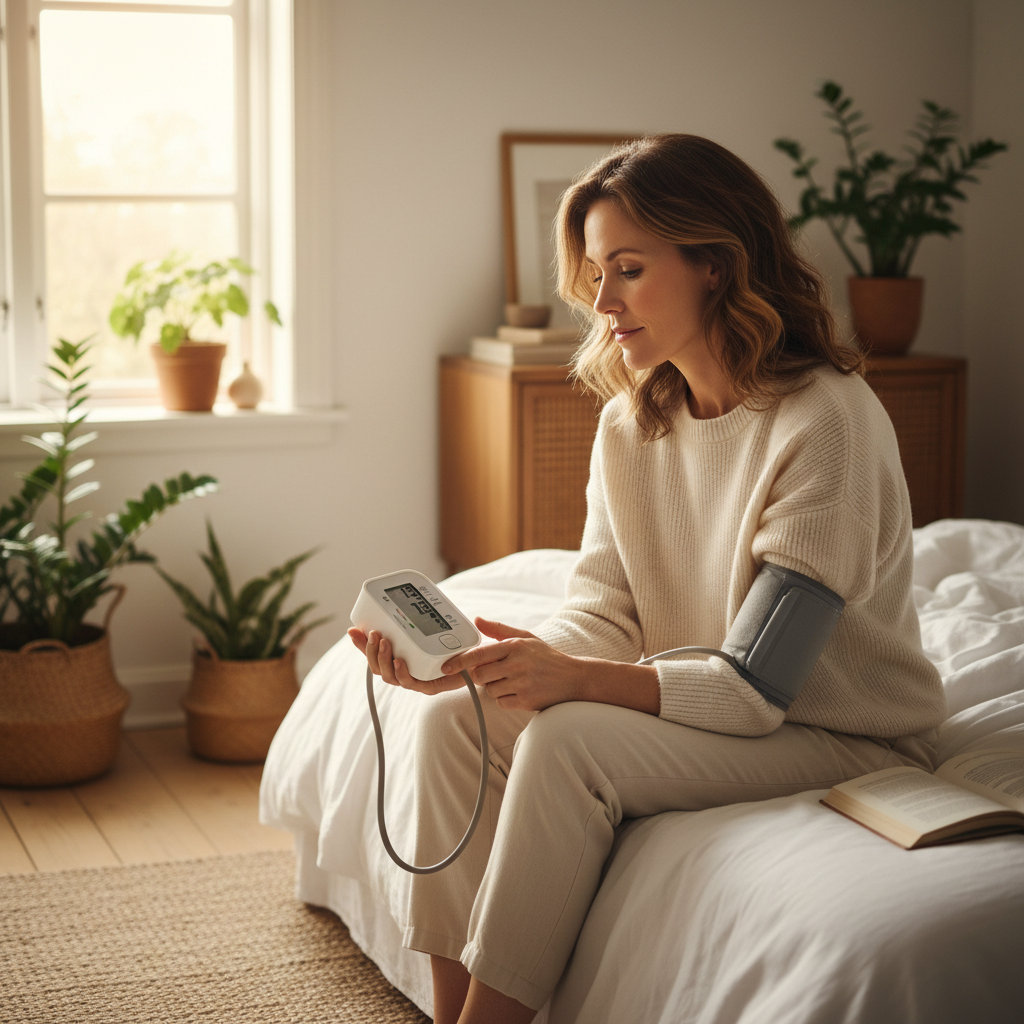
If you are over 40 and have started noticing that your blood pressure monitor shows a high reading first thing in the morning—even if it seems to level off by lunchtime—you aren't alone. This phenomenon, often called morning hypertension, can be a startling discovery during your perimenopause transition. You might feel a dull headache, a sense of tightness, or simply a racing heart as soon as your eyes open.
Understanding high morning blood pressure in perimenopause after 40 requires looking at the complex intersection of your cardiovascular system, your nervous system, and your fluctuating hormones. While we often focus on hot flashes and mood swings, the impact of estrogen decline on your blood vessels is one of the most critical shifts occurring in your body right now.
Why is your blood pressure high only in the morning during perimenopause?
In a healthy cardiovascular system, blood pressure follows a "diurnal rhythm." Typically, your blood pressure drops by 10% to 20% while you sleep (known as "dipping") and rises slightly as you wake up to help you face the day. However, during perimenopause, this rhythm can become dysregulated.
Many women over 40 become "non-dippers," meaning their blood pressure stays elevated throughout the night. Research suggests that the decline in estrogen, which helps keep blood vessels flexible and dilated, contributes to this shift. According to the American Heart Association, the loss of estrogen during the menopausal transition can lead to increased vascular stiffness.
When your blood pressure doesn't drop at night, that morning "surge" starts from a higher baseline, resulting in a reading that qualifies as hypertension. This is often the first sign that your body is struggling to manage the perimenopause symptoms checklist of metabolic changes.
What is the link between night sweats and morning hypertension?
If you are waking up drenched in sweat, your high morning blood pressure may be a direct consequence of a disrupted night. Night sweats are more than just a discomfort; they are a manifestation of vasomotor instability. When you have a hot flash or night sweat, your "fight or flight" (sympathetic) nervous system kicks into high gear.
This activation causes your heart rate to increase and your blood vessels to constrict. If this happens multiple times a night, your body remains in a state of physiological stress. Frequent nocturnal awakenings also prevent your blood pressure from "dipping" as it should. The National Institutes of Health (NIH) notes that sleep fragmentation and hot flashes are significantly associated with higher blood pressure levels in midlife women.
Furthermore, chronic sleep deprivation caused by these symptoms leads to systemic inflammation, which further damages the endothelial lining of your arteries. If you are also managing conditions like fibromyalgia perimenopause symptoms, the added layer of chronic pain can further exacerbate this morning spike.
Can estrogen dips cause sudden spikes in blood pressure at 40+?
Estrogen is a powerful vasodilator. It encourages the production of nitric oxide, a molecule that helps your blood vessels relax and widen. As estrogen levels begin to fluctuate wildly in your 40s, your blood vessels lose this consistent "relaxing" signal.
During a sudden estrogen dip, your arteries may become more reactive to stress hormones. This can lead to "labile hypertension," where your blood pressure isn't high all the time but spikes significantly in response to triggers—including the natural trigger of waking up.
The North American Menopause Society (NAMS) emphasizes that while menopause doesn't "cause" hypertension directly for everyone, the physiological changes during this stage—such as weight gain and increased salt sensitivity—often unmask a predisposition to high blood pressure. Many women find that a HRT for perimenopause beginners guide helps clarify how stabilizing these hormones might support vascular health.
Is your morning high blood pressure a sign of insulin resistance?
There is a deep connection between how your body handles sugar and how it regulates blood pressure. As estrogen declines, many women develop a decreased sensitivity to insulin. This is often referred to as metabolic syndrome.
When you are insulin resistant, your body retains more sodium and water, which increases the volume of blood pushing against your artery walls. Additionally, high insulin levels can stimulate the sympathetic nervous system, keeping your blood pressure elevated. If you’ve noticed increased abdominal fat or intense sugar cravings, you may want to review the perimenopause insulin resistance signs.
The following table illustrates the relationship between metabolic markers and blood pressure:
| Marker | Effect of Perimenopause | Impact on Blood Pressure |
|---|---|---|
| Estrogen | Decrease/Fluctuation | Increased arterial stiffness |
| Insulin Sensitivity | Decrease | Sodium retention & fluid volume increase |
| Cortisol | Increase (due to stress/sleep loss) | Vasoconstriction & morning surges |
| Nitric Oxide | Decrease | Reduced ability for vessels to dilate |
How does cortisol affect your BP readings when you first wake up?
Cortisol is your primary stress hormone, and it naturally peaks around 6:00 AM to 8:00 AM to help you wake up—this is known as the Cortisol Awakening Response (CAR). In your 40s, however, your "stress thermostat" can become overly sensitive.
In perimenopause, the adrenal glands often take over some hormone production duties as the ovaries wind down. If you are chronically stressed or dealing with other hormonal imbalances, such as those found in the Hashimotos perimenopause overlap, your cortisol levels may be inappropriately high.
High morning cortisol acts directly on the heart and blood vessels, increasing the force of contraction and causing vessels to narrow. This creates a "perfect storm" for a high morning blood pressure reading. Reducing this morning surge requires a combination of evening wind-down routines and possibly dietary adjustments to stabilize blood sugar overnight.
What lifestyle changes can lower morning blood pressure in your 40s?
The good news is that blood pressure in perimenopause is highly responsive to lifestyle interventions. Because the causes are multifactorial (hormonal, metabolic, and neurological), a multi-pronged approach works best.
- Reduce Sodium Intake: During perimenopause, women often become more "salt-sensitive." Reducing processed foods can significantly lower the fluid volume in your system.
- Evening Magnesium: Magnesium glycinate can help relax the nervous system and blood vessels, promoting a deeper sleep and a lower morning BP.
- Morning Sunlight: Exposure to natural light shortly after waking helps regulate your circadian rhythm, which in turn helps balance the cortisol awakening response.
- Timed Movement: Regular aerobic exercise helps improve arterial elasticity. According to the Mayo Clinic, even 30 minutes of moderate activity can have a profound effect on lowering overall blood pressure.
- Limit Alcohol: Alcohol is a major trigger for night sweats and can cause a rebound effect on blood pressure the following morning.
Focusing on these habits can help shift you from a "non-dipper" back to a healthy "dipper" profile.
When should you see a doctor for perimenopausal hypertension?
While it is common to see changes in your 40s, high blood pressure should never be ignored. Hypertension is known as the "silent killer" because it often has no symptoms until significant damage is done to the heart, brain, or kidneys.
You should consult a healthcare provider if:
- Your morning readings are consistently above 130/80 mmHg.
- You experience "thunderclap" headaches or vision changes.
- You feel heart palpitations or chest tightness.
- Your blood pressure remains high even after you have been awake and active for several hours.
A provider can help determine if you need temporary medication or if hormone replacement therapy (HRT) might be a tool to protect your cardiovascular health. The Endocrine Society notes that for many women, managing the transition with professional guidance can prevent the long-term development of chronic heart disease.
Don't dismiss your morning readings as "just stress" or "just a hot flash." They are vital data points from your body asking for a little extra support during this transitional decade. By addressing the root causes—insulin resistance, cortisol spikes, and estrogen loss—you can protect your heart and reclaim your morning energy.
FAQ
Common questions
What is morning hypertension?
Morning hypertension is a phenomenon where blood pressure is significantly higher upon waking than it is later in the day, often caused by circadian rhythm disruptions or lack of 'dipping' during sleep.
How does falling estrogen affect blood pressure?
Estrogen helps keep blood vessels flexible. As it drops in perimenopause, vessels can stiffen, leading to higher pressure, especially during the morning cortisol surge.
Can night sweats cause high morning blood pressure?
Yes, night sweats trigger the sympathetic nervous system, which constricts blood vessels and keeps blood pressure elevated throughout the night and into the morning.
What blood pressure reading is considered high for a woman over 40?
If your morning readings are consistently 130/80 mmHg or higher, you should consult your doctor to discuss cardiovascular health and perimenopause management.
Does HRT help lower blood pressure?
While HRT's primary goal is symptom relief, some studies show it can help maintain arterial elasticity, which may assist in stabilizing blood pressure in some women.
What triggers blood pressure spikes in the morning?
Poor sleep, high salt intake, alcohol consumption, and elevated stress/cortisol are the most common non-hormonal triggers for morning BP spikes.
Want this in your inbox each Sunday?
New articles, the science you can actually use, and the occasional rant.
Keep reading

Perimenopause Symptoms Checklist: 38 Signs You're Not Imagining
A comprehensive, doctor-reviewed checklist of perimenopause symptoms — from the obvious hot flashes to the weird ones nobody warned you about.
9 min read

Hashimoto's and Perimenopause: Why Symptoms Overlap (and How to Tell Them Apart)
Fatigue, brain fog, weight gain, hair loss — Hashimoto's and perimenopause share most symptoms. Here's how to tell what's flaring, what's hormonal, and what to ask your doctor.
11 min read

Fibromyalgia and Perimenopause: When Two Storms Collide
Why fibromyalgia almost always flares during perimenopause, what changes in your nervous system, and the small daily shifts that actually help.
10 min read