
Oral Progesterone vs Mirena Coil for Perimenopause
Deciding between oral progesterone vs Mirena coil for perimenopause symptoms? Learn which is better for heavy periods, anxiety, and sleep in your 40s.
Published:
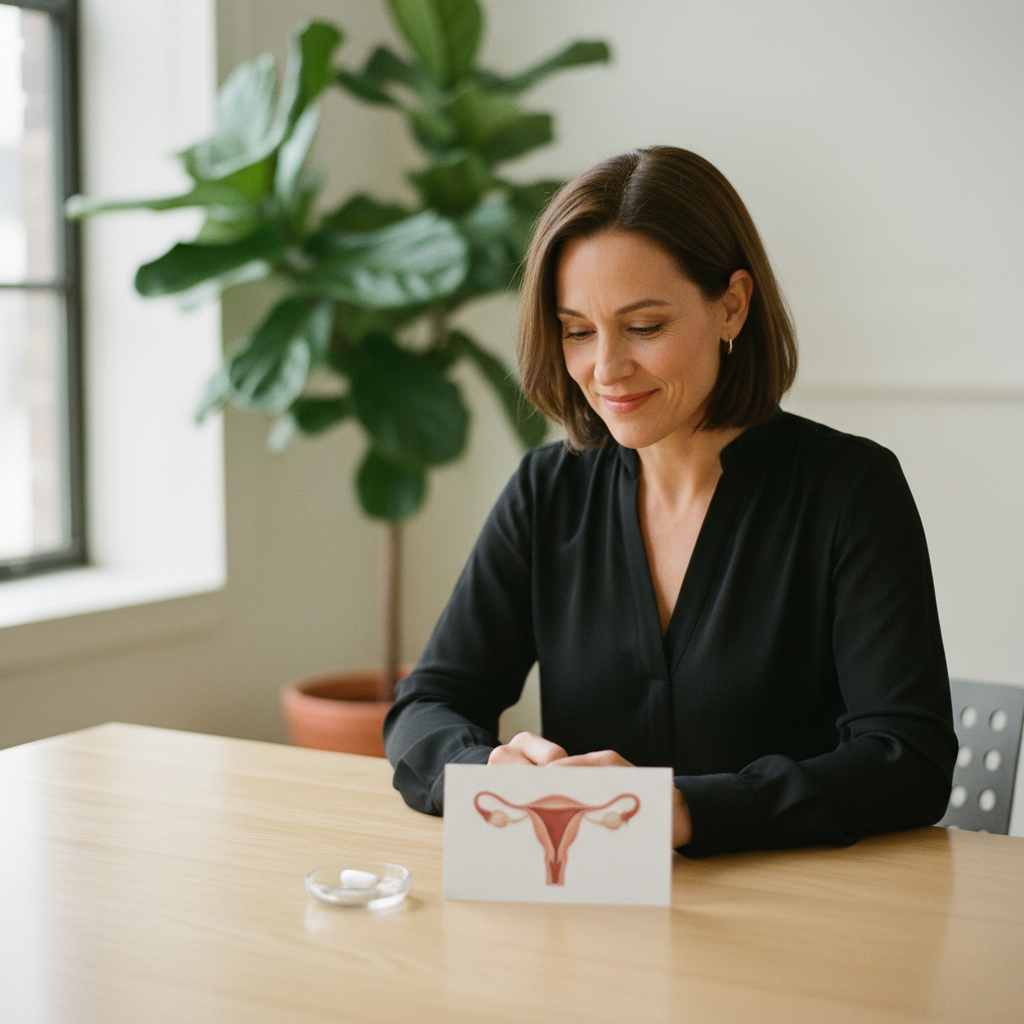
Navigating your 40s often feels like trying to solve a puzzle while the pieces are constantly changing shape. As estrogen begins its erratic fluctuations, your "progesterone buffer"—the calming, stabilizing hormone—often takes a nosedive first. This hormonal shift is the hallmark of the transition, and finding the right way to replace that missing progesterone is one of the most important decisions you will make for your long-term health.
When you look at the oral progesterone vs mirena coil for perimenopause symptoms debate, you aren't just choosing a medication; you are choosing a delivery system that dictates how your brain, uterus, and metabolism respond to treatment. Whether you are dealing with flooding periods or late-night anxiety, understanding these two heavyweights of Hormone Replacement Therapy (HRT) is essential.
Oral progesterone vs Mirena: Which is better for heavy perimenopause periods?
If your perimenopause journey includes "flooding" periods or cycles that arrive twice a month, your primary concern is likely uterine protection and flow control. The Mirena intrauterine system (IUS) is often considered the "gold standard" for managing heavy menstrual bleeding.
The Mirena coil releases a small, steady dose of levonorgestrel (a synthetic progestogen) directly into the uterine lining. This localized delivery causes the lining of the womb to remain thin, which significantly reduces blood loss. According to the National Institute for Health and Care Excellence (NICE), the levonorgestrel-releasing IUS is the first-line treatment for heavy menstrual bleeding because it can reduce blood flow by up to 90% within the first few months.
Oral progesterone, specifically micronized progesterone (often branded as Utrogestan or Prometrium), works systemically. While it is highly effective at protecting the uterine lining from thickening (hyperplasia) when you are taking estrogen, it may not be as aggressive at "switching off" heavy periods as the Mirena. For women struggling with uterine fibroids or adenomyosis—conditions that often flare during perimenopause—the localized power of the Mirena usually wins the battle of the heavy flow.
If you are just starting to track your cycle changes, our perimenopause symptoms checklist can help you identify if your flow issues are accompanied by other hormonal red flags.
How does the delivery of progesterone affect your mood and anxiety?
This is where the two options diverge significantly. The way your body processes progesterone dictates how it impacts your central nervous system.
When you take oral micronized progesterone, it passes through the liver, where it is broken down into metabolites called allopregnanolone. Allopregnanolone is a potent neurosteroid that interacts with GABA receptors in the brain—the same receptors targeted by anti-anxiety medications. This is why many women refer to their nightly progesterone pill as their "natural Valium." Research published via the National Institutes of Health (NIH) highlights that micronized progesterone has significant anxiolytic (anxiety-reducing) effects.
Conversely, the Mirena coil uses a synthetic progestogen (levonorgestrel). Because it is delivered locally to the uterus, the systemic levels in the bloodstream are much lower than with oral versions. For many women, this is a benefit because it avoids systemic side effects. However, for women who specifically suffer from perimenopausal "brain fog," rage, or high-octane anxiety, the Mirena may not provide the same neurological "calm" that oral progesterone offers.
It is also important to note that a small subset of women is sensitive to synthetic progestogens, which can sometimes exacerbate low mood. If you have a history of PMDD (Premenstrual Dysphoric Disorder), you should discuss the nuances of synthetic vs. bioidentical options with your provider, as outlined in our HRT for perimenopause beginners guide.
Will the Mirena coil help with perimenopause sleep issues like the pill does?
Sleep disruption is one of the most cited complaints in perimenopause, often caused by a combination of night sweats and a lack of progesterone’s sedative effect.
Oral micronized progesterone is almost uniquely positioned to help with sleep. Because of the aforementioned conversion to allopregnanolone, taking progesterone at bedtime helps women fall asleep faster and stay in deep sleep phases longer. The Mayo Clinic notes that progesterone can be a useful tool for managing sleep disturbances during the menopausal transition.
The Mirena coil, while excellent for contraception and uterine health, does not typically reach high enough systemic concentrations to cross the blood-brain barrier in a way that improves sleep architecture. If you choose the Mirena but still find yourself staring at the ceiling at 3:00 AM, you may need to address sleep through other avenues, such as optimizing your estrogen levels or practicing specific sleep hygiene.
Understanding the systemic vs localized hormone effects in your 40s
The choice between oral and localized delivery often comes down to your personal health history and your "why."
| Feature | Oral Micronized Progesterone | Mirena Coil (IUS) |
|---|---|---|
| Hormone Type | Bioidentical (identical to human) | Synthetic (Levonorgestrel) |
| Primary Delivery | Systemic (Bloodstream/Brain) | Localized (Uterus) |
| Contraception | No | Yes (99%+ effective) |
| Effect on Periods | Regulates cycle/Protects lining | Often stops periods entirely |
| Sleep/Mood Support | High (sedative effect) | Low (localized action) |
| Duration | Daily pill | Up to 5-8 years |
The systemic approach (Oral) means the hormone travels throughout your entire body. This is beneficial if you have widespread symptoms like joint pain or anxiety. However, it means the liver has to process the hormone, which may not be ideal for women with certain liver conditions or those at a very high risk of blood clots (though micronized progesterone carries a much lower risk than older synthetic pills).
The localized approach (Mirena) keeps the hormone where it is needed most: the uterus. This minimizes the "total hormone load" on the rest of the body. According to the American College of Obstetricians and Gynecologists (ACOG), localized progestin delivery is highly effective for endometrial protection with minimal systemic side effects.
Can you use both the Mirena coil and oral progesterone together?
In clinical practice, it is increasingly common to see a "belt and braces" approach. You might wonder: If the Mirena stops my heavy bleeding but doesn't help my sleep, can I have both?
The answer is often yes, under the guidance of a menopause specialist. This combination is frequently used for women who:
- Need the Mirena for superior contraception or to manage endometriosis/heavy bleeding.
- Require the systemic "calm" of oral progesterone to manage debilitating insomnia or anxiety.
Using both ensures the uterus is perfectly protected while the brain receives the neurosteroid support it craves. However, this increases the total progestogen in your system, so it’s vital to monitor for signs of "progesterone dominance," such as extreme fatigue or breast tenderness. This dual approach can be particularly helpful for women dealing with complex overlaps, such as fibromyalgia-perimenopause symptoms, where sleep quality is a non-negotiable factor in pain management.
Side effect comparison: Weight gain, skin changes, and bloating
One of the biggest fears women have when starting any hormone therapy is the scale moving in the wrong direction.
Weight Gain & Bloating: Neither oral progesterone nor the Mirena coil is clinically proven to cause significant weight gain in the majority of women. However, perimenopause itself is linked to perimenopause insulin resistance signs, which can lead to abdominal weight gain. Oral progesterone acts as a natural diuretic for many, actually reducing the fluid retention and bloating that often occurs in the week before a period. The Mirena coil, because it contains a synthetic progestin, may cause temporary bloating or breast tenderness in the first 3-6 months as the body adjusts.
Skin Changes: Synthetic progestins, like those in the Mirena, are sometimes "androgenic," meaning they can behave a bit like testosterone. For a small number of women, this can lead to hormonal acne or oily skin. Bioidentical oral progesterone is generally "skin-neutral" or can even improve skin by reducing the inflammatory stress response.
The "Adjustment Phase":
- Mirena: Expect irregular spotting for the first 3 to 6 months. This is the most common reason women ask to have it removed early, but if you can wait it out, the periods usually disappear.
- Oral Progesterone: Expect some morning grogginess if you take it too late in the evening. Most women find that taking it 30-60 minutes before bed solves this.
How to choose the right progesterone delivery for your specific symptoms
Choosing your path requires a look at your hierarchy of needs. Every woman's perimenopause is unique—some are navigating Hashimoto’s-perimenopause overlap and need to be very careful with systemic inflammation, while others are simply trying to survive a 9-to-5 job without a flooding accident.
Choose the Mirena Coil if:
- Contraception is a high priority.
- Your periods are extremely heavy, painful, or flooding.
- You have a history of uterine polyps or significant fibroids.
- You want a "set it and forget it" method that lasts for years.
- You have experienced side effects from oral medications in the past.
Choose Oral Micronized Progesterone if:
- Insomnia and anxiety are your primary perimenopause struggles.
- You prefer bioidentical hormones that match your body’s natural molecular structure.
- You have a regular cycle and just need "top-up" support during the luteal phase.
- You want the flexibility to adjust your dose or stop easily.
- You are sensitive to synthetic progestins and their potential effect on mood.
Ultimately, progesterone is the "great stabilizer." Whether you choose the localized precision of the Mirena or the systemic soothe of oral progesterone, you are taking a vital step toward protecting your brain, your bones, and your uterine health.
If you are still unsure, keep a symptom diary for two cycles. Note when your sleep fails, when your mood dips, and exactly how heavy your flow is. Armed with that data, you and your doctor can decide whether your body needs a localized shield or a systemic embrace. Perimenopause is a transition, not a destination—and your treatment can evolve as you do.
References:
- National Institute for Health and Care Excellence (NICE). (2018). Heavy menstrual bleeding: assessment and management. https://www.nice.org.uk/guidance/ng88
- North American Menopause Society (NAMS). Progesterone and The Brain. https://www.menopause.org/for-women/menopauseflashes/menopause-symptoms-and-treatments/the-role-of-progesterone
- Mayo Clinic. Hormone Therapy: Is it right for you? https://www.mayoclinic.org/diseases-conditions/menopause/in-depth/hormone-therapy/art-20046327
- American College of Obstetricians and Gynecologists (ACOG). Management of Abnormal Uterine Bleeding. https://www.acog.org/womens-health/faqs/abnormal-uterine-bleeding
- Cochrane Database of Systematic Reviews. Progestogen-releasing intrauterine systems for heavy menstrual bleeding. https://www.cochrane.org/CD002126/MENSTR_progestogen-releasing-intrauterine-systems-heavy-menstrual-bleeding
FAQ
Common questions
Is the Mirena coil better than oral progesterone for heavy bleeding?
The Mirena coil is generally superior for heavy periods. It releases levonorgestrel directly into the uterine lining, thinning it effectively and reducing blood flow by up to 90%.
Which option is better for perimenopause insomnia?
Oral micronized progesterone is usually better for sleep. It converts into metabolites that act on GABA receptors in the brain, providing a sedative and calming effect that helps you stay asleep.
Can I use both the Mirena coil and oral progesterone at the same time?
Yes, many specialists prescribe both. The Mirena provides localized uterine protection and contraception, while oral progesterone can be added to help with systemic symptoms like anxiety and sleep issues.
Is the progesterone in the Mirena coil bioidentical?
Oral micronized progesterone is bioidentical (identical to the progesterone your body makes). The Mirena coil uses levonorgestrel, which is a synthetic progestin designed to be stable for local delivery.
Does the Mirena coil cause more skin issues than oral progesterone?
Some women experience androgenic side effects with the Mirena, such as hormonal acne. Oral bioidentical progesterone is less likely to cause skin issues and may even improve them by lowering cortisol.
Does oral progesterone provide contraception?
The Mirena coil provides highly effective contraception for up to 8 years. Oral progesterone, when used as part of HRT, does not provide adequate protection against pregnancy.
Want this in your inbox each Sunday?
New articles, the science you can actually use, and the occasional rant.
Keep reading

Perimenopause Symptoms Checklist: 38 Signs You're Not Imagining
A comprehensive, doctor-reviewed checklist of perimenopause symptoms — from the obvious hot flashes to the weird ones nobody warned you about.
9 min read

Hashimoto's and Perimenopause: Why Symptoms Overlap (and How to Tell Them Apart)
Fatigue, brain fog, weight gain, hair loss — Hashimoto's and perimenopause share most symptoms. Here's how to tell what's flaring, what's hormonal, and what to ask your doctor.
11 min read

Fibromyalgia and Perimenopause: When Two Storms Collide
Why fibromyalgia almost always flares during perimenopause, what changes in your nervous system, and the small daily shifts that actually help.
10 min read