
Chin Hairs and Insulin: Managing Perimenopause Androgens
Discover the link between perimenopause facial hair growth and insulin resistance. Learn why chin hairs appear in your 40s and how to balance androgens naturally.
Published:
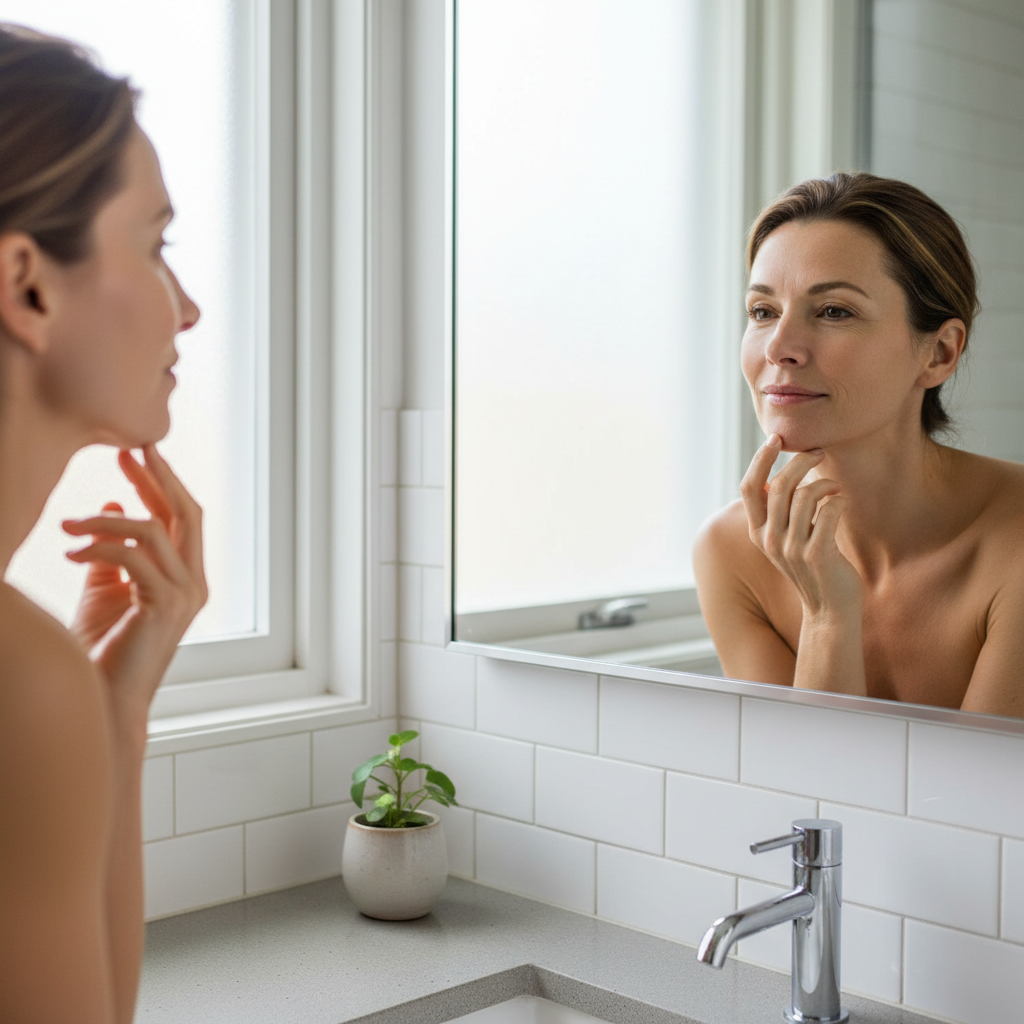
Finding a dark, coarse hair on your chin for the first time can feel like a betrayal by your own body. You might find yourself checking your perimenopause symptoms checklist to see if this is "normal," only to realize that while many women experience it, the underlying cause is often deeper than just "getting older." This sudden appearance of facial hair, known medically as hirsutism, is frequently a red flag for a metabolic shift involving your insulin levels.
Why am I suddenly getting chin hairs in my 40s?
As you enter your 40s, your ovaries begin to fluctuate in their hormone production. During the transition into perimenopause, estrogen and progesterone levels start to decline, but they don't always do so smoothly. This creates a state of relative "androgen dominance." Even if your testosterone levels stay the same, the drop in estrogen means that testosterone has a louder "voice" in your system.
However, the perimenopause facial hair growth and insulin resistance link is often the true culprit behind the most stubborn hairs. When estrogen drops, your body’s ability to manage blood sugar efficiently can decrease. According to the Endocrine Society, hirsutism affects approximately 5% to 10% of women and is frequently tied to excess androgens—the "male-type" hormones like testosterone. In your 40s, this isn't just about aging; it’s about how your metabolism and your ovaries are communicating.
Is hirsutism in perimenopause caused by high testosterone or insulin?
The answer is usually both, as they exist in a feedback loop. To understand this, we have to look at Sex Hormone Binding Globulin (SHBG). Think of SHBG as a sponge that soaks up excess testosterone in your bloodstream, preventing it from affecting your hair follicles.
When you develop perimenopause insulin resistance signs, your liver produces less SHBG. This leaves more "free" testosterone circulating in your blood, which then migrates to the hair follicles on your chin, upper lip, and jawline. Furthermore, high insulin levels act directly on the ovaries, stimulating them to produce even more testosterone.
| Factor | Effect on Facial Hair | Metabolic Connection |
|---|---|---|
| Declining Estrogen | Reduced inhibition of hair follicles | Increased visceral fat |
| High Insulin | Stimulates ovarian androgen production | Decreases SHBG levels |
| Low SHBG | Increases "Free" Testosterone | Driven by liver insulin resistance |
| Cortisol Spikes | Worsens androgenic activity | Provokes blood sugar swings |
If you are also navigating Hashimoto's and perimenopause overlap, the situation becomes more complex, as thyroid dysfunction can also lower SHBG, making that chin hair even more persistent.
How does insulin resistance drive 'male-pattern' hair growth?
Insulin is a "growth" hormone. When your cells become resistant to it, your pancreas pumps out more insulin to try and force the gates open. This hyperinsulinemia is the primary driver of central weight gain and skin changes.
In the hair follicle, there is an enzyme called 5-alpha reductase. This enzyme converts testosterone into a much more potent form called Dihydrotestosterone (DHT). High levels of insulin increase the activity of this enzyme. When DHT hits the follicles on your face, it transforms fine, light "vellus" hair into thick, dark "terminal" hair. The Mayo Clinic notes that when terminal hair appears in a male-pattern distribution on a woman, it is almost always an indicator of androgen excess.
The cycle often looks like this:
- Perimenopausal estrogen drop leads to decreased insulin sensitivity.
- The pancreas overproduces insulin to compensate.
- High insulin signals the ovaries to secrete more testosterone.
- Low SHBG (due to insulin) means more testosterone is "free."
- Free testosterone converts to DHT, stimulating the chin hair follicles.
What is the difference between PCOS and perimenopause hair growth?
Many women are diagnosed with Polycystic Ovary Syndrome (PCOS) in their teens or 20s. However, it is possible to develop "PCOS-like" symptoms for the first time during perimenopause. This is sometimes called "late-onset PCOS" or simply androgenic perimenopause.
The primary difference lies in the lifecycle. In traditional PCOS, the hormonal imbalance is often lifelong and tied to ovulatory failure from a young age. In perimenopause, the androgen surge is a byproduct of the failing communication between the brain (hypopituitary axis) and the ovaries. However, the National Institutes of Health (NIH) suggests that insulin resistance is a common thread in both conditions, regardless of the age of onset.
If you are experiencing widespread pain along with these changes, you might be investigating the fibromyalgia perimenopause symptoms connection, as systemic inflammation from insulin resistance can worsen both muscle pain and hormonal hair growth.
Can changing your diet stop hormonal facial hair growth?
Yes, but it requires patience. Hair follicles have a long growth cycle, so dietary changes usually take 3 to 6 months to manifest as "fewer hairs." The goal of a "hormone-balancing diet" is actually to improve insulin sensitivity.
- Prioritize Protein and Fiber: Every meal should center on stabilizing blood glucose. This prevents the insulin spikes that trigger testosterone production.
- Reduce Refined Carbohydrates: Flours and sugars are the primary drivers of the perimenopause facial hair growth and insulin resistance link.
- Include Spearmint Tea: Some studies published via PubMed/NIH suggest that drinking two cups of spearmint tea a day can significantly reduce free testosterone levels in women with hirsutism.
- Healthy Fats: Omega-3 fatty acids from fish or flaxseed help reduce the inflammation that often accompanies insulin resistance.
If dietary changes aren't enough, you might consider clinical interventions. For those just starting to explore medical options, a HRT for perimenopause beginners guide can explain how replacing estrogen can help raise SHBG and naturally "muffle" those androgenic signals.
Which supplements help lower the androgens causing chin hair?
When addressing the perimenopause facial hair growth and insulin resistance link, supplements should focus on two areas: improving insulin reception and blocking androgen conversion.
- Inositol (Myo-Inositol & D-Chiro-Inositol): This is perhaps the most well-researched supplement for insulin-induced androgen issues. It helps your cells "hear" the insulin signal better, so your body doesn't have to produce as much.
- Magnesium: Magnesium is a co-factor in glucose metabolism. Many perimenopausal women are deficient, which worsens insulin resistance.
- Saw Palmetto: Often used by men for prostate health, saw palmetto may help women by inhibiting the 5-alpha reductase enzyme that converts testosterone into hair-growing DHT.
- Zinc: Zinc has been shown to have anti-androgenic effects and can improve skin health and reduce hair thinning on the scalp (which often happens alongside chin hair growth).
According to research found on Cochrane Library, lifestyle interventions and specific supplements can be as effective as medications for some women in managing metabolic-driven hormonal symptoms.
Summary of Targeted Interventions
To manage the unwanted growth, a multi-pronged approach is necessary.
- Blood Sugar Monitoring: Watch for signs like "hanger," afternoon energy crashes, and increased abdominal fat.
- Strength Training: Building muscle is the fastest way to improve insulin sensitivity, as muscle tissue burns glucose even at rest.
- Stress Management: High cortisol drives up blood sugar, which drives up insulin, which drives up those chin hairs.
- Topical Treatments: While addressing the root cause, treatments like electrolysis or laser hair removal are more effective when your internal hormones are stabilized.
Managing perimenopause isn't just about surviving hot flashes; it's about reclaiming your metabolic health. By understanding that those pesky chin hairs are actually messengers from your metabolic system, you can take the steps necessary to balance your insulin, lower your androgens, and feel like yourself again.
FAQ
Common questions
Why am I suddenly getting facial hair in perimenopause?
The drop in estrogen during perimenopause leads to a higher ratio of testosterone, which can stimulate facial hair follicles. Additionally, rising insulin resistance during this phase triggers the ovaries to produce more androgens.
How does insulin resistance cause chin hair?
High insulin levels lower Sex Hormone Binding Globulin (SHBG), which normally mops up excess testosterone. With less SHBG, more 'free' testosterone circulates, leading to dark, coarse hair on the chin and jawline.
Does spearmint tea really help with hormonal hair growth?
Yes, studies suggest drinking two cups of spearmint tea daily can help lower free testosterone levels and reduce the growth of unwanted facial hair over time.
Do I need to have high testosterone to get chin hairs?
Not always. You may have 'normal' total testosterone levels but low SHBG, making your 'free' testosterone high. This is why testing for insulin resistance (HOMA-IR) is often more helpful than just testing testosterone.
Can diet get rid of perimenopausal facial hair?
Focus on a low-glycemic diet with high protein, fiber, and healthy fats. This stabilizes blood sugar and prevents the insulin spikes that drive androgen production.
What are the best supplements for insulin-related hair growth?
The most effective supplements for this link are Myo-inositol (to improve insulin sensitivity), Magnesium, and Saw Palmetto (to block DHT conversion).
Want this in your inbox each Sunday?
New articles, the science you can actually use, and the occasional rant.
Keep reading

Perimenopause Symptoms Checklist: 38 Signs You're Not Imagining
A comprehensive, doctor-reviewed checklist of perimenopause symptoms — from the obvious hot flashes to the weird ones nobody warned you about.
9 min read
Hashimoto's and Perimenopause: Why Symptoms Overlap (and How to Tell Them Apart)
Fatigue, brain fog, weight gain, hair loss — Hashimoto's and perimenopause share most symptoms. Here's how to tell what's flaring, what's hormonal, and what to ask your doctor.
11 min read

Fibromyalgia and Perimenopause: When Two Storms Collide
Why fibromyalgia almost always flares during perimenopause, what changes in your nervous system, and the small daily shifts that actually help.
10 min read