
Progesterone Cream vs. Chasteberry: Which is Best After 40?
Confused between progesterone cream and chasteberry for perimenopause? Learn the differences, benefits, and how to choose the right support for your hormones.
Published:
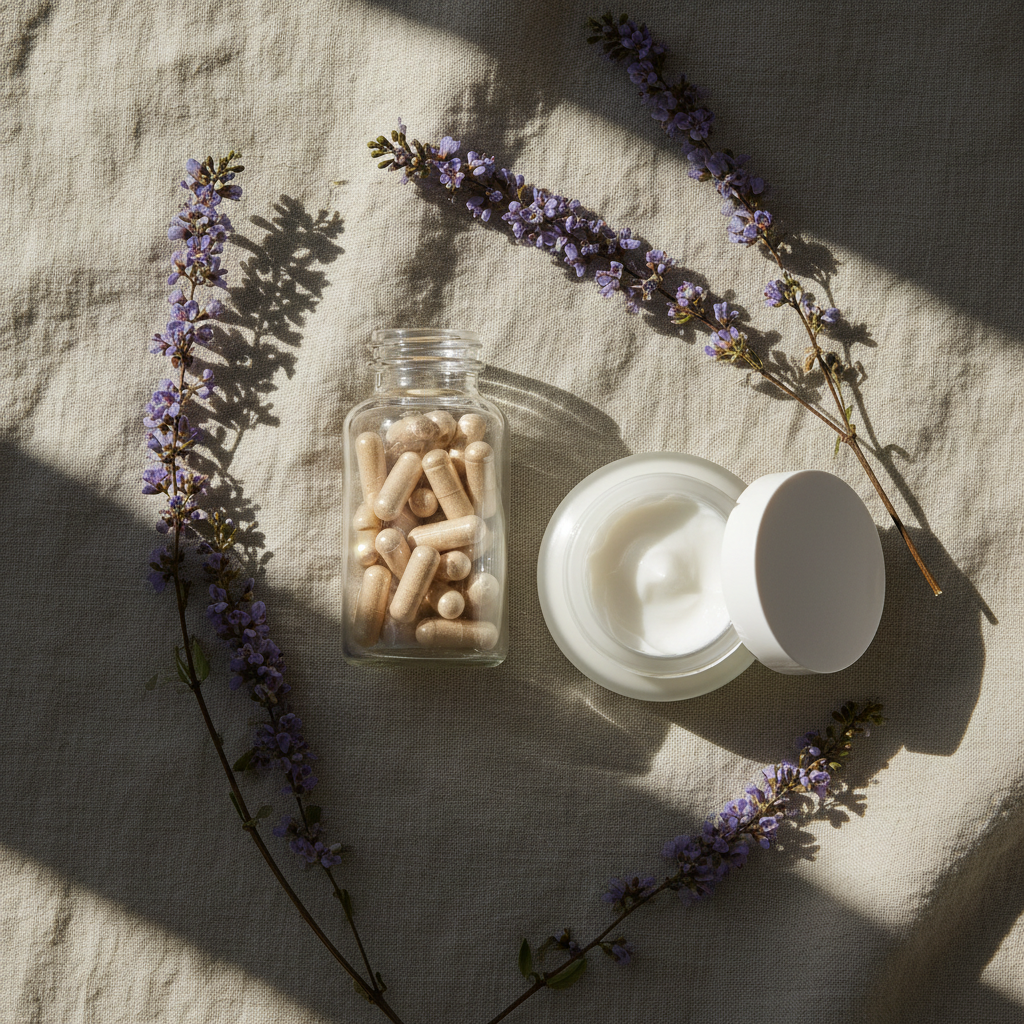
If you have reached your 40s and noticed that your once-predictable cycle has become a rollercoaster of mood swings, bloating, and sleepless nights, you are likely dealing with the early stages of the menopausal transition. At this stage, progesterone is often the first hormone to decline, leaving estrogen to dominate the landscape. When looking for relief, two names frequently top the list: progesterone cream and the herb Chasteberry (Vitex agnus-castus).
Choosing between a bioidentical hormone and a botanical supplement isn't just about "natural vs. synthetic"—it is about understanding how your body communicates with your endocrine system. This guide will help you navigate the nuances of progesterone cream vs. chasteberry for perimenopause symptoms so you can reclaim your hormonal harmony.
What is the difference between progesterone cream and vitex/chasteberry?
To understand which is right for you, we must first distinguish between a hormone and a hormone-modulator.
Progesterone cream is a topical application of bioidentical progesterone, usually derived from wild yams or soy and synthesized in a lab to be molecularly identical to the progesterone your ovaries produce. When you apply it to your skin, it is absorbed into the bloodstream, directly increasing your systemic levels of the hormone. This is a form of hormone replacement therapy (HRT), often discussed in our HRT for perimenopause beginners guide, though over-the-counter versions are usually lower in dose than prescription options.
Chasteberry (Vitex), on the other hand, contains no hormones. It is a botanical extract that acts on the pituitary gland—the "master gland" in your brain. Specifically, Vitex is thought to modulate the secretion of prolactin and influence the release of Luteinizing Hormone (LH), which in turn signals your ovaries to produce more of their own progesterone. According to the National Center for Complementary and Integrative Health (NCCIH), it has been used for centuries to address menstrual irregularities and PMS.
| Feature | Progesterone Cream | Chasteberry (Vitex) |
|---|---|---|
| Mechanism | Direct hormone replacement | Pituitary gland stimulation |
| Form | Topical cream/gel | Capsule, tincture, or tea |
| Hormone Content | Contains bioidentical progesterone | Hormone-free |
| Best For | Immediate deficiency correction | Restoring natural cycle rhythm |
| Regulation | FDA-regulated (if prescription) | Dietary supplement |
How does chasteberry influence your natural progesterone production?
Chasteberry works through an indirect pathway known as the Hypothalamic-Pituitary-Ovarian (HPO) axis. In your 40s, the communication between your brain and your ovaries can become "noisy."
Vitex works primarily by suppressing the release of prolactin from the pituitary gland. Elevated prolactin can inhibit the formation of the corpus luteum—the temporary endocrine structure that produces progesterone after ovulation. By lowering prolactin and stabilizing LH, Vitex encourages a more robust ovulation, which naturally results in higher progesterone levels during the luteal phase (the second half of your cycle).
Research published by the American Family Physician suggests that Vitex is particularly effective for "luteal phase defects," where the body doesn't produce enough progesterone to maintain a healthy cycle length. If you are checking off items on the perimenopause symptoms checklist and notice your cycles are getting shorter (e.g., 21 days instead of 28), chasteberry may help "stretch" the cycle back to a normal length by strengthening that natural production.
Is topical progesterone more effective than herbal supplements?
"Effectiveness" depends entirely on the state of your ovaries. During late perimenopause, ovulation becomes sporadic. If you are not ovulating, your ovaries lack the "machinery" (the corpus luteum) to produce progesterone, no matter how much chasteberry you take.
In these cases, topical progesterone cream is often more effective because it bypasses the need for ovulation. It provides the hormone directly to your tissues. For women dealing with fibromyalgia perimenopause symptoms or severe insomnia, the direct calming effect of progesterone on the GABA receptors in the brain can be a game-changer that herbs may not match.
However, progesterone cream has limitations. The Mayo Clinic notes that while topical hormones are absorbed, the dosing can be inconsistent depending on skin thickness and site of application. Furthermore, if you still have a uterus and are taking estrogen, over-the-counter progesterone creams are generally not considered potent enough to protect the uterine lining from hyperplasia.
Which is better for perimenopause mood swings and breast tenderness?
Both options target these symptoms, but through different mechanisms:
- For Breast Tenderness (Mastalgia): Chasteberry is often the gold standard. Clinical trials cited by PubMed/NIH have shown that Vitex is significantly effective at reducing cyclic breast pain, likely due to its ability to lower prolactin, a hormone directly linked to breast tissue swelling and sensitivity.
- For Mood Swings and Anxiety: Progesterone cream often wins here. Progesterone breaks down into a metabolite called allopregnanolone, which acts like a natural Valium for the brain. If your mood swings are characterized by "rage" or "deep anxiety" right before your period, the direct boost from a cream can provide faster relief.
- For Sleep: Progesterone is highly thermogenic and sedative. Applying cream at night can help lower core body temperature and improve sleep architecture, whereas Vitex’s effects on sleep are more gradual and indirect.
It is also worth noting that metabolic health plays a role here. If you are seeing perimenopause insulin resistance signs, progesterone can sometimes temporarily affect insulin sensitivity, so monitoring your response is vital.
Can you take chasteberry and progesterone cream together?
While it is technically possible to use both, it is generally recommended to start with one to see how your body responds. Using both simultaneously can make it difficult to determine which is helping—or which is causing side effects.
If you choose to combine them, you must be cautious of "over-supplementing." Too much progesterone (whether stimulated by Vitex or applied via cream) can lead to:
- Excessive daytime sleepiness
- A "heavy" or depressed mood
- Breakthrough bleeding
- Breast swelling
If you have a complex health history, such as the Hashimotos perimenopause overlap, you should always consult a functional medicine practitioner before layering hormonal supports, as the thyroid and ovaries are deeply interconnected.
What are the side effects of vitex compared to bioidentical progesterone?
Neither option is side-effect-free, but their profiles differ.
Chasteberry Side Effects:
- Nausea or gastrointestinal upset
- Acne (due to the increase in LH which can slightly raise testosterone)
- Changes in flow (making periods heavier or lighter)
- Headache
Progesterone Cream Side Effects:
- Skin irritation at the site of application
- Weight gain or bloating (if the dose is too high)
- Drowsiness
- Breast tenderness (ironically, while it can help some, too much can cause it)
According to the Endocrine Society, the safety of long-term botanical use like Vitex is less studied than bioidentical hormones. However, bioidentical progesterone is generally considered safer for the cardiovascular system and breast tissue than synthetic progestins used in older birth control pills or traditional HRT.
How to choose the right hormone support for your specific cycle?
The "best" choice depends on where you are in the perimenopause transition.
Choose Chasteberry if:
- You are in early perimenopause (late 30s or early 40s).
- Your cycles are still mostly regular but getting shorter.
- Your primary symptom is cyclical breast pain or mild PMS.
- You want to support your body's natural production rather than replacing it.
Choose Progesterone Cream if:
- You are in late perimenopause (skipped periods, heavy flooding).
- You suffer from significant insomnia or nighttime anxiety.
- You have already tried herbal supports without success.
- You need a more "potent" intervention to counter estrogen dominance symptoms like fibroids or heavy bleeding (under medical supervision).
A Note on Testing
Before starting either, consider a Day 21 (or mid-luteal phase) blood test or a DUTCH (Dried Urine Test for Comprehensive Hormones) test. Knowing your actual progesterone-to-estrogen ratio can take the guesswork out of the equation. According to the North American Menopause Society (NAMS), hormone levels can fluctuate wildly during perimenopause, so one test is just a snapshot, but it provides a valuable baseline.
Ultimately, whether you choose the botanical wisdom of Chasteberry or the targeted support of Progesterone Cream, the goal is the same: to smooth the transition and support your vitality. Listen to your body, track your symptoms, and don't be afraid to adjust your strategy as your hormones continue to evolve. You don't have to suffer through the "change"—you can thrive through it.
Final Comparison Table
| Goal | Chasteberry (Vitex) | Progesterone Cream |
|---|---|---|
| Primary Goal | Regulation of cycle | Symptom relief (Sleep/Anxiety) |
| Speed of Action | Slow (requires 2-3 cycles) | Fast (often within days) |
| PCOS Friendly? | Use with caution (may raise LH) | Generally helpful for cycle control |
| Ease of Use | Daily pill/tincture | Twice daily skin application |
| Source | Plant-based (Vegan) | Plant-derived, lab-synthesized |
In the end, many women find that their needs change. You might start with Vitex at 42 to keep your cycles regular, and transition to bioidentical progesterone cream at 47 when ovulation becomes less frequent. The key is flexibility and staying attuned to your unique hormonal rhythm.
Remember, perimenopause is not a disease to be cured; it is a significant life stage that requires a new level of self-care and hormonal literacy. Whether you reach for a bottle of Vitex or a pump of progesterone, you are taking a proactive step toward radiance and balance in your second act.
FAQ
Common questions
What is the main difference between progesterone cream and chasteberry?
Progesterone cream provides bioidentical hormones directly to the bloodstream, while chasteberry (Vitex) stimulates the pituitary gland to encourage your body to produce its own progesterone naturally.
Can I use both at the same time?
Yes, but it is often better to try one at a time. Using both simultaneously can make it difficult to track which supplement is working and may lead to excessively high progesterone symptoms like drowsiness.
Which one is better for breast tenderness?
Chasteberry is generally superior for cyclic breast tenderness (mastalgia) because it helps regulate prolactin levels, which are often the culprit behind breast swelling and pain.
Does progesterone cream help with sleep better than Vitex?
Progesterone cream is typically more effective for sleep because it has a direct sedative effect on the brain's GABA receptors and helps regulate body temperature at night.
Are there any risks to taking chasteberry?
Vitex can sometimes increase Luteinizing Hormone (LH), which may worsen acne or hormonal imbalances in some women with PCOS. Always consult a provider if you have a PCOS diagnosis.
How long does it take to see results?
It usually takes 2 to 3 full menstrual cycles to see the full benefits of chasteberry, whereas progesterone cream may provide relief for symptoms like anxiety or insomnia within a few days.
Want this in your inbox each Sunday?
New articles, the science you can actually use, and the occasional rant.
Keep reading

Perimenopause Symptoms Checklist: 38 Signs You're Not Imagining
A comprehensive, doctor-reviewed checklist of perimenopause symptoms — from the obvious hot flashes to the weird ones nobody warned you about.
9 min read

Hashimoto's and Perimenopause: Why Symptoms Overlap (and How to Tell Them Apart)
Fatigue, brain fog, weight gain, hair loss — Hashimoto's and perimenopause share most symptoms. Here's how to tell what's flaring, what's hormonal, and what to ask your doctor.
11 min read

Fibromyalgia and Perimenopause: When Two Storms Collide
Why fibromyalgia almost always flares during perimenopause, what changes in your nervous system, and the small daily shifts that actually help.
10 min read