
Progesterone Cream vs. Pill: Which Is Best for Mood Swings?
Choosing between progesterone cream and oral pills for perimenopause mood swings? Learn how GABA receptors, liver metabolism, and timing impact your anxiety.
Published:
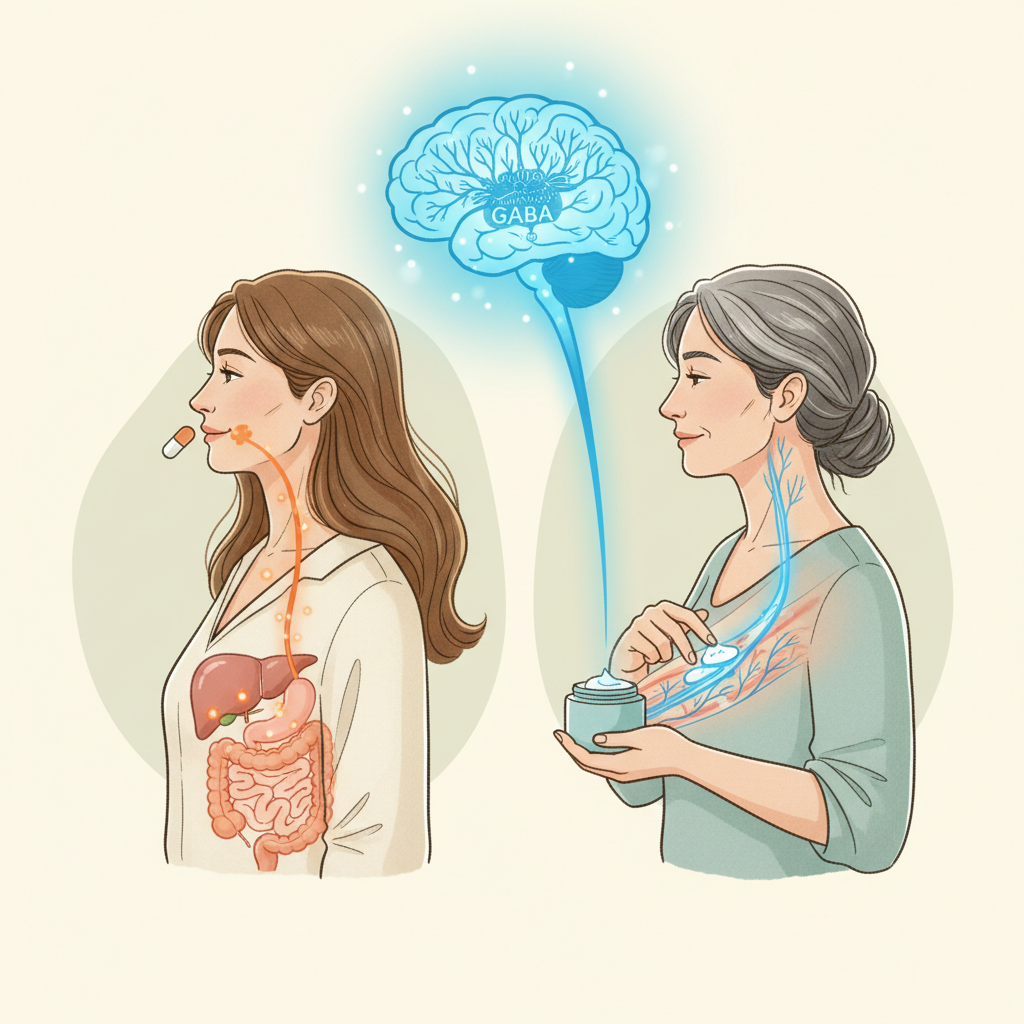
If you’ve ever felt like your brain was being hijacked by a sudden wave of irritability or an unshakable sense of dread, you aren’t alone. During the transition into perimenopause, progesterone is often the first hormone to take a nosedive. This isn't just about reproduction; it’s about your sanity. When you're weighing progesterone cream vs oral progesterone for perimenopause mood swings, you aren't just choosing a delivery method; you’re choosing how your brain processes stress and calm.
Understanding your unique hormone profile is the first step. If you are tracking your journey, you might recognize these shifts on our perimenopause symptoms checklist. Today, we’re diving deep into the science of GABA, the liver’s "first pass" effect, and how to stabilize your mood for good.
How does progesterone impact the GABA receptors in the brain?
Progesterone is often called "nature's Valium," but it isn't the progesterone molecule itself that does the heavy lifting in your brain. Instead, it is the metabolites—specifically allopregnanolone—that act as potent neurosteroids.
When progesterone enters your system, it is converted into allopregnanolone, which then binds to gamma-aminobutyric acid (GABA) receptors in the central nervous system. According to the National Institutes of Health (NIH), GABA is the primary inhibitory neurotransmitter in the brain. Its job is to "quiet" the nervous system, reducing excitability and promoting a state of calm.
For many women, the decline of progesterone in perimenopause leads to a "noisy" brain. Without enough allopregnanolone to activate those GABA receptors, you may experience:
- Increased vigilance and anxiety
- Intrusive thoughts
- Difficulty falling asleep
- Lowered threshold for stress (the "snapping" feeling)
Is oral micronized progesterone more effective for perimenopause anxiety?
When we talk about oral progesterone, we are typically referring to oral micronized progesterone (OMP), which is bioidentical to the hormone your ovaries produce. In many clinical settings, oral progesterone is considered the "gold standard" for mood-related symptoms and sleep disturbances.
The reason oral delivery excels at treating anxiety is precisely because of the liver. When you swallow a pill, it passes through the digestive tract and into the liver—a process known as "first-pass metabolism." The liver aggressively converts a significant portion of that progesterone into the neurosteroid allopregnanolone.
Research published by the Endocrine Society indicates that these high levels of metabolites reaching the brain can significantly improve sleep architecture and reduce generalized anxiety. However, this high concentration of metabolites is a double-edged sword, which we will explore later regarding the "progesterone blues."
If you are just starting your hormone journey, you might find our HRT for perimenopause beginners guide helpful in understanding how these prescriptions fit into a broader plan.
Does topical progesterone cream actually reach the bloodstream?
This is one of the most debated topics in women’s health. If you apply a cream to your skin, does it actually do anything for your mood?
The answer is complex. Progesterone is a lipophilic (fat-loving) molecule, meaning it easily penetrates the skin and sits in the fatty tissue (subcutaneous layer). From there, it is slowly released into the bloodstream. However, blood tests—specifically serum (liquid) blood tests—often fail to show a significant rise in progesterone levels after cream application.
According to studies cited by the Mayo Clinic, while topical progesterone may be absorbed, it may not reach levels high enough to protect the uterine lining in women taking estrogen. However, for mood swings, many women report significant relief with creams. This is likely because the cream provides a steady, low-dose release that avoids the massive "spike" of metabolites created by the liver.
| Feature | Oral Micronized Progesterone | Topical Progesterone Cream |
|---|---|---|
| Metabolism | High "first-pass" liver conversion | Bypasses the liver initially |
| Primary Benefit | Deep sleep and rapid anxiety relief | Steady mood stability; fewer side effects |
| GABA Impact | Very high (due to allopregnanolone) | Moderate |
| Uterine Protection | Clinically proven for HRT | Not reliably proven for HERS |
| Best For | Severe insomnia and acute anxiety | Sensitive systems; mild irritability |
Why do some women feel 'depressed' on oral progesterone but not cream?
While allopregnanolone is generally calming, for a subset of women, too much of it can trigger a paradoxical effect. Instead of feeling calm, they feel "flat," lethargic, or clinically depressed. This is often referred to as progesterone sensitivity.
When you take a pill, the liver produces a flood of metabolites. For women with sensitive GABA receptors, this flood can be overwhelming, leading to:
- Brain fog and "heaviness"
- Low motivation or "anhedonia"
- Morning grogginess (the "progesterone hangover")
- Increased appetite or sugar cravings
By contrast, progesterone cream enters the system more gradually. Because it bypasses the liver's first-pass metabolism, it produces far fewer metabolites. For the woman who feels depressed on the pill, the cream often provides the "edge-taking" benefits of progesterone without the emotional slump.
It is also worth noting that metabolic health plays a role in how we process these hormones. If you are struggling with weight or energy, checking for perimenopause insulin resistance signs can help clarify if your "mood swings" are hormonal, metabolic, or both.
Which delivery method is better for preventing the 'PMDD' style mood crash?
Premenstrual Dysphoric Disorder (PMDD) or "PMDD-lite" in perimenopause is characterized by a sharp drop in mood about 7–10 days before your period starts. This "crash" occurs when your natural progesterone levels plummet.
For women experiencing this specific crash, a pulsed approach is often best.
- The Case for Oral: If the crash involves severe insomnia and panic, the oral pill taken during the luteal phase (the second half of your cycle) can provide a powerful "floor" to catch your falling mood.
- The Case for Cream: If the crash involves intense irritability and breast tenderness, the cream can be used to smooth out the decline, providing a gentler transition.
Clinical guidelines from NICE (National Institute for Health and Care Excellence) suggest that individualized treatment is key for mood-related vasomotor symptoms. Often, a combination of lifestyle changes and targeted progesterone is required. If your mood swings are accompanied by widespread pain or fatigue, you may want to investigate the fibromyalgia perimenopause symptoms overlap to ensure you aren't missing a secondary diagnosis.
Can you use both progesterone cream and the pill together?
Generally, doctors do not recommend combining both unless you are under the strict supervision of a hormone specialist. Using both can lead to "progesterone dominance," which might paradoxically increase anxiety or cause significant spotting and irregular bleeding.
However, some practitioners use a "hybrid" approach for women with complex needs:
- Oral for Sleep: A low dose of oral progesterone (100mg) at night to ensure restorative sleep.
- Cream for "Breakthrough" Irritability: A small dab of cream during high-stress daytime moments.
Before trying a combination, it is essential to rule out other underlying causes of mood instability. For example, thyroid issues can mimic perimenopause perfectly. Read more on the Hashimoto's perimenopause overlap to ensure your thyroid isn't the true culprit behind your anxiety.
What is the best time of day to take progesterone for mood stability?
The timing of your dose depends entirely on your delivery method:
- Oral Progesterone: Should always be taken at night, shortly before bed. Because of its rapid conversion to sedating metabolites, taking it during the day can cause dangerous drowsiness or impaired coordination. According to the Cleveland Clinic, taking it with a small amount of fat (like a spoonful of almond butter) can actually increase absorption by up to twofold.
- Progesterone Cream: Can be split into two doses—once in the morning and once at night—or applied only in the evening. Because it provides a more sustained release, morning application can help maintain a "calm cool" throughout the workday without causing the sedation associated with the pill.
Finding Your "Sweet Spot"
Determining whether the cream or the pill is right for you often requires a trial period of 2–3 cycles.
Choose Oral If:
- Insomnia is your primary symptom.
- You have a high tolerance for sedating medications.
- You need to protect your uterus while taking estrogen.
Choose Cream If:
- You have a history of depression or feel "low" easily.
- You are sensitive to medications and prefer a "start low, go slow" approach.
- You only have mild irritability rather than full-blown anxiety.
The Role of Bioidentical Hormones
Regardless of the delivery method, the consensus among modern practitioners—including the North American Menopause Society (NAMS) —is that bioidentical progesterone is generally preferred over synthetic progestins (like medroxyprogesterone acetate) when the goal is mood stabilization. Synthetic progestins do not convert to allopregnanolone and, in some studies, have actually been linked to a higher risk of mood disorders and breast cancer compared to their bioidentical counterparts.
Summary of Delivery Methods
| Goal | Best Method | Why? |
|---|---|---|
| Immediate Sleep | Oral (100-200mg) | High metabolite production for GABA receptors. |
| Daytime Anxiety | Cream (20mg) | Steady levels without midday sedation. |
| Uterine Protection | Oral | Clinically validated for preventing endometrial hyperplasia. |
| Avoiding "Blues" | Cream | Lower levels of allopregnanolone, avoiding the "flat" feeling. |
In the end, your journey through perimenopause is as unique as your fingerprint. Whether you choose the targeted power of oral progesterone or the steady support of a cream, the goal is the same: returning to a state where you feel like you again. Always consult with a healthcare provider to check your levels and ensure your chosen method aligns with your overall health profile. By balancing your hormones, you aren't just treating a symptom—you're reclaiming your radiance.
Remember, mood swings are a physiological signal, not a character flaw. Listen to your body, track your cycle, and don't be afraid to adjust your protocol until you find the calm you deserve.
FAQ
Common questions
Why does oral progesterone affect mood differently than cream?
Oral progesterone is processed by the liver, creating metabolites like allopregnanolone that cross the blood-brain barrier to promote sleep and calm. Cream bypasses the liver, offering a steadier, lower dose that is less likely to cause morning grogginess.
Can oral progesterone actually make me feel more depressed?
Yes, for some women, the high level of metabolites from oral progesterone can 'over-saturate' GABA receptors, leading to feelings of lethargy, sadness, or a 'flat' mood. Switching to a cream often resolves this.
Is the cream safe to use if I am also taking estrogen?
Oral micronized progesterone is the only form clinically proven to protect the uterine lining in women taking estrogen therapy. Creams are not currently recommended for this specific protective purpose.
What is the best time of day to apply or take progesterone?
Oral progesterone should always be taken at night due to its sedating effects. Cream can be used once at night or split into morning and evening doses to maintain steady levels.
Can I use both progesterone cream and the pill together?
Generally, no. Combining them without medical supervision can lead to hormone dominance, irregular bleeding, and excessive sedation. It is best to choose one method based on your primary symptoms.
How long does it take for progesterone to help with mood swings?
Many women find relief within 30 minutes of taking an oral dose for sleep, but for chronic mood swings, it typically takes 2 to 3 full menstrual cycles to see a consistent stabilization.
Want this in your inbox each Sunday?
New articles, the science you can actually use, and the occasional rant.
Keep reading

Perimenopause Symptoms Checklist: 38 Signs You're Not Imagining
A comprehensive, doctor-reviewed checklist of perimenopause symptoms — from the obvious hot flashes to the weird ones nobody warned you about.
9 min read

Hashimoto's and Perimenopause: Why Symptoms Overlap (and How to Tell Them Apart)
Fatigue, brain fog, weight gain, hair loss — Hashimoto's and perimenopause share most symptoms. Here's how to tell what's flaring, what's hormonal, and what to ask your doctor.
11 min read

Fibromyalgia and Perimenopause: When Two Storms Collide
Why fibromyalgia almost always flares during perimenopause, what changes in your nervous system, and the small daily shifts that actually help.
10 min read