
Progesterone Cream vs. Wild Yam: Which Works for Your 40s?
Wondering about progesterone cream vs wild yam cream for perimenopause symptoms? Discover the science-backed differences, absorption tips, and what actually works.
Published:
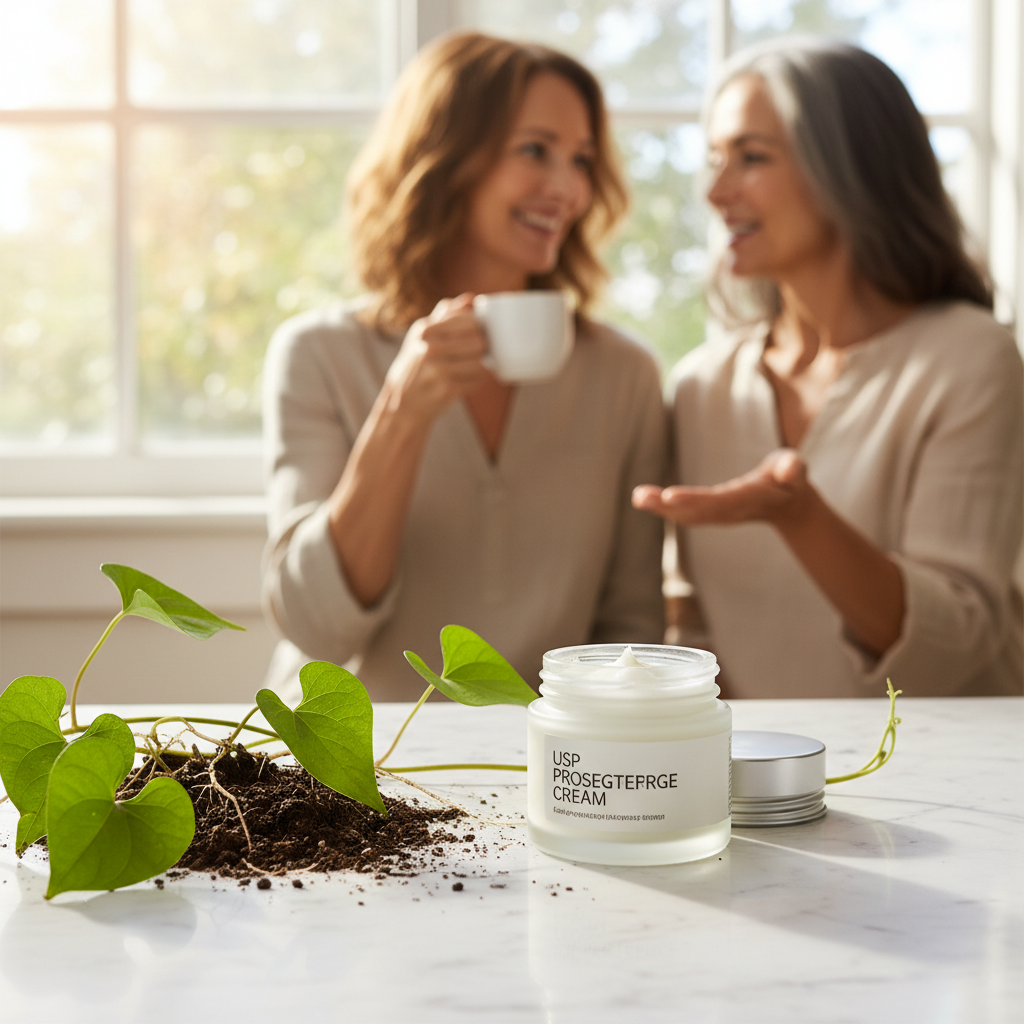
If you have reached your 40s and found yourself staring at the ceiling at 3 A.M., drenched in sweat and feeling inexplicably irritable, you aren't alone. You are likely navigating the "hormonal storm" known as perimenopause. As your ovaries begin to fluctuate in their hormone production, the first hormone to often take a precipitous dip is progesterone.
In your search for relief, you’ve likely encountered two primary topical contenders: wild yam cream and USP progesterone cream. They are often sitting side-by-side on health food store shelves, branded with similar imagery of blooming flowers and serene women. However, scientifically speaking, they are worlds apart. Understanding the progesterone cream vs wild yam cream for perimenopause symptoms debate is essential for reclaiming your sleep, your mood, and your metabolic health.
Throughout this guide, we will explore why one of these options is a bioidentical hormone that your body recognizes, while the other is a botanical precursor that requires a laboratory to become functional.
What is the difference between wild yam and USP progesterone?
The confusion between these two products often stems from their shared origin story. Both wild yam cream and USP progesterone cream begin with a compound called diosgenin, which is extracted from the wild yam (Dioscorea villosa). However, their paths diverge immediately after extraction.
Wild Yam Cream is a botanical extract. It contains diosgenin in its raw, plant-based form. Proponents of wild yam cream suggest that it acts as a "phyto-progestogen," providing a gentle, herbal balancing effect. However, it is fundamentally an herbal supplement, not a hormone.
USP Progesterone Cream (United States Pharmacopeia) is what we call "bioidentical." While it starts as diosgenin from wild yams, it undergoes a complex laboratory process to be converted into micronized progesterone. This final molecule is chemically identical to the progesterone your own ovaries produce. The "USP" designation ensures that the product meets specific standards of strength, quality, and purity according to the National Institutes of Health.
To help you visualize the differences, consider this comparison table:
| Feature | Wild Yam Cream | USP Progesterone Cream |
|---|---|---|
| Active Ingredient | Diosgenin (Plant Saponin) | Progesterone (Bioidentical Hormone) |
| Regulatory Status | Herbal Supplement | Cosmetic or Prescription |
| Human Conversion | Body cannot convert to hormone | Already in bioactive form |
| Primary Use | General herbal support | Targeted hormone replacement |
| Hormone Level Impact | Minimal to none | Can increase serum/saliva levels |
If you are currently tracking your transition, you might find it helpful to cross-reference your experiences with our perimenopause symptoms checklist to see if progesterone deficiency is your primary concern.
Does wild yam cream actually raise progesterone levels?
This is perhaps the most critical "myth" to debunk in the world of natural women’s health. A common marketing claim is that the body can take the diosgenin in wild yam cream and "naturally" convert it into progesterone as needed.
According to the North American Menopause Society, the human body lacks the enzymes necessary to convert diosgenin into progesterone. This conversion can only happen in a laboratory setting. Therefore, while wild yam cream may have some mild anti-inflammatory or local skin-soothing properties, it does not actually raise your systemic progesterone levels.
If your goal is to address the physiological symptoms of low progesterone—such as heavy periods, anxiety, or perimenopause insulin resistance signs—wild yam cream is likely to fall short because it does not provide the actual hormone your receptors are looking for.
Which cream is better for perimenopause night sweats?
Night sweats and hot flashes are hallmarks of the perimenopausal transition. While these are primarily caused by declining estrogen, the "progesterone-to-estrogen ratio" plays a massive role in how intensely you feel these vasomotor symptoms.
- USP Progesterone Cream: Because it contains active hormones, it can help stabilize the signaling in the hypothalamus (the body's thermostat). Many women find that applying USP progesterone cream in the evening improves sleep quality and reduces the frequency of night sweats.
- Wild Yam Cream: Clinical studies have generally shown that wild yam cream is no more effective than a placebo for treating hot flashes. A landmark study cited by the Mayo Clinic found that while wild yam cream was well-tolerated, it did not significantly reduce menopausal symptoms compared to a control group.
If your night sweats are accompanied by widespread body aches, you may also want to investigate the fibromyalgia perimenopause symptoms link, as hormonal fluctuations can exacerbate pain sensitivity.
How to apply progesterone cream for maximum absorption?
If you choose to use USP progesterone cream, application technique is everything. Progesterone is a lipophilic (fat-soluble) molecule, meaning it is easily absorbed through the skin and stored in fatty tissue before being released into the bloodstream.
To ensure you get the most out of your cream, follow these guidelines:
- Choose Thin-Skinned Areas: Apply the cream to areas where capillaries are close to the surface. The best spots include the inner arms, the chest, the neck, and the palms of the hands.
- Rotate Sites: To prevent "receptor fatigue" or localized saturation in the fat cells, rotate the application site daily. Move from your left inner arm to your right inner arm, then to your chest, then to your neck.
- Timing: For those struggling with insomnia, applying the cream about 30 minutes before bed is often most effective, as progesterone has a natural sedative effect on the brain’s GABA receptors.
- Cyclical Use: In your 40s, you are likely still menstruating. Most practitioners suggest using progesterone during the "luteal phase" (usually days 12–26 of your cycle). However, always consult a professional. If you are just starting out, checking a HRT for perimenopause beginners guide can help clarify the timing.
Are there side effects to using wild yam cream after 40?
While wild yam cream is generally considered safe because it doesn't contain active hormones, it is not entirely without risk. Because these products are sold as supplements, they are not regulated as strictly as pharmaceuticals.
Possible side effects or concerns include:
- Contact Dermatitis: Some women may experience a rash or irritation from the base creams or the wild yam extract itself.
- Inaccurate Labeling: Some "wild yam" products have been found to be secretly spiked with synthetic medroxyprogesterone (a progestin) to make the product "work," which carries a much higher risk profile than bioidentical progesterone.
- False Sense of Security: The biggest "side effect" is often the delay of effective treatment. If a woman uses wild yam to treat a significant hormonal imbalance, she may miss the window for more effective interventions like USP progesterone or estrogen therapy.
It is also important to note that hormonal symptoms can sometimes mimic other conditions. For example, if you find that no amount of cream is helping your fatigue and weight gain, you should look into the Hashimoto's perimenopause overlap to ensure your thyroid isn't the true culprit.
Natural vs. Bioidentical: Which topical is right for your symptoms?
When deciding between these two, you must define your goals. If you are looking for a gentle, herbal skin cream and have very mild symptoms, wild yam might be a soothing addition to your routine. However, if you are dealing with the clinical symptoms of perimenopause, USP progesterone is the evidence-based choice.
The Endocrine Society emphasizes that bioidentical hormones (like USP progesterone) provide a consistent, measurable dose that matches the molecules your body was built to use.
When to choose Wild Yam:
- You want a purely botanical approach.
- You have very mild "PMS-style" symptoms in your early 40s.
- You are sensitive to all forms of hormone therapy.
When to choose USP Progesterone:
- You have confirmed low progesterone via a Dutch test or blood work.
- You suffer from perimenopausal insomnia or anxiety.
- You are experiencing heavy, clotted periods (a sign of estrogen dominance).
- You need a reliable way to protect your uterine lining if you are also taking estrogen.
Integrating Topicals into a Holistic Plan
Hormones do not work in a vacuum. Whether you choose a botanical support or a bioidentical hormone, your lifestyle provides the foundation. In your 40s, your body becomes more sensitive to cortisol (stress) and insulin.
High stress levels can lead to "progesterone steal," where your body diverts the precursors of progesterone to make more cortisol, leaving you feeling "wired but tired." Therefore, using USP progesterone cream while simultaneously practicing stress reduction and blood sugar management will yield the best results.
Final Thoughts for Your 40s
The transition through perimenopause is a marathon, not a sprint. While "wild yam" sounds more natural and "progesterone" sounds more medicinal, remember that USP progesterone is a natural substance that has simply been refined to be useful to human biology.
In the debate of progesterone cream vs wild yam cream for perimenopause symptoms, the science largely favors USP progesterone for its ability to actually interface with your endocrine system. By choosing tools that are biologically compatible with your receptors, you can navigate your 40s with more grace, better sleep, and more stable moods.
Always remember to discuss these options with a healthcare provider who understands the nuances of perimenopause to ensure you are selecting the safest and most effective path for your unique body.
Summary of Key Points
- Chemical Difference: Wild yam contains diosgenin; USP progesterone contains bioidentical hormones.
- Conversion: Humans cannot turn wild yam into progesterone; this happens in a lab.
- Effectiveness: USP progesterone is statistically more effective for night sweats and sleep.
- Application: Apply to thin skin and rotate sites for best results.
- Safety: While wild yam is safe, it may lack the potency needed for significant symptom relief.
- Selection: Choose USP progesterone if you have clinical signs of hormonal deficiency.
Your 40s are a time of profound change. Whether you choose the path of herbal support or bioidentical restoration, the goal is the same: to shine with radiance through every stage of your life. For more detailed information on beginning your journey, check our HRT for perimenopause beginners guide.
The Cleveland Clinic notes that every woman's journey is unique, and what works for one may not work for another. Stay informed, stay curious, and listen to your body's signals. Education is your greatest tool in reclaiming your hormonal health.
As always, we are here to support you with science-backed insights for your most radiant self. Transitioning doesn't have to mean suffering—it's about finding the right balance for the woman you are becoming. For more help identifying your specific stage, revisit our perimenopause symptoms checklist anytime.
References and Authoritative Sources:
FAQ
Common questions
Can my body turn wild yam cream into progesterone?
No. While many labels suggest this, the human body lacks the enzymes to convert the plant compound diosgenin into progesterone. This conversion can only occur in a laboratory.
What does 'USP' mean on a progesterone cream label?
USP (United States Pharmacopeia) means the progesterone is bioidentical to what your body produces and meets strict quality and purity standards for pharmaceutical-grade ingredients.
Is progesterone cream better than wild yam for night sweats?
Yes, USP progesterone cream is effective for many women in reducing night sweats and improving sleep because it directly interacts with the body's thermoregulatory and GABA receptors.
Where is the best place to apply progesterone cream?
Common sites include the inner arms, upper chest, neck, and the palms of the hands—anywhere where the skin is thin and capillaries are close to the surface.
Should I use progesterone cream every day?
For menstruating women in perimenopause, it is typically used during the last 14 days of the menstrual cycle (the luteal phase) to mimic the natural rise of progesterone.
Are there any risks to using wild yam cream?
Wild yam cream is generally safe, but common side effects include skin irritation or rashes. If it contains unlabeled synthetic progestins, it may carry more significant risks.
Want this in your inbox each Sunday?
New articles, the science you can actually use, and the occasional rant.
Keep reading

Perimenopause Symptoms Checklist: 38 Signs You're Not Imagining
A comprehensive, doctor-reviewed checklist of perimenopause symptoms — from the obvious hot flashes to the weird ones nobody warned you about.
9 min read

Hashimoto's and Perimenopause: Why Symptoms Overlap (and How to Tell Them Apart)
Fatigue, brain fog, weight gain, hair loss — Hashimoto's and perimenopause share most symptoms. Here's how to tell what's flaring, what's hormonal, and what to ask your doctor.
11 min read

Fibromyalgia and Perimenopause: When Two Storms Collide
Why fibromyalgia almost always flares during perimenopause, what changes in your nervous system, and the small daily shifts that actually help.
10 min read