
Progesterone for Anxiety: Is Pill or Cream Better for You?
Anxious in perimenopause? Discover the differences between topical vs oral progesterone for anxiety relief, GABA conversion, and which delivery method is best for you.
Published:
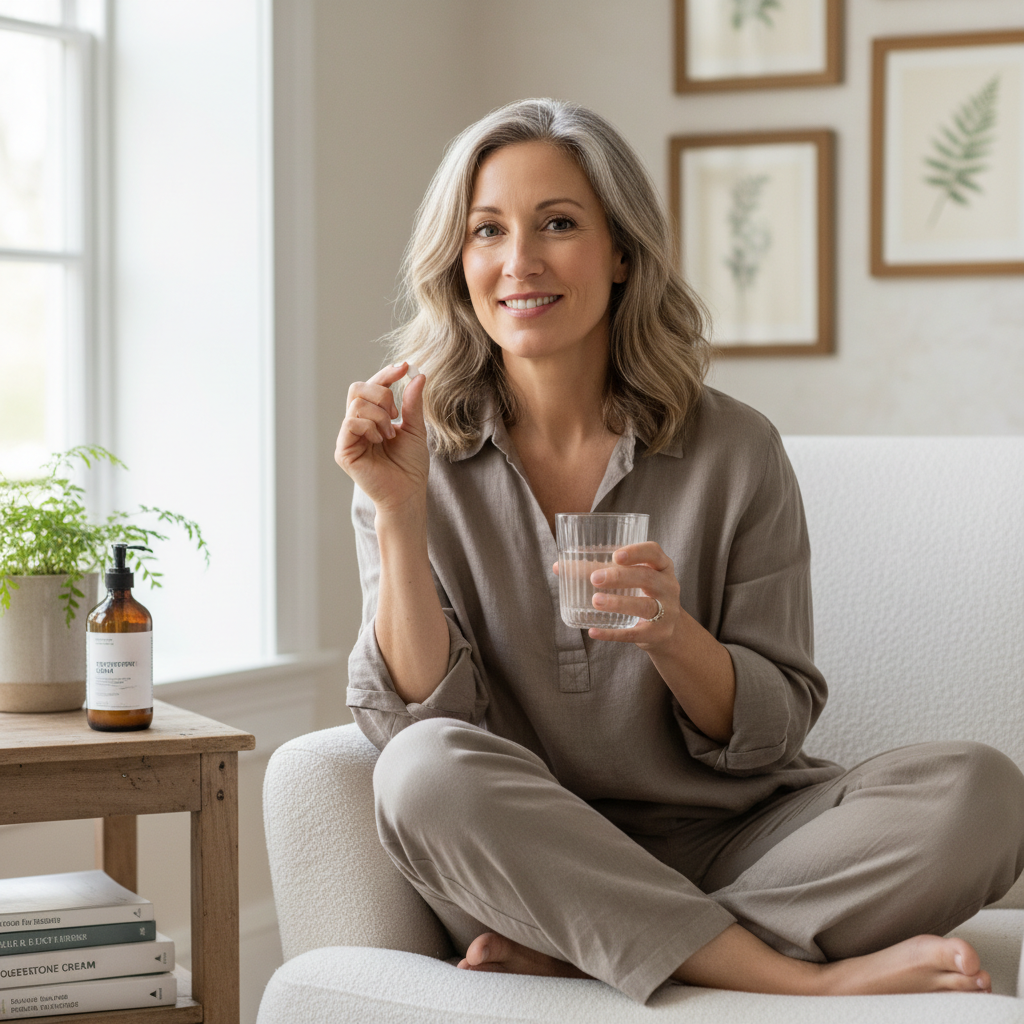
You are sitting at your desk, your heart racing for no apparent reason. Your palms are slightly damp, and a sense of impending dread—often called "doom-scrolling of the mind"—settles over you. If this sounds familiar, you aren't alone. For many women navigating the transition into midlife, anxiety isn't just "in your head"; it is a physiological response to shifting hormones. When searching for solutions, you likely encountered the debate of topical vs oral progesterone for perimenopause anxiety relief.
Progesterone is often called "nature's Valium" because of its profound effect on the central nervous system. However, the delivery method you choose—swallowing a capsule or rubbing a cream into your skin—dictates exactly how your brain experiences that "calming" effect. Understanding the science behind these two paths is the first step in reclaiming your peace of mind.
Is the pill or the cream better for calming nerves?
When it comes to soothing a frayed nervous system, not all hormone replacement therapy (HRT) is created equal. To understand which is better, we must first distinguish between synthetic progestins and bioidentical progesterone. For its mood-stabilizing benefits, most practitioners point toward bioidentical progesterone, which is molecularly identical to what your ovaries produced in your younger years.
The "pill vs. cream" debate centers on how the body processes the hormone. Oral progesterone (most commonly prescribed as Prometrium) is typically considered the gold standard for significant anxiety and sleep disturbances. This is because oral ingestion leads to the production of specific metabolites that interact directly with GABA receptors in the brain. According to the Cleveland Clinic, progesterone plays a critical role in mood regulation and sleep quality during the menopausal transition.
Topical progesterone (creams or gels) can still be effective for mild symptoms or for women who are sensitive to the side effects of oral medication. However, if your anxiety is severe or involves "middle-of-the-night" panic, the pill often provides a more robust sedative effect. If you are just starting your journey, reviewing our HRT for perimenopause beginners guide can help clarify the broader context of these treatments.
| Feature | Oral Progesterone (Pill) | Topical Progesterone (Cream) |
|---|---|---|
| Primary Benefit | Sedation, deep sleep, anxiety relief | Skin health, mild mood balancing |
| Metabolism | Processed by the liver (produces allopregnanolone) | Bypasses the liver; enters bloodstream directly |
| Uterine Protection | Clinically proven to protect the lining | Absorption can be inconsistent for protection |
| Best For | Severe anxiety, insomnia, panic attacks | Sensitivity to pills, mild PMS-like anxiety |
| Dosing | Standardized (usually 100-200mg) | Variable (depends on skin thickness/site) |
How oral progesterone converts to calming 'allopregnanolone'?
The "secret sauce" of oral progesterone lies in its journey through your digestive system. When you swallow a progesterone capsule, it travels to the liver, where it undergoes what is known as "first-pass metabolism." During this process, the progesterone is broken down into various metabolites, the most important of which is allopregnanolone.
Allopregnanolone is a potent neurosteroid. It crosses the blood-brain barrier and acts as a "positive allosteric modulator" of the GABA-A receptors. GABA is your brain’s primary inhibitory neurotransmitter—essentially the "brakes" of your nervous system. By enhancing GABA activity, allopregnanolone produces an effect similar to anti-anxiety medications like benzodiazepines, but in a more natural, physiological way.
Research published via the National Institutes of Health (NIH) demonstrates that these progesterone metabolites are crucial for reducing the "excitability" of neurons, which directly translates to feeling calmer and less reactive to stress. This conversion is significantly less robust with topical creams because the hormone enters the bloodstream through the skin, largely bypassing the liver and the subsequent conversion into high levels of allopregnanolone.
If you are tracking your journey using a perimenopause symptoms checklist, you might notice that while the cream helps with breast tenderness, only the pill seems to "turn off" the internal hum of anxiety.
Does topical progesterone bypass the liver more effectively?
Yes, one of the primary selling points of topical progesterone is that it bypasses the liver. For some women, this is a distinct advantage. When a substance passes through the liver (oral route), it can trigger the production of inflammatory markers or affect blood clotting factors in some sensitive individuals—though bioidentical oral progesterone is generally considered much safer than older synthetic progestins.
Topical application allows the hormone to sit in the fatty tissue beneath the skin and release slowly into the systemic circulation. This can provide a more "level" baseline of hormones throughout the day, rather than the peak-and-trough effect associated with a nightly pill.
However, "bypassing the liver" is a double-edged sword when it comes to anxiety. Because the liver is the site where progesterone is converted into the sedative metabolites we discussed earlier, bypassing it means you get less of that specific anti-anxiety "hit."
- Absorption Variability: The thickness of your skin, the site of application (wrists vs. inner thighs), and even the ambient temperature can change how much hormone you actually absorb.
- Uterine Safety: If you are also taking estrogen, the North American Menopause Society (NAMS) indicates that topical progesterone may not consistently provide enough protection for the uterine lining to prevent endometrial cancer.
- Brain Concentrations: While topical creams increase serum levels of progesterone, they may not reach the concentrations in the brain necessary to halt a spiraling nervous system.
For women dealing with comorbid conditions, such as the fatigue and "brain fog" often found in the Hashimoto's perimenopause overlap, managing the liver burden is important, but it shouldn't come at the cost of effective symptom relief.
Which form is best for stopping perimenopause panic attacks?
Panic attacks in perimenopause are often the result of "estrogen dominance" or, more accurately, the wild fluctuations and ultimate drop in progesterone levels. Progesterone stabilizes the "HPA axis" (the hypothalamus-pituitary-adrenal axis), which controls your fight-or-flight response.
For the acute management of perimenopause-induced panic, oral progesterone is typically the superior choice. The rapid conversion to allopregnanolone acts as a thermal blanket for a shivering nervous system. Many women find that taking 100mg to 200mg of micronized progesterone at bedtime not only helps them fall asleep but also "resets" their baseline anxiety for the following day.
If your anxiety is accompanied by physical pain, you might be exploring the fibromyalgia perimenopause symptoms connection. In these cases, the systemic effect of oral progesterone can help lower the "volume" on nerve pain while simultaneously quieting the mind.
Topical cream is better suited for:
- Maintaining a steady mood throughout the month.
- Addressing cyclical breast tenderness.
- Women who experience extreme grogginess or "hangover" effects from the oral pill.
- Balancing mild estrogen fluctuations.
Dosing differences: Why the cream isn't always enough?
The most common frustration women report with topical progesterone is that "it stopped working" or "it wasn't enough." This usually boils down to a dosing discrepancy. A standard dose of oral micronized progesterone is 100mg to 200mg. To get the equivalent amount of progesterone into your system via a cream, you would have to apply an immense—and often impractical—amount of product.
Furthermore, the skin can become saturated. Over time, the receptors in the localized fatty tissue can become "congested," leading to a decrease in effectiveness. This is why many practitioners recommend rotating application sites (e.g., forearms one day, behind the knees the next).
In contrast, oral dosing is standardized and predictable. It is also more effective for women showing perimenopause insulin resistance signs, as stabilizing the nervous system is a key component of metabolic health. High cortisol (driven by anxiety) pushes blood sugar up; by using a more effective oral dose to suppress cortisol, you indirectly support your metabolic goals.
Mayo Clinic research emphasizes that hormone therapy should be individualized. If 20mg of cream isn't touching your anxiety, it isn't that progesterone doesn't work for you; it's likely that the delivery method isn't providing the therapeutic concentration your brain requires.
Real user experiences: Anxiety relief on different forms?
The qualitative data from thousands of women in perimenopause highlights a clear trend: the "Night-and-Day" effect.
The Case for the Pill: Many women describe oral progesterone as a "lifesaver." One user reported, "I spent six months feeling like I was permanently vibrating with anxiety. Within three nights of taking oral Prometrium, the vibration stopped. I could finally breathe." This experience is common because the oral route targets the GABA receptors so directly. The "downside" mentioned by some is vivid dreaming or a slight "heaviness" in the morning, though this usually fades after two weeks of consistent use.
The Case for the Cream: Women who prefer the cream often value the lack of systemic side effects. "The pill made me feel too depressed and groggy," one user shared. "The cream doesn't give me that 'drugged' feeling, but it takes the edge off my PMS-style anxiety and stops my night sweats." For women sensitive to medication, the lower, slower absorption of the cream is a gentle way to reintroduce hormonal balance.
The "Hybrid" Approach: Some clinical protocols involve using a low-dose cream daily to maintain stability, with an oral dose reserved for the luteal phase (the two weeks before a period) when progesterone naturally plummets and anxiety usually peaks. This "pulsed" dosing can sometimes provide the best of both worlds—avoiding daily grogginess while providing emergency "allopregnanolone" support when the perimenopause storm hits hardest.
Ultimately, your choice depends on the severity of your symptoms and how your specific liver chemistry processes the hormone. If you are struggling to find your footing, remember that perimenopause is a temporary (though often long) transition. Working with a provider who understands the nuance of bioidentical progesterone metabolites—not just "normal" lab ranges—is the key to moving from a state of panic back to a state of radiance.
Choosing between topical and oral progesterone isn't just about convenience; it's about matching the physiological mechanism to your specific symptom profile. If anxiety is your primary "giant" to slay, the oral route offers the metabolic keys to unlock your brain's natural calming system. If you seek a gentle balance and have mild symptoms, the cream may be your perfect companion. Listen to your body, track your symptoms, and don't be afraid to adjust your approach until you find the peace you deserve.
Disclaimer: This information is for educational purposes only and does not constitute medical advice. Always consult with a licensed healthcare provider before starting or changing any hormone therapy.
FAQ
Common questions
Does oral progesterone work better for anxiety than the cream?
Oral progesterone is metabolized by the liver into allopregnanolone, a neurosteroid that binds to GABA receptors in the brain to create a calming, sedative effect. Topical progesterone largely bypasses this conversion.
What are the side effects of taking progesterone orally?
The primary side effect of oral progesterone is drowsiness, which is why it is usually taken at bedtime. Some women also report vivid dreams or a slight 'hangover' feeling the next morning.
Can I use progesterone cream for panic attacks?
Yes, though it is usually less potent. For women with mild anxiety or those sensitive to medications, the slow-release nature of topical progesterone can provide a steady, calming baseline without the grogginess associated with pills.
Is the dosage of progesterone cream the same as the pill?
Standard oral doses are typically 100mg to 200mg. To achieve similar blood levels with a cream, you would need a high-potency prescription gel, as over-the-counter creams usually provide much lower doses (usually 20mg per pump).
How long does it take for progesterone to help with anxiety?
Many women see improvements in sleep within 1-3 nights of oral use. For anxiety, it may take 2-4 weeks of consistent dosing to stabilize the nervous system and notice a significant reduction in baseline stress.
Can I switch from the pill to the cream?
Yes, some women use a low-dose cream daily and add oral progesterone during the luteal phase (the two weeks before their period) when anxiety and insomnia are typically at their worst. This should always be supervised by a doctor.
Want this in your inbox each Sunday?
New articles, the science you can actually use, and the occasional rant.
Keep reading

Perimenopause Symptoms Checklist: 38 Signs You're Not Imagining
A comprehensive, doctor-reviewed checklist of perimenopause symptoms — from the obvious hot flashes to the weird ones nobody warned you about.
9 min read

Hashimoto's and Perimenopause: Why Symptoms Overlap (and How to Tell Them Apart)
Fatigue, brain fog, weight gain, hair loss — Hashimoto's and perimenopause share most symptoms. Here's how to tell what's flaring, what's hormonal, and what to ask your doctor.
11 min read

Fibromyalgia and Perimenopause: When Two Storms Collide
Why fibromyalgia almost always flares during perimenopause, what changes in your nervous system, and the small daily shifts that actually help.
10 min read