
Progesterone Oil vs. Cream: Which Is Better for 40+?
Progesterone oil vs cream for perimenopause anxiety and sleep: learn which delivery method absorbs better, how to dose, and the best application sites for 40+.
Published:
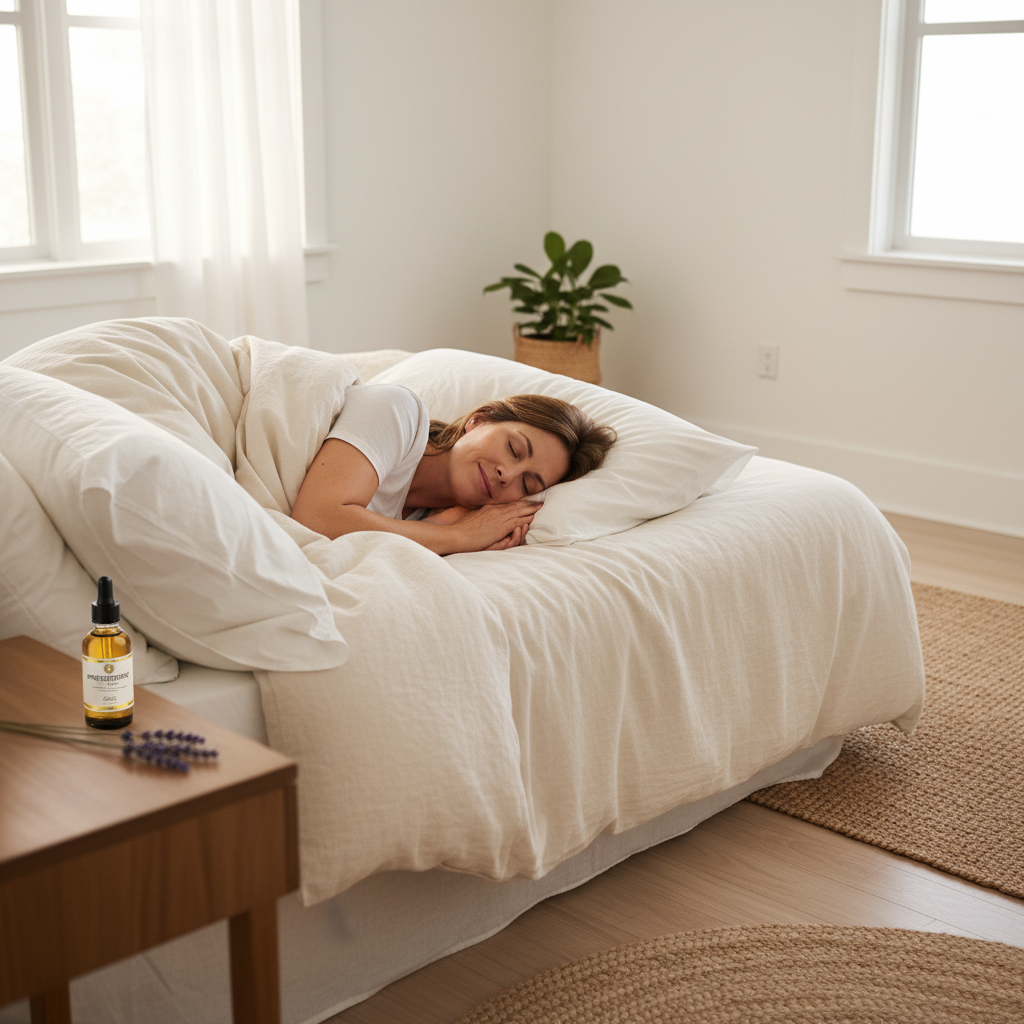
If you are navigating your 40s, you likely know the feeling: the 3:00 AM wake-up call, the racing heart for no reason, and the sudden, sharp edges of perimenopausal anxiety. As your ovaries begin to slow their production of progesterone—the hormone often dubbed "nature’s Valium"—finding the right replacement becomes a priority. But when you look at the options, you are often faced with a choice: progesterone oil vs cream for perimenopause anxiety and sleep.
While both delivery methods aim to restore hormonal balance, they interact with your skin and bloodstream in surprisingly different ways. Understanding these nuances is key to reclaiming your rest and steadying your mood.
What is the difference between progesterone oil and topical cream?
The fundamental difference between progesterone oil and cream lies in their "vehicle"—the inactive ingredients that carry the hormone into your body. Progesterone is a lipophilic (fat-loving) molecule. This means it dissolves easily in fats and oils but resists mixing with water.
Progesterone Cream Creams are emulsions, meaning they are a blend of water and oil. Because they contain water, they almost always require preservatives and emulsifiers to keep the product stable. While creams are popular because they feel less "messy" and absorb quickly into the top layer of the skin, the water content can sometimes limit the concentration of the progesterone itself.
Progesterone Oil Progesterone oil is a pure lipid-based delivery system, typically using carrier oils like coconut, grape seed, or Vitamin E oil. Because these oils mimic the skin’s natural sebum, they often allow for a more direct passage through the stratum corneum (the skin’s outermost barrier). According to the Endocrine Society, the delivery method of hormones significantly impacts their bioavailability and how they are metabolized by the liver.
In your 40s, your skin begins to lose lipids and moisture. Oils can serve a dual purpose by nourishing the skin barrier while delivering the active hormone. For many women, the simplicity of an oil—free from the parabens or fragrances often found in mass-market creams—is a safer choice for sensitive systems.
Which form of progesterone absorbs better for night-time anxiety?
When you are dealing with perimenopause anxiety, speed and consistency of absorption are everything. You need the hormone to reach your GABA receptors (the calming neurotransmitters in the brain) efficiently.
Recent pharmacological insights suggest that oil-based preparations may provide a more sustained release compared to creams. When you apply a cream, the water evaporates quickly, which can cause the progesterone to crystallize on the skin's surface, potentially hindering full absorption. In contrast, an oil stays "wet" on the skin longer, facilitating a deeper soak into the fatty tissues beneath the dermis.
Progesterone is stored in the adipose (fat) tissue before being released into the bloodstream. This creates a "reservoir effect." For night-time anxiety, the goal is to prevent the "cortisol spike" that happens when progesterone levels drop too low during the night. The Mayo Clinic notes that sleep disruptions are often tied to these hormonal fluctuations. By using an oil, you may achieve a more stable reservoir that feeds your system throughout the night, rather than a sharp peak and valley.
If you are also managing other conditions like fibromyalgia perimenopause symptoms, stable hormone levels are even more critical to prevent pain flares associated with sleep deprivation.
Is progesterone oil more potent than over-the-counter creams?
Potency isn't just about the milligrams on the label; it’s about how much actually reaches your cells. Many over-the-counter (OTC) creams are marketed as "wild yam" products but contain very little actual USP Progesterone (United States Pharmacopeia). To be effective for perimenopause symptoms, the product must contain "bioidentical" progesterone, which is chemically identical to what your body produces.
| Feature | Progesterone Cream | Progesterone Oil |
|---|---|---|
| Base | Water & Oil Emulsion | Pure Lipid/Oil |
| Preservatives | Usually required | Often preservative-free |
| Absorption Speed | Fast initial, then tapers | Steady, sustained |
| Residue | Dries matte | Slightly oily/dewy |
| Concentration | Often lower (20mg/pump) | Can be highly concentrated |
Progesterone oil is often perceived as more "potent" because it bypasses the evaporation issues of creams. Furthermore, many professional-grade oils allow for higher concentrations in fewer drops. This is particularly helpful for women who are struggling with perimenopause insulin resistance signs, as hormonal balance plays a role in metabolic health. When your progesterone levels are optimized, your body can better manage cortisol, which in turn helps stabilize blood sugar.
How do you dose progesterone oil for perimenopause symptoms?
Dosing progesterone is not a "one size fits all" endeavor, especially during the chaotic years of perimenopause. Unlike menopause, where hormones stay consistently low, perimenopause is characterized by wild swings.
- Start Low: Most practitioners recommend starting with 20mg to 30mg of bioidentical progesterone daily.
- Cycle It: If you are still menstruating, you typically use the oil during the "luteal phase" (Days 14–28 of your cycle).
- Listen to Your Body: If you feel groggy the next morning, your dose may be too high. If your anxiety persists, you may need to gradually increase.
- Split Dosing: For severe anxiety, some women find relief by applying a small amount in the morning and a larger amount before bed.
It is vital to cross-reference your dosage needs with a perimenopause symptoms checklist to track how your body responds over 2-3 cycles. The North American Menopause Society (NAMS) emphasizes that the lowest effective dose should be the goal for all hormonal therapies.
Where is the best place to apply progesterone oil for maximum effect?
Because progesterone is fat-soluble, it should be applied to areas with a thin layer of fat and a rich supply of capillaries. However, there is a catch: if you apply it to the same spot every day, the local fat tissues can become "saturated," and the progesterone will stop moving efficiently into the bloodstream.
The best practice is to rotate your application sites daily. Recommended areas include:
- Inner forearms
- Upper chest
- Inner thighs
- Lower abdomen
- The soles of the feet (especially for sleep)
Applying progesterone oil to the soles of the feet is a "hack" many women swear by for sleep. The skin there is porous, and it bypasses the saturation issues found in thinner skin areas. If you are struggling with systemic issues like Hashimoto's perimenopause overlap, ensuring consistent absorption is vital, as thyroid function and progesterone levels are deeply linked.
Can you use both progesterone oil and HRT patches together?
This is a common question for women who are already on a "combined" HRT regimen or using an estrogen-only patch. Most HRT patches for women with a uterus already contain a progestogen (like levonorgestrel) or are paired with an oral progesterone (like Prometrium) to protect the uterine lining.
Adding a topical progesterone oil on top of a prescription HRT patch should only be done under the guidance of a healthcare provider. According to ACOG (American College of Obstetricians and Gynecologists), the primary role of progesterone in HRT is to prevent endometrial hyperplasia (the thickening of the uterine lining caused by estrogen).
However, some women find that the progestogen in their patch isn't enough to curb their anxiety or improve sleep. In these cases, a low-dose progesterone oil might be used as a "top-off." If you are just starting your journey, consulting a HRT for perimenopause beginners guide can help you understand how these different forms interact.
Side effects of topical progesterone: what to watch for in your 40s?
While bioidentical progesterone is generally well-tolerated, it is a powerful hormone. In your 40s, your receptors may be extra sensitive.
- Drowsiness: The most common side effect (which is why we use it at night!).
- Skin Irritation: More common with creams due to preservatives than with pure oils.
- Sore Breasts: This usually happens if estrogen levels are high and progesterone is just starting to balance them out.
- Mood Changes: While it usually helps anxiety, some women experience "progesterone sensitivity" where it makes them feel depressed or sluggish.
- Weight Changes: If dosing is incorrect, it can occasionally lead to water retention.
The Cochrane Library has reviewed various hormone therapies and notes that individual responses to topical applications can vary significantly based on skin thickness and metabolic rate. Always monitor how you feel and report significant changes to your doctor.
How long does it take for progesterone oil to improve sleep quality?
The "Golden Rule" of hormones is patience, but progesterone is often the exception. Because of its direct effect on GABA receptors, many women notice an improvement in sleep quality within the first 3 to 7 days of consistent use.
However, the full "calming" effect on daytime anxiety may take a full cycle (about 4 weeks) to manifest. This is because progesterone needs time to balance the "estrogen dominance" that often characterizes the early 40s. Estrogen dominance occurs when progesterone levels drop, leaving estrogen—even if it’s also declining—to run unopposed, leading to irritability and "wired but tired" feelings.
To get the most out of your oil:
- Be Consistent: Apply it at the same time every evening.
- Darkness Matters: Progesterone helps your body produce melatonin; ensure your room is dark to support this synergy.
- Track Symptoms: Use a journal to note your "time to fall asleep" and "number of night wakings."
By choosing the right delivery method—specifically a high-quality progesterone oil—you are giving your body a bioavailable, steady tool to fight back against the turbulence of perimenopause. Whether it's the 3:00 AM anxiety or the chronic fatigue of a sleepless night, the right oil can be the key to turning the lights out on perimenopause symptoms and waking up feeling like yourself again.
Progesterone Oil vs Cream FAQ
Q: Can I apply progesterone oil to my face? A: While you can, it’s not recommended as the primary site. The skin on the face is very thin and has many hormone receptors; applying it there may lead to localized effects like breakouts or unwanted hair growth in some women. Stick to the forearms, chest, or thighs.
Q: Does progesterone oil stain clothing? A: Because it is a pure lipid base, it can leave a small mark on delicate fabrics like silk if not allowed to absorb. Wait about 3-5 minutes for the oil to fully sink in, or apply it to the soles of your feet and wear socks.
Q: Is progesterone oil better than pills? A: Oral progesterone (pills) must pass through the liver, which converts much of it into "allopregnanolone." This metabolite is very sedating, which is great for sleep, but can be hard on the liver for some. Topical oil bypasses the "first-pass metabolism," leading to different effects.
Q: Can progesterone oil help with perimenopause weight gain? A: Indirectly, yes. By improving sleep and reducing cortisol (the stress hormone that triggers belly fat storage), progesterone oil can support a healthy metabolism and weight management.
: How do I know if my progesterone oil has gone bad? A: Pure oils have a long shelf life but can go rancid if exposed to high heat or direct sunlight. If the oil develops a sharp, sour, or "plastic" smell, it is time to replace it. Always store your bottle in a cool, dark drawer.
Q: Can I use progesterone oil if I still have a period? A: Yes. In perimenopause, it is usually used during the second half of your cycle (the luteal phase). If your periods are irregular, your practitioner may suggest a different schedule to help regulate your cycle.
Disclaimer: This information is for educational purposes only and does not constitute medical advice. Always consult with a qualified healthcare provider before starting any new hormone therapy.
FAQ
Common questions
Can I apply progesterone oil to my face?
While you can, it’s not recommended as the primary site. The skin on the face is very thin and has many hormone receptors; applying it there may lead to localized effects like breakouts or unwanted hair growth in some women. Stick to the forearms, chest, or thighs.
Does progesterone oil stain clothing?
Because it is a pure lipid base, it can leave a small mark on delicate fabrics like silk if not allowed to absorb. Wait about 3-5 minutes for the oil to fully sink in, or apply it to the soles of your feet and wear socks.
Is progesterone oil better than pills?
Oral progesterone (pills) must pass through the liver, which converts much of it into allopregnanolone. This metabolite is very sedating, which is great for sleep, but can be hard on the liver for some. Topical oil bypasses the first-pass metabolism.
Can progesterone oil help with perimenopause weight gain?
Indirectly, yes. By improving sleep and reducing cortisol (the stress hormone that triggers belly fat storage), progesterone oil can support a healthy metabolism and weight management.
How do I know if my progesterone oil has gone bad?
Pure oils have a long shelf life but can go rancid if exposed to high heat or direct sunlight. If the oil develops a sharp, sour, or plastic smell, it is time to replace it. Always store your bottle in a cool, dark drawer.
Can I use progesterone oil if I still have a period?
Yes. In perimenopause, it is usually used during the second half of your cycle (the luteal phase). If your periods are irregular, your practitioner may suggest a different schedule to help regulate your cycle.
Want this in your inbox each Sunday?
New articles, the science you can actually use, and the occasional rant.
Keep reading

Perimenopause Symptoms Checklist: 38 Signs You're Not Imagining
A comprehensive, doctor-reviewed checklist of perimenopause symptoms — from the obvious hot flashes to the weird ones nobody warned you about.
9 min read

Hashimoto's and Perimenopause: Why Symptoms Overlap (and How to Tell Them Apart)
Fatigue, brain fog, weight gain, hair loss — Hashimoto's and perimenopause share most symptoms. Here's how to tell what's flaring, what's hormonal, and what to ask your doctor.
11 min read

Fibromyalgia and Perimenopause: When Two Storms Collide
Why fibromyalgia almost always flares during perimenopause, what changes in your nervous system, and the small daily shifts that actually help.
10 min read