
Progesterone Pills vs. Topical Oil: Which Fixes 40+ Sleep?
Struggling with 3 a.m. wakeups? Compare progesterone pills vs topical oil for perimenopause sleep relief. Learn why oral progesterone is the gold standard for sleep.
Published:
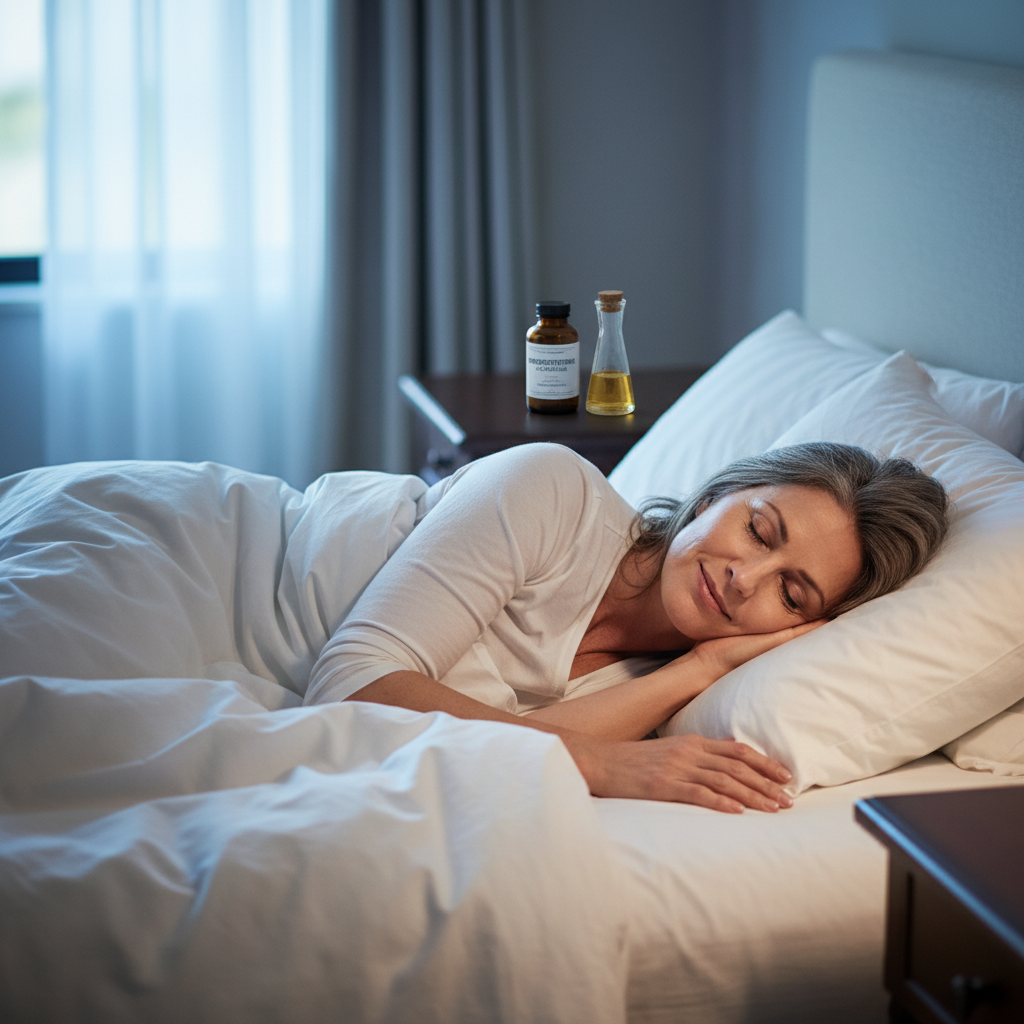
If you are lying awake at 3 a.m. staring at the ceiling, you aren't alone. For many women navigating the transition into their 40s and 50s, sleep becomes a fragile commodity. The culprit is often a precipitous drop in progesterone, the "calming hormone" that acts like nature’s Valium for the brain. As you scan your perimenopause symptoms checklist, sleep disruption and skyrocketing anxiety often sit right at the top.
When you decide to seek relief through Hormone Replacement Therapy (HRT), you’re immediately faced with a choice: Do you take a pill or rub an oil into your skin? The debate of progesterone pills vs topical oil for perimenopause sleep relief is more than just a matter of convenience; it’s a matter of biochemistry. Understanding how these two delivery methods interact with your GABA receptors and your liver can be the difference between a restful night and another day of brain fog.
What is the difference between oral micronized progesterone and topical oil?
The primary difference lies in the formulation and the delivery route. Oral micronized progesterone (often sold under the brand name Prometrium) is identical to the progesterone your body produces. It is "micronized," meaning the particles are broken down to be easily absorbed by the digestive tract. Because progesterone is fat-soluble, these capsules are usually suspended in oil (like peanut or sunflower oil) to aid absorption.
Topical progesterone oil, on the other hand, is applied directly to the skin (transdermal). It bypasses the digestive system and is absorbed into the fat layers beneath the skin, where it is gradually released into the bloodstream. While both aim to restore hormonal balance, they behave very differently once they enter your system. If you are just starting this journey, our HRT for perimenopause beginners guide can help you understand the broader landscape of hormone therapy.
Why do doctors prefer oral progesterone for protecting the uterine lining?
If you have an intact uterus and are taking estrogen, your doctor will almost certainly insist on oral progesterone. The reason is safety. Estrogen causes the lining of the uterus (the endometrium) to thicken. Without enough progesterone to counteract this growth, you face an increased risk of endometrial hyperplasia and uterine cancer.
Clinical data from the North American Menopause Society (NAMS) indicates that oral micronized progesterone is highly effective at reaching the uterus and keeping the lining thin. In contrast, studies on topical progesterone have shown inconsistent results regarding uterine protection. Because topical oils are absorbed into the skin’s fat, they may not reach high enough concentrations in the blood to fully protect the endometrium. For women dealing with complex inflammatory issues like fibromyalgia perimenopause symptoms, systemic stability is even more crucial.
How does the 'first-pass' liver metabolism of pills help with sleep?
This is where the "magic" happens for sleep. When you swallow a progesterone pill, it travels to your liver—a process known as "first-pass metabolism." The liver breaks the progesterone down into several metabolites, most notably allopregnanolone.
Allopregnanolone is a potent neurosteroid that crosses the blood-brain barrier and binds to GABA-A receptors in the brain. According to the National Institutes of Health (NIH), this interaction produces a sedative, anti-anxiety, and hypnotic effect. Because topical oils bypass the liver, they do not produce these high levels of sleep-inducing metabolites. This is why women who take oral progesterone often report feeling "heavy-lidded" and sleepy within 30 to 60 minutes of ingestion.
Is topical progesterone oil effective for calming perimenopause anxiety?
While topical oil may not be the heavy hitter for deep sleep, it can be excellent for managing daytime anxiety and "edginess." Because the oil is absorbed slowly, it provides a steady, low-level release of progesterone without the drowsy "hit" that comes with pills.
Many women find that topical application helps mitigate the irritability and mood swings associated with perimenopause insulin resistance signs or thyroid fluctuations like Hashimoto's perimenopause overlap. If your goal is to take the edge off your day without feeling like you need a nap at 2 p.m., a topical oil might be the right secondary tool.
Can you use both oral and topical progesterone at the same time?
Yes, but only under the strict supervision of a healthcare provider. Some practitioners use a "bi-modal" approach: a standard dose of oral progesterone at night for sleep and uterine protection, and a very small dose of topical oil during the day to manage breakthrough anxiety.
However, you must be careful not to overdose, which can lead to "progesterone dominance" symptoms like extreme lethargy, depression, and breast tenderness. Always track your symptoms and share them with your doctor before layering treatments.
What are the side effects of progesterone pills vs. skin application?
Every delivery method has its trade-offs. Oral pills are powerful but can be hard on the liver for some or cause morning grogginess. Topical oils are gentler but can be unpredictable in their absorption rates depending on your skin thickness and body fat percentage.
| Feature | Oral Micronized Progesterone | Topical Progesterone Oil |
|---|---|---|
| Primary Benefit | Deep sleep & Uterine protection | Mood stability & Skin health |
| Metabolism | First-pass (Liver) | Transdermal (Bypasses liver) |
| GABA Effect | High (Sedating) | Low (Calming) |
| Absorption | Reliable/Standardized | Variable |
| Common Side Effect | Morning drowsiness | Skin irritation/Rash |
According to the Mayo Clinic, side effects for oral progesterone can include dizziness and breast tenderness, while topical users may experience localized reactions at the site of application.
Which form of progesterone is best for waking up at 3 a.m.?
If your specific problem is "maintenance insomnia"—waking up in the middle of the night and being unable to return to sleep—oral micronized progesterone is generally considered superior. The sedative metabolites created by the liver help stabilize the sleep architecture, allowing you to cycle through deep sleep and REM sleep more effectively.
- Timing: Take oral progesterone about 30–60 minutes before bed.
- Consistency: Take it at the same time every night to maintain steady levels.
- Empty Stomach: Taking progesterone with a high-fat meal can actually increase absorption by up to 300%, which might make you feel too groggy the next day. Most doctors recommend taking it on a relatively empty stomach or with a light snack.
Research published in the journal Sleep suggests that progesterone can significantly reduce the time it takes to fall asleep and the number of nighttime awakenings in postmenopausal women.
How to talk to your doctor about switching your progesterone delivery?
If you are currently using a topical oil and still struggling with sleep, or if you are on the pill and feel too "hungover" the next morning, it’s time for a conversation. Start by bringing a sleep log to your appointment.
- Ask about Micronization: Ensure your doctor is prescribing "micronized" progesterone rather than synthetic progestins (like Medroxyprogesterone), which do not have the same calming effect on the brain.
- Discuss Uterine Safety: If you are switching from oral to topical, ask how they plan to monitor your uterine lining (usually via periodic ultrasounds).
- Verify the Source: Not all topical oils are created equal. Over-the-counter wild yam creams often do not contain USP Progesterone and cannot be converted by the body into active hormones. The Endocrine Society warns that "natural" doesn't always mean "effective" or "regulated."
Summary of Delivery Methods
Choosing between pills and oils isn't about which one is "better" in a vacuum; it’s about which one solves your specific physiological puzzle. For the 40+ woman whose primary complaint is the 3 a.m. wake-up call, the oral route is typically the gold standard due to its unique metabolic pathway to the brain’s GABA receptors.
However, bioindividuality rules all. Some women are "poor metabolizers" and find that pills make them feel depressed or bloated. For them, a carefully monitored topical approach may be the only way to find balance. The key is to work with a provider who understands the nuance of the "first-pass" effect and respects the impact sleep has on your overall quality of life.
By addressing the progesterone gap, you aren't just fixing your sleep; you're protecting your brain health, your metabolic health, and your sanity. Whether you choose the capsule or the oil, the goal is the same: waking up feeling like yourself again.
References and Authoritative Sources:
FAQ
Common questions
Which is better for sleep: progesterone pills or topical oil?
Oral micronized progesterone is generally better for sleep because the liver converts it into allopregnanolone, a neurosteroid that calms the brain and promotes deep sleep.
Is oral progesterone safer for the uterus than topical oil?
Yes, doctors almost always recommend oral progesterone if you have a uterus, as topical forms may not provide enough systemic absorption to prevent endometrial hyperplasia (thickening of the uterine lining).
When should I take my progesterone pill for the best sleep?
Take oral progesterone approximately 30 to 60 minutes before bed. For best results and consistent absorption, take it on a relatively empty stomach at the same time every night.
Can progesterone pills cause morning grogginess?
Some women experience morning grogginess, dizziness, or a 'hangover' feeling. If this happens, your dose may be too high, or you may need to take it earlier in the evening.
Is over-the-counter progesterone cream as effective as prescription oil?
Most over-the-counter 'wild yam' creams do not contain active USP progesterone and are not effective for HRT. Prescription topical oils are much stronger and regulated for consistency.
Can I use both oral and topical progesterone together?
Yes, but only under medical supervision. This 'bi-modal' approach uses pills for nighttime sleep and uterine protection, with small doses of oil for daytime anxiety management.
Want this in your inbox each Sunday?
New articles, the science you can actually use, and the occasional rant.
Keep reading

Perimenopause Symptoms Checklist: 38 Signs You're Not Imagining
A comprehensive, doctor-reviewed checklist of perimenopause symptoms — from the obvious hot flashes to the weird ones nobody warned you about.
9 min read

Hashimoto's and Perimenopause: Why Symptoms Overlap (and How to Tell Them Apart)
Fatigue, brain fog, weight gain, hair loss — Hashimoto's and perimenopause share most symptoms. Here's how to tell what's flaring, what's hormonal, and what to ask your doctor.
11 min read

Fibromyalgia and Perimenopause: When Two Storms Collide
Why fibromyalgia almost always flares during perimenopause, what changes in your nervous system, and the small daily shifts that actually help.
10 min read