
Soy Isoflavones vs HRT: Which Is Best for Your 40s?
Compare soy isoflavones vs HRT for perimenopause hot flashes safety. Learn which treatment is best for your 40s, including risks, benefits, and effectiveness.
Published:
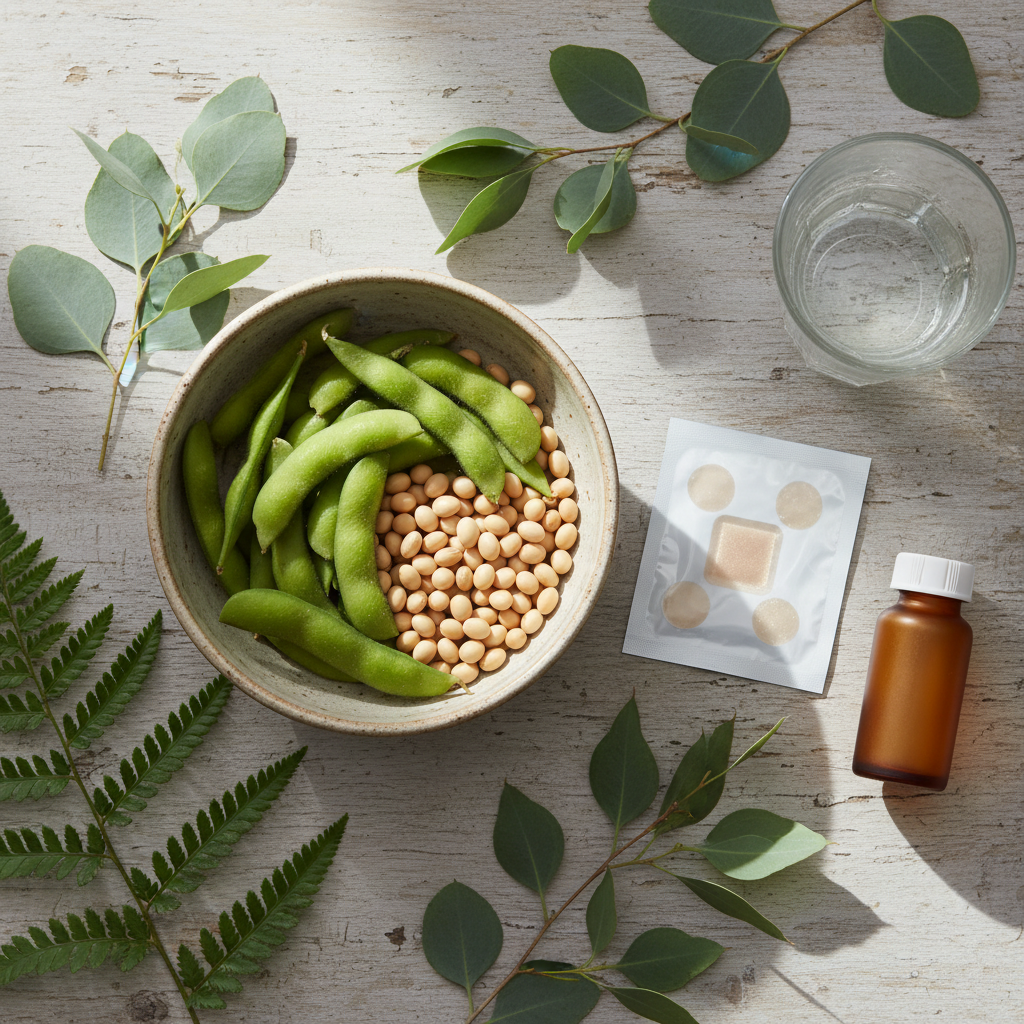
If you are currently navigating the unpredictable waters of your 40s, you’ve likely felt the sudden surge of a hot flash or the frustration of sleep-disrupting night sweats. As your estrogen levels begin their erratic decline, the search for relief usually leads to a crossroads: soy isoflavones vs HRT for perimenopause hot flashes safety.
On one hand, hormone replacement therapy (HRT) is often touted as the gold standard for symptom management. On the other, plant-based soy isoflavones offer a "natural" alternative that many women feel more comfortable with. Deciding which path to take requires understanding how these substances interact with your unique biology during this transition.
What are soy isoflavones and how do they interact with estrogen receptors?
Soy isoflavones are a type of phytoestrogen—literally, "plant estrogen." The primary compounds found in soy are genistein and daidzein. While they are chemically distinct from the human estrogen (estradiol) produced by your ovaries, they possess a similar molecular structure that allows them to dock into estrogen receptors in your body.
However, there is a catch. Your body has two main types of estrogen receptors: Alpha (ER-α) and Beta (ER-β). According to research published via the National Institutes of Health (NIH), human estrogen binds strongly to both, which can lead to stimulation in tissues like the breasts and uterus. Soy isoflavones, conversely, have a much higher affinity for Beta receptors. These Beta receptors are found in high concentrations in the brain, bones, and cardiovascular system.
Because they bind more selectively, soy isoflavones act as "Selective Estrogen Receptor Modulators" (SERMs). In an environment where your natural estrogen is low—like perimenopause—they can provide a mild estrogenic boost. In an environment where estrogen is high, they can actually block stronger estrogens from binding, potentially providing a protective effect. Understanding this mechanism is the first step in using our perimenopause symptoms checklist to track how your body responds to different interventions.
Are soy isoflavones safer than HRT for women with a history of fibroids or cysts?
When you have a history of uterine fibroids or ovarian cysts, you are likely cautious about anything that might stimulate growth. Standard HRT, particularly high-dose estrogen, can sometimes cause fibroids to enlarge because these growths are estrogen-sensitive.
Soy isoflavones are generally considered a safer or more "neutral" option for these specific concerns. Because they are 100 to 1,000 times weaker than pharmaceutical-grade estrogen, they rarely provide enough stimulus to cause significant fibroid proliferation. In fact, some studies suggest that a diet high in soy may even be associated with a lower risk of fibroids, though the data remains inconclusive.
For women who are also managing complex conditions like fibromyalgia perimenopause symptoms, the lower potency of soy may be preferable to avoid "over-stimulating" an already sensitive nervous system. However, if your symptoms are severe, the mildness of soy might not be enough to provide relief.
Which is more effective for reducing the frequency of severe hot flashes?
When comparing the "horsepower" of these two treatments, pharmaceutical HRT is the undisputed winner. Clinical trials consistently show that HRT can reduce the frequency and severity of hot flashes by up to 75% to 90%.
Soy isoflavones do work, but their effect is more modest. A meta-analysis available through the North American Menopause Society (NAMS) suggests that soy isoflavones can reduce hot flash frequency by about 20% to 50% compared to a placebo.
| Feature | Soy Isoflavones | Hormone Replacement Therapy (HRT) |
|---|---|---|
| Primary Ingredient | Genistein, Daidzein | Estradiol (Bioidentical or Synthetic) |
| Hot Flash Reduction | Approximately 30-50% | Approximately 75-90% |
| Bone Protection | Mild benefit | Significant reduction in fracture risk |
| Speed of Action | 8 to 12 weeks for full effect | 2 to 4 weeks for full effect |
| Prescription Required | No (Over-the-counter) | Yes |
For women experiencing "night sweats that soak the sheets" or hot flashes that impact their ability to work, a HRT for perimenopause beginners guide may provide the comprehensive relief they need. If your flashes are more of a nuisance than a debilitating hurdle, starting with 50-100mg of soy isoflavones might be the gentler first step.
Can you take soy supplements while on an estrogen patch or progesterone pill?
A common question for women in their 40s is whether they can "double up." If the patch isn't quite doing the job, is it safe to add a soy supplement?
Generally, there is no acute danger in consuming dietary soy (like tofu or edamame) while on HRT. However, taking high-dose soy isoflavone supplements alongside pharmaceutical estrogen is usually not recommended. Because soy competes for the same receptor sites, it could theoretically interfere with the way your prescribed hormones work. In some cases, it might block the more potent estradiol from binding to receptors, actually making your HRT less effective.
If you find that your HRT isn't managing your symptoms, it is better to discuss a dosage adjustment or a change in delivery method (like moving from a pill to a patch) with your doctor rather than adding soy supplements. This is particularly important if you are trying to manage the Hashimotos perimenopause overlap, as both soy and estrogen can affect how your body utilizes thyroid medication.
Does soy help with perimenopause weight gain as effectively as bioidentical HRT?
Weight gain, particularly "visceral fat" around the midsection, is a hallmark of the 40s. This is often driven by a combination of declining estrogen and rising insulin resistance.
- HRT and Metabolism: Bioidentical HRT has been shown to improve insulin sensitivity and help maintain lean muscle mass. By stabilizing estrogen levels, it helps the body regulate where fat is stored, often preventing the "meno-pot" from forming.
- Soy and Insulin: Soy isoflavones have shown some promise in improving glucose metabolism. A study cited by the Mayo Clinic suggests that the fiber and protein in whole soy foods are excellent for weight management, though the isoflavones alone are less potent than HRT at shifting metabolic fat.
- Synergy: While soy isoflavones are helpful, they are rarely enough to counter the structural metabolic shifts of perimenopause on their own.
If you are noticing rapid weight gain, it is essential to check for perimenopause insulin resistance signs. While soy can be a healthy part of your diet, HRT usually provides a more robust metabolic defense.
What does the research say about soy isoflavones and breast cancer risk after 40?
The fear surrounding soy and breast cancer stems from older animal studies that did not translate to humans. Current consensus from major health organizations, including the American Cancer Society and the European Food Safety Authority (EFSA), indicates that soy consumption does not increase breast cancer risk in humans.
In fact, many observational studies show that women who consume soy from a young age have lower rates of breast cancer. For women in their 40s, soy isoflavones appear to be a safe alternative.
HRT, specifically combined estrogen and progestogen therapy, does carry a small, well-documented increase in breast cancer risk when used for longer than five years. However, according to The Lancet, this risk is often comparable to other lifestyle factors like alcohol consumption or obesity. For many, the benefits to heart and bone health outweigh this statistically small risk.
How to choose between plant-based phytoestrogens and pharmaceutical hormones
Choosing between soy isoflavones and HRT is not a "right or wrong" decision, but a "best for right now" decision.
Choose Soy Isoflavones if:
- Your symptoms are mild to moderate.
- You have contraindications to HRT (such as a history of blood clots).
- You prefer a "food-first" or supplement-based approach.
- You are in early perimenopause and still have regular cycles.
Choose HRT if:
- Your symptoms (insomnia, hot flashes, brain fog) are significantly impacting your quality of life.
- You are at high risk for osteoporosis.
- You have tried plant-based options for 3 months with no relief.
- You are seeking the "gold standard" for cardiovascular and cognitive protection.
In your 40s, your body is in a state of flux. What works this year might need adjustment next year. Whether you choose the gentle path of soy or the more direct path of HRT, the goal is the same: to support your body so you can move through this transition with radiance and strength.
Remember, you don't have to choose in a vacuum. A healthcare provider who specializes in menopause can look at your bloodwork, your family history, and your symptom diary to help you decide. If you choose soy, look for "standardized" extracts to ensure you are getting an effective dose of genistein. If you choose HRT, consider bioidentical options which are molecularly identical to the hormones your body produces naturally.
Whichever path you choose, remember that perimenopause is a temporary bridge to a new phase of life. Taking care of your hormonal health now sets the foundation for your vitality in the decades to come. Ensure you are getting enough Vitamin D, magnesium, and resistance exercise to support the work your chosen "estrogen" is doing for your bones and heart. Your 40s are a time of profound change—make sure your treatment plan is as dynamic as you are.
FAQ
Common questions
What is the main difference between soy isoflavones and HRT?
Soy isoflavones are phytoestrogens (plant estrogens) that bind to estrogen receptors but are 100 to 1,000 times weaker than the estradiol used in HRT. While HRT provides a full replacement of declining hormones, soy provides a mild, selective boost that may be enough for mild to moderate symptoms.
Can I take soy supplements and HRT at the same time?
Yes, but it is rarely recommended. Because soy isoflavones compete for the same receptors as pharmaceutical estrogen, they can actually block the more effective medication from working properly. It is usually best to choose one or the other.
Is soy as effective as HRT for hot flashes?
Most clinical studies show that soy isoflavones can reduce hot flash frequency by 20% to 50%. In contrast, HRT typically reduces hot flashes by 75% to 90%, making it significantly more effective for severe cases.
Does soy increase the risk of breast cancer in my 40s?
Current research indicates that human consumption of soy isoflavones does not increase breast cancer risk. In many cases, soy consumption is associated with a protective effect, particularly when started earlier in life.
Can soy isoflavones help with perimenopause weight gain?
While soy isoflavones can be helpful for general wellness, they are not a 'weight loss supplement.' HRT is generally more effective at managing perimenopausal weight gain because it directly improves insulin sensitivity and fat distribution.
How quickly do soy isoflavones work compared to HRT?
It generally takes about 8 to 12 weeks of consistent soy isoflavone supplementation to see the maximum reduction in perimenopause symptoms, whereas HRT often provides relief within 2 to 4 weeks.
Want this in your inbox each Sunday?
New articles, the science you can actually use, and the occasional rant.
Keep reading

Perimenopause Symptoms Checklist: 38 Signs You're Not Imagining
A comprehensive, doctor-reviewed checklist of perimenopause symptoms — from the obvious hot flashes to the weird ones nobody warned you about.
9 min read

Hashimoto's and Perimenopause: Why Symptoms Overlap (and How to Tell Them Apart)
Fatigue, brain fog, weight gain, hair loss — Hashimoto's and perimenopause share most symptoms. Here's how to tell what's flaring, what's hormonal, and what to ask your doctor.
11 min read

Fibromyalgia and Perimenopause: When Two Storms Collide
Why fibromyalgia almost always flares during perimenopause, what changes in your nervous system, and the small daily shifts that actually help.
10 min read