
Swollen Face and Eyes in the Morning? The Perimenopause Link
Waking up with a swollen face and eyes in the morning during perimenopause? Learn how hormones, insulin, and cortisol cause facial puffiness and how to fix it.
Published:
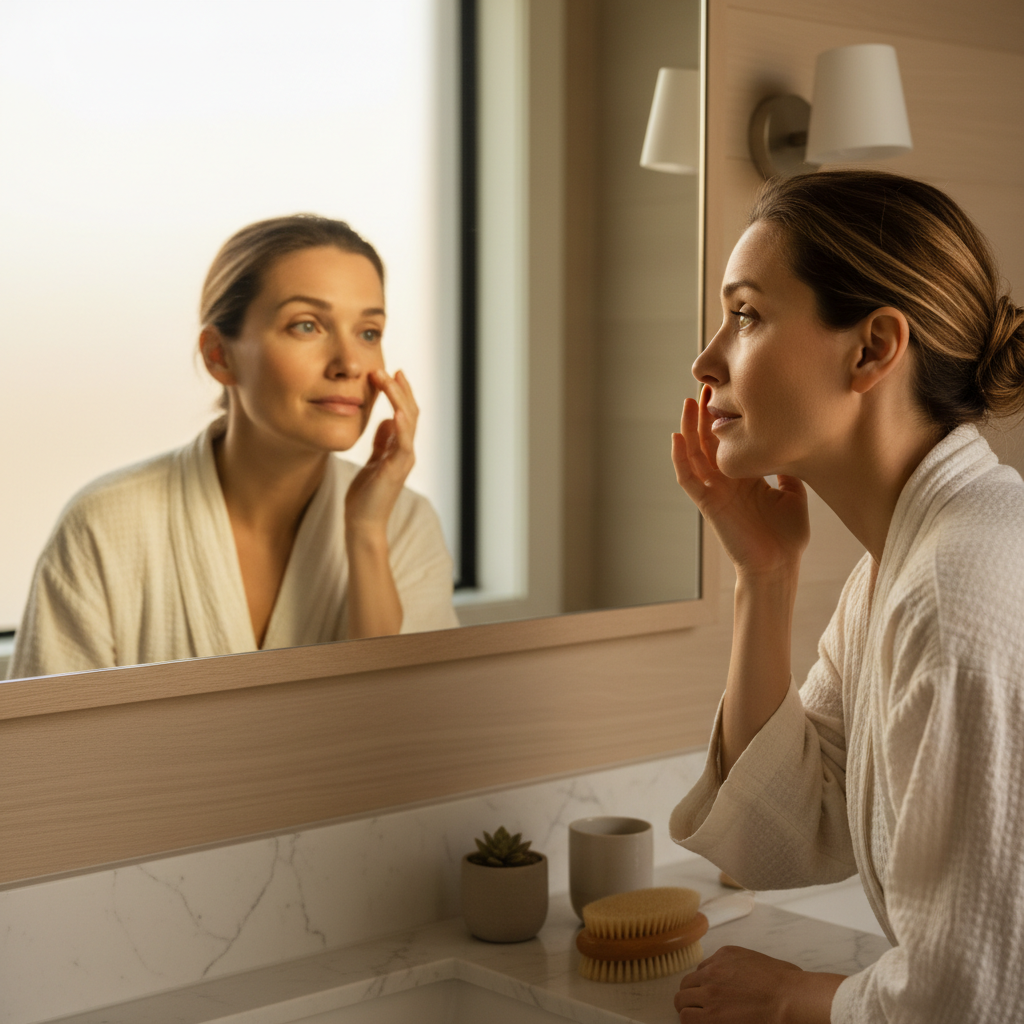
You glance in the mirror at 7:00 AM, expecting to see your familiar reflection, but instead, you see a stranger. Your eyelids are heavy and hooded, your cheekbones have vanished under a layer of puffiness, and your jawline looks softer than it did just a few years ago. If you are in your 40s or early 50s, this isn't just a "bad sleep" day or the result of a salty dinner.
Waking up with a swollen face and eyes in the morning during perimenopause is a distinct physiological phenomenon. It is often one of the more frustrating entries on the perimenopause symptoms checklist because it affects how you present yourself to the world before you’ve even had your first cup of coffee. While it might feel like a cosmetic annoyance, this morning edema is actually a loud signal from your endocrine system that your hormones, insulin levels, and inflammatory markers are shifting.
Why am I waking up with a swollen face and eyes in perimenopause?
During the transition to menopause, your body undergoes a radical recalibration of its fluid management system. The primary culprits are the fluctuating levels of estrogen and progesterone. Estrogen, in particular, has a direct effect on how your body handles sodium and water. When estrogen levels are high—or high relative to progesterone (a state often called estrogen dominance)—your kidneys tend to retain more sodium. According to the Mayo Clinic, edema occurs when tiny blood vessels leak fluid into nearby tissues, and hormonal shifts are a classic trigger for this leakage.
In perimenopause, your cycles become irregular. You might have months where estrogen spikes significantly, leading to "water weight" that concentrates in the face, breasts, and abdomen. Furthermore, the skin around your eyes is among the thinnest on your body. As we age, the structural integrity of the lymphatic drainage system in the face weakens, making it harder for your body to move fluid away from the eyes while you lie flat at night.
Is morning facial puffiness a sign of insulin resistance after 40?
Many women are surprised to learn that their morning puffiness might have more to do with their pancreas than their ovaries. As we enter our 40s, our cells naturally become less responsive to insulin. This is a core component of the perimenopause insulin resistance signs many women experience.
When you are insulin resistant, your body carries higher levels of insulin in the bloodstream to manage blood sugar. High insulin levels signal the kidneys to reabsorb sodium rather than excreting it through urine. This sodium retention leads to systemic water retention. If you notice that your facial swelling is worse after a high-carb meal or a glass of wine the night before, you are likely seeing the intersection of insulin and fluid dynamics. Research published via the National Institutes of Health (NIH) highlights how hyperinsulinemia directly contributes to sodium retention in the distal nephron of the kidney.
How do progesterone drops cause significant fluid retention in the face?
Progesterone is often described as a natural diuretic. It competes with aldosterone—the hormone responsible for salt retention—at the mineralocorticoid receptor. When progesterone is high (as it should be in the second half of a youthful menstrual cycle), it helps your body flush out excess salt and water.
However, during perimenopause, one of the first things to decline is your progesterone production. As you stop ovulating regularly, you lose that "natural diuretic" effect. Without enough progesterone to counteract aldosterone, your body holds onto water with newfound intensity. This is why you might feel like you’ve "inflated" overnight. If you are considering HRT for perimenopause, replacing bioidentical progesterone is often a key step in resolving this chronic puffiness.
| Hormone Shift | Effect on Fluid Retention | Facial Impact |
|---|---|---|
| High Estrogen | Stimulates renin-angiotensin system | Generalized puffiness, "moon face" |
| Low Progesterone | Loss of natural diuretic effect | Eyelid swelling, morning bags |
| High Insulin | Signals kidneys to retain sodium | Tightness in cheeks and jawline |
| High Cortisol | Increases systemic inflammation | Redness and peri-orbital edema |
Can perimenopause-related salt sensitivity lead to morning edema?
Your relationship with the salt shaker changes in your 40s. Estrogen helps maintain the elasticity of blood vessels and the efficiency of the kidneys. As estrogen fluctuates and begins its overall decline, your body may become more "salt sensitive." This means the same amount of sodium that caused no issues in your 30s can now cause significant facial edema the next morning.
Furthermore, perimenopause is a time of increased systemic inflammation. If you are also managing conditions like fibromyalgia perimenopause symptoms, your body’s inflammatory response is already primed. Salt promotes water retention, which exacerbates the pressure on sensitive tissues, leading to that heavy, "clogged" feeling in the sinuses and around the eyes.
The link between cortisol, sleep quality, and facial swelling
Sleep disturbances are a hallmark of the menopausal transition. Whether it’s night sweats or "perimenopause insomnia," a lack of deep, restorative sleep keeps your cortisol levels elevated. Cortisol is a stress hormone produced by the adrenal glands, and like insulin, it has a "cross-talk" relationship with the hormones that regulate salt.
When cortisol remains high due to poor sleep, it can trigger the retention of salt and water. Additionally, sleep deprivation leads to vasodilation (widening of the blood vessels). Because the skin under the eyes is so thin, these dilated vessels appear as dark circles and puffiness. According to the Cleveland Clinic, lack of sleep is a leading lifestyle cause of peri-orbital edema, and when paired with hormonal shifts, the effect is doubled.
How to tell the difference between hormonal bloat and kidney issues?
While morning puffiness is usually a symptom of the "change," it is vital to distinguish between hormonal shifts and underlying medical conditions. If your facial swelling is accompanied by swelling in the ankles (pitting edema) or changes in how often you urinate, it is time to consult a professional.
Sometimes, what looks like perimenopause is actually a thyroid issue. There is a significant Hashimoto’s perimenopause overlap where the symptoms of hypothyroidism (like a puffy face and thinning eyebrows) mimic perimenopause.
You should seek medical advice if:
- The swelling is persistent and does not go away by mid-afternoon.
- You have a "pitting" effect (you press your skin and the indentation stays).
- You experience shortness of breath or high blood pressure.
- The swelling is painful or accompanied by a rash.
The Endocrine Society notes that fluid retention is a classic sign of thyroid dysfunction, which frequently emerges during the same window as perimenopause.
7 ways to reduce perimenopause morning puffiness naturally
If you’ve ruled out clinical issues, you can manage "menopause face" by addressing the root causes of fluid retention.
- Prioritize Lymphatic Drainage: Use a jade roller or your fingers to gently massage your face in an outward and downward motion. This helps move stagnant lymph fluid toward the lymph nodes in the neck.
- Adjust Your Sleep Position: Sleeping slightly elevated with an extra pillow can prevent fluid from pooling in your facial tissues overnight.
- Monitor Your "Hidden" Sodium: It’s often not the salt shaker, but the sodium in processed breads, dressings, and canned goods that causes the morning bloat.
- Increase Potassium Intake: Potassium works in opposition to sodium. Foods like avocados, spinach, and bananas help your kidneys excrete excess salt.
- Hydrate to De-bloat: It sounds counterintuitive, but if you are dehydrated, your body will hold onto every drop of water it has. Drink filtered water steadily throughout the day.
- Manage Insulin Spikes: Focus on a "protein-first" diet to stabilize blood sugar, which reduces the insulin-driven sodium retention.
- Cold Compression: A cold washcloth or chilled eye mask for five minutes in the morning constricts blood vessels and manually reduces swelling quickly.
The Role of Micro-Circulation
In perimenopause, our capillary walls can become more permeable. This means fluid leaks out of the blood vessels and into the interstitial space (the space between cells) more easily. This is why you might wake up with "pillow marks" on your face that take an hour to disappear. Supporting your vascular health through antioxidants—found in brightly colored berries and leafy greens—can help strengthen these vessel walls.
The Magnesium Connection
Magnesium is a critical mineral that often becomes depleted during times of high stress or hormonal transition. According to research via the NIH, magnesium supplementation can help reduce water retention in women experiencing hormonal fluctuations. It acts as a cofactor in hundreds of enzymatic reactions, including those that regulate fluid balance and insulin sensitivity.
Closing Thoughts
Waking up with a swollen face and eyes in the morning during perimenopause is your body's way of asking for balance. By addressing the trio of insulin, cortisol, and sex hormones, you can wake up feeling—and looking—more like yourself. While topical creams might offer a temporary fix, the real solution lies in supporting your metabolic and hormonal health from the inside out. Remember, your skin is a mirror of your internal environment; when you soothe the internal inflammation, the radiance returns to your reflection.
Disclaimer: This information is for educational purposes and does not constitute medical advice. Always consult with a healthcare provider before starting new supplements or treatments.
FAQ
Common questions
Is facial swelling a normal symptom of perimenopause?
Yes. Fluctuating estrogen and dropping progesterone levels lead to increased sodium retention and changes in how your body distributes fluid, especially in the thin skin around the eyes.
How does insulin resistance contribute to a puffy face?
Insulin resistance causes the kidneys to retain more sodium. This extra salt holds onto water, leading to systemic puffiness that often shows up in the face and jawline first thing in the morning.
Why does low progesterone cause water retention?
Progesterone acts as a natural diuretic. When it drops during perimenopause, you lose the ability to easily flush out excess fluid, resulting in morning edema.
How can I tell if my swelling is hormonal or a kidney problem?
If the swelling is accompanied by pitting (an indentation that stays after pressing the skin), decreased urination, or high blood pressure, it may indicate a kidney or heart issue rather than just hormones.
Does stress make morning facial puffiness worse?
Cortisol, the stress hormone, is often elevated due to poor perimenopausal sleep. High cortisol triggers the body to hold onto salt and water, worsening facial bloating.
What is the fastest way to reduce perimenopause morning puffiness?
Focus on a low-sodium, high-potassium diet, stay hydrated, use lymphatic drainage massage, and consider bioidentical progesterone if recommended by your doctor.
Want this in your inbox each Sunday?
New articles, the science you can actually use, and the occasional rant.
Keep reading

Perimenopause Symptoms Checklist: 38 Signs You're Not Imagining
A comprehensive, doctor-reviewed checklist of perimenopause symptoms — from the obvious hot flashes to the weird ones nobody warned you about.
9 min read

Hashimoto's and Perimenopause: Why Symptoms Overlap (and How to Tell Them Apart)
Fatigue, brain fog, weight gain, hair loss — Hashimoto's and perimenopause share most symptoms. Here's how to tell what's flaring, what's hormonal, and what to ask your doctor.
11 min read

Fibromyalgia and Perimenopause: When Two Storms Collide
Why fibromyalgia almost always flares during perimenopause, what changes in your nervous system, and the small daily shifts that actually help.
10 min read