
Swollen Neck Lymph Nodes: Perimenopause or Something Else?
Discover if swollen neck lymph nodes are a sign of perimenopause, hormonal shifts, or something else. Learn how to support your lymphatic system after 40.
Published:
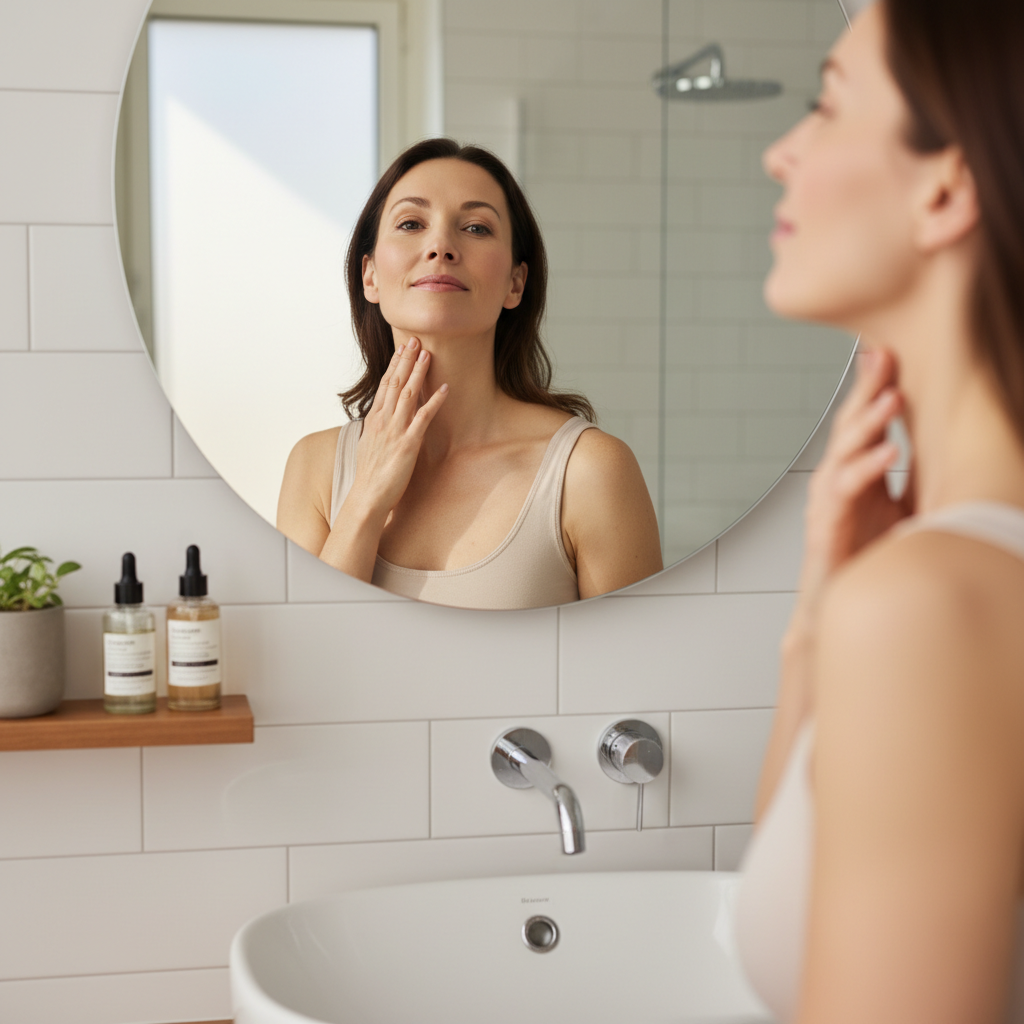
You are standing in front of the bathroom mirror, smoothing on your morning moisturizer, when your fingers brush against a small, tender lump just below your jawline. Your heart skips a beat. In your 40s, every new sensation—every ache or strange bump—can feel like a riddle. Is this just another bizarre addition to your perimenopause symptoms checklist, or is your body signaling something more urgent?
Finding swollen lymph nodes in the neck during perimenopause or due to an infection is a common concern that often sits at the intersection of hormonal shifts and immune function. While lymphadenopathy (the medical term for swollen nodes) is rarely listed in the "top 10" menopause symptoms, the physiological changes occurring in your body during this transition can certainly influence how your lymphatic system behaves.
Can perimenopause cause swollen lymph nodes in the neck?
Technically, perimenopause itself—the transition toward the end of reproductive years—does not cause lymph nodes to swell in the same way a virus does. However, the hormonal volatility of this stage can create a systemic environment where lymph nodes become more reactive or noticeable.
Estrogen and progesterone are not just sex hormones; they are potent immune modulators. According to the National Institutes of Health (NIH), estrogen has a significant impact on the development and function of immune cells. When estrogen levels fluctuate wildly during perimenopause, your immune system may become more sensitive, leading to localized inflammation that can make lymph nodes feel tender or slightly enlarged.
Furthermore, many women experience increased water retention and breast tissue changes (mastalgia) during this time. Because the lymphatic system is responsible for fluid drainage, these changes can sometimes lead to a feeling of "fullness" or tenderness in the lymph nodes located in the armpits (axillary) or neck (cervical).
How do hormonal shifts affect the lymphatic system after 40?
Your lymphatic system is your body’s drainage and filtration network. It moves lymph—a fluid containing white blood cells—throughout the body to fight infection and remove waste. As you cross the threshold of 40, several factors begin to impact this drainage efficiency:
- Estrogen Dominance and Fluid Retention: During early perimenopause, you may have "estrogen dominance" relative to falling progesterone. High estrogen is linked to increased capillary permeability, which means more fluid leaks into the tissues, putting a higher load on the lymphatic system to clear it out.
- Tissue Changes: The thinning of the skin and changes in sub-dermal fat (collagen loss) can make previously deep lymph nodes feel more prominent to the touch, even if they aren't pathologically swollen.
- Immune Senescence: As we age, the immune system undergoes "inflammaging"—a state of chronic, low-grade inflammation. The Mayo Clinic notes that lymph nodes react to this inflammation by filtering out debris and pathogens, which can cause temporary swelling.
| Factor | Impact on Lymphatic System | Common Symptom |
|---|---|---|
| Estrogen Fluctuation | Increases vascular permeability | Edema (swelling) & tenderness |
| Progesterone Drop | Reduces natural diuretic effect | Fluid buildup in neck/armpits |
| Cortisol Rise | Suppresses immune efficiency | Slow recovery from minor infections |
| Metabolic Shift | Increases systemic inflammation | "Reactive" lymph nodes |
Is it a perimenopause symptom or a hidden metabolic infection?
One of the greatest challenges of the midlife transition is the "overlap" phenomenon. Many symptoms of perimenopause mimic other metabolic or autoimmune conditions. If you are experiencing swollen lymph nodes alongside extreme fatigue or joint pain, you might be looking at a fibromyalgia-perimenopause symptoms crossover or even a thyroid issue.
A significant number of women in their 40s develop Hashimoto’s thyroiditis, an autoimmune condition where the body attacks the thyroid gland. Because the thyroid is located in the neck, inflammation in this area can often be mistaken for swollen lymph nodes, or the immune response itself can cause the cervical nodes to enlarge. Understanding the Hashimoto's perimenopause overlap is crucial for getting the right diagnosis.
Furthermore, metabolic health plays a role. Insulin resistance, which often peaks during perimenopause, is a pro-inflammatory state. If your body is struggling with glucose regulation, you may experience more frequent minor infections (like sinus or dental issues) that keep your neck lymph nodes in a state of constant, low-level activation. Checking for perimenopause insulin resistance signs can help determine if your metabolic health is taxing your immune system.
Why do my lymph nodes feel tender right before my period?
If you notice that your neck or armpit nodes become tender like clockwork every month, you are likely experiencing "cyclical lymphadenopathy." This is closely tied to the hormonal fluctuations of the luteal phase (the days leading up to your period).
During this window, progesterone levels ideally rise and then fall. If the balance is off, the body retains more sodium and water. The Cleveland Clinic explains that lymph nodes can swell in response to local tissue changes. Just as your breasts become tender and swollen (cyclical mastalgia) due to hormonal shifts, the lymphatic channels serving those tissues can become congested. This congestion often radiates to the cervical nodes in the neck or the axillary nodes in the armpit.
When should I worry about neck swelling during the transition?
While most swelling in perimenopause is "reactive" (meaning the nodes are doing their job responding to a minor threat or hormonal shift), it is vital to know the red flags.
According to the American College of Obstetricians and Gynecologists (ACOG), new symptoms in midlife should always be evaluated by a healthcare professional, especially if they persist.
See a doctor if your swollen lymph nodes:
- Feel hard, fixed in place, or "matted" together.
- Are larger than 1 to 2 centimeters (about the size of a large grape).
- Do not shrink or change after 2 to 4 weeks.
- Are accompanied by persistent night sweats (beyond typical hot flashes).
- Are accompanied by unexplained weight loss or a persistent fever.
- Are red, hot, or the skin over them is inflamed.
If your doctor determines the swelling is related to the inflammatory environment of menopause, they may suggest HRT for perimenopause beginners guide to help stabilize hormones and reduce systemic inflammation.
How does systemic inflammation in perimenopause impact lymph drainage?
Perimenopause is often a "perfect storm" for systemic inflammation. As estrogen—which has anti-inflammatory properties—declines, the body produces more pro-inflammatory cytokines. This state of chronic low-level inflammation can cause the lymphatic system to become "sluggish."
When the lymph doesn't move efficiently, cellular waste products linger in the interstitial fluid. This can lead to:
- Puffy Face and Neck: Often called "menopause face," this is frequently just stagnant lymph.
- Brain Fog: Research at University of Virginia discovered "meningeal lymphatic vessels" that drain the brain. If systemic lymph drainage is poor, it may contribute to the cognitive "fog" many women report.
- Increased Sensitivity: Your lymph nodes may become "palpable"—meaning you can feel them—simply because the surrounding tissues are more inflamed.
What are the best ways to support lymphatic health after 40?
The good news is that the lymphatic system does not have a "pump" like the heart; it relies on your movement and habits to function. You can actively support your lymph drainage and reduce neck tenderness with these strategies:
- Hydration with Electrolytes: Lymph fluid is mostly water. Dehydration makes the fluid thicker and harder to move. Ensure you are getting enough magnesium and potassium to balance the sodium that causes fluid retention.
- Manual Lymphatic Drainage (MLD): Gentle, skin-stretching massage techniques can help move fluid from the neck toward the drainage points near the collarbone.
- Gua Sha or Dry Brushing: Using a smooth tool (Gua Sha) on the neck and jawline can physically move stagnant fluid. Always move downward toward the heart.
- Movement: Rebounding (jumping on a small trampoline), walking, and yoga are the most effective ways to "pump" the lymphatic system.
- Anti-Inflammatory Nutrition: Reducing processed sugars and alcohols helps lower the systemic inflammatory load, giving your lymph nodes a "break."
- Manage Stress: High cortisol is linked to impaired immune function and increased fluid retention.
A Note on Professional Diagnosis
It is tempting to blame every new symptom on "just hormones." However, perimenopause is also a time when the risk for other conditions—such as autoimmune flares or even certain cancers—can increase. A simple physical exam and blood work (like a CBC or inflammatory markers) can provide peace of mind. Your doctor may also order an ultrasound of the neck to ensure the "lumps" are indeed lymph nodes and not thyroid nodules or cysts.
By staying proactive about your metabolic health and recognizing the signs of hormonal imbalance, you can navigate these changes with confidence. Whether the swelling is a temporary reaction to an infection or a sign of the perimenopausal transition, supporting your body’s natural filtration system is a vital step toward long-term radiance.
FAQ
Common questions
Can hormones alone cause swollen lymph nodes?
While perimenopause itself doesn't cause infection, hormonal fluctuations can trigger systemic inflammation and fluid retention, making lymph nodes feel more tender or noticeable.
Is it normal for lymph nodes to swell before my period?
Yes, many women experience tender lymph nodes in the neck or armpits during the luteal phase (the week before a period) due to estrogen and progesterone shifts causing fluid buildup.
When should I worry about a lump in my neck?
If the node is hard, immovable, larger than a grape, or stays swollen for more than 4 weeks, you should consult a doctor to rule out more serious issues.
Can poor lymph drainage cause brain fog?
Sluggish lymph drainage can contribute to the 'puffy face' and brain fog often reported in perimenopause, as the body struggles to clear inflammatory waste.
Could my swollen neck be related to my thyroid?
Yes, Hashimoto's is common in perimenopausal women and can cause inflammation in the neck area that mimics or triggers swollen lymph nodes.
What is the best way to drain lymph nodes in the neck?
Stay hydrated, practice gentle movement like walking or rebounding, and try manual lymphatic drainage (MLD) or Gua Sha to help move fluid.
Want this in your inbox each Sunday?
New articles, the science you can actually use, and the occasional rant.
Keep reading

Perimenopause Symptoms Checklist: 38 Signs You're Not Imagining
A comprehensive, doctor-reviewed checklist of perimenopause symptoms — from the obvious hot flashes to the weird ones nobody warned you about.
9 min read

Hashimoto's and Perimenopause: Why Symptoms Overlap (and How to Tell Them Apart)
Fatigue, brain fog, weight gain, hair loss — Hashimoto's and perimenopause share most symptoms. Here's how to tell what's flaring, what's hormonal, and what to ask your doctor.
11 min read

Fibromyalgia and Perimenopause: When Two Storms Collide
Why fibromyalgia almost always flares during perimenopause, what changes in your nervous system, and the small daily shifts that actually help.
10 min read