
Upper Belly & Rib Weight Gain: The Perimenopause Shift
Discover why perimenopause causes weight gain around the ribs and upper belly. Learn about cortisol, insulin resistance, and metabolic shifts in your 40s.
Published:
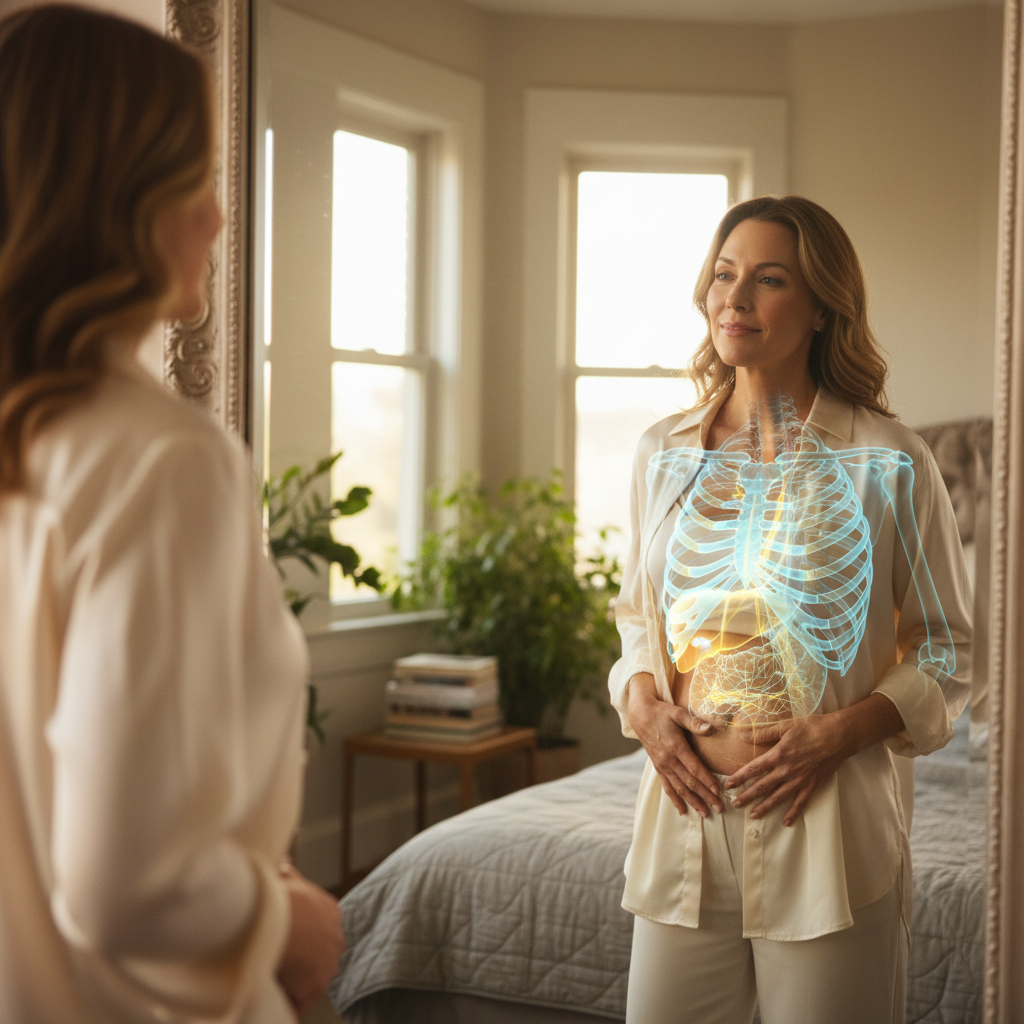
If you have recently looked in the mirror and wondered why your bra feels tighter, yet your actual cup size hasn't changed, you aren't alone. Many women in their 40s and early 50s notice a frustrating expansion of the upper abdomen, specifically right under the bust and around the rib cage. This isn't just "general weight gain"; it is a physiological shift deeply rooted in the hormonal fluctuations of the perimenopausal transition.
Understanding why this happens is the first step to reclaiming your comfort and confidence. This upper-torso expansion is often one of the first perimenopause symptoms checklist items women notice, even before their periods become irregular.
Why am I gaining weight right under my bra line?
The "bra-line bulge" or "rib spread" is a hallmark of the midlife transition. Unlike the weight gain of our 20s, which often settled on the hips or thighs (gynoid fat), perimenopausal weight gain is primarily android (central). As estrogen levels fluctuate and eventually decline, the body’s blueprint for fat storage changes.
Estrogen plays a crucial role in where we store adipose tissue. In our younger years, estrogen promotes fat storage in the subcutaneous layers—the "pinchable" fat under the skin. As we enter perimenopause, the lack of estrogen—combined with a relative increase in the ratio of androgens (like testosterone)—signals the body to store fat in the abdominal cavity and the upper torso. According to the Mayo Clinic, this shift is not just cosmetic; it represents a move toward visceral fat accumulation.
Furthermore, the rib cage area is highly sensitive to inflammation and fluid retention. During perimenopause, the decline in progesterone—a natural diuretic—can lead to significant water retention. This often manifests as a feeling of "tightness" around the ribs that fluctuates throughout the month.
The difference between subcutaneous fat and 'metabolic rib fat'?
It is essential to distinguish between the two types of fat because they behave differently and respond to different interventions.
| Feature | Subcutaneous Fat | Metabolic (Visceral) Rib Fat |
|---|---|---|
| Location | Directly under the skin | Deep around organs and upper abdominal wall |
| Texture | Soft, "pinchable" | Firm, can make the torso feel "thick" or "solid" |
| Hormonal Driver | General caloric surplus | Cortisol and Insulin resistance |
| Health Risk | Lower | Higher (cardiovascular and metabolic risk) |
| Responsiveness | Responds well to steady-state cardio | Requires stress management and blood sugar balance |
Subcutaneous fat is the "padding" we’ve lived with most of our lives. However, "metabolic rib fat" is often visceral fat pushing outward from the inside. In perimenopause, the body becomes less efficient at processing glucose, leading to perimenopause insulin resistance signs. This metabolic shift specifically targets the upper abdominal area, creating a "shelf" of weight that starts immediately below the breasts.
How cortisol and insulin specifically target the upper torso?
The upper belly and rib area are particularly rich in glucocorticoid receptors. These receptors are like "locks" that are opened by the "key" of cortisol, our primary stress hormone. When we are chronically stressed—a common state during the "sandwich generation" years of perimenopause—cortisol levels remain elevated.
- Cortisol’s Role: Research published via the National Institutes of Health (NIH) indicates that cortisol directly stimulates the enzyme lipoprotein lipase, which encourages fat storage specifically in the abdominal region.
- The Insulin Spike: As estrogen drops, our cells become more "deaf" to insulin. When insulin levels stay high to compensate, the body enters storage mode.
- The Synergistic Effect: Together, cortisol and insulin create a "perfect storm" for rib-area expansion. High cortisol tells the body there is an emergency, and high insulin provides the fuel to store energy exactly where those glucocorticoid receptors are most dense: the upper abdomen.
For some women, this weight gain may be exacerbated by other underlying conditions. For instance, the Hashimoto's perimenopause overlap can further slow the basal metabolic rate, making it even easier for the body to deposit fat around the midsection despite no changes in diet.
Is it bloating or new adipose tissue in your 40s?
Many women visit their doctors complaining of "sudden weight gain," only to realize their measurements haven't changed as much as their feeling of inflation has. In perimenopause, the distinction between fat (adipose) and bloat (distension) becomes blurred.
GI Changes: The decline in estrogen affects the transit time of food through the digestive tract. This can lead to increased gas production and "perimenopause bloat," which often sits high in the abdomen, right under the ribs. This creates the illusion of permanent weight gain when it is actually trapped gas or slow digestion.
The "Poof" Factor: If your rib weight fluctuates significantly—feeling fine in the morning but tight by 4:00 PM—it is likely digestive distension or fluid retention. If the thickness is consistent regardless of the time of day, it is likely the redistribution of adipose tissue.
Distinguishing between the two is vital. If the "weight" is accompanied by widespread pain or tenderness, it’s worth investigating the fibromyalgia perimenopause symptoms connection, as systemic inflammation can cause both tissue swelling and localized discomfort in the torso.
The role of posture and muscle loss in rib area changes?
We cannot discuss the rib area without talking about the "scaffolding" underneath the fat. Sarcopenia, or the age-related loss of muscle mass, accelerates during perimenopause due to falling estrogen and growth hormone levels.
As we lose core strength, particularly in the transverse abdominis and the intercostal muscles (between the ribs), our posture begins to change. A common perimenopausal posture involves a slight "slumping" or forward rounding of the shoulders. According to the Cleveland Clinic, muscle loss can lead to a change in how the skin and fat drape over the skeleton.
When the muscles of the mid-back and core weaken, the rib cage can actually tilt downward and forward. This "shortens" the distance between your ribs and your hips, leaving the soft tissue with nowhere to go but out. This creates a "thick" look through the ribs that isn't purely about fat—it's about the collapse of the space where that fat resides.
Diet and exercise tweaks for upper abdominal weight?
If you are struggling with weight gain around the ribs and perimenopause metabolic causes, the "eat less, exercise more" mantra often fails. In fact, excessive high-intensity cardio can spike cortisol, further signaling the body to hold onto rib fat.
Instead, a more physiological approach is required:
Prioritize Protein and Fiber
To combat insulin resistance, focus on stabilizing blood sugar. The Endocrine Society emphasizes that managing glucose is key to reducing abdominal fat. Aim for 25-30 grams of protein per meal to maintain muscle and high fiber to assist in estrogen detoxification.
Resistance Training is Non-Negotiable
Since muscle loss contributes to the "rib spread," lifting weights is essential. Focus on:
- Back exercises: Rows and lat pulldowns to "lift" the rib cage.
- Core stability: Planks and dead bugs rather than crunches (which can exacerbate the "shortened" torso look).
Manage the Cortisol Spikes
Since the upper abdomen is so sensitive to cortisol, your "exercise" must include nervous system regulation. Activities like yoga or walking in nature are not "luxury" add-ons; they are metabolic tools that lower the hormones telling your ribs to store fat.
Consider Hormonal Support
For many, the metabolic shift is too aggressive to manage through lifestyle alone. Exploring an HRT for perimenopause beginners guide can help you understand how bioidentical hormones might stabilize the insulin/estrogen relationship, making it easier for the body to release visceral fat.
The Power of "Micro-Movements"
Don't underestimate the power of standing up and stretching your intercostal muscles. Reaching overhead and side-bending helps maintain the space between the ribs and the pelvis, preventing the "compressed" look that defines midlife weight gain.
In conclusion, weight gain around the ribs in perimenopause is a complex interplay of insulin signaling, cortisol sensitivity, and structural changes. By addressing the metabolic causes—rather than just cutting calories—you can support your body through this transition and find comfort in your own skin once again. Every woman’s journey is unique; listen to your body’s signals and remember that this "shift" is a physiological response, not a personal failing. Mounting research from organizations like the North American Menopause Society (NAMS) continues to show that targeted hormonal and lifestyle interventions can effectively manage these midlife changes.
| Intervention | Primary Benefit | Target Hormone |
|---|---|---|
| Strength Training | Increases BMR and improves posture | Growth Hormone / Estrogen |
| Protein-First Diet | Stabilizes blood sugar and prevents muscle loss | Insulin |
| Magnesium/Relaxation | Reduces fluid retention and stress | Cortisol |
| Walking/NEAT | Lower intensity fat burning without stress | Cortisol |
By understanding the "why" behind the bra-line bulge, you can stop fighting your body and start working with it. Radiant health in perimenopause is about harmony, not deprivation. Give your body the nutrients, movement, and grace it needs to navigate this metabolic shift.
FAQ
Common questions
Why am I suddenly gaining weight right under my breasts?
Upper belly fat in perimenopause is often driven by rising cortisol and insulin resistance. As estrogen drops, the body shifts fat storage from the hips to the visceral area, specifically the upper abdomen where cortisol receptors are dense.
Can perimenopause change the actual shape of my rib cage?
Yes, the 'rib spread' is often a combination of visceral fat accumulation and a loss of core muscle tone (sarcopenia), which causes the rib cage to tilt and the torso to appear thicker.
Is it possible to lose 'bra-line' fat with exercise?
While you cannot spot-reduce fat, resistance training that targets the back and core can 'lift' the torso, while a low-glycemic diet helps reduce the visceral fat specifically stored in the upper belly.
How can I tell the difference between bloating and actual weight gain?
Hormonal bloating usually fluctuates and feels like 'tightness' or gas, often worsening in the evening. Adipose tissue (fat) is consistent and doesn't change significantly throughout the day.
Does cardio help with perimenopausal rib fat?
High-intensity interval training (HIIT) can sometimes raise cortisol too high in perimenopausal women, signaling the body to store more belly fat. Switching to heavy lifting and zone 2 cardio (walking) is often more effective.
Why does my rib area feel so tight and swollen?
Progesterone is a natural diuretic. When it drops during perimenopause, the body retains more sodium and water, which often settles around the midsection and rib area.
Want this in your inbox each Sunday?
New articles, the science you can actually use, and the occasional rant.
Keep reading

Perimenopause Symptoms Checklist: 38 Signs You're Not Imagining
A comprehensive, doctor-reviewed checklist of perimenopause symptoms — from the obvious hot flashes to the weird ones nobody warned you about.
9 min read

Hashimoto's and Perimenopause: Why Symptoms Overlap (and How to Tell Them Apart)
Fatigue, brain fog, weight gain, hair loss — Hashimoto's and perimenopause share most symptoms. Here's how to tell what's flaring, what's hormonal, and what to ask your doctor.
11 min read

Fibromyalgia and Perimenopause: When Two Storms Collide
Why fibromyalgia almost always flares during perimenopause, what changes in your nervous system, and the small daily shifts that actually help.
10 min read